

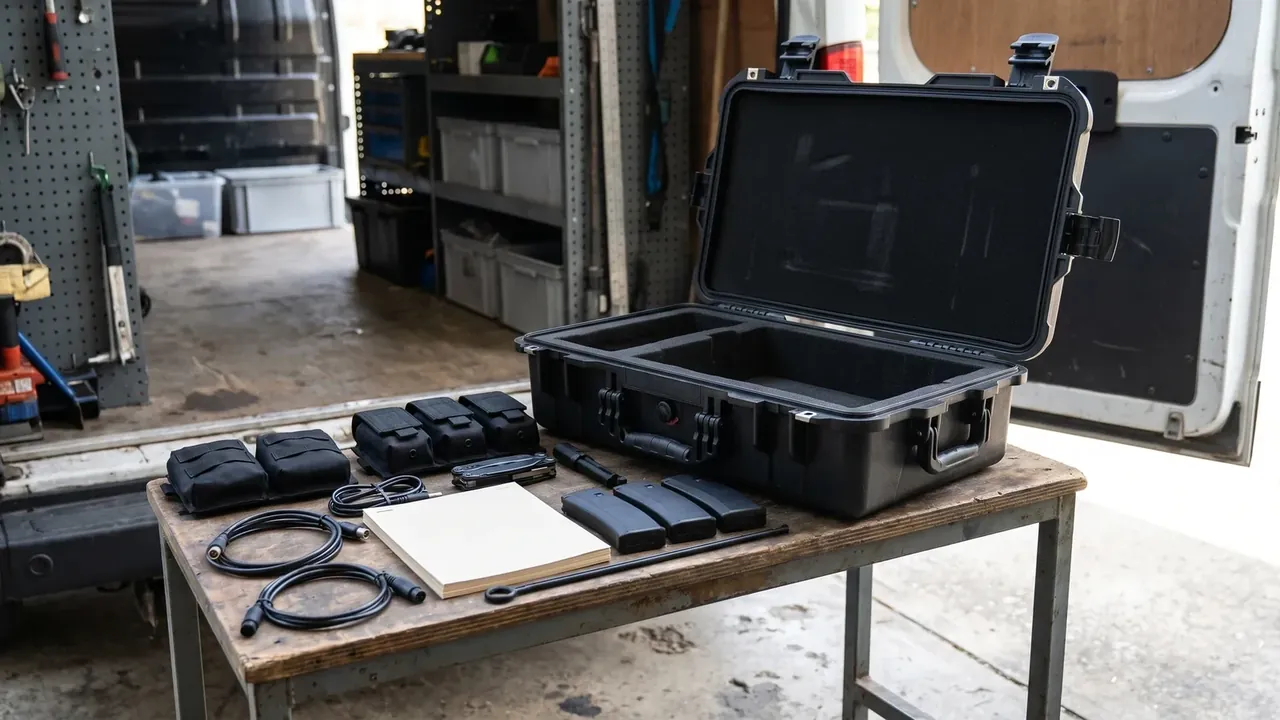
Quick answer: A cartridge storage box specification follows from four inputs: item outline, transport mode, stack height and store environment. Those four fix cavity size, wall thickness, lid load and sealing class; everything else is derived.
Table of contents
- Four Inputs Behind a Cartridge Storage Box Specification
- Cavity Size and Cell Layout
- Wall Thickness and Ribbing
- Load Capacity and Stacking Height
- Sealing Class, Temperature Range and Unit Weight
- FAQ
1. Four Inputs Behind a Cartridge Storage Box Specification
A cartridge storage box specification does not start with a size chart. It starts with what goes in, how it travels, how high it stacks and where it sits. Settle those four and the parameters lock.
Describe the contents to the item outline. A fifty-round carton needs about 30 mm more cavity height standing than lying flat, and square versus long cells is a question of finger clearance.
| Input | Fixes | Starting value |
|---|---|---|
| Item outline | Cavity, cells | 92 × 62 × 32 mm carton |
| Transport | Wall, latch count | 2.8 mm and up for road |
| Stack height | Lid load, feet | Four tiers, 150 kg |
| Environment | Sealing class | IP67, −30 to +60 °C |
Stack height is the input most often lost. “Stackable” invites a six-tier empty-case design while the store loads four full tiers, and the lid takes a set that shows as a misaligned seal.
2. Cavity Size and Cell Layout
Cavity comes from outline plus clearance. A 92 × 62 × 32 mm carton with 3 mm clearance a side gives a 98 × 68 × 170 mm cell, five cartons deep; with 8 mm foam walls, four cells across and three along fill a 480 × 320 × 180 mm cavity.
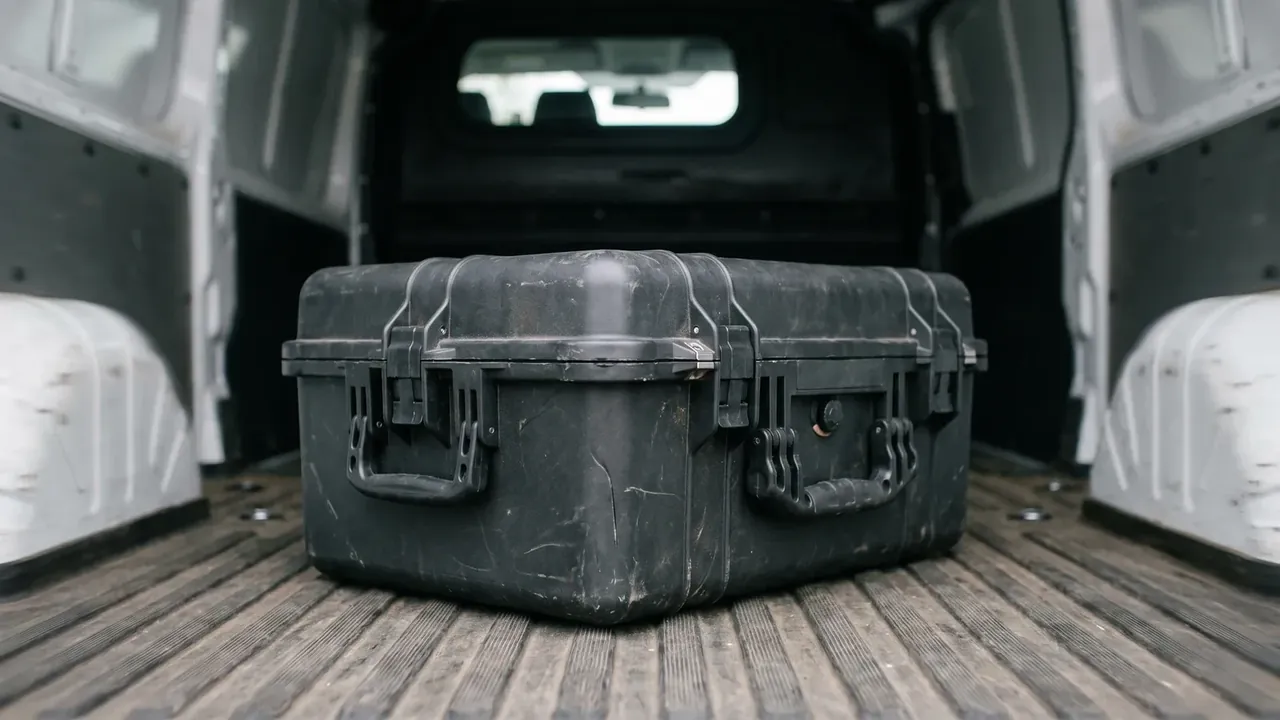
More cells is not better. Sixteen pockets thins the shared wall from 8 mm to 5 mm and lateral support drops with it. If fingers enter from one side, the cell should not be walled equally on all four.
The cavity works out at 27.6 litres, which drives desiccant quantity and loaded weight. Overstate it and the interior runs dry; understate it and capacity fails.
3. Wall Thickness and Ribbing
Wall thickness balances load against weight. Injection-moulded polypropylene runs 2.8 to 3.2 mm; rotomoulded polyethylene 4.5 to 5.0 mm, because powder deposition varies about ±0.5 mm.
Ribs carry lid load into the side walls; 3 mm tall at 60 mm centres is a workable start. Past 80 mm the lid bulges before it cracks, and under 40 mm the rib root sinks.
Thickness converts to weight: each extra 0.5 mm adds about 0.6 kg, raising loaded weight and lowering stack height. A cartridge storage box sheet must show both together.
4. Load Capacity and Stacking Height
Three load cases apply: lifting, static stacking and transport shock. Static stacking is where the arithmetic fails, since it acts longest and plastic creeps throughout.
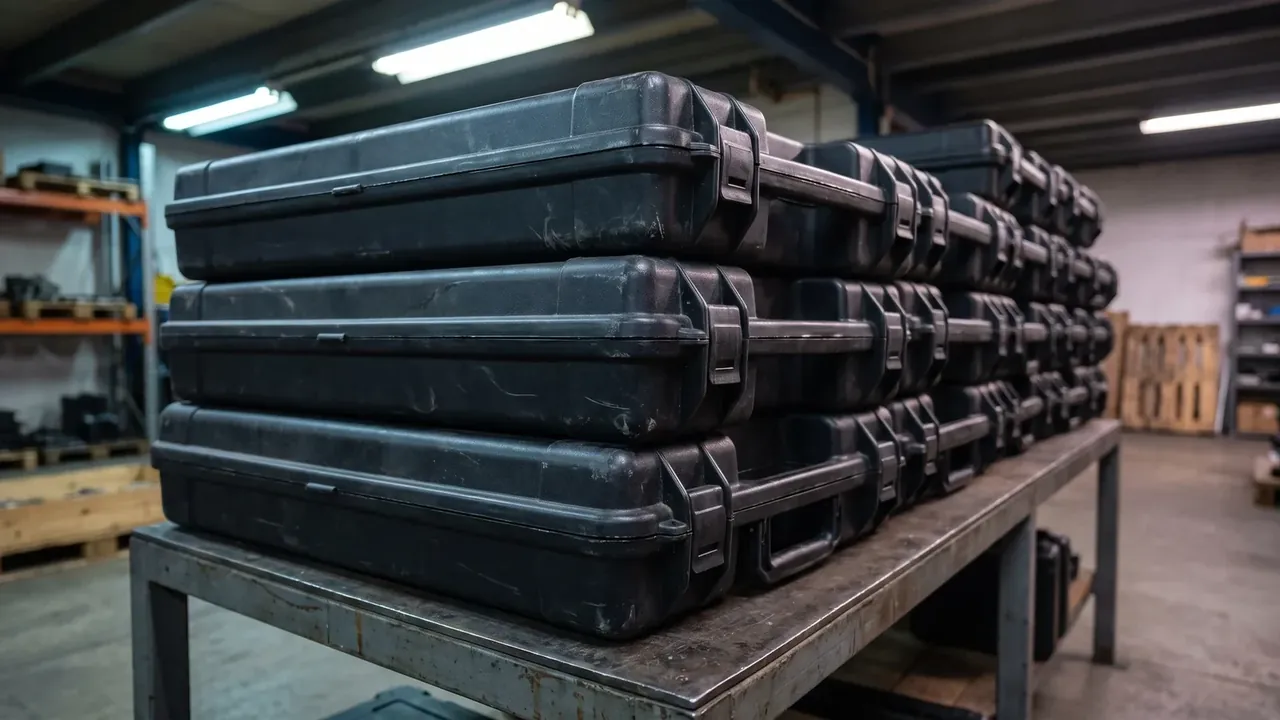
Stack height for a cartridge storage box back-calculates: 21.4 kg loaded against a 150 kg lid allowance gives seven tiers, and a factor of 1.75 brings it to four.
Feet and pockets belong together. A 12 mm foot with a 6 mm pocket self-aligns; hand-aligned stacks drift by the third tier and split the bottom corners.
5. Sealing Class, Temperature Range and Unit Weight
Sealing class on a cartridge storage box follows the store. IP65 covers an indoor room; IP67 means thirty minutes at one metre without ingress, paid for with a larger seal profile and four latches.
Write temperature as a pair: case −30 to +60 °C, seal −40 to +90 °C. When they do not match the seal fails first, and a wide-swing store needs a pressure valve.
| Parameter | Value | Basis |
|---|---|---|
| Cavity | 480 × 320 × 180 mm | Twelve cells plus clearance |
| Volume | 27.6 L | Net dimensions multiplied |
| Lid load | 150 kg | Back-calculated from four tiers |
| Ingress | IP67 | One metre, thirty minutes |
| Weight | 4.2 / 21.4 kg | 3.0 mm wall plus contents |
Unit weight is the last line on the sheet and the first one skipped. At 21.4 kg loaded it decides whether one person or two handle the case.
Conclusion
The specification of a cartridge storage box is a set of linked numbers: cavity from the outline, wall from process and load, stack height from lid capacity, sealing class from the store. Fix the inputs and the sheet has one answer, and a cartridge storage box specification holds together on site.
This article discusses only the container (case body) side of specifications and design intent, and does not cover any handling, loading or use of the contents.
Related Reading
- Size, wall and stacking rules for cartridge transport boxes
- Cavity and cell layout for cartridge protective boxes
- Volume, load and sealing figures for ammunition cases
- Load and stacking figures for heavy duty cases
Related Products
- 8 Series — Gun Cases; Military Equipment Cases; Camera Equipment Cases; Drone Cases; Watch Cases; Knife Cases; First Aid Cases; Electronics Equipment Cases
- WL8-2812 PP Gun Case — model WL8-2812
- All protective cases and toolboxes: 7 series, 158 models