

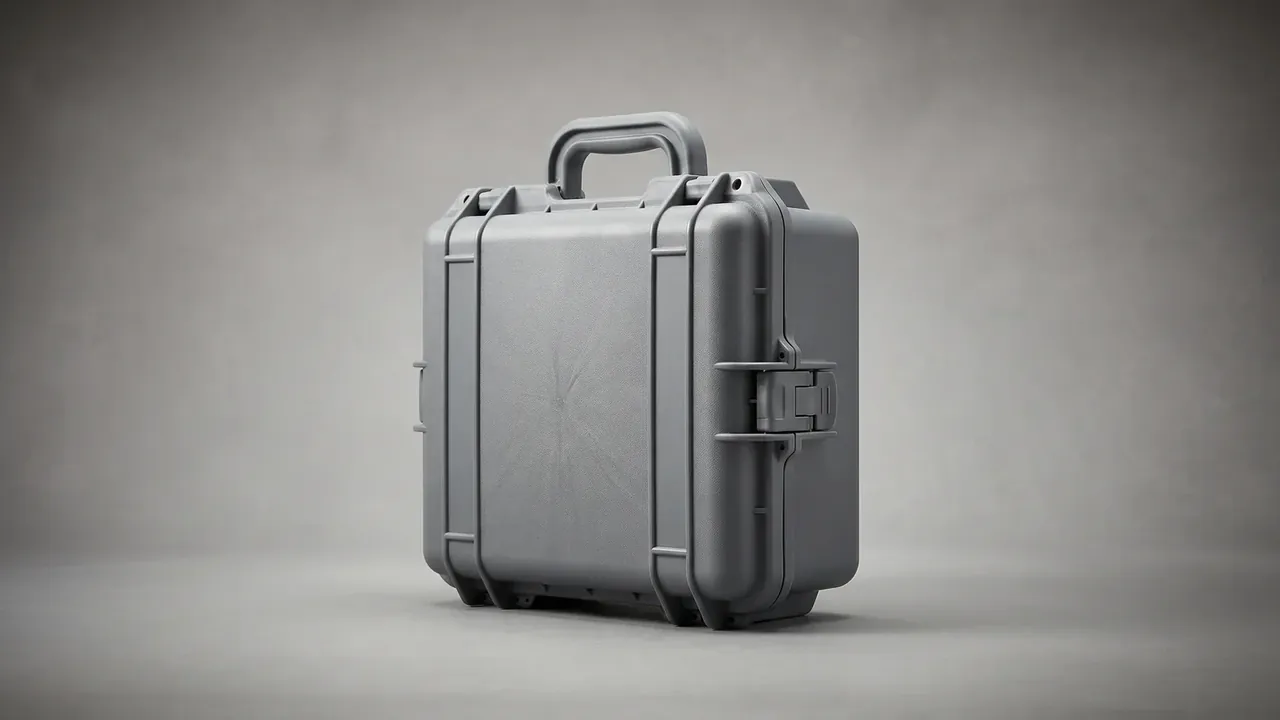
Quick answer: A cartridge storage box is accepted at three gates: first article, patrol, pre-shipment. Each gate names items, gauges and limits. Critical defects are never sampled, a failed lot gets one tighter recheck, and the report travels with a twelve-digit code.
Table of contents
- Three Inspection Gates for Cartridge Storage Box Acceptance
- Inspection Items and the Gauges Behind Them
- Sampling and How a Lot Is Formed
- Decision Rules and Recheck Arbitration
- Reports, Retention and Traceability Fields
- FAQ
1. Three Inspection Gates for Cartridge Storage Box Acceptance
One checklist stretched from incoming material to the dock looks complete and judges nothing. Nobody measures cavity depth at the first article, and the same visual check runs three times before shipment.
The gates divide the work. The first article runs every item on three units and confirms that mould, machine and parameters have settled. The patrol watches four values that drift: lid line, latch effort, colour shift, unit weight. Pre-shipment samples by lot. Each gate carries a signature, and the signature is what locates a cartridge storage box decision to a person.
2. Inspection Items and the Gauges Behind Them
Items sit in four groups: dimensions, sealing, latches and handles, appearance and marking. Each needs a gauge, a reading and a limit; drop one and the clause becomes an adjective.
| Item | Gauge | Reading | Limit |
|---|---|---|---|
| Cavity length, width, depth | Vernier caliper | 0.02 mm | Plus or minus 0.8 mm |
| Lid line | Feeler gauge 0.05 to 1.0 mm | 0.05 mm | 0.30 mm maximum |
| Air tightness | Differential pressure tester | 1 Pa | 50 Pa drop in 30 seconds |
| Latch effort | Force gauge, 500 N | 1 N | 60 to 140 N |
| Colour shift | Spectrophotometer, D65 | ΔE 0.01 | ΔE 1.5 or less |
Calibrate quarterly for calipers, yearly for force gauges, half-yearly for shims. A moulded case then rests at 23 degrees Celsius plus or minus 2 for 24 hours: read straight off the tool and cavity width comes in 0.3 to 0.5 mm small. Visual work needs 800 lux at 400 mm for ten seconds.
3. Sampling and How a Lot Is Formed
One mould, one machine, one shift and one colour make a lot; a stop over four hours starts a new number, or the sample has no denominator. Cartridge storage box lots of 151 to 500 take 32 units, 501 to 1200 take 50, 1201 to 3200 take 80, with major Ac of 1, 1, 2 and minor Ac of 3, 4, 6.
Draw from three heights of the pallet, not the top layer alone. An 800-unit lot sampled at 50 found two major defects against an Ac of 1, so it failed. Sorting pulled 26 units; 9 passed after latch replacement, 17 were downgraded.
4. Decision Rules and Recheck Arbitration
There are three exits: pass, concession, reject. Concession is open to minor defects only, needs a written sign-off and caps quantity and use. Reject means sorting or returning the lot.
A recheck is granted once, with a doubled sample and only the failed items retested. Disputes go to arbitration: each side keeps three sealed units and a third-party laboratory retests the same items.
| Decision | Trigger | Action |
|---|---|---|
| Pass | No critical defect, others within Ac | Release |
| Concession | Minor items over Ac only | Sign-off, capped use |
| Reject | One critical defect or more | Sort or return |
5. Reports, Retention and Traceability Fields
A report answers five questions unaided: who made the batch, from which compound, how many were sampled, what was found, who decided. Ten fields at least, from lot and shift through resin grade to defect distribution.
The trace code is twelve digits: six for the date, two for the machine, one for the shift, three for the running number, fixed on the back of the case. Keep it three years; a complaint should pull the full set within 24 hours.
Conclusion
An acceptance standard is worth what can be measured, decided and retrieved. Fix the gates, tie each item to a gauge, give the sample a denominator, and let the report reach the operator and the resin batch. Then cartridge storage box inspection stops depending on who is on shift.
This article discusses only the container (case body) side of specifications and design intent, and does not cover any handling, loading or use of the contents.
Related Reading
- How to Read Cartridge Storage Box Specifications
- Comparing Materials for Cartridge Boxes
- Acceptance Flow and Sampling Records for Military Supply Cases
- Shop Checklist for Gun Case Production Audits
Related Products
- 8 Series — Gun Cases; Military Equipment Cases; Camera Equipment Cases; Drone Cases; Watch Cases; Knife Cases; First Aid Cases; Electronics Equipment Cases
- WL8-2812 PP Gun Case — model WL8-2812
- All protective cases and toolboxes: 7 series, 158 models