

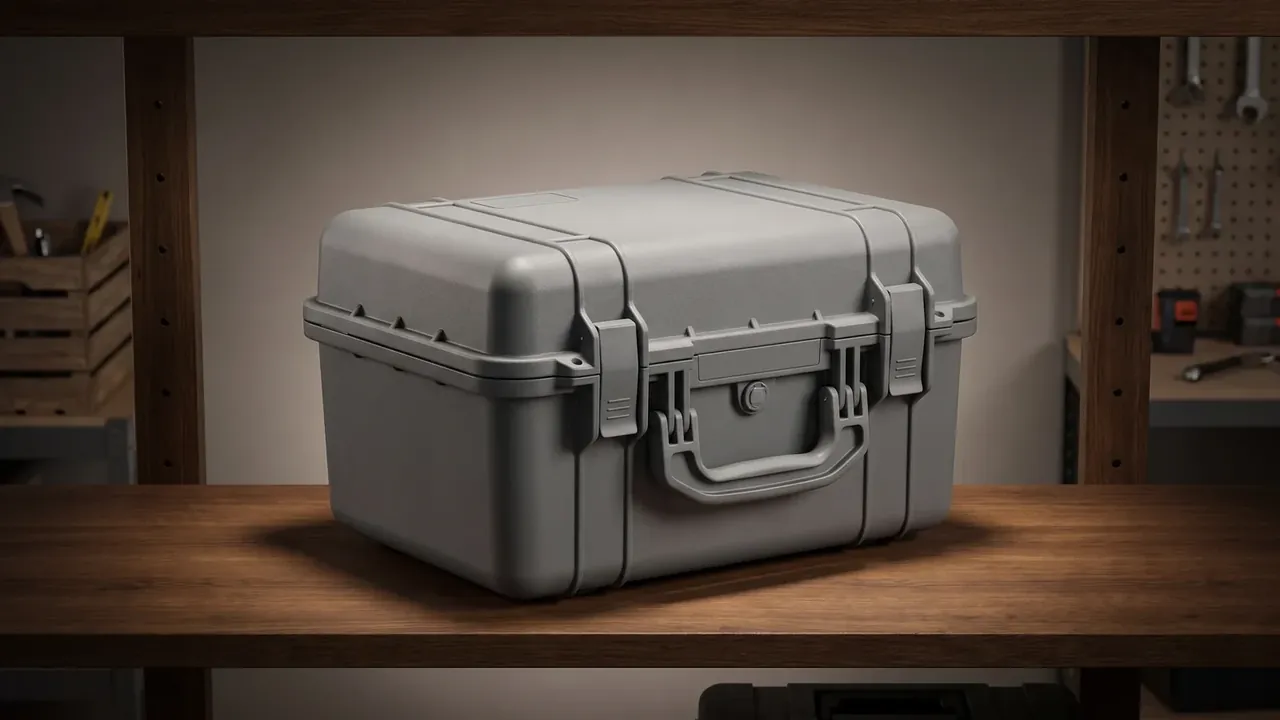
Quick answer: Choose a cartridge transport box by the route first: turnover volume sets size, stacking height sets lid strength, road and rail set the securing points, protection follows the weakest link, and cycle count decides how much box you should buy.
Table of contents
- How to Choose a Cartridge Transport Box: Start With Turnover Volume
- Stacking Height and Fork Access
- Securing Points for Road and Rail
- Protection Rating Follows the Weakest Link
- Turnover Count and Whole-Life Cost
- FAQ
1. How to Choose a Cartridge Transport Box: Start With Turnover Volume
Turnover volume comes first, and it is not the cavity size. Trips per day times boxes per trip times days in transit: four trips of six boxes over two days gives forty-eight, fifty-three with spare.
Handling follows volume: two people below thirty boxes at four minutes each, a trolley to eighty at six, a forklift above that at nine but four boxes a trip. A size class that fights the method gives savings back in labour.
| Turnover volume | Cavity volume | Handling | Load time per box |
|---|---|---|---|
| Under 30 | 45 L | Two-person carry | 4 minutes |
| 30 to 80 | 80 L | Trolley | 6 minutes |
| Above 80 | 120 L | Forklift | 9 minutes |
2. Stacking Height and Fork Access
Stacking height is a lid specification, not a warehouse habit. Five empty boxes put four full weights on the bottom one, and loaded pressure per unit area rises again. Above five layers a pallet or rack should carry the stack.
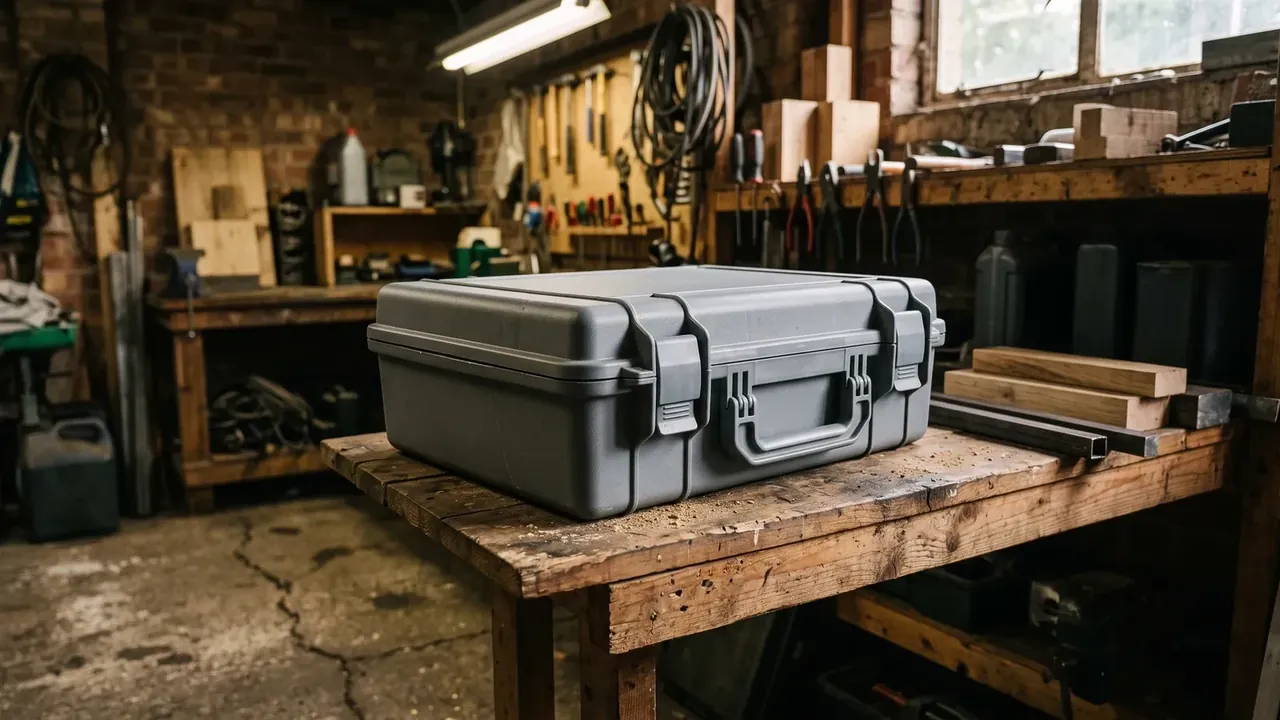
Pockets 100 mm high and 200 mm deep let a truck enter without lifting; an aisle under 1.8 m forces a second alignment. Align ribs when stacking, or the lid takes patch loads.
| Stack | Load on bottom box | Bearing area | Main risk |
|---|---|---|---|
| 3 layers | About 2 units | Full lid | Slight dishing |
| 5 layers | About 4 units | Lid plus corners | Corner collapse |
| 7 layers | About 6 units | Pallet required | Side wall bulge |
3. Securing Points for Road and Rail
Road is usually assessed at 2g longitudinal, which a strap through the base slot tied to floor anchors will hold. Rail marshalling reaches 4g, where straps alone are not enough and end-face rings with timber blocking carry the load.
Fixed hardware belongs in the specification: a 25 mm strap at 2.5 tonne breaking load, end rings rated 800 kg, mounts in solid wall. A 3 mm rubber mat under the box lifts friction from 0.3 to 0.6.
| Mode | Securing point | Impact level | Check |
|---|---|---|---|
| Road | Base strap slot | 2g longitudinal | Strap slip |
| Rail | End rings, timber | 4g longitudinal | Loose ring mount |
| Air | Four corner rings | 9g forward | Point overload |
4. Protection Rating Follows the Weakest Link
Rate the route, not the wish list. One twenty-minute stretch in rain makes IP65 insufficient; covered docks throughout make IP67 a premium nobody needs.
At -30 degrees ordinary polypropylene turns brittle and a dropped box cracks. Coastal work commonly asks for 96 hours of neutral salt spray, long sea legs for 480. Gaskets harden in cold and age under UV, so the seal fails first.
5. Turnover Count and Whole-Life Cost
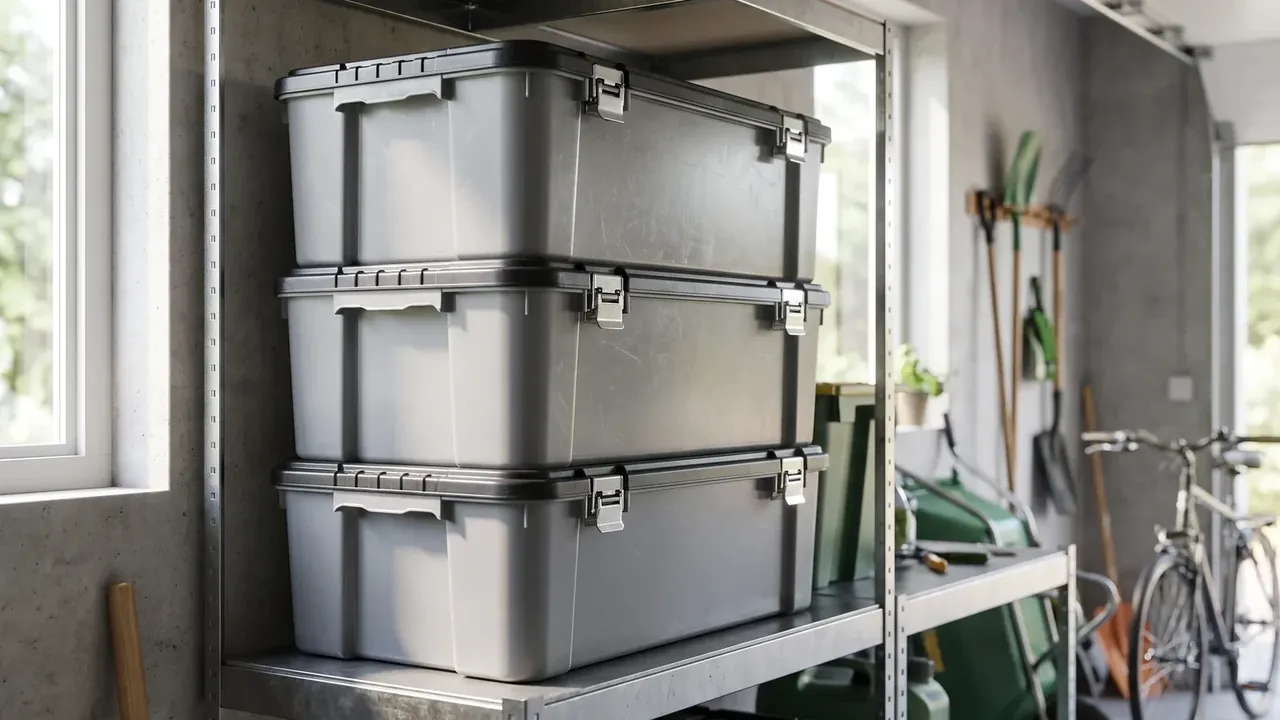
Two trips a day over 250 working days is 500 cycles a year, so a three-year plan means 1,500 openings. A cheap cartridge transport box loses latch tension near 300 cycles, and a thirty percent lower price buys two batches.
Whole-life cost splits four ways at 380 per unit and 800 cycles: purchase 45 percent, inserts 15 percent, repair 10 percent, loading labour 30. Labour is the block the right volume improves, turning nine minutes into six.
| Cost block | Share | Amortised by |
|---|---|---|
| Purchase | 45% | Cycle count |
| Insert replacement | 15% | Every 200 cycles |
| Repair and spares | 10% | Per year |
| Loading labour | 30% | Minutes |
Conclusion
Selection runs in order: turnover volume sets size, stack height sets lid strength, transport mode sets the securing points, exposure sets the rating, cycle count turns unit price into cost per trip. Put the five criteria on the enquiry sheet, and choosing a cartridge transport box stops being a guess.
This article discusses only the container (case body) side of specifications and design intent, and does not cover any handling, loading or use of the contents.
Related Reading
- Capacity calculation and loading efficiency for cartridge transport boxes
- Transport packaging requirements a cartridge transport box must meet
- Common damage and securing problems in ammunition transit cases
- Load ratings and stacking specifications for stackable containers
Related Products
- 8 Series — Gun Cases; Military Equipment Cases; Camera Equipment Cases; Drone Cases; Watch Cases; Knife Cases; First Aid Cases; Electronics Equipment Cases
- WL8-2812 PP Gun Case — model WL8-2812
- All protective cases and toolboxes: 7 series, 158 models