

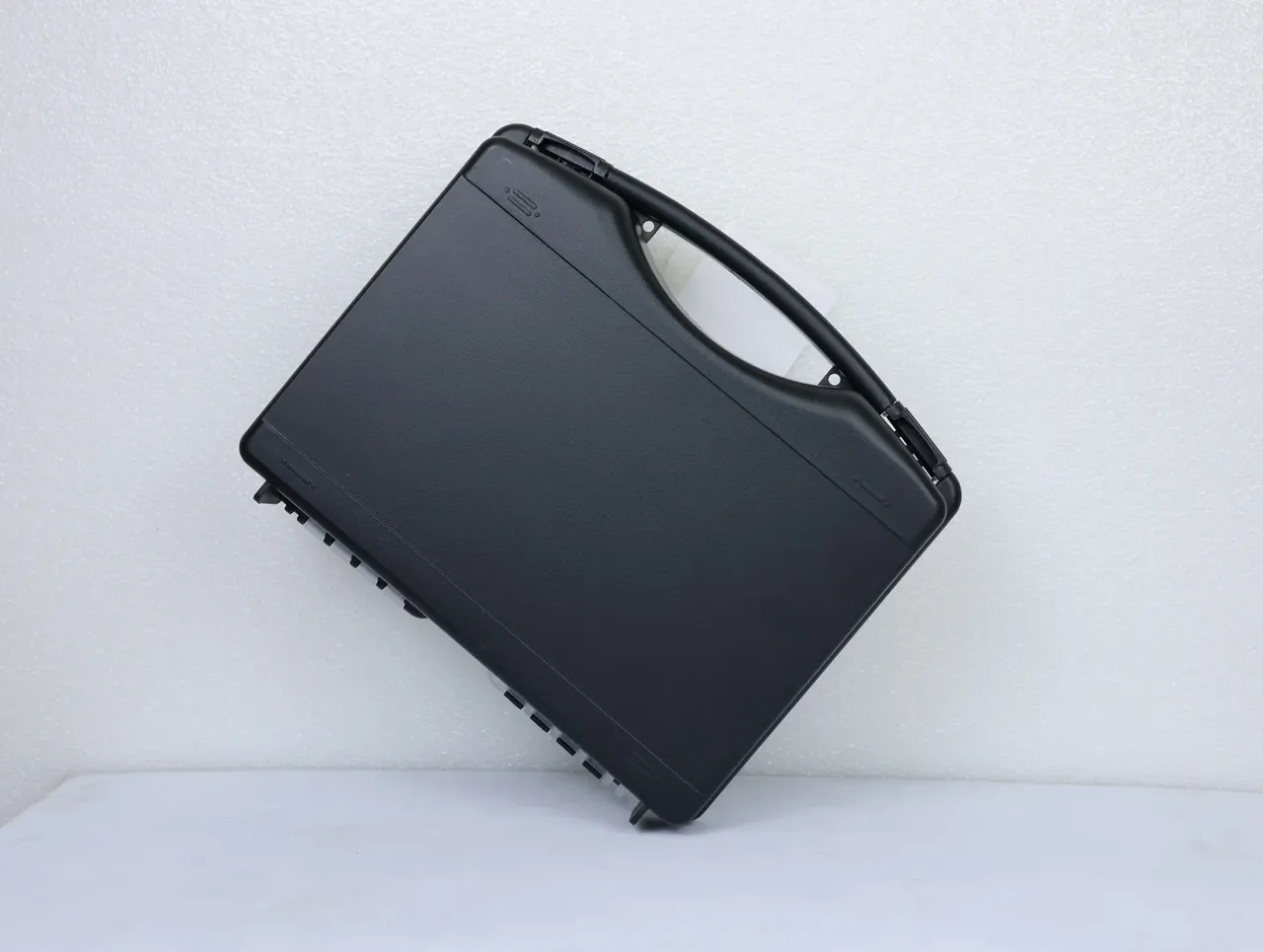
Quick answer: Bring a tape and a stopwatch. Seven figures decide whether a Case Assembly Workstation earns its quote: bench height, reach radius, bay width, median cycle, locating repeat, torque and trial yield.
Table of contents
- Three dimensions to measure before anything else
- Cycle time comes from a median, not an average
- Prove locating accuracy with ten repeats
- Three judgement lines for air tools and supply
- Three days of trial running decide the signature
- FAQ
1. Three dimensions to measure before anything else
Anything a tape can answer should not be settled by opinion. Bench height, reach radius and bay width are wrong in most bays, and the operator pays hundreds of times a shift.
Set the bench at elbow height minus 80 to 120 mm: a 1700 mm operator has an elbow near 1050 mm, so the surface lands at 930 mm. With a 240 mm case the wrist presses down to close the lid; drop the bench 40 mm and the forearm lifts every cycle.
Reach radius runs from the case centre. A bin past 400 mm costs time, and past 550 mm the operator turns the torso. One bay needs 1200 mm of clear width, a two-person bay 1900 mm, and the aisle 900 mm so a trolley rolls through.
| Dimension | Target | Tolerance | How to check |
|---|---|---|---|
| Bench height | 930 mm | ±20 mm | Tape from floor, lowest of 3 points |
| Reach radius | 400 mm | +50 mm at most | Case centre to bin edge |
| Bay width | 1200 mm | ±30 mm | Inner faces of both posts |
The three pull against each other: a bench widened to 1500 mm while bins move 600 mm away gains nothing. Case tolerance also sets the fixture opening, so fix that band first with the basic rules for choosing a case.
2. Cycle time comes from a median, not an average
A quoted cycle is usually the best piece the line produced. Time 20 consecutive pieces, drop the first 2 as warm-up and the last as clean-up, and read the median of the other 17.
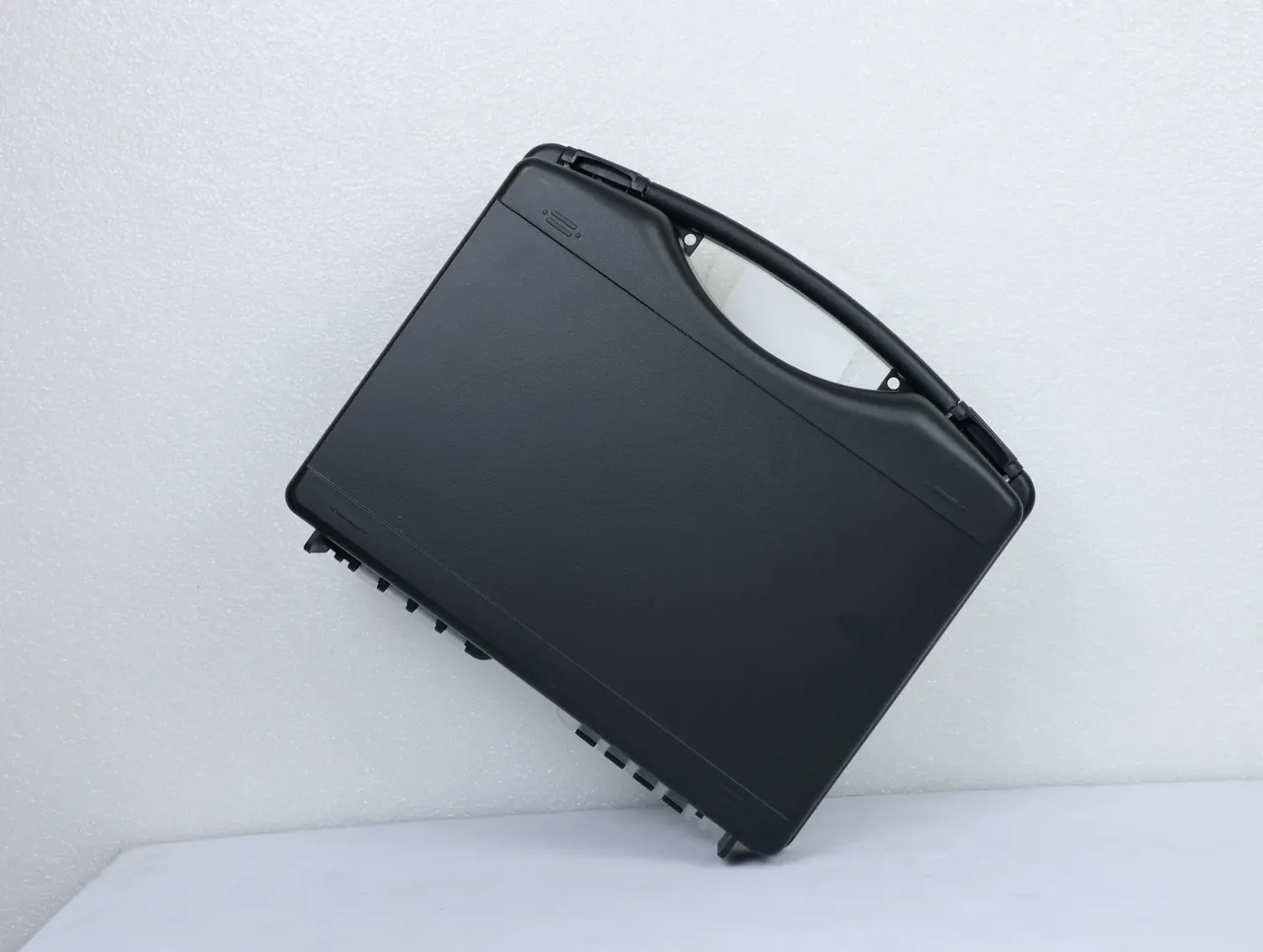
A moulded case of 520 × 380 × 210 mm assembles in 168 seconds. If the slowest piece takes 240, the gap is rarely in the hands; it is a break in parts supply. When median and mean differ by 5%, one long search sits in the sample.
Repeat across shifts: a median within 8% over 3 shifts belongs to the bay, while 15% means every new operator restarts the curve.
| What to read | Pass line | What it means |
|---|---|---|
| Median against mean | Within 5% | One abnormal action sits in the sample |
| Range against median | Within 40% | Supply or changeover is unstable |
3. Prove locating accuracy with ten repeats
Fixture accuracy never appears on a datasheet; it shows up in the repeat. Load 3 cases from one batch, 3 times each, gauge the gap with a 0.05 mm feeler. Nine readings inside 0.15 mm and the fixture carries production.
Pin type decides life. A taper pin at 1:50 still holds 0.1 mm after 5000 insertions; a straight pin goes slack near 2000, and a slack pin lets the case rotate until latches miss.
Changeover is the second test. Two eccentric clamps hold it under 8 minutes; 6 bolts and 4 aligned holes push it past 20, and a small batch loses its margin. Check blocks every 3000 cycles, replace at 0.1 mm of wear.
4. Three judgement lines for air tools and supply
An air screwdriver is convenient because its torque follows the air line. At 0.6 MPa it delivers 2.2 N·m; at 0.45 MPa torque falls by more than 15%, the insert nut is loose, and the operator feels nothing.
Write all three lines into the acceptance sheet; the pneumatic side of a Case Assembly Workstation is where promises die.
| Line | Set value | Re-check |
|---|---|---|
| Tightening torque | 2.2 N·m ±10% | Torque wrench, 3 first-off pieces per shift |
| Supply pressure | 0.6 MPa ±0.05 MPa | Gauge at start of shift |
| Pressure drop | 0.03 MPa at most | Gauge at the far end under load |
5. Three days of trial running decide the signature
Judge a trial over three days, not one. Run 80 pieces on day one, 160 on day two, 260 on day three, and watch whether yield holds as volume climbs.
Below 98.5% yield, take the process apart. A bay reworking 4% of output usually has one problem: an action that depends on memory instead of a locating feature. Move it onto a fixture and rework falls under 1%.
Cost belongs in those three days. Retrofitting a bay costs about 16000 yuan; at 5000 pieces a month and 0.4 yuan saved per piece, payback lands at 8 months. Six seconds of cycle time pushes it past 20 months.
Before signing, copy the seven figures into the acceptance sheet: 930 mm, 400 mm, 1200 mm, 168 seconds, 0.15 mm, 2.2 N·m, 98.5%. None is an industry standard; together they are this Case Assembly Workstation floor.
Conclusion
A bay is not judged by its equipment list but by seven numbers a tape and a stopwatch can produce. Publish the methods and the tolerances and quotes become comparable. Buying a Case Assembly Workstation is buying numbers that can be reproduced.
This article discusses only the container (case body) side of specifications and design intent, and does not cover any handling, loading or use of the contents.
Related Reading
- Case tolerance and structural criteria
- Station layout for a fuze packing line
- What to inspect after an airdrop case lands
Related Products
- 8 Series — Gun Cases; Military Equipment Cases; Camera Equipment Cases; Drone Cases; Watch Cases; Knife Cases; First Aid Cases; Electronics Equipment Cases
- WL8-2812 PP Gun Case — model WL8-2812
- All protective cases and toolboxes: 7 series, 158 models