

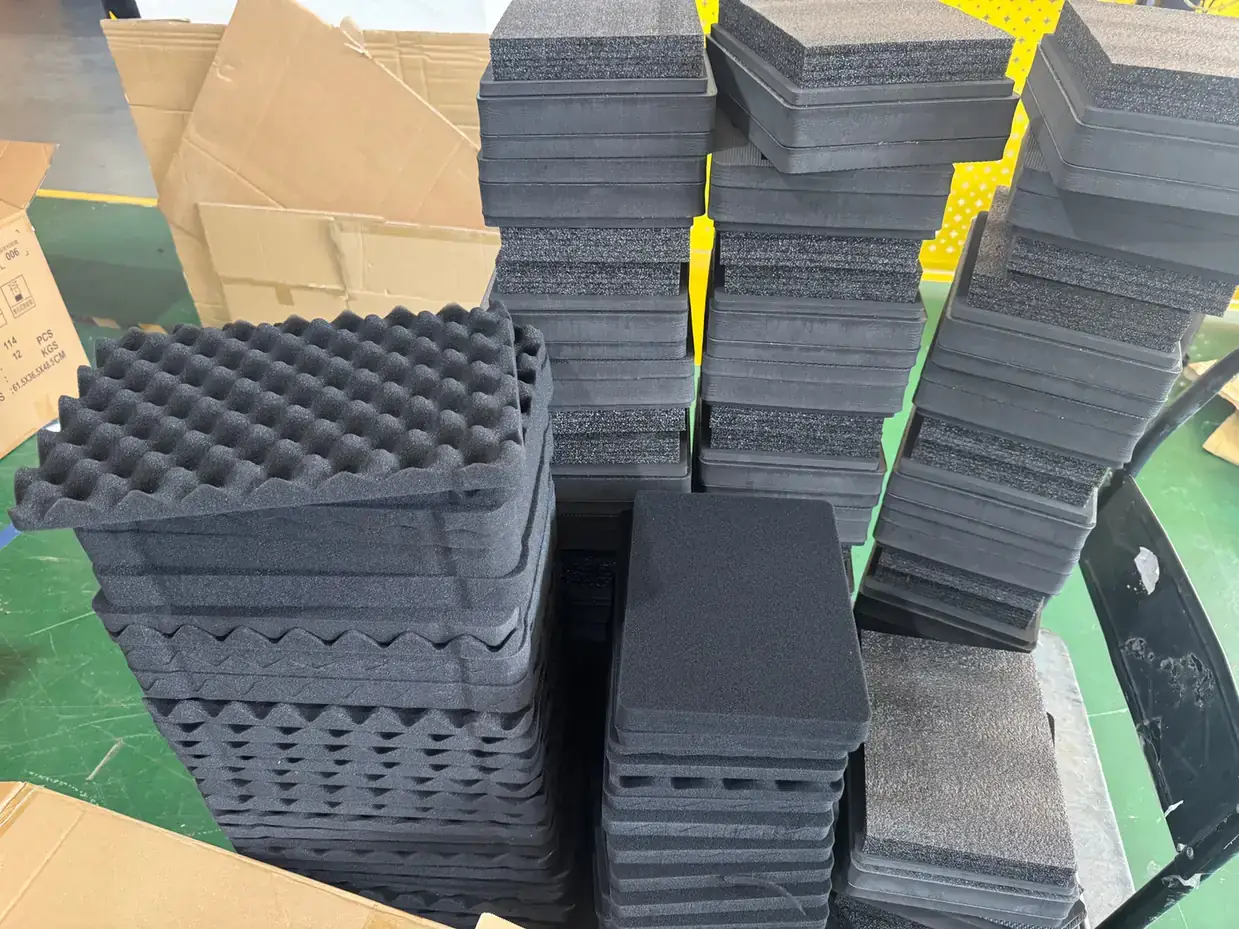
Quick answer: Latch count is the one number anyone can get without touching the product, which is why buyers over-rate it. Case Assembly quality shows in what you can do in two minutes: a feeler gauge at the rim, weight against wall thickness, hardware you can pull on, one closing motion, three samples compared.
Table of contents
- Why Latch Count Is Not a Criterion
- The Rim: What a Feeler Gauge Asks
- Wall Thickness and Weight: How Far Your Hands Go
- Hardware: Three Points You Can Test
- The Closing Motion Betrays Three Faults
- Between Sample and Production Batch
- FAQ
1. Why Latch Count Is Not a Criterion
A latch does one job: pull the lid onto the rim until the gasket reaches design compression. Whether that happens depends on a reinforced base, latch travel and gasket section — not on how many you can count.
Two latches at 280 N each take a 5 mm gasket to thirty percent compression on a 40 litre case. Four on an unreinforced base dish the lid instead, and the gasket goes slack where the dish is deepest. The trade calls it sealing yourself into a leak.
| Latches | Typical volume | Precondition | Common failure |
|---|---|---|---|
| 2 | 20 to 40 litres | Ribbed base | Mid-span lift on larger sizes |
| 4 | 40 to 80 litres | Support at mid-length | Lid dishes if the base is weak |
| 6 | Above 80 litres | Reinforced side walls | Stacked tolerance, stiff closing |
Close the lid, press the four corners, and you know more.
2. The Rim: What a Feeler Gauge Asks
The rim is the only sealing surface you can judge with the case shut; one 0.5 mm feeler gauge answers most of it.
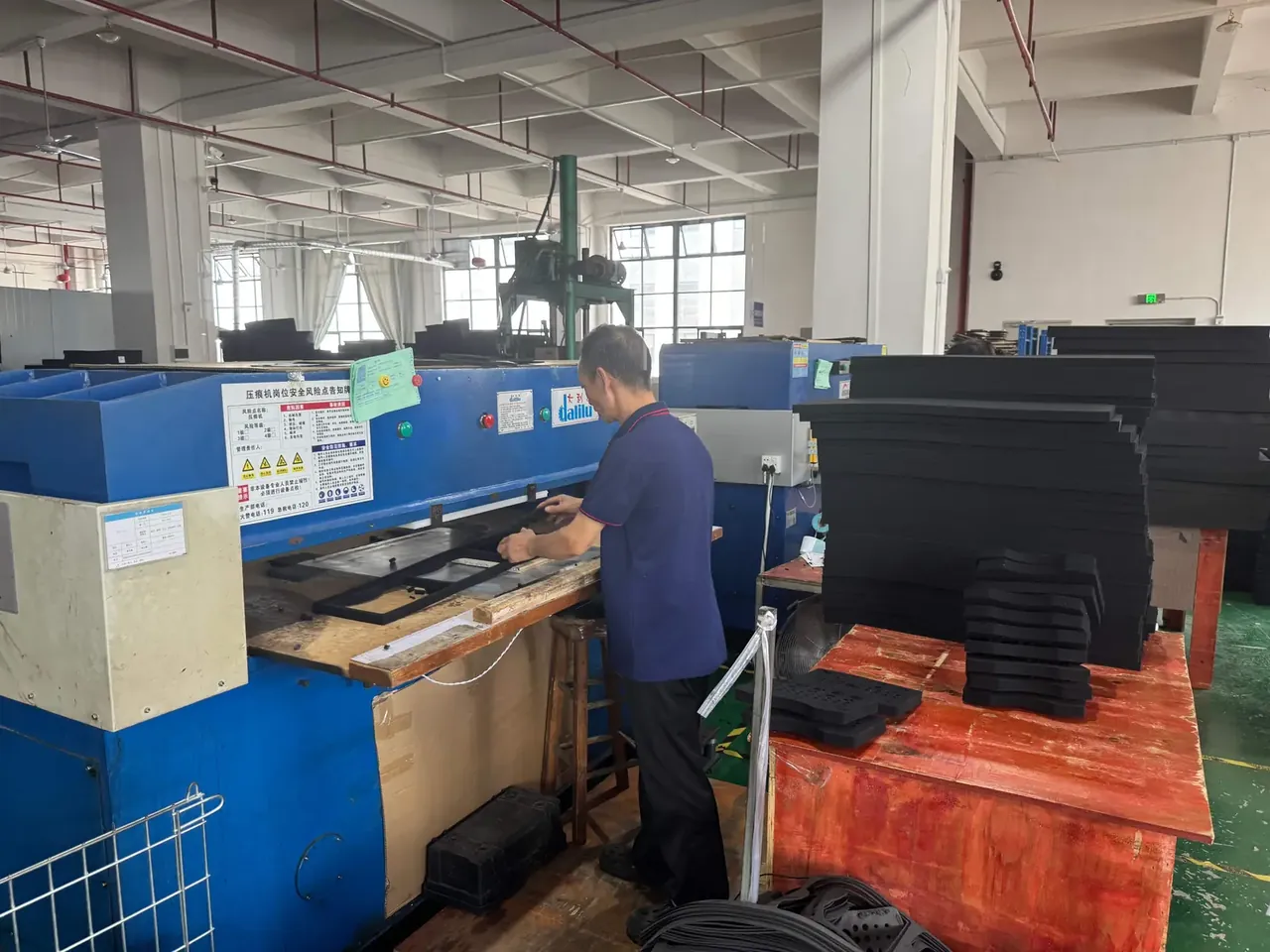
If the gauge enters, that gap exceeds 0.5 mm. Warp, an undersized gasket or a deep groove all look the same to a buyer: that section will not seal.
Then read the witness mark: unbroken, 3 to 4 mm wide. Narrower means compression is short; past 6 mm the rubber ages faster.
Corners deserve a look. A wrinkled gasket means surplus length or an over-wide groove, and it will weep within weeks.
3. Wall Thickness and Weight: How Far Your Hands Go
Nobody feels wall thickness, but everyone can weigh a case. The same cavity in 2.8 mm and 4.0 mm stock differs by over a kilogram, so confirm foam and hardware are unchanged.
Three hand tests work if you compare like with like:
- Squeeze both side walls at mid-height; clean rebound, no rattle;
- Press the centre of the base; deflection under 2 mm, recovering slowly;
- Stand it upside down; four corners touch, rock under 1 mm.
Pass all three and stiffness is real. Only then does the printed wall figure mean anything, since a figure can be edited and stiffness cannot.
4. Hardware: Three Points You Can Test
Hardware is the only part you verify with a tool instead of an opinion: three checks, no disassembly.
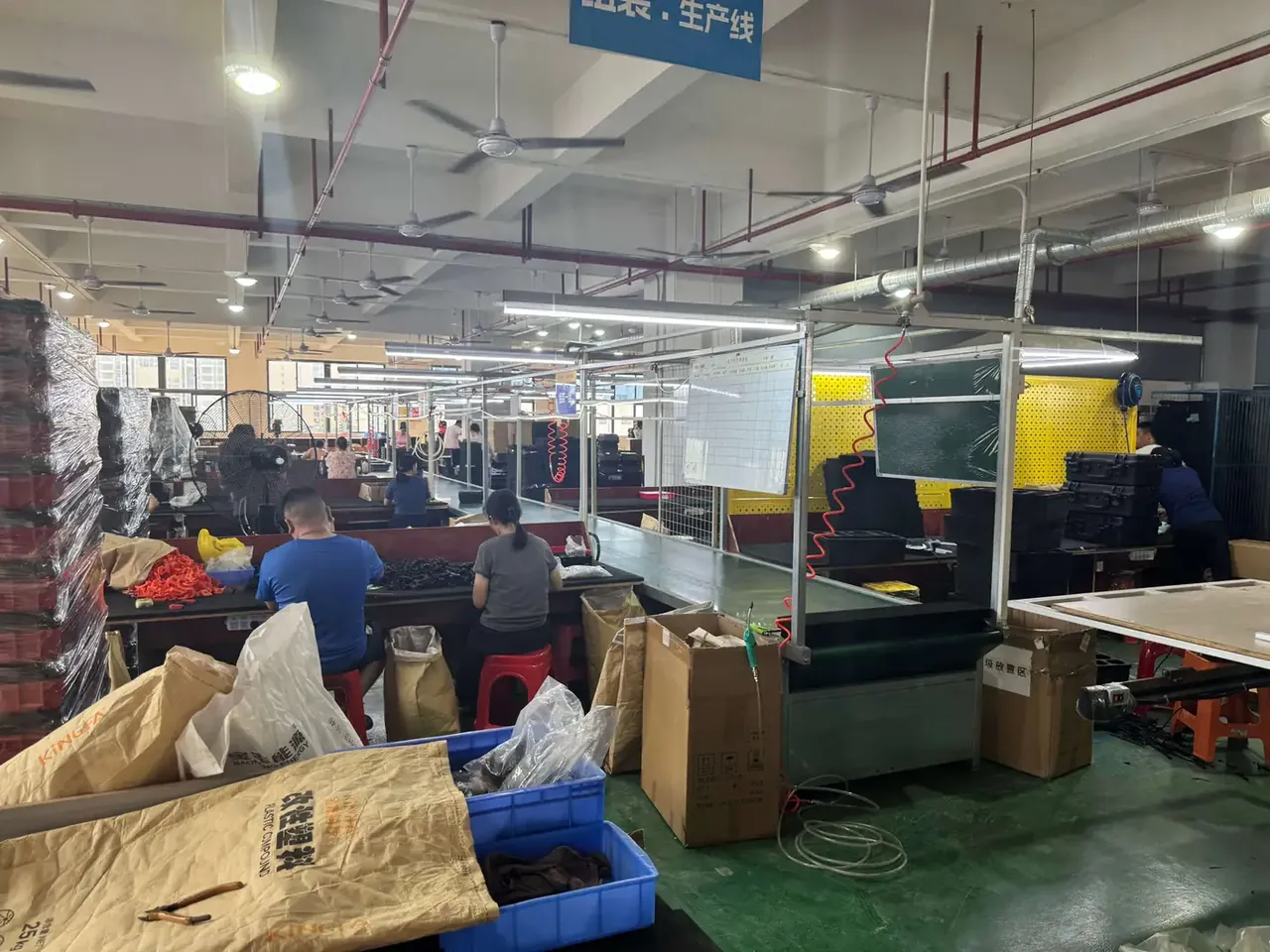
Rock a hinge seat by hand; movement or a click means short torque. Close a latch and pull: no vertical play. Hang 30 kg from the handle for 24 hours, then check for whitening or hairline marks.
| Check | Tool | Pass line | Failure sign |
|---|---|---|---|
| Hinge seat | Hand and driver | No movement, no click | Rattles when shaken |
| Latch engagement | Eye and hand | No vertical play | Over 1 mm of slop |
| Handle load | 30 kg weight | 24 hours without set | Whitening or sagging crown |
Pin feel matters too: three thousand cycles should leave the hinge smooth — the one item a buyer can test until convinced.
5. The Closing Motion Betrays Three Faults
Run the lid from open to latched in one movement, without steadying the case. Three stages, three fault classes.
- If the last ten degrees need force, the liner is bearing on the rim;
- If one latch closes and the other needs a second push, rim heights disagree;
- If pressing the crown pushes air out at the rim, compression is short.
Under a minute, and clearer than most inspection reports.
6. Between Sample and Production Batch
At sampling, compare three cases against each other. A rim height spread above 0.5 mm across three samples points to an unstable tool, and production only widens it.
At delivery, pull three more and compare with the retained sample on seam straightness and latch force.
Temperature confuses both: the same case at minus 10 °C and 45 °C needs closing forces thirty percent apart, so let sample and delivery sit in one room four hours.
| Stage | Samples | Measure | Tolerance |
|---|---|---|---|
| Sampling | 3 | Rim height | Within 0.5 mm |
| Delivery | 3 | Latch closing force | Within thirty percent |
Conclusion
A latch count can be taken from a photograph; Case Assembly quality cannot. Walk a gauge round the rim, weigh the case, pull on the hardware, close it once by hand — no instruments, two minutes, a firmer answer than any parameter sheet. Those four moves cover where Case Assembly gives way.
This article discusses only the container (case body) side of specifications and design intent, and does not cover any handling, loading or use of the contents.
Related Reading
- How the Case Assembly line is sequenced
- In-process checks in Case Assembly
- How Case Assembly workstations are laid out
- Workstation efficiency in Case Assembly
- What to look for in a gun case
Related Products
- 8 Series — Gun Cases; Military Equipment Cases; Camera Equipment Cases; Drone Cases; Watch Cases; Knife Cases; First Aid Cases; Electronics Equipment Cases
- WL8-2812 PP Gun Case — model WL8-2812
- All protective cases and toolboxes: 7 series, 158 models