

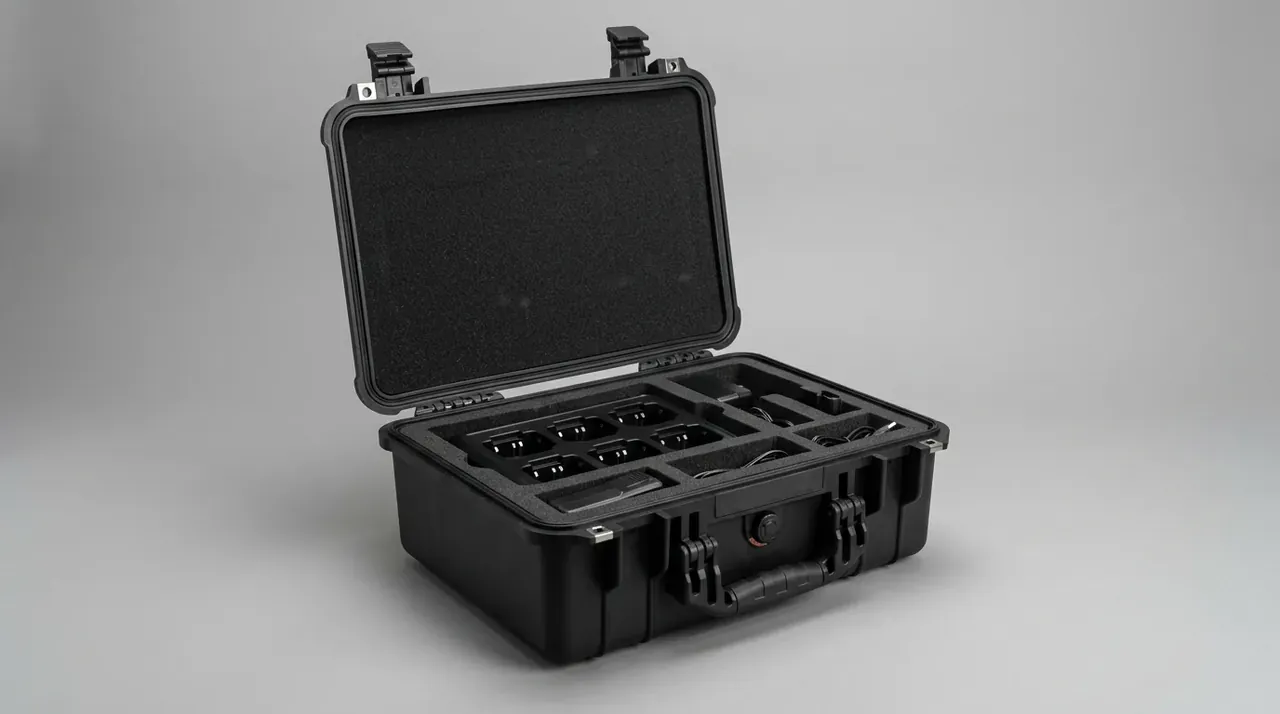
Quick answer: A cost model splits a 2.4 kg case into five factors: material 58%, labour 14%, overhead 18%, scrap 6%, packaging 4%, with material at 0.58.
Table of contents
- Five factors, and the share each one holds
- The 37.2 yuan build-up on a 2.4 kg case
- Elasticity: where a 10 per cent move hurts
- Wall thickness and cavity count: the threshold
- Utilisation rewrites the overhead rate
- FAQ
1. Five factors, and the share each one holds
A 2.4 kg polypropylene case leaves the factory at 37.2 yuan: 21.6 of material, 5.2 of labour, 6.7 of overhead, 2.2 of scrap, 1.5 of packaging and freight — 58, 14, 18, 6 and 4 per cent, adding to 100.
Shares decide where a negotiation can move.
At 58 per cent, material carries the argument. One yuan per kilogram on resin is 2.4 yuan per case, 6.5 per cent of price. Labour at 14 per cent moves 0.52 yuan when the hourly rate rises 10 per cent. The same cut is worth 2.16 yuan in material and 0.52 in labour.
| Factor | Share | Change in price at ±10% | Elasticity |
|---|---|---|---|
| Material | 58% | 5.8% | 0.58 |
| Labour | 14% | 1.4% | 0.14 |
| Overhead | 18% | 1.8% | 0.18 |
| Scrap | 6% | 0.6% | 0.06 |
| Packaging and freight | 4% | 0.4% | 0.04 |
Elasticity equals the share in a linear build-up, so what matters is which input can be compressed.
2. The 37.2 yuan build-up on a 2.4 kg case
Material is not weight times price. Resin at 9.0 yuan per kilogram on a 2.4 kg finished part gives 21.6 yuan, but the runner weighs 2.58 kg: regrind credit at 8 per cent returns 0.8 yuan, colour masterbatch adds 0.8, and the two cancel.

Labour is time times rate: trimming 150 s, assembly 160 s, packing 80 s, so 390 s at a loaded 48 yuan per hour is 5.2. The 32 yuan base wage gives 3.5, hiding 1.7 yuan that only shows at year-end.
Overhead of 6.7 yuan is machine depreciation 0.5, tool amortisation 1.6, building 0.8, energy 2.2, maintenance 1.6. The tool is 180,000 yuan over 110,000 cases; fully amortised in year three, the same case models at 35.6 yuan.
Scrap at 2.2 yuan assumes 6 per cent rejects, against 8 to 12 per cent with a new tool. Packaging and freight of 1.5 covers bag 0.3, edge board 0.4, carton 0.8; pallet and haulage are billed apart.
Five segments, 37.2 yuan; 10 per cent on any one moves the price by more than half a yuan.
3. Elasticity: where a 10 per cent move hurts
Material at 0.58 is 4.1 times labour. Resin from 9.0 to 10.0 yuan per kilogram adds 2.4 yuan, 6.5 per cent of price; the same percentage on labour adds 0.52.
| Move | Size | Change per case | Share of price |
|---|---|---|---|
| Resin price | 9.0 to 10.0 yuan/kg | +2.4 yuan | 6.5% |
| Labour rate | +10% | +0.52 yuan | 1.4% |
| Electricity | +10% | +0.22 yuan | 0.6% |
| Reject rate | 6% to 8% | +0.74 yuan | 2.0% |
| Utilisation | 80% to 60% | +1.7 yuan | 4.6% |
Energy at 0.6 per cent is easy to skip and the only line that ignores order volume. At 3.1 kWh per case and 0.72 yuan per kWh, energy is 2.2 yuan; a 10 per cent tariff rise is 0.22. A desiccant dryer and 2 °C on the chiller return 0.3 yuan of that 2.2.
Scrap is underrated: two points of reject rate costs 0.74 yuan, three times a 10 per cent electricity rise. Check resin drying of 3 hours, mould temperature within 2 °C of setpoint, and missing latch inserts.
4. Wall thickness and cavity count: the threshold
From 2.5 mm to 2.2 mm the part goes from 2.4 kg to 2.08, saving 2.9 yuan of material; the cycle falls from 62 s to 55 s, worth 0.2 more. Total 3.1 yuan, 8.3 per cent — the easiest structural saving to bank and to lose.
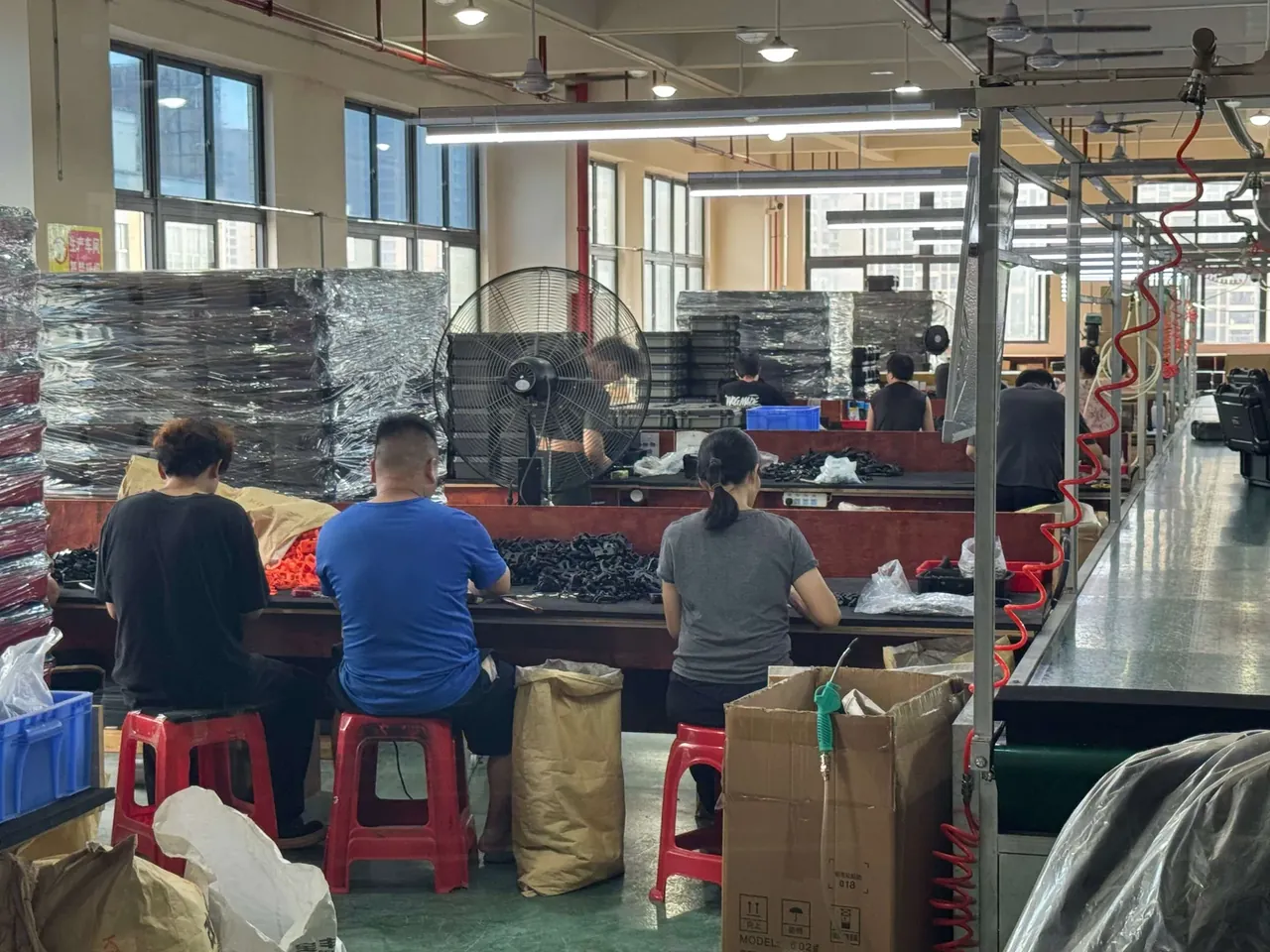
The limit is stiffness: stacked 3 high at 12 kg, a 2.5 mm lid deflects 1.9 mm, a 2.2 mm lid 3.4 against a 2.5 mm ceiling. The saving holds only with no divider and no more than 2 high; three-high stacking needs two ribs and returns 0.7 yuan.
| Wall | Part weight | Material | Lid deflection, 3-high stack |
|---|---|---|---|
| 2.5 mm | 2.40 kg | 21.6 yuan | 1.9 mm |
| 2.35 mm | 2.26 kg | 20.3 yuan | 2.4 mm |
| 2.2 mm | 2.08 kg | 18.7 yuan | 3.4 mm |
Cavity count is separate. A single-cavity tool is 180,000 yuan, a two-cavity 240,000; at 30,000 cases amortisation is 6 and 8 yuan, at 50,000 it is 3.6 and 4.8. Two cavities cut overhead from 6.7 to 5.4, saving 1.3, and the two lines meet at 46,000 cases a year.
5. Utilisation rewrites the overhead rate
Of the 6.7 yuan of overhead, 5.1 is fixed and 1.6 follows volume. At 60 per cent utilisation the fixed part scales by 80/60 and the rate becomes 8.4 yuan, a 1.7 yuan gap worth 4.6 per cent.
It never appears on a quotation: a maintenance surcharge, or a quiet 1 to 2 yuan rise in a slow season.
On 30,000 cases, 80 to 60 per cent adds 51,000 yuan — more than a 5 per cent resin increase. Below 55 per cent overhead rises from 18 to 22 per cent and material falls to 54, so the model is rebuilt.
Conclusion
The point of a cost model is not the 37.2 yuan total but knowing that 58 per cent sits in material and 18 per cent in overhead, so a 10 per cent resin move equals a 41 per cent labour move. Shares plus elasticity turn a vague increase into numbers that can be checked, and the 8.3 per cent wall saving carries a stiffness ceiling. Model the case finely enough and no single total price can lead you.
This article covers case-side specifications only and does not address any handling, loading or use of the contents.
Related Reading
- How a case quotation splits into four layers
- Total cost of ownership beyond the unit price
- Which parts can be downgraded safely
- Packaging cost between inserts and cartons
Related Products
- 8 Series — Gun Cases; Military Equipment Cases; Camera Equipment Cases; Drone Cases; Watch Cases; Knife Cases; First Aid Cases; Electronics Equipment Cases
- WL8-2812 PP Gun Case — model WL8-2812
- All protective cases and toolboxes: 7 series, 158 models