

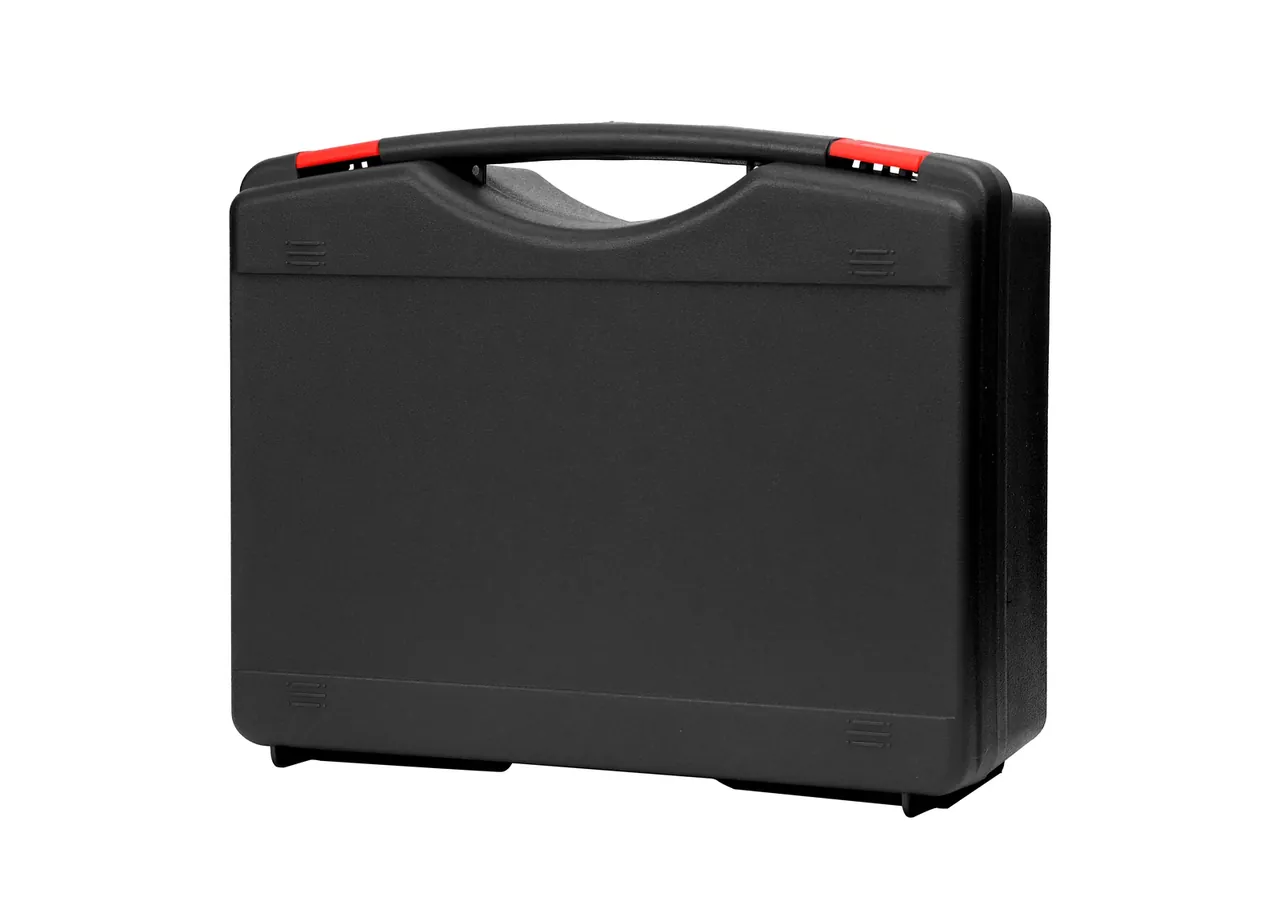
Quick answer: Domestic case substitution is graded stage by stage: melt flow at 8 to 12 g/10min and tooling match, while moulding and hardware only come close.
Table of contents
- Grade It by Stage, Not as a Whole
- Raw Material and Tooling: Two Stages Already Matched
- Moulding and Hardware: Close, Batch Consistency Is Not
- Seals, Testing and Certification: Where the Gap Sits
- Five Checks and Two Switching Risks
- FAQ
1. Grade It by Stage, Not as a Whole
A case body splits into 7 stages: raw material, tooling, moulding, hardware, seals, testing and certification. Domestic case substitution is judged on each one. A matched stage swaps straight away, a close stage needs verification, a short stage needs margin.
There are only three grades. Swap it and the drawing, dimensions and performance do not move: matched. Swap it and 5 comparison tests must pass before volume: close. Swap it and the grade must be named or testing frequency raised: still short.
Grading sets the order too. Take the 2 matched stages first, then push the 2 close ones into one 100-unit batch, then name grades for the 3 short stages one at a time.
On these projects a full switch cut cost 18 to 25 percent and lead time from 45 days to 22, gross of verification and one re-test cycle.
| Stage | Grade | Basis | Where the gap sits |
|---|---|---|---|
| Raw material | Matched | PP at 8 to 12 g/10min melt flow | Colour drift between lots on high-flow grades |
| Tooling | Matched | 718H and S136, cavity ±0.02 mm | Cooling layout on large tools |
| Moulding | Close | 250 to 1300 t clamping, 3.0 mm wall | Weld-line consistency on thin sections |
| Hardware | Close | 45 to 70 N latch force, 48 h salt spray | Surface treatment between lots |
| Seals | Still short | Compression set 25 percent or less | Rebound speed at -20 ℃ |
| Testing | Still short | Leak-down 2 kPa or less in 60 s | Four-point sampling on large cavities |
| Certification | Close | IEC 60529 reports available | Whether an overseas buyer accepts the issuer |
2. Raw Material and Tooling: Two Stages Already Matched
Raw material starts with melt flow. The PP used for a case body sits at 8 to 12 g/10min: below 8 it flows poorly and thin sections starve, above 12 impact strength falls away and corners crack first in a drop. Local and imported grades overlap across that band, so a swap does not move mould temperature.
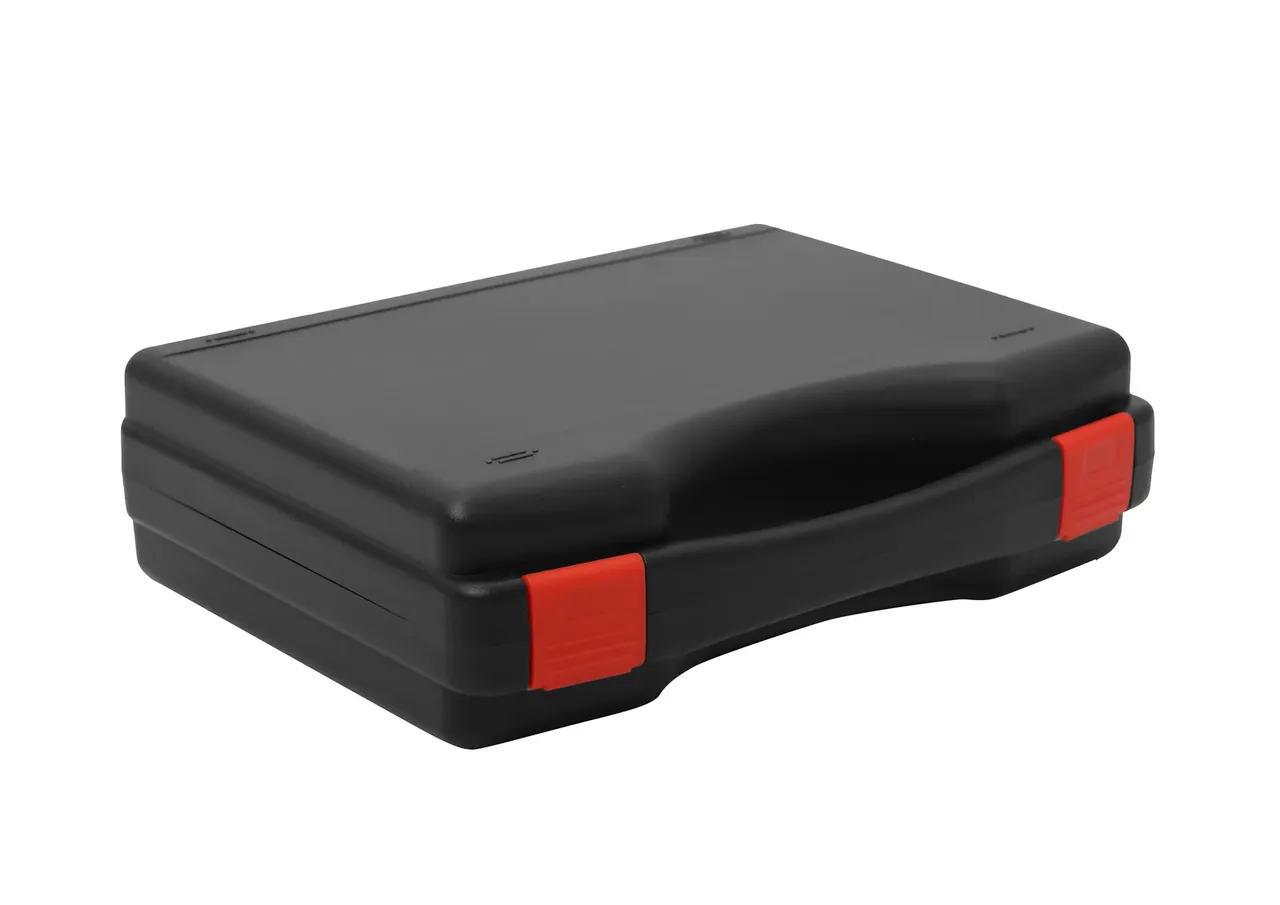
Incoming checks are 3: melt flow, density, moisture. Above 0.1 percent moisture the surface blooms with silver streaks and 30 parts in a 2,000 run show them, so set the dryer dew point first.
Verification takes 2 steps: read melt flow across 3 lots and hold the spread at 2 g/10min or less, then drop 200 samples on each corner from 1.2 m with 20 kg inside.
Tooling is steel and cavity accuracy. 718H is pre-hardened and polishes well for visible faces; S136 resists corrosion for high gloss and pale colours. Hold the cavity at ±0.02 mm and flash stays controlled. Steel certificates and cavity reports are both obtainable locally.
3. Moulding and Hardware: Close, Batch Consistency Is Not
The moulding equipment is not the constraint. Presses from 250 to 1300 t cover small bodies through large ones, a 3.0 mm wall is the usual case side, the cycle holds near 55 s, and 300,000 shots of tool life is within reach.
Hardware turns on two numbers: latch force of 45 to 70 N and 48 h of neutral salt spray to ISO 9227. Below 45 N the latch feels slack and can pop open in transit; above 70 N one person struggles.
The two stages can move in parallel: presses and tools stay, only the hardware supplier changes, with force measured on every unit.
Close rather than matched comes down to batch consistency. On one tool and press, lot 1 measured 62 N and lot 4 measured 48 N; both sit inside the window and still feel different.
4. Seals, Testing and Certification: Where the Gap Sits
Seals are judged on compression set. Held at 70 ℃ for 24 h and released, a local gasket returns to 25 percent or less under GB/T 7759.1. The gap is cold: after 4 h at -20 ℃ rebound lags, and leak-down in the first 5 minutes after closing runs higher.
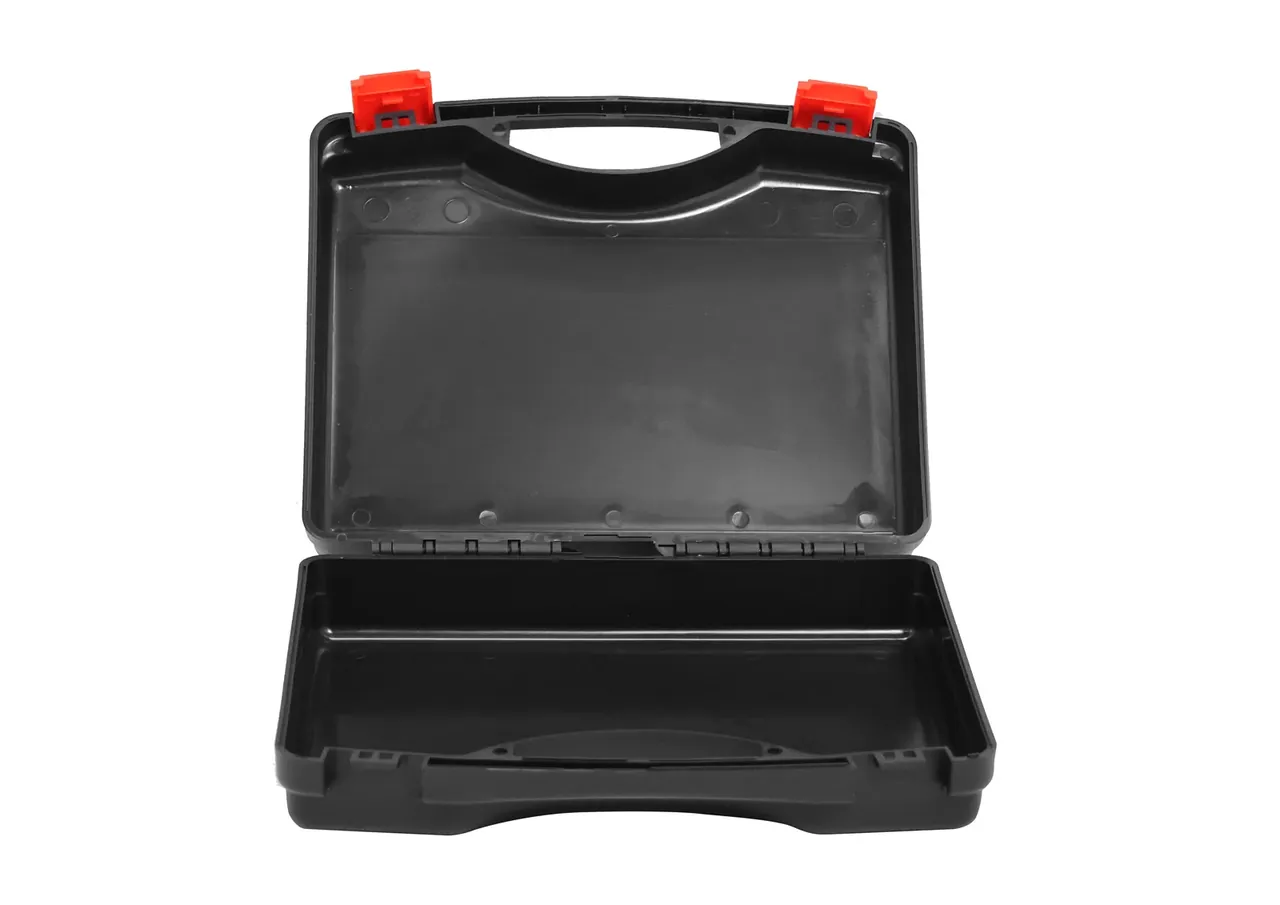
Testing differs in method, not equipment. A 2 kPa drop over 60 s from 0.6 bar is easy at one point; a large cavity needs 4 points sampled together, and the fixture and channels have to be rebuilt, adding 2 weeks.
Certification is acceptance, not capability. IEC 60529 reports can be issued locally; whether an overseas buyer honours one depends on the terms it sets at goods receipt.
Those 3 stages need margin before anything is signed: specify seals against the -20 ℃ figure, build testing around 4-point sampling, settle certification terms early. They are the slowest, and the easiest to bury under a claim that the whole case matches.
5. Five Checks and Two Switching Risks
Five comparison tests pass together before volume: leak-down, latch force, gasket rebound, salt spray, and drop plus stacking. If 1 of the 5 fails, the fix belongs to that stage, not the whole case.
| Check | Method | Pass line |
|---|---|---|
| Leak-down | 0.6 bar start, held 60 s | 2 kPa or less |
| Latch force | Pull gauge per unit, 20 per lot | 45 to 70 N, spread 8 N or less |
| Gasket rebound | 50 percent compression, 70 ℃ for 24 h | Set 25 percent or less |
| Salt spray | Neutral salt spray, 48 h | No red rust |
| Drop and stack | 1.2 m on each corner; 120 kg for 24 h | No cracking, lid deflection 2 mm or less |
The batch is 100 units in 3 lots of about 33, and one failing lot is remade in full. Keep 10 for a re-check after 6 months, to see whether rebound has fallen further.
All five reports belong in one file with conditions, instruments and pass values. After volume starts they become the incoming inspection for the next batch and the only thing to rerun when a supplier changes.
Risk one is certification carry-over: once parts inside the case change, the old report cannot be reused and the configuration is re-tested, so putting that into the plan saves 3 weeks. Risk two is a customer-specified brand: about 30 percent of orders name one, and substitution needs a written change order.
Conclusion
Domestic case substitution is not one verdict but a grade for each of 7 stages: raw material at 8 to 12 g/10min and tooling at 718H, S136 and ±0.02 mm match; moulding and hardware at 45 to 70 N and 48 h of salt spray come close; seals, testing and certification each keep a gap. Volume depends on 5 comparison tests and a 100-unit batch, not a sample. The 18 to 25 percent saving is an outcome, not a reason.
This article discusses only the container (case body) side of specifications and design intent, and does not cover any handling, loading or use of the contents.
Related Reading
- Imported and domestic cases compared on five points
- Choosing a plastic case supplier in China
- Tracing raw material batches through production
- Export compliance points for the United States
Related Products
- 8 Series — Gun Cases; Military Equipment Cases; Camera Equipment Cases; Drone Cases; Watch Cases; Knife Cases; First Aid Cases; Electronics Equipment Cases
- WL8-2812 PP Gun Case — model WL8-2812
- All protective cases and toolboxes: 7 series, 158 models