

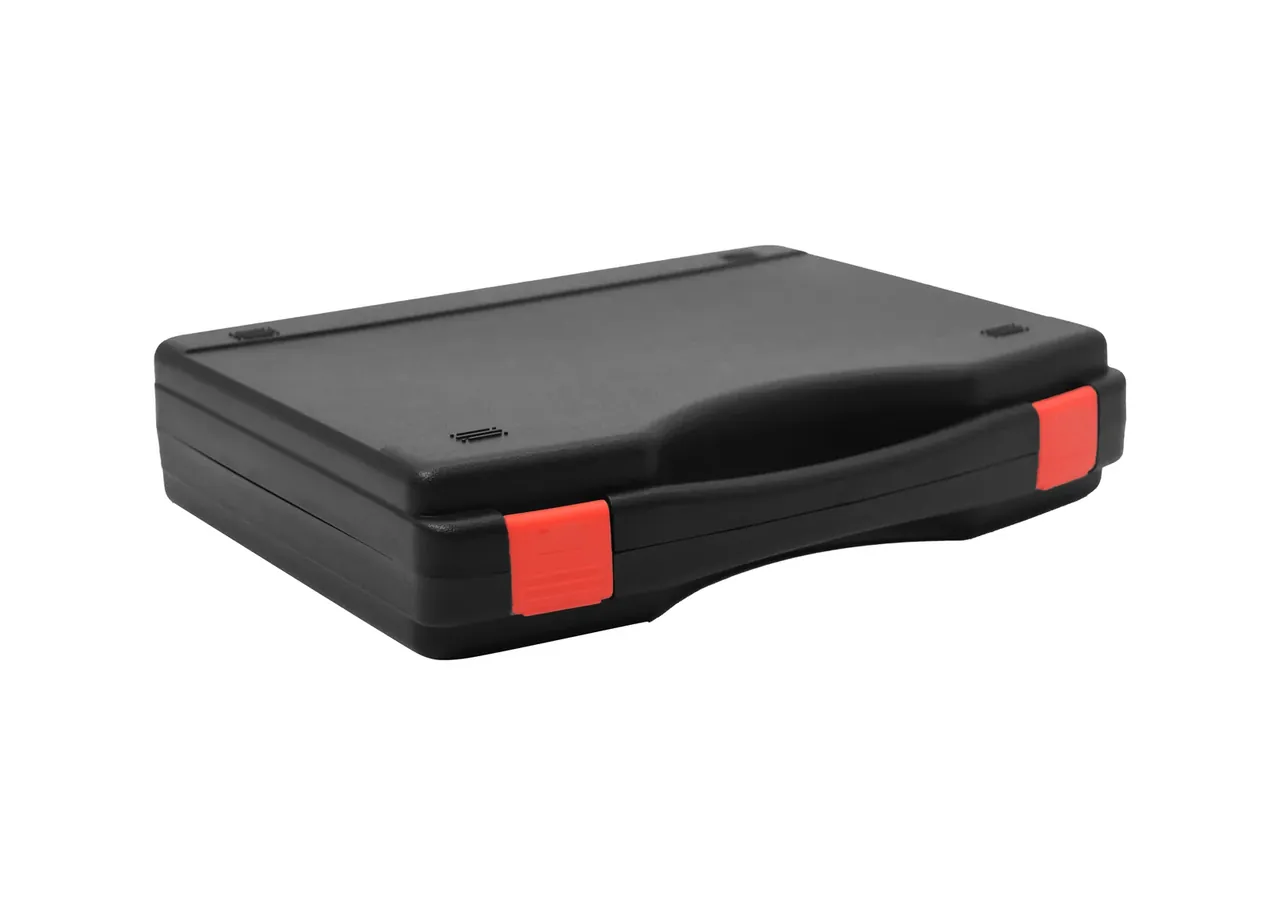
Quick answer: Imported vs domestic cases at one 460 × 330 × 170 mm cavity land at 1,300 and 620 CNY, with the gap in hardware, test files and outer volume.
Table of contents
- What Makes Imported vs Domestic Cases Comparable
- Where the Wall Thickness and Weight Gap Sits
- Sealing Is Compression, Not a Rating
- Hardware: Holding Force and Salt Spray Hours
- Adding Up the Landed Cost
- When an Imported Case Still Wins
- FAQ
1. What Makes Imported vs Domestic Cases Comparable
Fix the cavity before comparing a price. One instrument needs 460 × 330 × 170 mm, or 25.8 L, and a millimetre either way means new foam. With the cavity pinned, the outside becomes the first difference: 520 × 390 × 210 mm and 42.6 L imported, against 505 × 380 × 205 mm and 39.3 L domestic.
Divide one by the other and the usable ratio reads 60.5% against 65.7%. Those 5.2 points are not a quality verdict; they show where the ribs took the material.
Bulk turns into money: LCL sea freight bills 85 USD per cubic metre, so 10% extra volume costs about 2 CNY per case, and air freight at 6,000 cm³/kg adds 16 CNY. One clause settles it: the order states cavity and outer dimensions.
| Measure | Imported | Domestic | Delta |
|---|---|---|---|
| Cavity, mm | 460×330×170 | 460×330×170 | 0 |
| Clear volume, L | 25.8 | 25.8 | 0 |
| Outer, mm | 520×390×210 | 505×380×205 | 15 mm shorter |
| Outer volume, L | 42.6 | 39.3 | −3.3 |
| Usable ratio | 60.5% | 65.7% | +5.2 points |
2. Where the Wall Thickness and Weight Gap Sits
Rotational moulding sets wall thickness by powder charge and dwell time, so the nominal figure is only a start. The imported body is quoted at 4.0 mm and measures 3.8 to 4.3 mm; the domestic body is quoted at 3.5 mm and measures 3.3 to 3.8 mm.
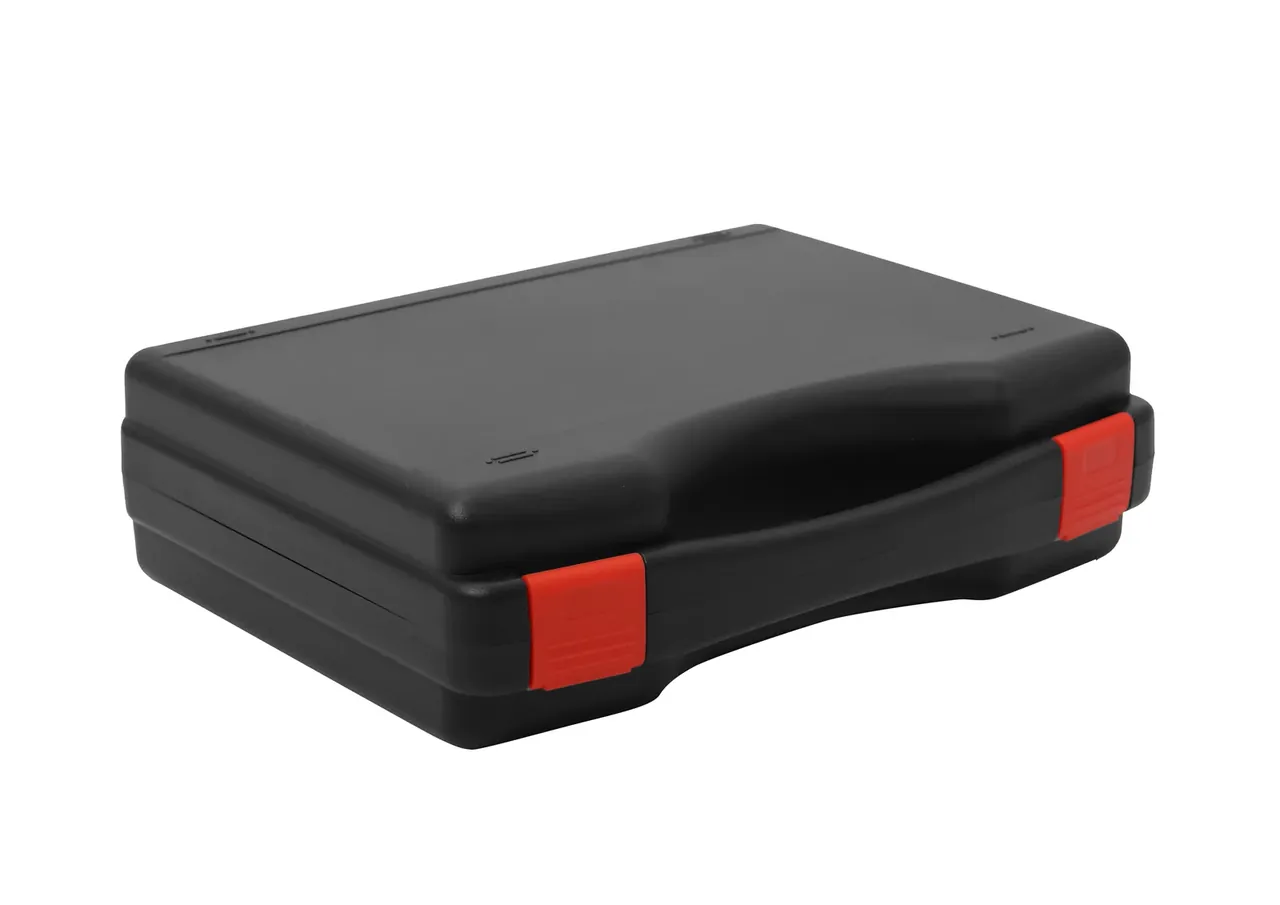
Load 100 kg over the lid for 24 h: the 4.0 mm body sinks 1.2 mm, the 3.5 mm body 1.8 mm, recovering to 0.3 and 0.6 mm after two hours. That 0.6 mm residual matters once cases stack two high, because the upper one then rests on two points instead of four.
Weight reads 6.2 kg against 5.4 kg, and 200 cases in a truck add 160 kg. Both pass a 1.2 m six-face drop after 4 h at -20 °C; the thinner body whitens 0.5 mm at the latch boss. Check walls with an ultrasonic gauge, five points per face, 0.8 mm spread or less.
3. Sealing Is Compression, Not a Rating
A gasket works only while it springs back. An 8 mm EPDM cord in a 6.0 mm groove sits at 25%, which holds about three years; past 40% permanent set begins within three months.
Compression set to ASTM D395 method B at 70 °C for 24 h reads 18% imported and 22% domestic, both inside the 25% limit. Both are sold as IP67 and survive 1 m for 30 min; after the soak the cords recover to 7.6 and 7.1 mm, a 6% loss of closing force.
Pressure decay separates them earlier: from a 3 kPa charge, 0.18 kPa against 0.26 kPa over 5 min. Both sit inside the 0.3 kPa limit, but the margin covers one ageing cycle only. Measure one gasket, free thickness and groove depth, and keep the ratio between 22% and 30%.
4. Hardware: Holding Force and Salt Spray Hours
Latches take load on every cycle. The imported one uses PA66 with 30% glass fibre and holds 320 N; the domestic POM part holds 260 N at room temperature and 180 N at -20 °C.
- Pin: 304 stainless against zinc-plated carbon steel, told apart by a magnet
- Hinge pin: 4 mm against 3 mm, with 0.2 mm against 0.4 mm of play after 5,000 cycles
- Salt spray: 96 h neutral at 5% NaCl and 35 °C leaves 304 clean, while zinc whitens at 48 h and shows red points at 72 h
- Pressure valve: standard imported, optional domestic at 35 CNY
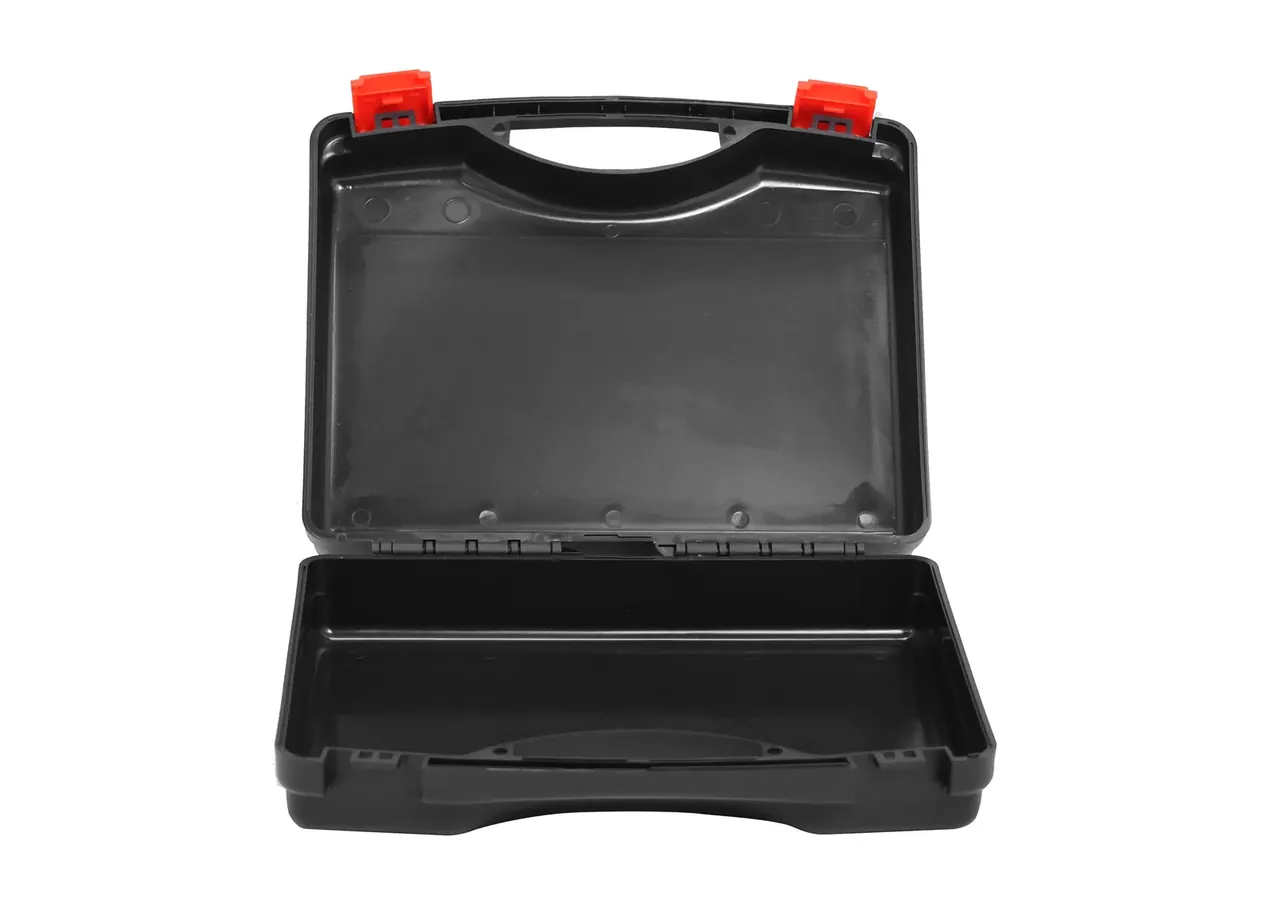
A 304 pin adds about 6 CNY per case and settles the salt spray question. Holding force needs one latch: 200 N held for 1 min, then pulled to failure.
5. Adding Up the Landed Cost
The quotation stops at FOB, so the buyer builds the rest. At 7.15 to the dollar, 168 USD becomes 1,201 CNY; 6.5% duty under HS 4202.99 adds 78, freight and clearance 21, currency 4, for 1,300 CNY landed.
VAT at 13% is recoverable and stays out of the table, though 100 cases tie up 16,900 CNY in tax. Spares widen the gap: 48 and 90 CNY imported against 12 and 25 CNY domestic.
| Cost line | Imported | Domestic | Note |
|---|---|---|---|
| Ex-works | 1,201 CNY | 620 CNY | 168 USD converted |
| Duty | 78 CNY | 0 | HS 4202.99, 6.5% |
| Freight and clearance | 21 CNY | included | LCL sea |
| Landed total | 1,300 CNY | 620 CNY | 2.1 times |
| Minimum order | 20 cases | 100 cases | imported ships by pallet |
| Lead time | 75 days | 18 days | customs included |
6. When an Imported Case Still Wins
Three hard conditions keep the imported case economic: a contract naming MIL-STD-810G method 512.5 or DNV 2.7-1; orders under 20 units from one mould and one lot; a ten-year spares commitment written into the annex.
Above 100 units, indoors, with no certification clause, three of the five points are already level. The usable ratio runs 5.2 points better domestic, 0.5 mm of wall shows as 0.6 mm of extra sink under 100 kg, and both decay inside 0.3 kPa.
Put the numbers on one sheet for the supplier: cavity ratio 58% or more, wall spread 0.8 mm, compression 22% to 30%, decay 0.3 kPa per 5 min, latch force 260 N. The imported advantage concentrates in hardware and paperwork, not in the body.
Conclusion
Imported vs domestic cases come down to five measurable numbers: 5.2 points of usable ratio, 0.5 mm of wall, 0.8 kg of weight, 60 N of latch force and 2.1 times the landed price. The first three sit inside the thresholds on both sides, so they decide nothing. The last two are the real line, and they earn a premium only when a certification clause or a long spares commitment is on the table.
This article discusses only the container (case body) side of specifications and design intent, and does not cover any handling, loading or use of the contents.
Related Reading
- Domestic cases: substitute sizes and specification targets
- HS code for cases: choosing between 4202 and 3923
- IP67 immersion test: the 1 m, 30 min verdict
- Case raw materials compared: PP, ABS and HDPE
Related Products
- 8 Series — Gun Cases; Military Equipment Cases; Camera Equipment Cases; Drone Cases; Watch Cases; Knife Cases; First Aid Cases; Electronics Equipment Cases
- WL8-2812 PP Gun Case — model WL8-2812
- All protective cases and toolboxes: 7 series, 158 models