

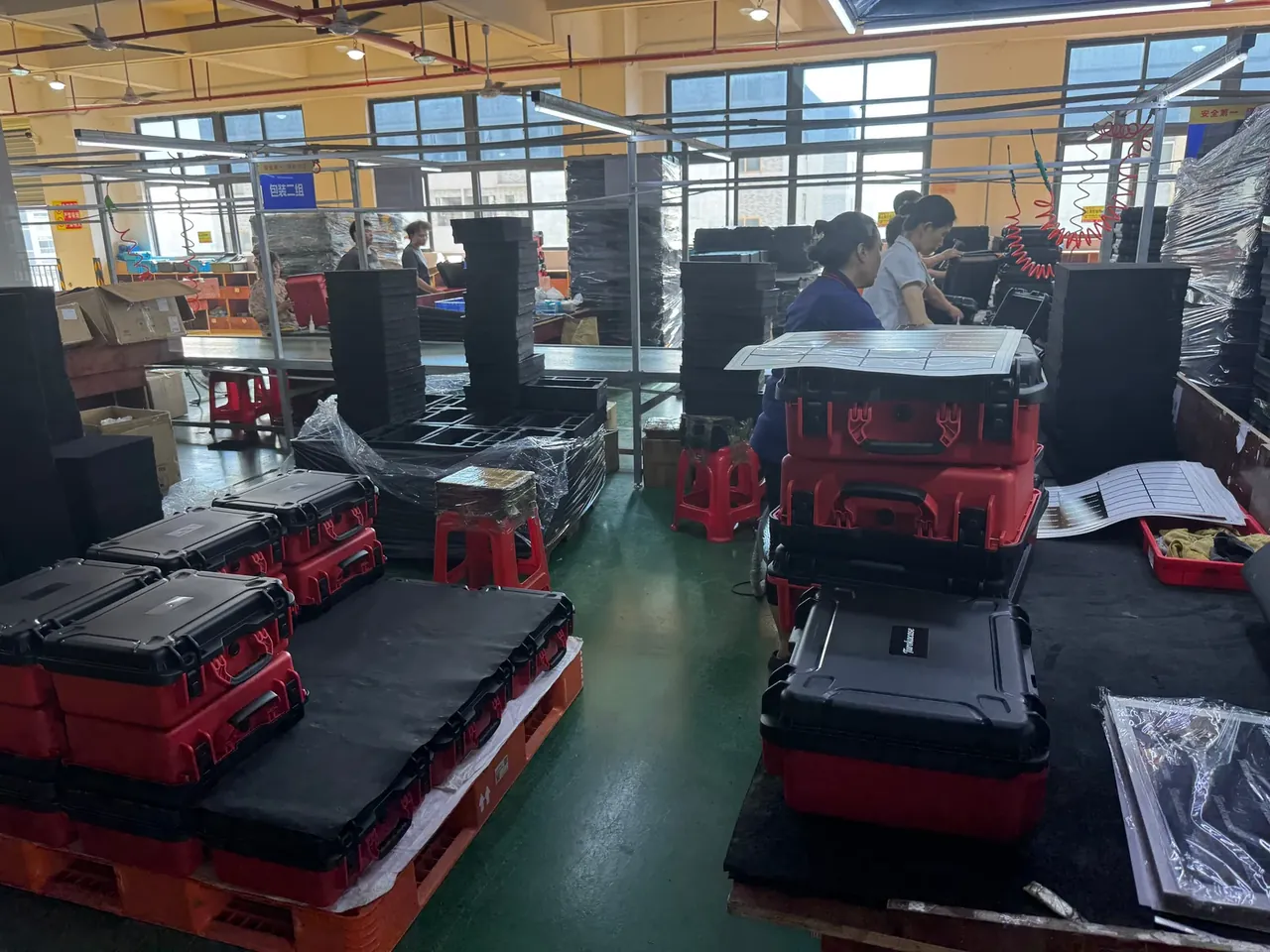
Quick answer: Case export korea starts with the certificate: 14 digits, positions 5 to 7 give the product class, and a KC mark under 5 mm is stopped at customs.
Table of contents
- Reading the 14-digit certificate
- Where KC applies and the 5 mm rule
- Korean label items: maker, model, rating
- Lithium packs: KC and UN38.3
- FAQ
1. Reading the 14-digit certificate
A KC certificate number runs 14 digits, and positions 5 to 7 give the product class: 011 for luminaires, 010 for information technology equipment, 009 for audio and video. Those three digits decide which edition of the safety standard applies and which route the importer picks in the clearance system.
| Position | Field | Meaning | Example |
|---|---|---|---|
| 1 | Scheme | S for safety certification, Z for safety confirmation | S |
| 2 | Origin code | Korea A to Q, Asia U, Europe W | U |
| 3–4 | Body and plant | Issuing body code plus plant number | 12 |
| 5–7 | Product class | Sets the standard edition and test list | 011 |
| 8–14 | Serial and year | Sequence within one plant and class | 6040011 |
Case export korea paperwork needs that string beside the mark, since a mark without a number counts as no certification, and one digit out of step makes the record unreadable.
Most transcription errors are typesetting errors: the number wraps across two lines and a trailing 0 is read as the letter O, so keep all 14 digits in one unbreakable block.
2. Where KC applies and the 5 mm rule
Korea sorts electrical products into three tiers, safety certification, safety confirmation and supplier declaration, in descending order of hazard. A plastic shell with no electrical function sits outside all three and needs no KC, while lighting, a charging port, a heater or an electronic lock pulls the complete unit into scope.
The mark may not stand shorter than 5 mm, and 8 mm is the sane choice on a large lid because it leaves room for screen-print drift. Only a genuinely small shell may shift the mark to the smallest sales pack, with a note on the first page of the manual.
Colour is indigo by default, with black, gold, silver or a single-colour print accepted, and shrinking means shrinking the symbol, frame and number together.
Placement matters as much as size. Case export korea suppliers print on the lower right of the lid side, clear of ribs and the parting line, because a mark on the base or inside the handle stays invisible during sampling and gets rejected.
The number sits immediately beside the mark, no more than one character width away, and a designer who moves it to the far end of the label leaves the product effectively unmarked.
Scope follows the unit rather than the accessory: a build with a light bar and a charging port is certified as a whole, so an empty shell order outside the list gains nothing from a borrowed certificate.
3. Korean label items: maker, model, rating
The Korean label rests on three items, maker, model name and rating, and a label missing any of them fails however much else it carries.
| Item | Korean wording | Check point |
|---|---|---|
| Certificate | 인증번호 | 14 digits, identical to the certificate |
| Product | 제품명 | Statutory Korean name, not the English trade name |
| Model | 모델명 | Matches the test report including suffixes |
| Rating | 정격 | Voltage, frequency and input power all present |
| Maker | 제조자 | Overseas plants add the country of manufacture |
| Date | 제조년월 | Month and year, batch code may sit beside it |
| Service | A/S 연락처 | A number reachable inside Korea |
The maker row is the usual failure, because the invoice names the Chinese plant while the label must name the party liable inside Korea plus the country of manufacture. The rating belongs to the complete unit, with voltage, frequency and input power each in its own place, since a label without frequency is judged incomplete and a reprint costs 3 days. The product name has to be the statutory Korean term, and a service number that dials China counts as blank.
Label size follows the shell, commonly 80 × 50 mm with 3 mm type, and Korean strokes are thinner than Chinese ones, so anything smaller smears. Wear is proved with 100 rubber rubs, which rules out coated stock.
4. Lithium packs: KC and UN38.3
A case with a lithium pack runs two tracks, KC for electrical safety and UN38.3 for transport safety, and a shipment that clears one but not the other stays on the quay.
UN38.3 covers 8 tests: altitude simulation, thermal cycling, vibration, shock, external short circuit, impact and crush, overcharge and forced discharge. The summary travels with the goods and the original stays on file.
Cells and packs also sit in the Korean safety confirmation list, so they carry their own KC number, and a case export korea order with a built-in pack and a charger often shows three numbers that the document wallet has to map.
Air freight moves as UN3481 with the pack inside the equipment, at 30% state of charge or below. Sea freight runs as class 9 dangerous goods with an MSDS and a transport declaration.
Customs wants four copies: KC certificate, test report, UN38.3 summary and MSDS. One missing sheet means the container is held first and completed later, at 3 days minimum plus per-pallet storage, and case export korea rework lands at that sampling desk more often than on the line.
Conclusion
Case export korea works backwards from the number. Read positions 5 to 7 for the product class, then confirm whether the route is certification or confirmation. Check whether the shell carries any electrical function and drop the rule set when it does not. When it does, hold the mark at 5 mm or above in indigo or a permitted single colour, keep the number one character away, and walk the label rows: certificate, product name, model, rating, maker, date, service contact. Those seven rows are the only thing compared character by character at the port, so a full set with a matching number and a legal mark height moves, while one missing row means a 3-day hold and per-pallet storage that costs more than printing it correctly once.
This article discusses container-side specifications and design implications only, and does not cover any handling, loading or use of the contents.
Related Reading
- Choosing a case for lithium battery packs
- Test items behind UN transport certification
- Field layout for English case labels
Related Products
- 8 Series — Gun Cases; Military Equipment Cases; Camera Equipment Cases; Drone Cases; Watch Cases; Knife Cases; First Aid Cases; Electronics Equipment Cases
- WL8-2812 PP Gun Case — model WL8-2812
- All protective cases and toolboxes: 7 series, 158 models