

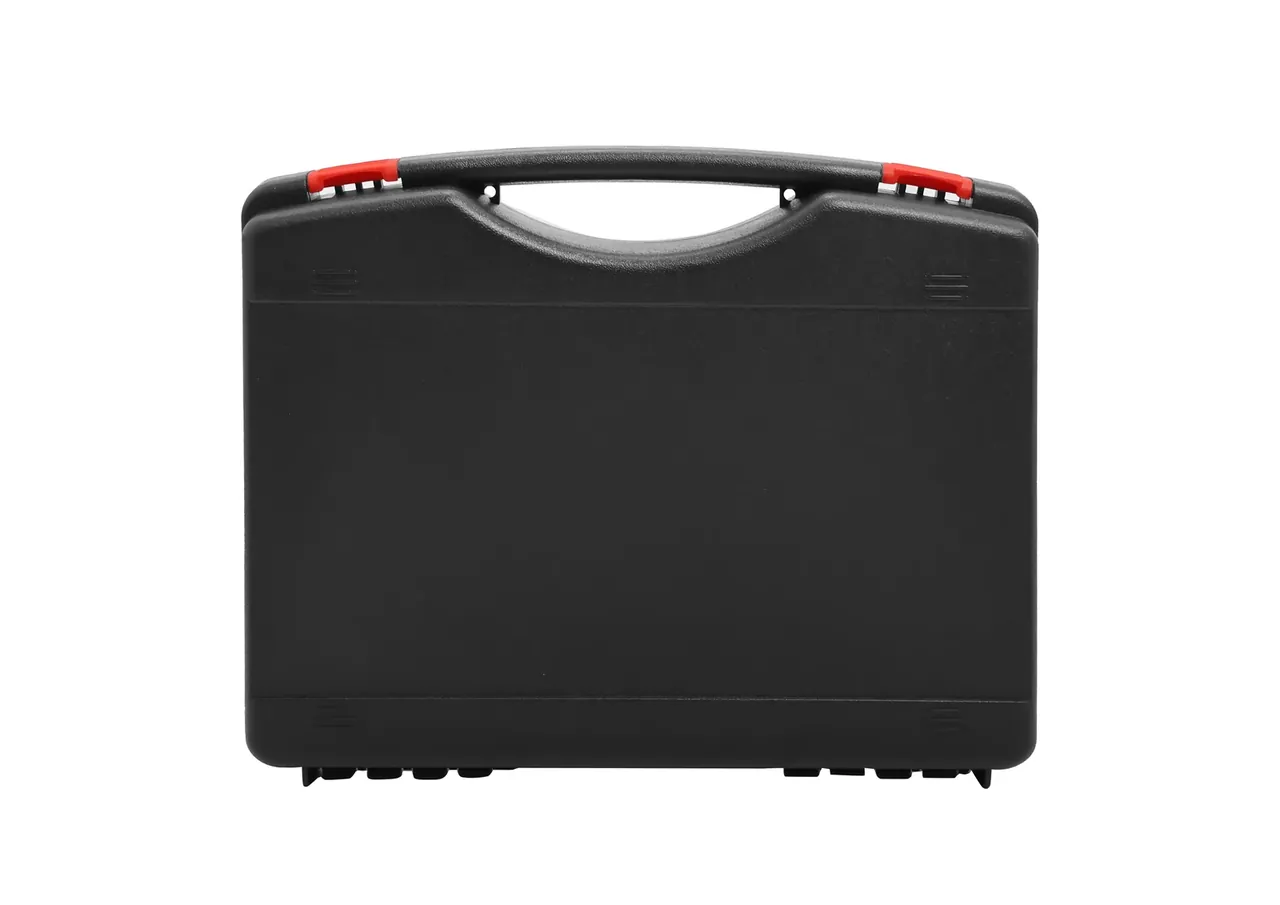
Quick answer: English Labels on Cases runs to 3 lines: a graded warning word, a load in kg and lb with a stack height, and a lot code with the month of manufacture.
Table of contents
- Three lines, no more
- Warning line and load line
- Batch line and traceability fields
- Substrate, position and acceptance
- FAQ
1. Three lines, no more
A receiver looks for 3 things inside 3 seconds: is it hazardous, can it be stacked, which batch is it. English Labels on Cases follow that order, one line per question, no wording shared between lines.
Line 1 carries the warning, line 2 the load, line 3 the batch. Warning sets boldest, batch lightest, but every line keeps a 3 mm cap height with 1.5 times leading.
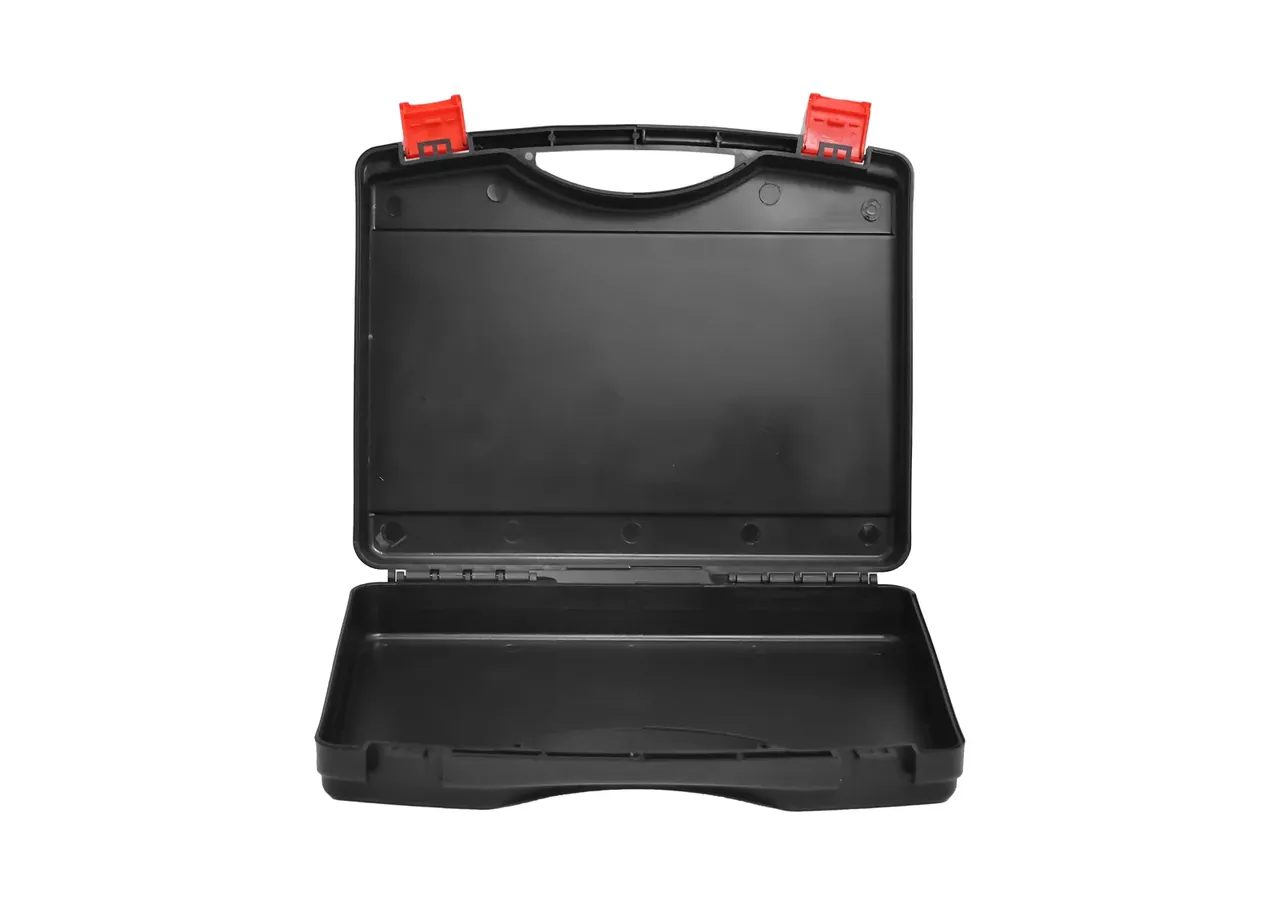
Area follows the face: 80×50 mm on an end face, 100×70 mm on a lid, 10 mm clear border. Print English only: a bilingual block pushes each line under 2 mm.
| Line | Content | Units and format | Hard limit |
|---|---|---|---|
| 1 | Signal word and symbol | WARNING or CAUTION, caps | Cap height ≥ 3 mm |
| 2 | Max load and stack height | kg and lb, whole layers | One third of measured value |
| 3 | Lot, month, QR code | LOT plus 4-digit month plus sequence | Code ≥ 15×15 mm |
2. Warning line and load line
English Labels on Cases put the signal word first. ANSI Z535 gives 3: DANGER for immediate severe injury, WARNING for possible, CAUTION for minor injury. Most cases use CAUTION, for pinched fingers. Only a case holding dangerous goods climbs to WARNING, and then it also carries a GHS signal word.
GHS has exactly 2, Danger and Warning. Pictograms are red-bordered diamonds at 15 mm and up, no more than 3 to a label. An empty case carries none, since GHS invites a dangerous goods declaration at the border.
Symbols follow ISO 3864: yellow triangle for warning, blue disc for mandatory, red disc with a slash for prohibition, 25 mm and up, text to the right or below, never on top.
Write the instruction and its consequence: Keep hands clear of latch when closing, not Please be careful; Do not drag on rough ground, not Handle with care. A polite phrase carries no action. Never mix 2 warning words: CAUTION on the lid with WARNING on the end face makes the receiver treat the lot at the higher level.
Line 2 carries load and stack. Write Max load 25 kg / 55 lb, kg first, factor 2.2046, rounded to 1 lb, and Stack up to 3 high (including this case) so nobody reads 3 more on top.
Those numbers must match the test report: static load is a compression test divided by 3, so a case labelled 150 kg needs 450 kg measured, and a label above that is the first exhibit after a collapse.
3. Batch line and traceability fields
Line 3 of English Labels on Cases answers where the unit came from. Build the code as LOT 2603-017-A2: prefix, 4-digit year and month, 3-digit day sequence, 2-digit plant code. That is 12 characters monospaced, so 0 and O never blur, in regular weight so it does not compete with line 1.
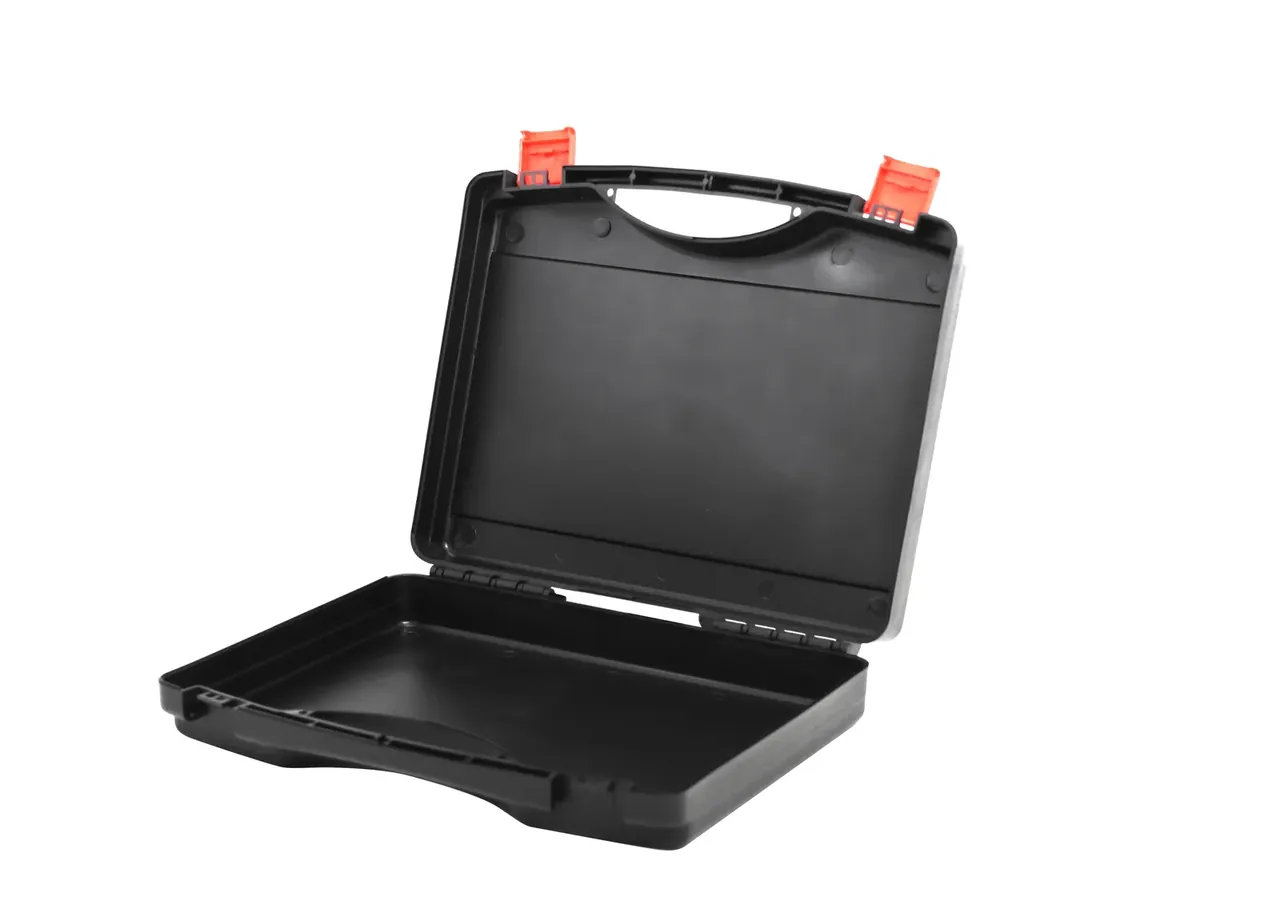
Write the month as 2026-03, not 03/2026, which reads as a day in some markets. PO tracks the order, SN the unit: SN runs 12 characters, 4 model and 4 year-month and 4 sequence, apart from the mould number in the shell.
The QR code carries 6 fields: LOT, PO, SN, production date, net weight, stack height. Code 15×15 mm minimum, quiet zone 4 modules, 300 dpi or better; below that a 0.3 mm module bleeds and the scan fails.
| Field | Format | Example | Purpose |
|---|---|---|---|
| LOT | 4-digit month, 3-digit sequence, 2-digit plant | 2603-017-A2 | Batch trace and recall |
| PO | Customer order, 8–12 characters | PO-26117 | Invoice and despatch check |
| SN | 4 model, 4 month, 4 sequence | JZ60-2603-0412 | Unit-level trace |
| Date | YYYY-MM | 2026-03 | Shelf life and stock turns |
| QR | 6 fields, ≥15×15 mm | — | Scan to goods-in |
4. Substrate, position and acceptance
English Labels on Cases pick a substrate by volume. PET self-adhesive is the default: -40 to 80 °C, no lift after 96 h of salt spray, Taber loss of 0.05 g or less at 500 g over 500 cycles, from 500 pieces. Screen printing lasts as long as the shell, -40 to 90 °C at a 2.5 mm cap height, but a change needs a screen and 1,000 pieces. Laser marking on PE and ABS reaches 100 °C and wears best, though contrast fails on light grey, so characters go to 4 mm. In-mould labelling fuses into the shell across -40 to 100 °C, from 3,000 pieces.
Position goes on an end face before the lid. A lid label is ground by the case above it: 6 cases to a pallet stacked 3 high leaves the bottom lid carrying 2 cases, so wear runs 3 times faster. Set it mid short face, 10 mm clear of the edge, away from ribs and draft angles over 3°. On a curve stay above a 100 mm radius, or the adhesive thins and the label lifts within 7 days.
Acceptance runs AQL 2.5 at level II: 50 pieces from a 500-piece lot, 4 checks. Adhesion is a 6×6 cross-cut at 1 mm spacing, tape pulled at 45°, passing at 5% loss or less, which is 4B under ISO 2409. Temperature means 24 h at -40 °C plus 24 h at 80 °C, and salt spray 96 h with characters still readable.
Two adhesion failures in one lot rejects it rather than sorting, since a missing label breaks traceability. Records run 3 years.
Conclusion
What English Labels on Cases buys is one job per line. Line 1 settles risk under ANSI Z535 and ISO 3864, CAUTION for pinched hands, a GHS pictogram only for dangerous goods. Line 2 gives load in kg and lb plus a stack height, never above one third of measured value. Line 3 carries the LOT and month. With PET at -40 to 80 °C, 96 h salt spray, an end-face position and a 4B cross-cut, the case reads from 5 m.
This article discusses only the container (case body) side of specifications and design intent, and does not cover any handling, loading or use of the contents.
Related Reading
- Binding labels to asset codes
- Marking and stacking rules for export packing
- Running an AQL 2.5 inspection
Related Products
- 8 Series — Gun Cases; Military Equipment Cases; Camera Equipment Cases; Drone Cases; Watch Cases; Knife Cases; First Aid Cases; Electronics Equipment Cases
- WL8-2812 PP Gun Case — model WL8-2812
- All protective cases and toolboxes: 7 series, 158 models