

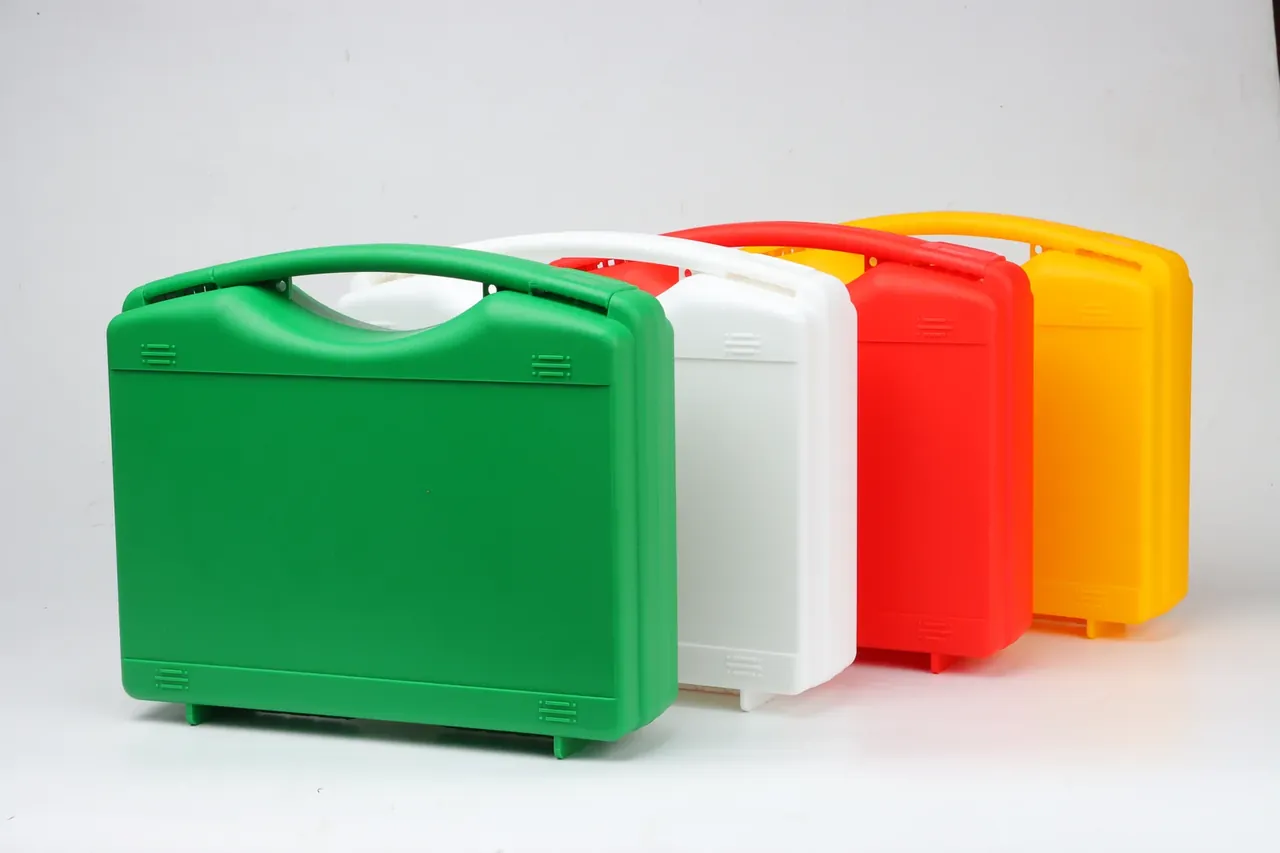
Quick answer: A 500-piece lot samples 50 units under GB/T 2828.1 at AQL 2.5, which accepts 3 and rejects 4. Interior, wall, latch and seal are all measurable on site, and the thinnest of 5 wall points rules: under 2.7 mm the case fails.
Table of contents
- Case Export Packaging Acceptance: Four Must-Test Items
- Measuring on Site: Gauges, Climate and Readings
- Verdicts: Pass, Concession and Rejection
- Handling Failures: Rework, Downgrade and Return
- FAQ
1. Case Export Packaging Acceptance: Four Must-Test Items
November 2025 brought a lot of 500 cases and an argument over one. The drawing said a 3.0 mm wall; a caliper read 2.6 mm; the supplier cited a 2.9 average. Two sets of numbers for one lot, and the gap sat in the gauge and the measuring points.
The basis is GB/T 2828.1, general level II at AQL 2.5: a 500-piece lot gives a sample of 50, with 3 accepted and 4 rejected. Sample 20 and a 0.4 mm shortfall slips through half the time.
Four items reproduce on any bench and none is destructive: interior, wall, latch force and seal. One case takes about 40 minutes.
| Item | Gauge | Sampling | Pass line |
|---|---|---|---|
| Interior | 300 mm caliper, 5 m tape | 3 sections, 18 readings | Within ±2.0 mm |
| Wall | Ultrasonic gauge, 0.02 mm | 5 points per case | Thinnest ≥2.7 mm |
| Latch | 0–500 N pull gauge | Every case | Holds 240 N for 10 s |
| Seal | 0.05 mm feeler | Once around the rim | Entry ≤10 mm |
2. Measuring on Site: Gauges, Climate and Readings
Let plastic settle first: 23 °C ±2 °C at 50% ±10% humidity for 4 hours. Pulled from a 5 °C warehouse, an interior reads 0.4 mm small and a good lot fails.
The interior takes a 300 mm caliper and a 5 m tape at 3 sections, 4 edges and 2 diagonals each, 18 readings; the smallest wins. Measuring only at the opening misses a bulged middle.
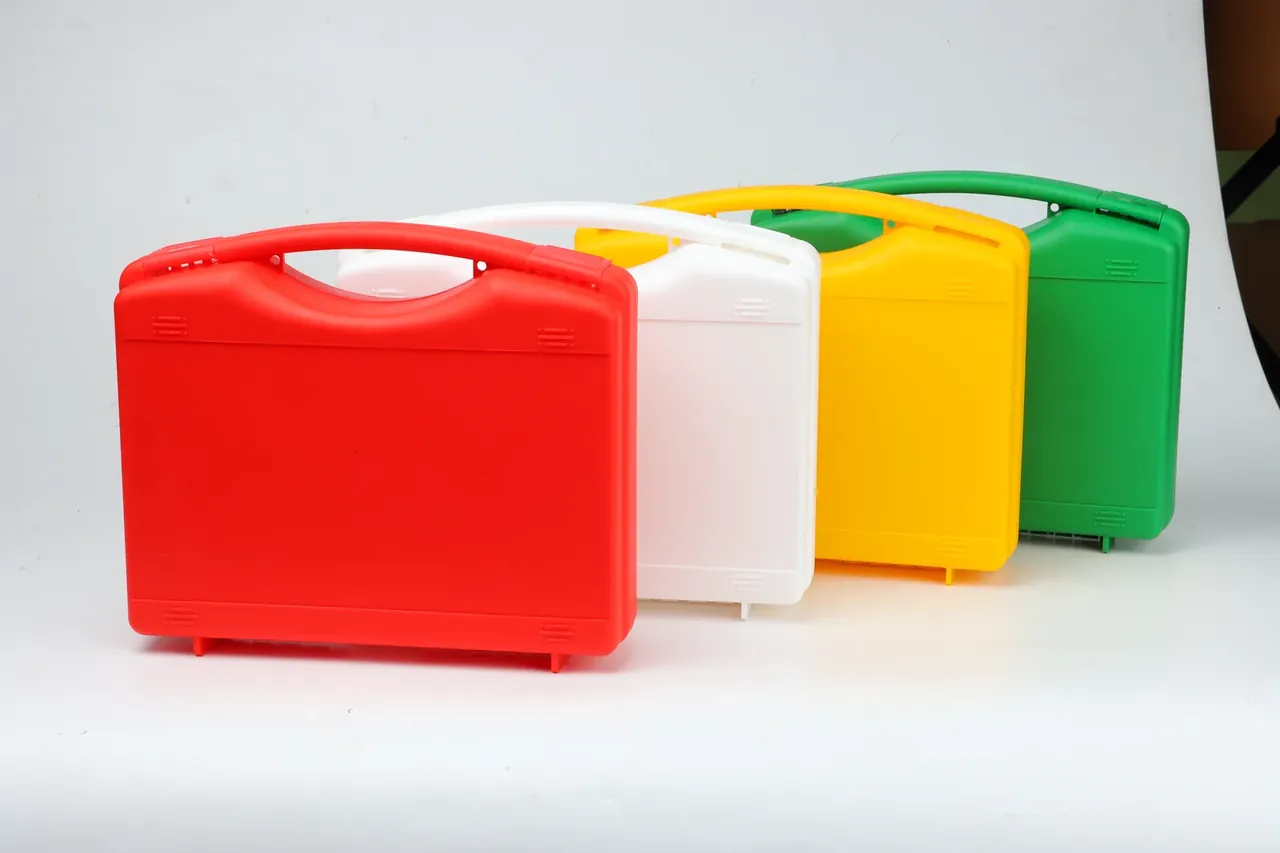
Wall thickness uses an ultrasonic gauge at 5 points: four edge midpoints plus the base centre. The thinnest point rules, so below 2.7 mm the case fails even when the mean is 3.1 mm. Keep the probe off the ribs, where it happily reads 4.5 mm.
Latches go on a 0–500 N pull gauge to 240 N, held 10 seconds, with no release, crack or whitening. The seal takes a 0.05 mm feeler around the rim: any stretch entering past 10 mm is a leak point, and the allowance is 0.
Gauges need a calendar too: calipers are checked every 12 months against a 50 mm block, and 0.02 mm of drift retires the tool.
3. Verdicts: Pass, Concession and Rejection
Defects come in three grades: fatal cracks, latch failure and water ingress; major dimension or wall shortfalls; minor colour, burrs and skewed labels. The grade decides the action.
Count by unit, then by lot. Three fatal defects in a 50-piece sample reject the lot with no re-sample; four major defects trigger a second 50, and a combined 6 rejects. Second-round readings go on the same sheet.
A minor defect can be conceded at 8% off, with the lot number written on the packing list. Fatal defects carry no concession; whoever signs carries the after-sales cost.
| Grade | Example | Lot decision | Action |
|---|---|---|---|
| Fatal | Crack, latch failure, leak | 3 units reject | Return or 100% sort |
| Major | Dimension, thin wall | 4 units re-sample, 6 reject | Rework, then re-check |
| Minor | Colour, burr, label | No rejection | 8% concession |
4. Handling Failures: Rework, Downgrade and Return
Rework sorts first: dimensions get trimmed or re-tooled, thick walls get downgraded, failed latches get new hardware. Labour differs 3 times between those queues. The rework order names the defect location, since a lid and a base differ 40% in handling time.
Rework returns within 48 hours and is re-sampled at 20 pieces; a second failure turns it into a return. Returns ship within 7 days, freight on the responsible party, and each late day costs 0.5% of invoice value.
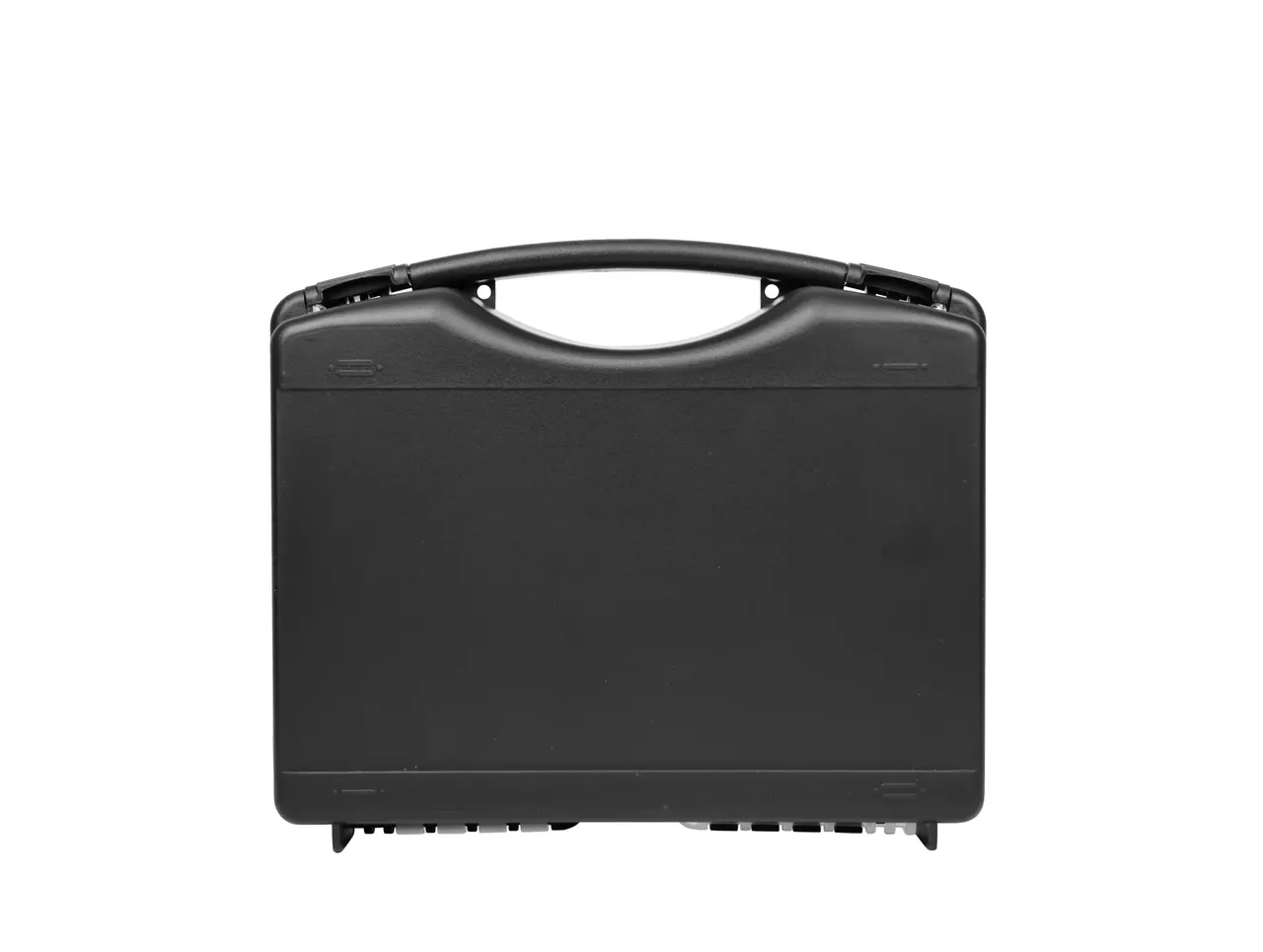
Downgraded cases are marked and sold at 8% off on the domestic market, never mixed into an export lot. A mixed container that gets caught costs more than 10 times the downgrade loss.
Records cover 12 fields: lot, quantity, sample size, four readings, grade, action and signature. Keep 2 samples and the file for 3 years; the next wall argument ends with the 18 readings.
Conclusion
A 500-piece lot, a 50-piece sample, 4 must-tests and 3 defect grades turn acceptance into a process. The lines are a 2.7 mm thinnest wall, a 10 mm feeler stop and a ±2.0 mm interior, all reproducible on a bench. Rejection also needs a route: 48 hours of rework, a 20-piece re-check, a 3-year file. Written into a contract, case export packaging acceptance stops depending on who speaks loudest.
This article discusses only the container (case body) side of specifications and design intent, and does not cover any handling, loading or use of the contents.
Related Reading
- Three-layer export packing structure and materials
- Airdrop case test items and their order
- Pallet and shipping mark acceptance points
- Waterproof hard case seal rating checks
Related Products
- 8 Series — Gun Cases; Military Equipment Cases; Camera Equipment Cases; Drone Cases; Watch Cases; Knife Cases; First Aid Cases; Electronics Equipment Cases
- WL8-2812 PP Gun Case — model WL8-2812
- All protective cases and toolboxes: 7 series, 158 models