

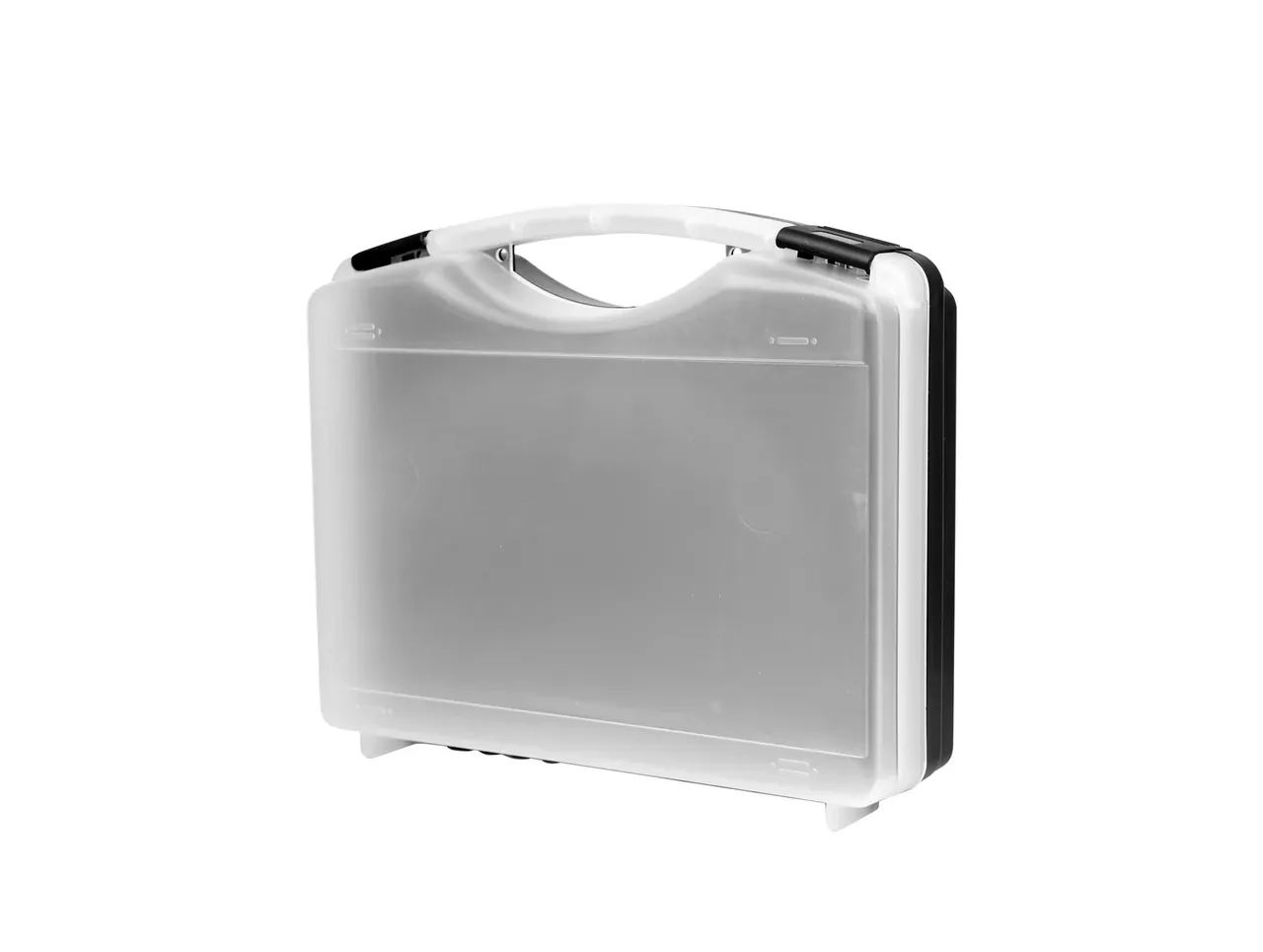
Quick answer: Group the work by part weight, wall thickness and output, give each class its own clamp force, mould temperature and take-out rhythm, and first-article approval drops from six parts to two.
Table of contents
- Five classes before the settings screen
- Thin walls, deep cavities: speed and low-pressure protection
- Thick walls: hold pressure and split mould temperature
- Overmoulding: turntable angle and core-pull sequence
- Mould change to first article in 25 minutes
- Night shift: barrel soak and mould rust
- FAQ
1. Five classes before the settings screen
A press running a deep box in the morning and a flat lid after lunch throws flash, then short shots, on one recipe. Five classes, one recipe each, give the operator a number to start from.
The dividing line is how far the melt travels, not the footprint. A 2.2 mm wall above a flow ratio of 200 is thin-wall deep-cavity work; a 4.5 mm wall on a 5.8 kg part is thick-wall flat work. Weight alone misleads: a case between 3 kg and 4 kg belongs where its wall puts it.
| Duty class | Part weight and wall | Set-up | Common mistake |
|---|---|---|---|
| Thin-wall deep box | 1.2 kg, 2.2 mm | 1,000-tonne press, 20 L accumulator | Speed too low, corners run white |
| Thick-wall flat lid | 5.8 kg, 4.5 mm | 1,300-tonne press, split mould heat | Cooling maxed out, sink marks deepen |
| Overmoulded body | 2.4 kg, two 1.8 mm layers | 1,300-tonne two-shot press | Mould opened before the core retracts |
Cycle times come from a 1,000-tonne press and shift 10 to 15 percent on other tonnages; written down, first-article approval falls from six parts to two and a 40-minute changeover takes 25.
2. Thin walls, deep cavities: speed and low-pressure protection
A 2.2 mm wall running 540 mm from gate to the far end gives a flow ratio above 245, pushing cavity pressure to 450 kg/cm² and making 1,000 tonnes the clamp-force floor.
A 20 L accumulator lifts screw speed from 95 mm/s to 145 mm/s, and the white patches at the bottom corners go away. A 30 L bottle charges slowly instead; the first three shots of a shift are scrap.
Low-pressure protection needs a position: switch 3 mm from the parting line at 25 MPa and a slug left in the cavity stops the platen rather than marking steel. At 8 mm there is no protection; a bruised insert costs 2,000 yuan to polish.
Take-out sits in the cycle too: a 1.8 s robot traverse beats 4 s of manual opening, worth 1.5 hours on a 1,400-shot day.
| Setting | Value | Reason |
|---|---|---|
| Injection speed | 145 mm/s | 2.2 mm wall filled in 1.4 s |
| Hold pressure | 8 s | Gate freezes at 6 s |
| Mould temperature | 35 °C | Fast setting, short cycle |
3. Thick walls: hold pressure and split mould temperature
Thick work reverses the problem. A 5.8 kg lid on a 4.5 mm wall needs 14 s before the gate freezes, and hold pressure has to run 18 s before the sink mark stops growing.
Mould heat then splits: fixed half 60 °C, moving half 45 °C. The 15 °C difference bows the lid 0.6 mm toward the fixed half and cancels the shrinkage that would dish the top face. Single-zone control cannot, and sink marks and warpage arrive together.
The cycle stretches to 78 s, 32 s of it cooling. Water at 18 °C instead of 25 °C buys 6 s back, at the cost of a sweating mould.
4. Overmoulding: turntable angle and core-pull sequence
A 180-degree index takes 2.6 s, and the 4 s gap before the second closing is the only window for a hand-placed metal insert, which is why the cycle sits at 55 s.
The core-pull order cannot be reversed: pull the core home, then open; close fully, then push the core in. Reverse it once and the core strikes the cavity wall: a 3,800 yuan repair, 6 hours lost.
Inserts want 60 °C preheat, within 30 °C of the melt; a cold insert leaves a 0.2 mm gap within 24 hours and pull strength falls from 480 N to 260 N. Clamp force comes from the larger mould, and the turntable faces should stay within 8 percent of each other, or the index drifts 0.1 mm.
5. Mould change to first article in 25 minutes
Mould change is the longest stop in a shift: a 4.2 t mould goes in on a 5 t crane, magnetic platens clamp in 30 s, water connects four in and four out, and the moves only add up when sequenced.
| Move | Time | Control point |
|---|---|---|
| Crane the mould in | 6 min | Lifting points over the centre of gravity |
| Connect water and oil | 7 min | Four in, four out; water before heat |
| Purge and first article | 8 min | Eight parts, weight within 1 percent |
Weight must land between 3.58 kg and 3.62 kg before the run counts as stable, and one bad part in eight means resetting the recipe rather than running skewed, because 1,400 shots of scrap is worth half a mould.
6. Night shift: barrel soak and mould rust
Between 22:00 and 06:00 a press often stands idle. Polypropylene held at 200 °C for 2 hours degrades from the metering section forward, and the next shift finds black specks.
Above 2 hours, drop the barrel to 160 °C and bring it back before start-up, 25 minutes; purge with 2.5 kg of compound, or the first 30 shots are scrap. Chilled water at 25 °C left off for 4 hours also leaves rust that takes 40 minutes to clean, so a short stop keeps the loop at 15 °C.
Handover carries three numbers: mould temperature, barrel temperature and the weight of the last part. When they agree, the case injection molding machine needs no re-tuning after an operator change.
Conclusion
Five classes divided by weight, wall thickness and output, with four settings moving alongside them: speed, hold pressure, mould heat and take-out. Held as recipes, they let one press change over and produce a first article inside 25 minutes. The ledger is worth building, which is why a case injection molding machine should be set up class by class.
This article discusses only the container (case body) side of specifications and design intent, and does not cover any handling, loading or use of the contents.
Related Reading
- How tonnage is worked out for a case injection molding machine
- Daily checks on an injection molding machine
- Plastic tool cases on the workshop floor
Related Products
- 8 Series — Gun Cases; Military Equipment Cases; Camera Equipment Cases; Drone Cases; Watch Cases; Knife Cases; First Aid Cases; Electronics Equipment Cases
- WL8-2812 PP Gun Case — model WL8-2812
- All protective cases and toolboxes: 7 series, 158 models