

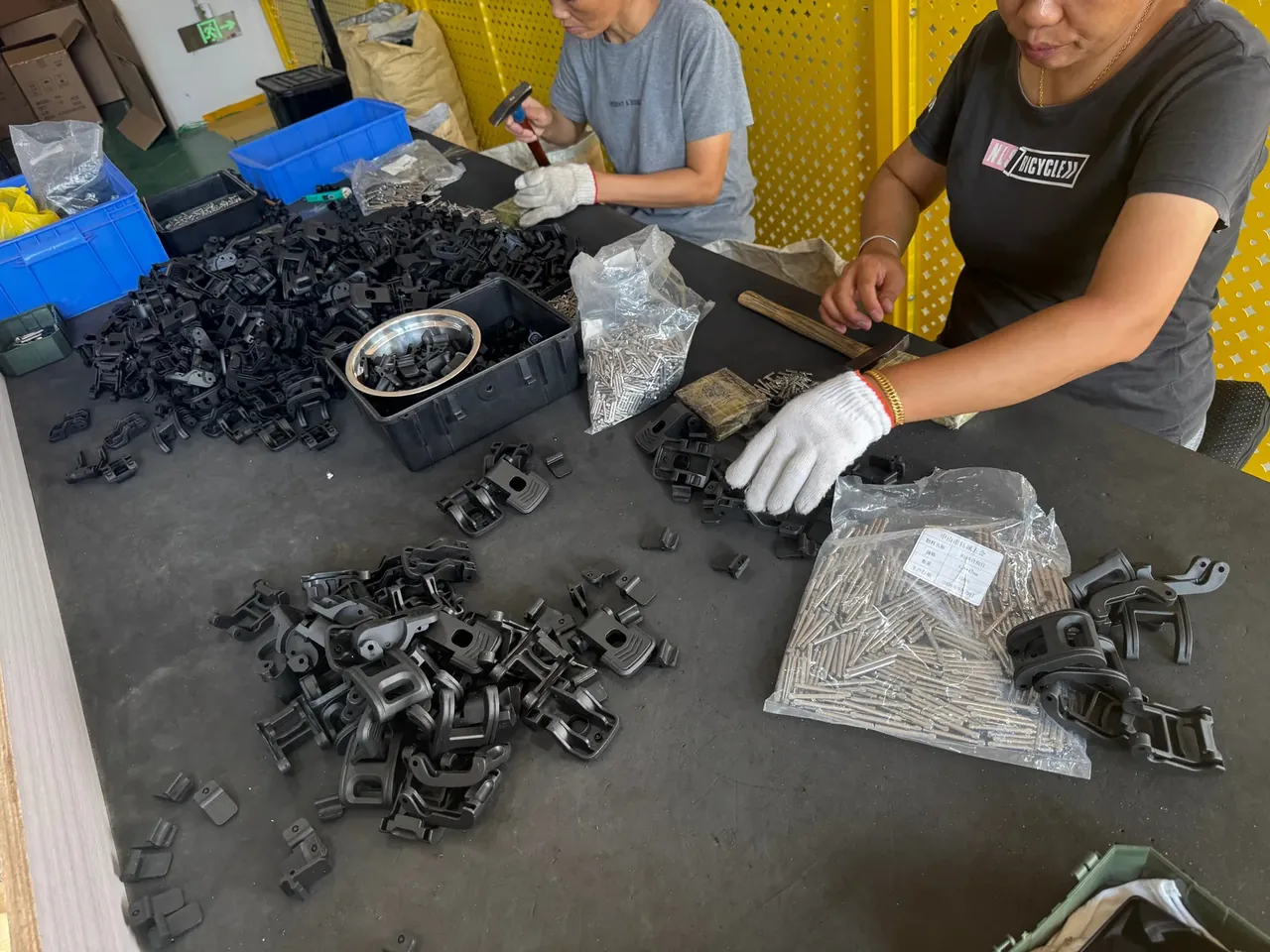
Quick answer: A case lock hole is set by the ligament beside it: 6 mm leaves 5 mm and holds 900 N, 8 mm leaves 3.5 mm and drops the case to 630 N.
Table of contents
- Four Numbers Behind a Case Lock Hole
- A 6 mm Hole with a 5 mm Shackle
- An 8 mm Hole and What It Costs
- Placing the Holes
- Incoming Checks and Fitting Order
- FAQ
1. Four Numbers Behind a Case Lock Hole
The hole runs through a lug that projects from the front rim, with plates on lid and base meeting so a shackle passes through both. A case lock hole is defined by four numbers: diameter, the ligament from hole edge to lug end, centre position and boss size.
Moving from 6 mm to 8 mm keeps the centre fixed and adds 1 mm of radius, so the ligament falls from 5 mm to 3.5 mm. Ligament times the 3 mm wall gives the shear area.
| Hole mm | Shackle mm | Ligament mm | Case side N | Assembly N | Typical use |
|---|---|---|---|---|---|
| 6 | 5 | 5 | 900 | 900 | vehicle tools |
| 8 | 7 | 3.5 | 630 | 630 | outdoor storage |
Assembly rating is the lower of shackle and case, so 630 N is the real figure in the second row and a catalogue's 1400 N describes the shackle alone.
A boss is the only feature that helps both sides. A ring 14 mm across and 1.5 mm high lifts effective wall thickness from 3 mm to 4.5 mm, adding 50% to the shear area.
2. A 6 mm Hole with a 5 mm Shackle
A 6 mm case lock hole gives two ligaments of 5 mm at 3 mm of wall, 30 mm², and at 30 MPa that is 900 N. A hardened 5 mm shackle shears at about the same figure, so the two sides balance.
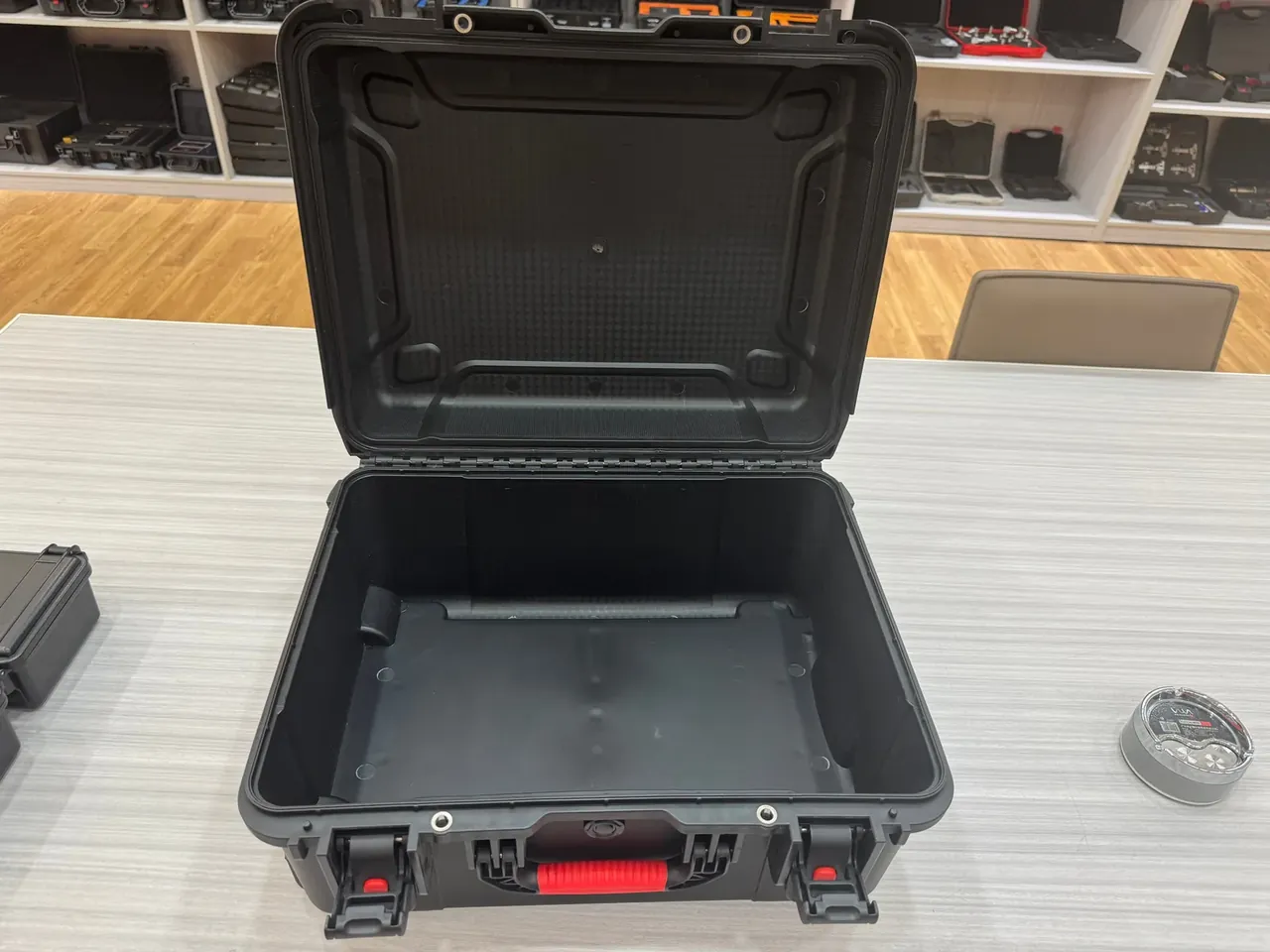
900 N is 150 N on a 600 mm bar. A 6 mm hole survives a casual attempt and fails against a determined one.
Pull direction matters more than pull force. Pulling along the lug face uses the full 30 mm²; prying square to the wall halves that, so 900 N becomes 450 N.
3. An 8 mm Hole and What It Costs
A 7 mm shackle has 96% more section and takes shear capacity from 900 N to 1400 N. The cost lands on the ligament: 3.5 mm at a 3 mm wall is 21 mm², so the case side falls to 630 N, 30% below the 6 mm version.
This is the trade-off at the centre of any case lock hole choice. A thicker shackle resists cutting, but the thinner ligament lets a bar tear the lug with less force. Rated at its weakest link, an 8 mm hole protects at 630 N, not 1400 N.
The boss recovers part of it: effective thickness 4.5 mm, area 31.5 mm², case side 945 N, still under the shackle, so the assembly rates 945 N.
| Shackle mm | Hole mm | Boss | Case side N | Assembly N | Verdict |
|---|---|---|---|---|---|
| 5 | 6 | none | 900 | 900 | balanced |
| 5 | 6 | 14 × 1.5 | 1350 | 900 | case has margin |
| 7 | 8 | none | 630 | 630 | case is the weak link |
| 7 | 8 | 14 × 1.5 | 945 | 945 | usable, not optimal |
Read the first and last rows together: thickening the shackle pays only if the ligament is built back up.
4. Placing the Holes
A centre 12 mm from the outer face gives the lock body room to swing. A hanging padlock settles and rotates 30° to 45° about the shackle; closer and the body rubs the wall, and below 9 mm it presses the seal groove so the lid will not close flat.
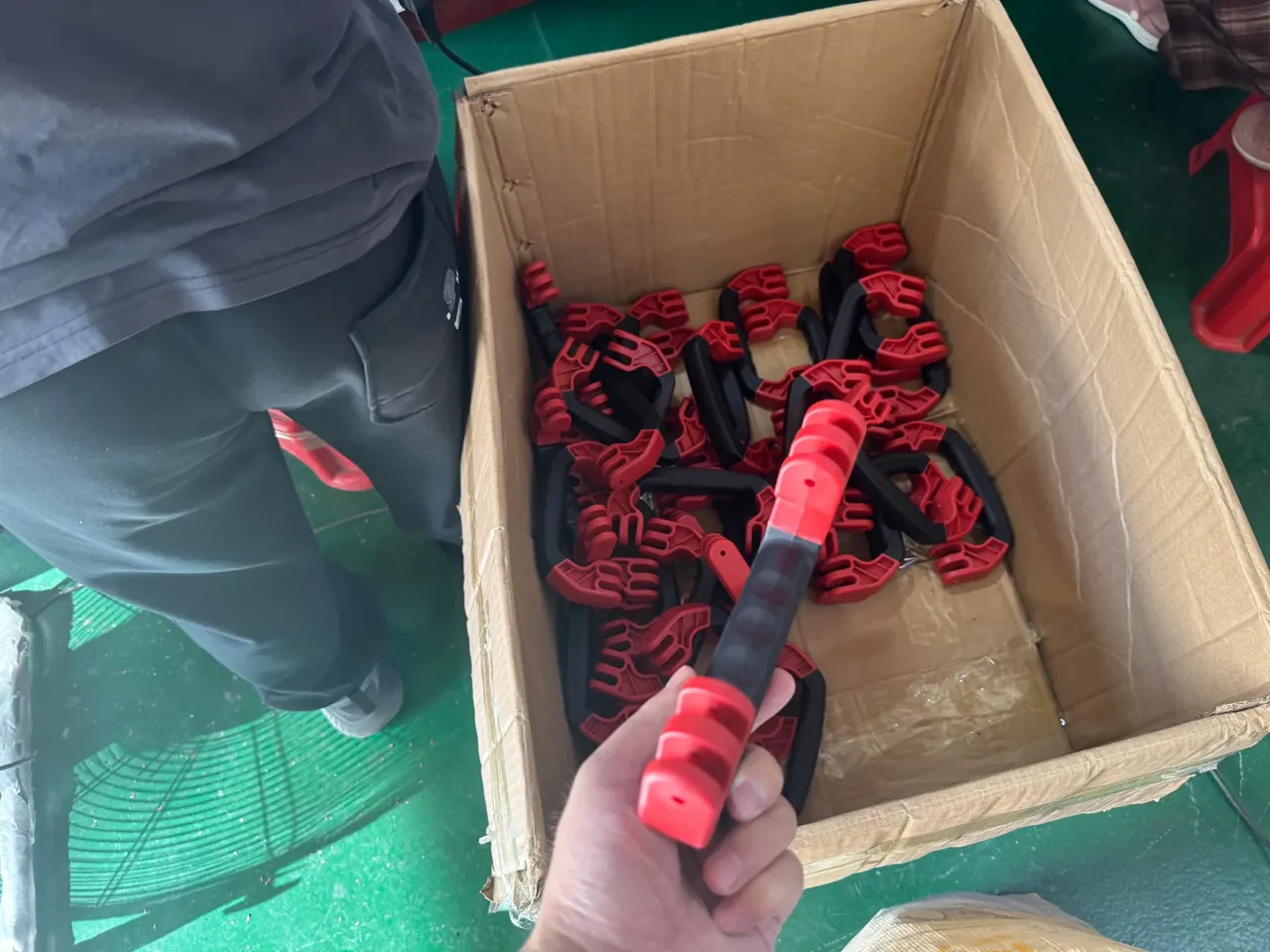
The 76 mm spacing keeps the left and right locks apart. Cap body width at 60 mm, leave 8 mm between them, and 76 mm fits; squeeze the spacing to 60 mm and only one lock goes on.
A 22 mm shackle opening matches an 18 mm lug, leaving 2 mm each side. Widen the lug and the shackle will not seat, so the bolt stops half engaged.
| Centre to edge mm | Hole spacing mm | Lug width mm | Shackle opening mm | Max body mm |
|---|---|---|---|---|
| 9 | 60 | 18 | 22 | 50 |
| 12 | 76 | 18 | 22 | 60 |
| 15 | 90 | 20 | 25 | 70 |
The third row is the next size up: centre 15 mm and 90 mm spacing take a 70 mm body.
5. Incoming Checks and Fitting Order
Measure the case lock hole with calipers, 6 mm at +0.2 and −0; check the 12 mm centre and the 76 mm spacing to ±0.5 mm. Out of tolerance, the body hangs crooked and the load turns into a diagonal pull.
Pull one sample per batch at 100 mm per minute and record the peak. Reject a 6 mm hole below 850 N and an 8 mm hole below 600 N, 5% under nominal; a tested part whitens at the edge and cannot ship.
Fitting order decides service life. Hang one lock, press the lid, hang the second; turn the shackle 90° before pressing home so the bolt seats.
Die-cast aluminium reaches 1200 N at 4 mm and 160 MPa, a third above plastic, but a chipped corner gives no warning.
Conclusion
A case lock hole is decided by the ring of material around it. A 6 mm hole leaves 5 mm, pairs with a 5 mm shackle and balances at 900 N; an 8 mm hole drops to 3.5 mm, lets the shackle reach 1400 N, leaves the case at 630 N and needs the 14 mm boss to climb to 945 N. Hold the centre at 12 mm, the spacing at 76 mm and the shackle opening at 22 mm, and the lock hangs straight and opens slowly.
This article discusses container-side specifications and design implications only, and does not cover any handling, loading or use of the contents.
Related Reading
- Lock options for protective cases
- What to compare when choosing latches
- How to choose a lockable storage box
Related Products
- 8 Series — Gun Cases; Military Equipment Cases; Camera Equipment Cases; Drone Cases; Watch Cases; Knife Cases; First Aid Cases; Electronics Equipment Cases
- WL8-2812 PP Gun Case — model WL8-2812
- All protective cases and toolboxes: 7 series, 158 models