

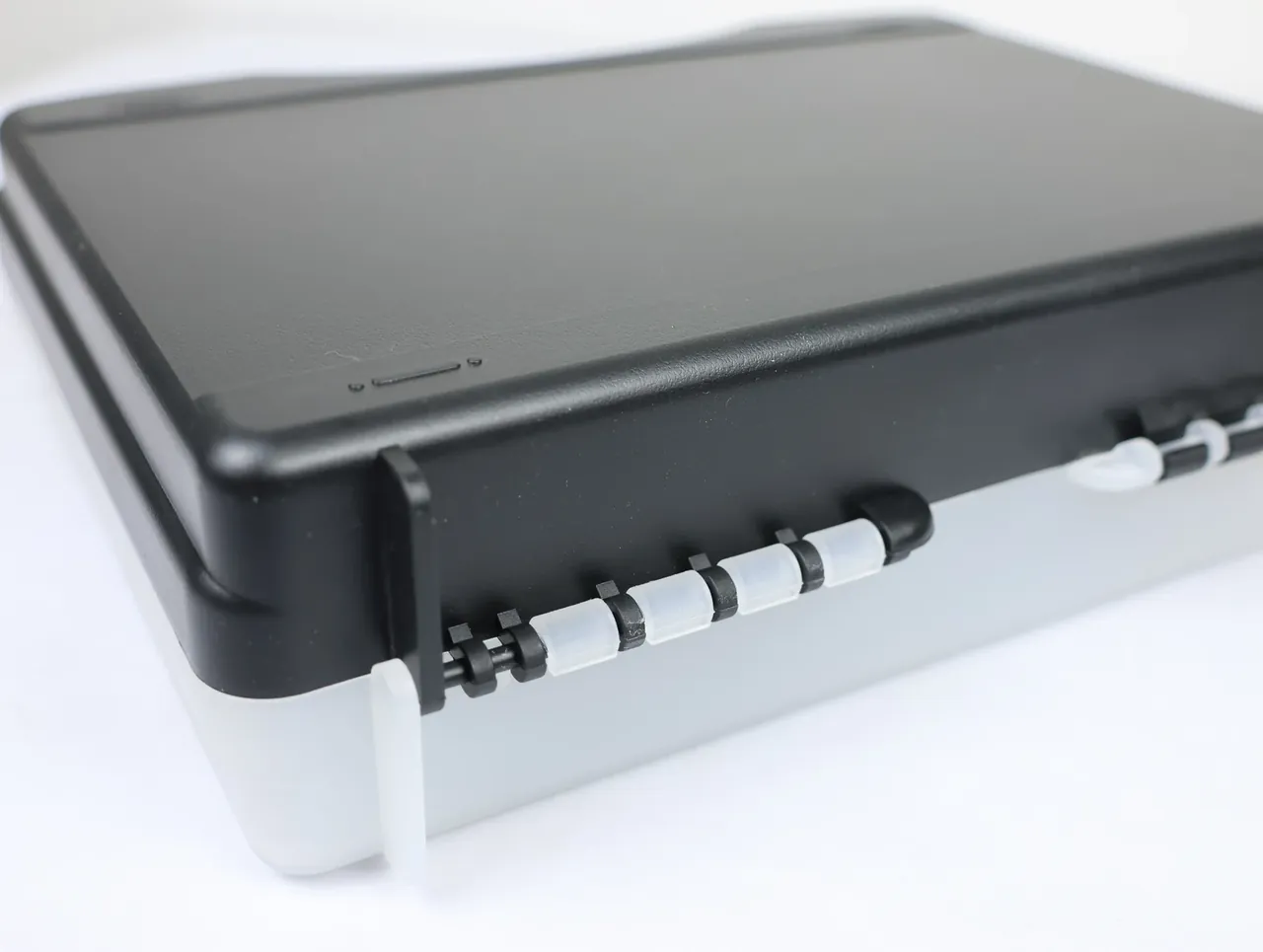
Quick answer: Case raw material preparation can be judged at the dock: melt flow index, density, impact strength and regrind ratio inside their windows, plus one bag checked for powder and colour.
Table of contents
- Six checks on the receiving dock
- When the MFI window closes a batch
- Density and filler load before price
- Impact strength read against temperature
- Regrind ceiling set by drop height
- Turning the checks into a receiving card
- FAQ
1. Six checks on the receiving dock
A 25 kg sack of PP copolymer arrives with little beyond a delivery note: grade code, batch number, 9.8 yuan per kilogram. None of it says whether the resin survives a -30℃ drop in a 420 mm case.
Six measured numbers do. Melt flow index fixes flow, density fixes filler load and part weight, impact strength fixes cold toughness, regrind ratio fixes cost and life, then powder and colour cover the visible lines. All six take two hours, no first-off sample needed.
| Check | Method | Pass line | Cost of a miss |
|---|---|---|---|
| MFI | 230℃, 2.16 kg weight | within 15% of nominal | wall swings 0.3 mm |
| Density | density cup, three samples | spread under 0.005 g/cm³ | 0.4 kg between parts |
| Impact | notched Charpy, 23℃ and -20℃ | cold value at or above 15 kJ/m² | corner crack in winter |
| Regrind | declaration plus drop test | drop loss under 0.15 m | later cases go brittle |
| Powder | 200 g through a 0.5 mm screen | at or under 0.5% | bridging at the feed throat |
| Colour | colorimeter, three points | ΔE at or under 1.0 | two shades in one order |
The six are not equal. MFI and impact are gates: a miss returns the load. Density and regrind are fit questions. A 3.5 mm thin-wall case runs well on 0.905 g/cm³ copolymer; an 8 mm ammunition case packs short and stays soft.
2. When the MFI window closes a batch
Melt index is the first line on a grade certificate and the usual origin of a mixed-batch failure. Drift beyond 15% of nominal is not normal, and two part-used sacks should never share a hopper. Blend them and half the cases come out brittle, half soft.
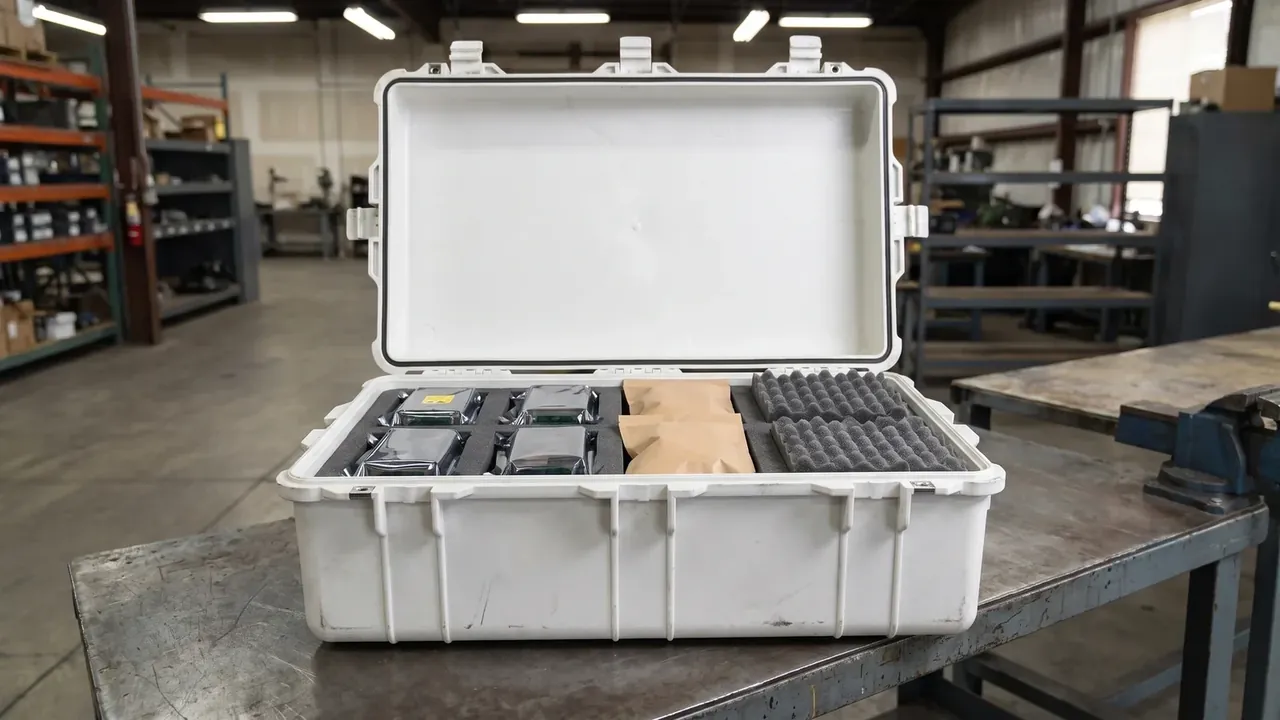
Resin 3 g/10min above nominal fills the cavity early, so weld-line molecules never entangle and the latch ring breaks first. Resin 3 g/10min below nominal needs 8 extra seconds of holding pressure, stretching a 62 second cycle to 70 and costing 40 cases a shift.
Sampling matters more than measuring. Resin at the hopper top dries overnight and reads 1 g/10min higher than at the sack bottom, so sample the middle. Two runs differing by more than 0.8 g/10min mean an uneven batch: change the lot.
3. Density and filler load before price
Density gets read as proof of strength, when it first sets weight. PP copolymer sits at 0.905 g/cm³; with 20% talc it reaches 1.05 g/cm³, and a case with a 420 by 320 by 180 mm cavity goes from 4.6 kg to 5.9 kg.
More filler buys stiffness and sells impact: each 10% of talc costs 8% of room-temperature impact, more in the cold, so an outdoor case holds filler under 10%. That trade inside case raw material preparation beats 0.3 yuan per kilogram off the invoice.
| Density band | Compound | Cases that fit | Cost |
|---|---|---|---|
| 0.90–0.91 g/cm³ | unfilled copolymer | thin-wall equipment cases | flats bow |
| 0.95–1.00 g/cm³ | 10% talc | medium-wall cases | 8% less cold impact |
| 1.04–1.10 g/cm³ | 20%–30% filler | load bases | 28% more weight |
Readings of 0.98 and 1.06 from one delivery are two filler loads, not a broken instrument.
4. Impact strength read against temperature
Impact only means something with a temperature attached. Copolymer at 45 kJ/m² at room temperature falls to 16 kJ/m² at -20℃, a 64% loss, and a winter truck bay sits there before dawn.
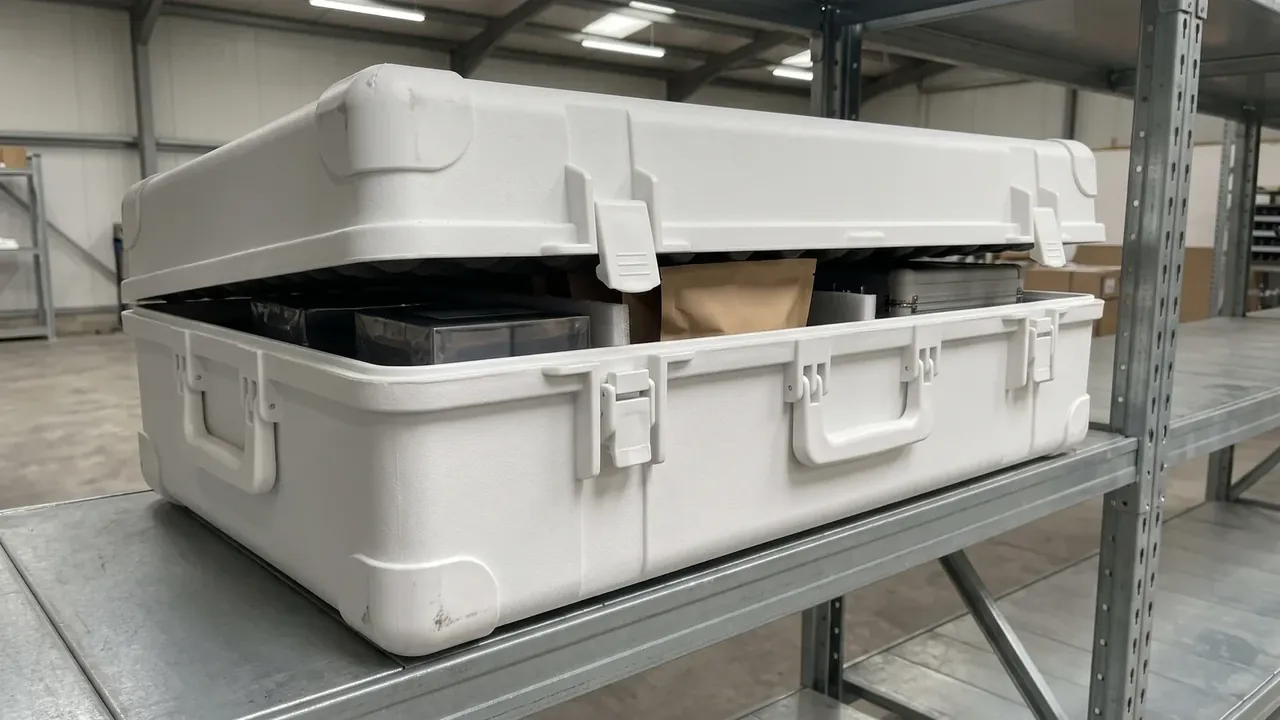
Notched Charpy and drop testing measure different things: crack growth in a cut bar against whole-case deformation. Judge the case by the drop, the resin by Charpy, never one for the other; between them sit wall thickness, ribs and liner.
Read the lower bound. A printed 45 kJ/m² is a mean of ten bars, and the weakest may sit at 38 kJ/m². Writing the minimum into the contract beats arguing the average, and a low cold figure sets the shipping latitudes.
5. Regrind ceiling set by drop height
Regrind is the one knob that trades cost against toughness by hand. Regrind at 20% cuts material cost 8% and drops the case from 1.2 m to 1.05 m, still acceptable.
At 35% and a third cycle, cold impact retention falls to 68% and the corner whitens on the first drop. Each pass shortens the chain; by the fifth cycle the lot goes to base plates.
| Cycle | Share | Drop height | Cold impact |
|---|---|---|---|
| 1 | up to 20% | 1.05 m | 92% |
| 2 | up to 15% | 0.95 m | 85% |
| 3 | up to 10% | 0.80 m | 76% |
A declaration is thin evidence. Drop five virgin cases and five from the suspect lot: a gap over 0.15 m means the higher share.
6. Turning the checks into a receiving card
Six checks fit on one A5 card that a warehouse clerk fills in without knowing moulding: batch and quantity, the six values, the verdict, the disposition. Photograph it, one per batch.
| Field | How to fill it | Owner |
|---|---|---|
| Batch and quantity | copy the bag code, count sacks at 25 kg | clerk |
| Six values | write the number, never the word pass | inspector |
| Verdict | release, concession or return | quality lead |
| Disposition | re-batch, sieve or downgrade use | buyer |
When a lid cracks in service, the card shows whether cold impact was 16 kJ/m² or 20 kJ/m² and regrind 18% or 33%.
Conclusion
Choosing resin ends as a list that can be measured: MFI governs flow, density weight, impact the cold, regrind cost. Each line carries a pass value and a disposition, so a clerk fills the card and a buyer argues from it. That is why case raw material preparation deserves two hours at the dock.
This article discusses only the container (case body) side of specifications and design intent, and does not cover any handling, loading or use of the contents.
Related Reading
- Matching ABS shell grade to wall thickness
- Gasket design and grade choice for airtight cases
- Load ratings and stacking rules for ammunition chests
Related Products
- 8 Series — Gun Cases; Military Equipment Cases; Camera Equipment Cases; Drone Cases; Watch Cases; Knife Cases; First Aid Cases; Electronics Equipment Cases
- WL8-2812 PP Gun Case — model WL8-2812
- All protective cases and toolboxes: 7 series, 158 models