

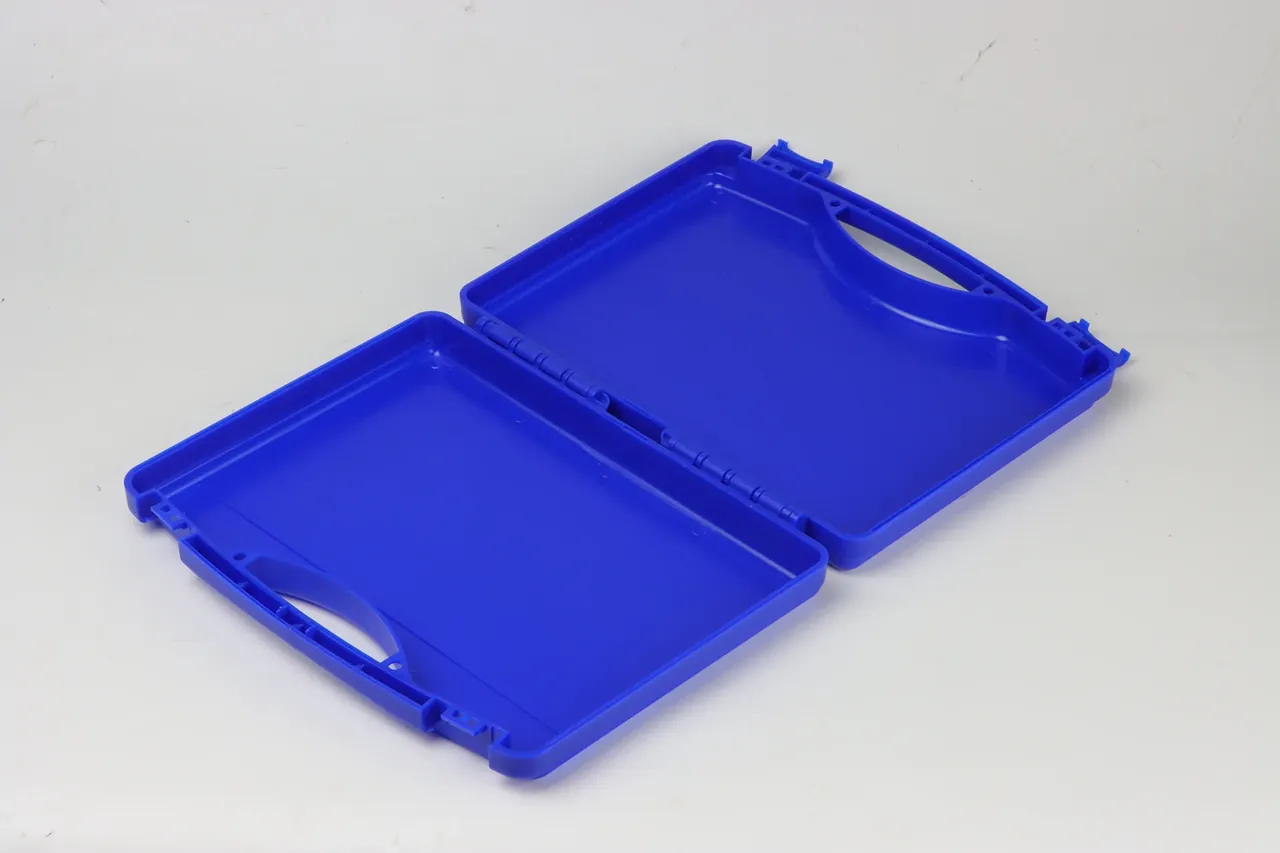
Quick answer: Case Secondary Operations price by hole type, colour count and label material, not by the box: at 3000 units an 8 mm hole runs about ¥3.2, one-colour printing ¥3.4, a PET label ¥1.2, with jigs amortised separately.
Table of contents
- Why Case Secondary Operations Are Quoted by Line
- Drilling: Tooling, Tolerance and Re-sealing
- Screen Printing: Colours and Minimum Runs
- Labels and Nameplates: Adhesion and Weathering
- Price Bands and Jig Amortisation
- What Doubling the Batch Does
- FAQ
1. Why Case Secondary Operations Are Quoted by Line
A quotation that lumps Case Secondary Operations into ¥18 per unit leaves both sides arguing over which part of that 18 moves when a hole shifts. Split the lines and every change has a home: holes by count, printing by colours and screens, labels by piece.
The stages also run at different rates: a CNC centre at ¥60 per hour, a screen press with set-up at ¥45, a labelling bench at ¥25. Blending them averages cheap labour with expensive labour, and hides risk: 3 percent scrap sits in drilling, 8 percent in printing.
2. Drilling: Tooling, Tolerance and Re-sealing
A round port from 6 mm to 12 mm is cut with a step drill in 8 seconds through a 3 mm wall. A USB cut-out or valve seat needs a CNC router and a jig that pins the shell flat, or the hole walks with the draft angle.
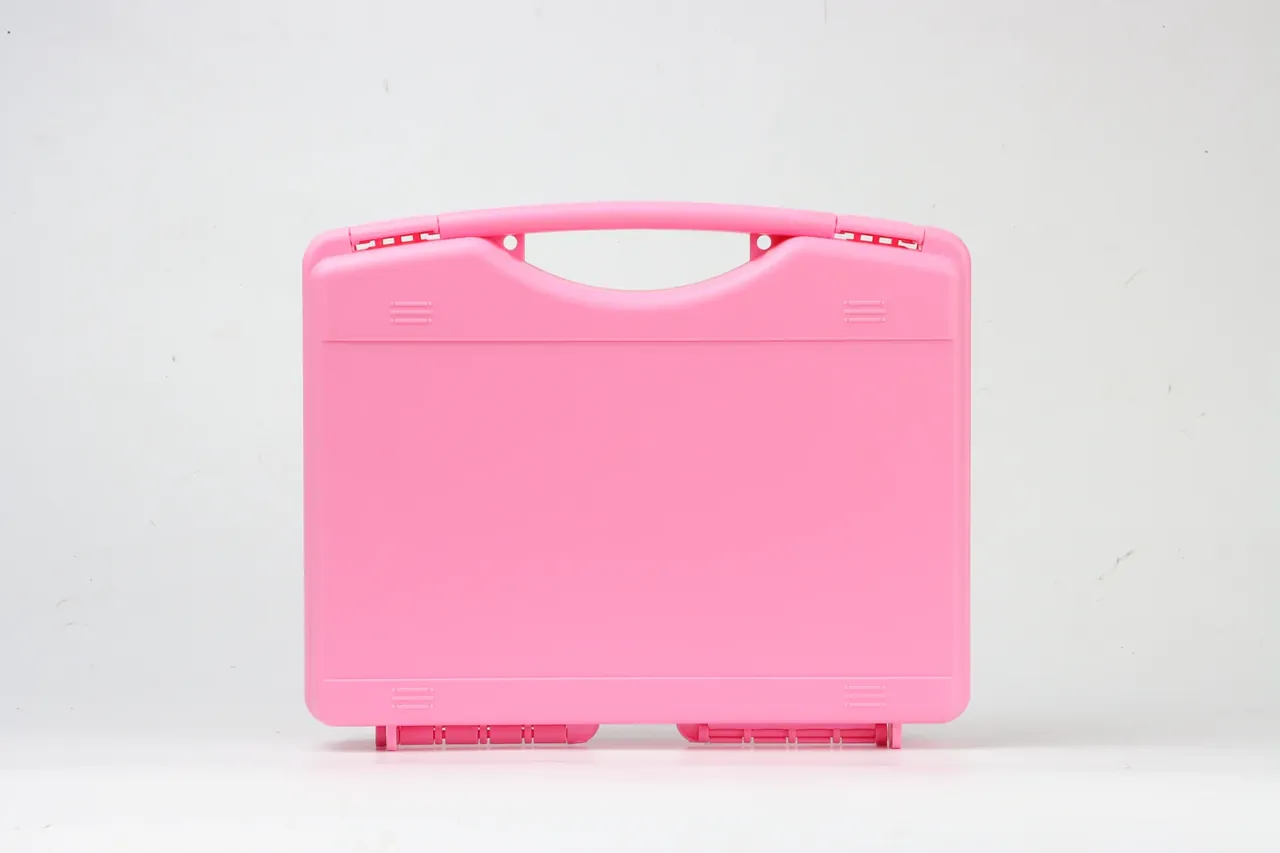
Tolerance follows the fixture. A jig-held hole holds ±0.2 mm on position and ±0.1 mm on diameter; a hand drill wanders to ±0.8 mm. Waterproof glands seal on an O-ring, and 0.5 mm of offset pinches one side, the most common rework item on a sealed case.
Re-sealing is where the money goes. Once a hole is cut the IP67 rating is gone, and it returns only through a gland at ¥8 to ¥12 per hole, a vent, or a 0.2 mm membrane patch at ¥2 to ¥4 that stops splashes only. A full unit then holds 0.3 bar for 60 seconds at ¥8 per case.
3. Screen Printing: Colours and Minimum Runs
Printing splits into a one-off and a per-unit charge. A single-colour screen in a 300 mm by 200 mm frame costs ¥120 to ¥180; four colours need four screens at ¥480 to ¥720. That cost does not move with volume, so spreading it over 300 units instead of 3000 multiplies its share by ten.
The per-unit charge tracks colours, not area. One pass lands at ¥3.4 per case at 3000 units; four passes with three registration steps reach ¥12. Past four colours the error shows at 0.3 mm, and UV digital at ¥9 is cheaper.
Set-up sets the minimum. A screen change takes 40 minutes, colour matching wastes 30 g of ink, and the first 20 units go to proofing, so shops quote from 300 units. Curved walls need a cylindrical machine and 40 percent more money.
4. Labels and Nameplates: Adhesion and Weathering
A 50 mm by 80 mm PET label costs ¥1.2 to ¥2.5 and holds colour indoors for 3 years, but yellows and lifts its corners after 18 months in sun. An anodised aluminium plate of the same size runs ¥6 to ¥12 and lasts beyond 5 years.
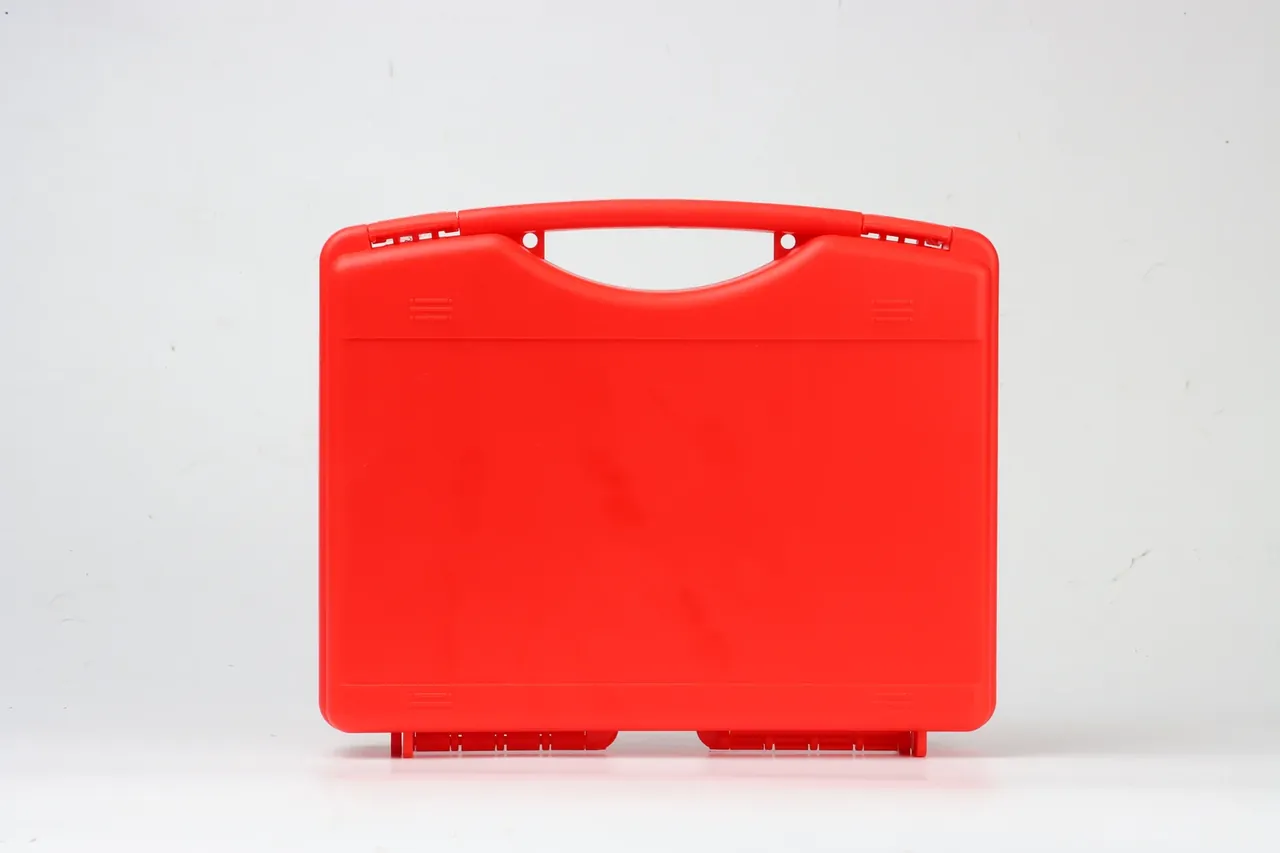
Adhesion fails more often than material. Polypropylene sits at 29 mN/m of surface energy and ordinary adhesive will not wet it; 3M 468MP works, but only after an isopropanol wipe and 10 seconds of rolling at 0.2 MPa.
Weathering follows the route. A case that enters a −20 °C freezer cracks standard PET within two cycles, while 0.15 mm low-temperature film adds ¥0.6.
5. Price Bands and Jig Amortisation
Case Secondary Operations only compare cleanly in one table. The figures assume a 3 mm polypropylene wall, a 2.8 kg case and 2026 labour rates in southern China, before tax.
| Operation | Unit | 300 units | 3000 units |
|---|---|---|---|
| 8 mm round hole | ¥/hole | 6.0 | 3.2 |
| Shaped cut-out | ¥/hole | 32 | 18 |
| One-colour print | ¥/case | 7.5 | 3.4 |
| Four-colour print | ¥/case | 26 | 12 |
| PET label | ¥/label | 1.9 | 1.2 |
| Aluminium plate | ¥/plate | 14 | 9 |
One-off costs need their own lines, with the amortisation basis written into the quotation. A ¥680 jig is ¥2.27 per unit over 300 pieces and ¥0.23 over 3000, which is why two quotes for the same drawing can differ by ¥6.
| One-off item | Cost (¥) | Over 300 units | Over 3000 units |
|---|---|---|---|
| Drilling jig | 680 | 2.27 | 0.23 |
| Cut-out program | 120 | 0.40 | 0.04 |
| Four-colour screens | 600 | 2.00 | 0.20 |
Ownership follows payment: a buyer who pays for the jig usually owns it, while a shop that absorbs the cost recovers it later.
6. What Doubling the Batch Does
Volume does not act evenly, so a single discount factor misleads. A jig is set once, so a round hole falls 47 percent between 300 and 3000 units.
Printing gains from screen life, dropping 55 percent on one colour; four colours stop four times for registration and drop 54 percent, though the cash saved is largest. Labelling gains least at 37 percent.
| Batch (units) | Drilling | Printing | Labelling |
|---|---|---|---|
| 100–300 | Hand drill with jig | Flatbed screen | By hand |
| 300–1000 | Single-spindle CNC | Flatbed screen | Hand plus board |
| Above 5000 | Multi-spindle head | Pad or UV digital | Semi-automatic |
The break point sits at 5000 units, where each stage wants a machine of around ¥20,000 that only 12 months of orders can absorb.
Conclusion
A Case Secondary Operations quote holds up when four things are visible: holes split into round and shaped, tolerance tied to IP67, printing priced by colours and screens, and the amortisation batch of every jig in the contract. With those on the page, the ¥5 gap between a 300-unit and a 3000-unit order is arithmetic.
Related Reading
- Tooling and jig cost in custom case projects
- What a protective case quotation must specify
- How a protective case mould works
- Daily capacity on a case production line
Related Products
- 8 Series — Gun Cases; Military Equipment Cases; Camera Equipment Cases; Drone Cases; Watch Cases; Knife Cases; First Aid Cases; Electronics Equipment Cases
- WL8-2812 PP Gun Case — model WL8-2812
- All protective cases and toolboxes: 7 series, 158 models