

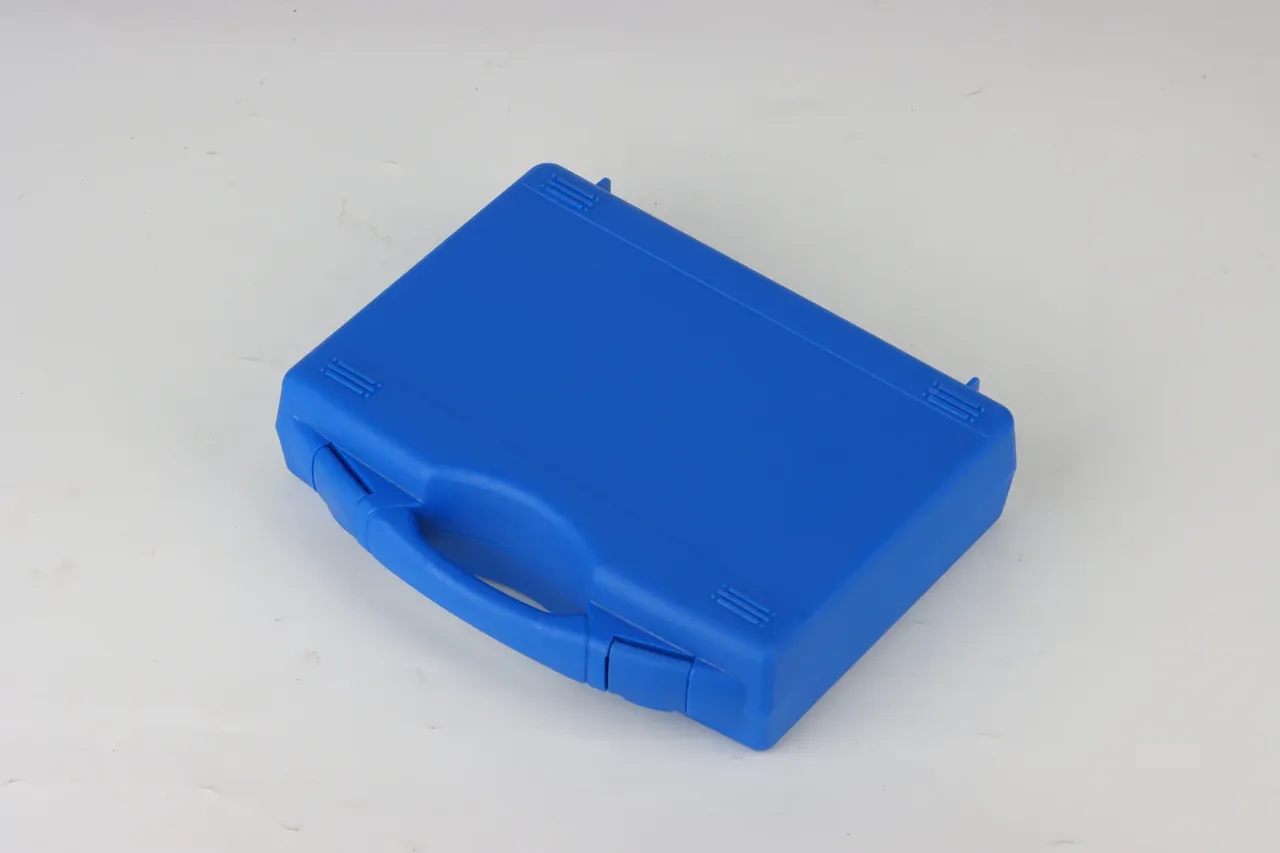
Quick answer: A Case Showroom built outdoors at minus 20 °C is settled by three details before any product goes out: a deck 120 mm off the frozen ground, a wind break holding airflow under 2 m/s, and a 5 °C transition tent that stops condensation.
Table of contents
- Rigging the Case Showroom for a Cold Field Site
- Demonstrating Lid Force and Latch Feel Below Freezing
- Six Moves From Transit State to Display State
- Packing Up: Three Failures That Repeat Every Season
- FAQ
1. Rigging the Case Showroom for a Cold Field Site
Cold-weather sites are compacted grass or gravel. The first job is levelling, not arranging product: 18 mm plywood, 2 mm embossed aluminium above it, the deck 120 mm up so air moves underneath. Without that gap a corner sinks as the top layer thaws.
Panels run 800 × 600 mm with joints offset by half a panel, so castors cannot drop into a seam. Aisles are 1.2 m wide, and a 100 mm kerb keeps visitors off an open lid.
Wind control costs far less than heating. Three sides of quilted tarpaulin plus a 1.5 m board on the windward face hold airflow under 2 m/s, and four people strike the whole Case Showroom in forty minutes.
Heat goes to the side, never onto the product. A forced-air unit two metres away is enough. Closer, one face of a case reaches 15 °C while the other stays near minus 18 °C, so a gloved hand reports soft on one side and hard on the other. The clear polycarbonate roof runs about 8 °C warmer than outside at noon. That gap produces condensation. Water on a latch makes it slip and pushes lid-force readings up by about 10 N.
| Item | Value | Why that number |
|---|---|---|
| Deck height | 120 mm | Isolates thawing ground, leaves an air gap |
| Aisle width | 1.2 m | Two people pass; kneeling blocks nobody |
| Heater outlet distance | 2 m or more | Prevents a local hot spot above 15 °C |
| Stack height on deck | 3 units maximum | Cold walls lose impact strength; the bottom unit whitens |
2. Demonstrating Lid Force and Latch Feel Below Freezing
Sequence matters more than technique. Move a case out of the 5 °C tent and let it stand 25 minutes so wall temperature catches up; open it off the trolley and you measure residual warmth.
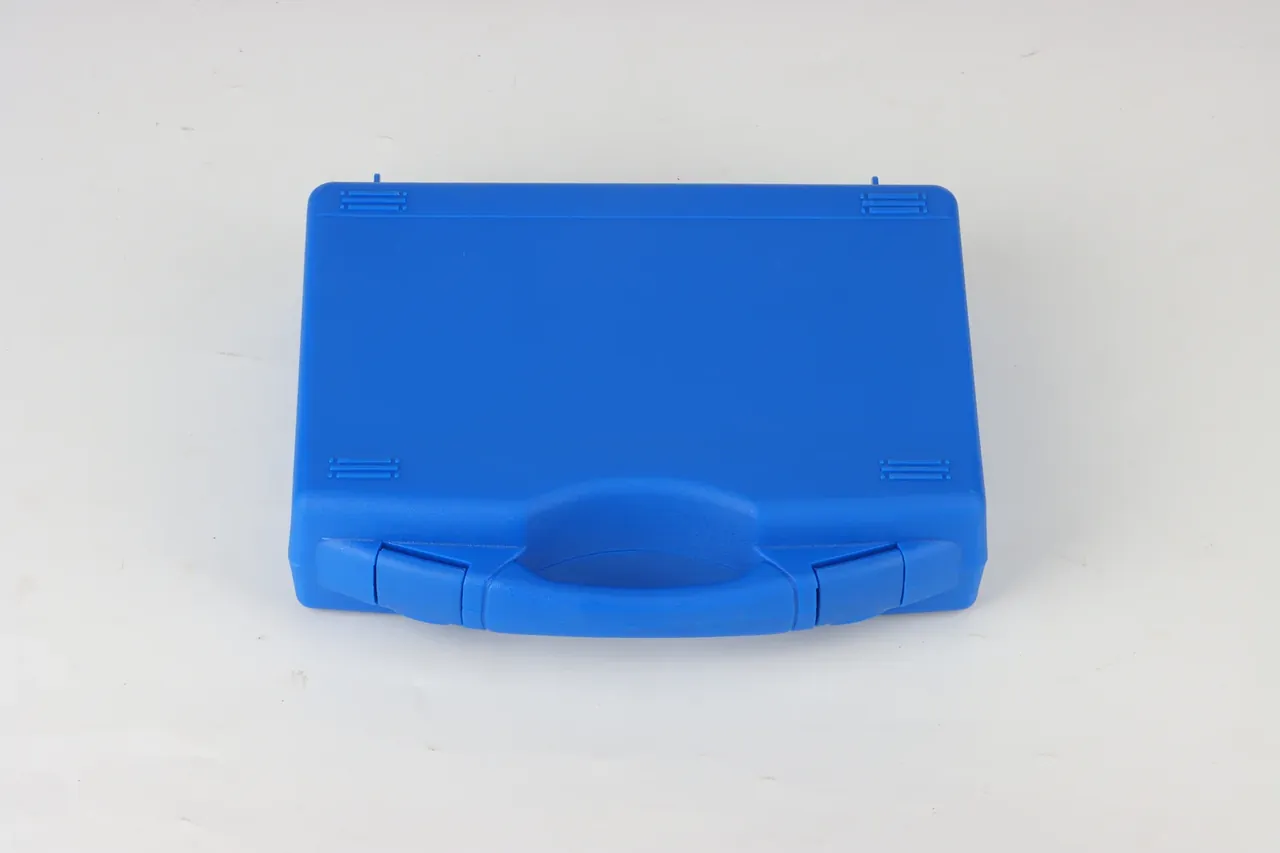
Polypropylene at minus 20 °C keeps roughly 35% of its room-temperature notched impact strength. A drop does not crack it; a corner shears off. Demos therefore cover opening, carrying and stacking.
In a Case Showroom the latch is the dividing line. The same catch needing 38 N at 20 °C takes 55 N at minus 20 °C, and a 3 mm glove cannot hook it one-handed, so the demo teaches a two-thumb press.
Ask for three readings. Lid force comes from a 50 kg gauge hooked at the lid edge midpoint and pulled to 90 degrees; latch return is two distinct clicks, since one click means a side never seated; the handle test hangs 12 kg and walks five metres.
| Check | At 20 °C | At minus 20 °C | Field criterion |
|---|---|---|---|
| Lid opening force | 28 to 35 N | 48 to 58 N | Above 65 N, the latch is over-tight |
| Latch return | Two crisp clicks | Two muffled clicks | One click: re-check seating depth |
| Handle, 12 kg, 5 m | No set | Slight whitening at root | Any hairline crack fails |
3. Six Moves From Transit State to Display State
Converting a case from transit to display in a Case Showroom takes six moves. A practised hand does one unit in four minutes, and 42 samples take two people three hours.
- Cut the stretch wrap and roll it upward from the base, blade facing out.
- Pull the desiccant sachet, read the humidity card, replace anything above 40%.
- Wipe surface water off the latch cavity and hinge pins.
- Set the case down, front edge flush, inset 20 mm from the deck lip.
- Stand the label card, 90 × 60 mm, type no smaller than 24 pt.
- For open-lid display, hold the lid at 105 degrees with a concealed prop.
Step three is the one crews skip. Leave the water and the latch cavity freezes into a thin skin overnight; the first visitors cannot release it, and hot water gets poured on.
4. Packing Up: Three Failures That Repeat Every Season
Packing up a Case Showroom is always rushed. A case that sat at minus 20 °C all day, pushed into a 20 °C hall, beads with water in ten minutes.
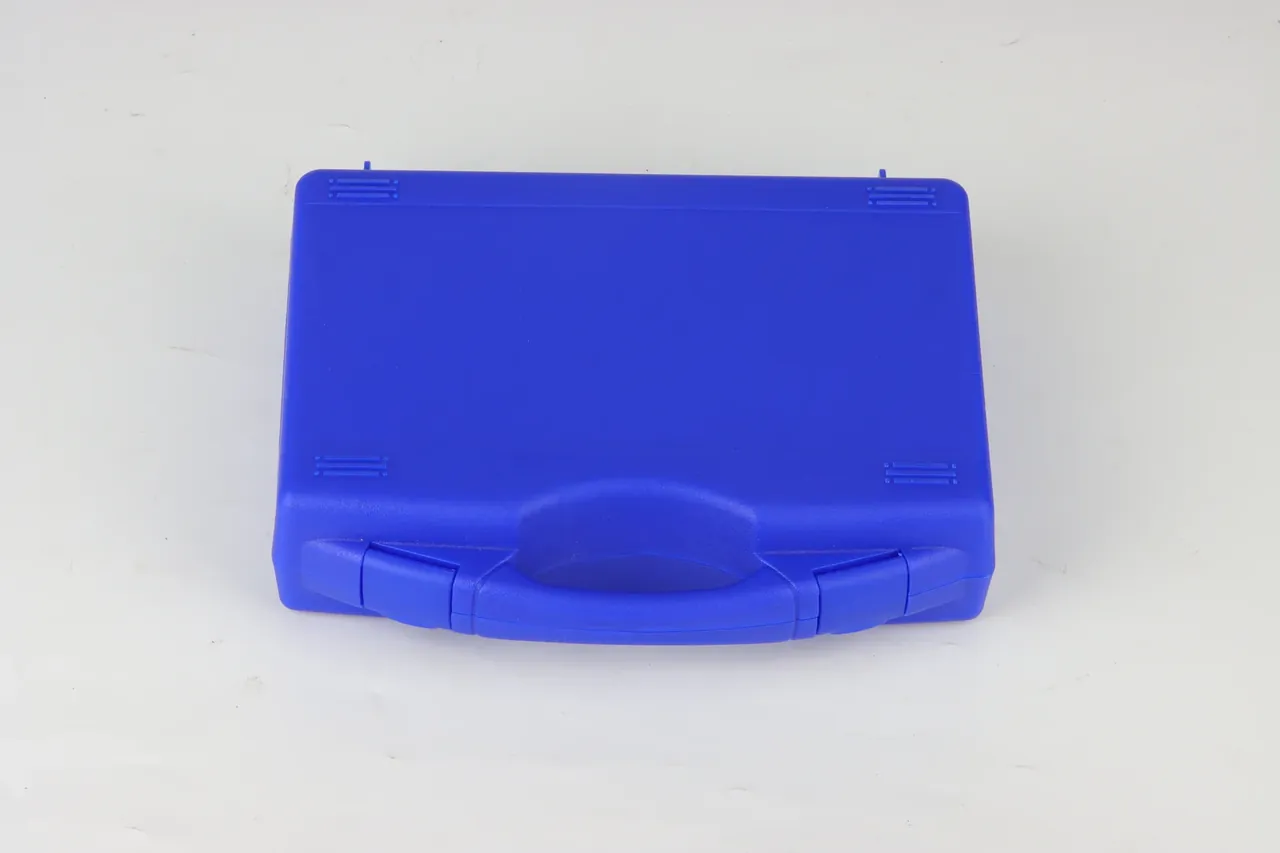
Run it through a 5 °C room for four hours first; a converted container is enough.
The second failure is restacking with latches not driven home. Thirty minutes of vibration and the unseated side springs open, bruising the lid edge.
The third is leaving label cards inside. PVC turns brittle, the card shatters and scores the foam.
Conclusion
A cold-climate Case Showroom is an ordinary showroom plus a raised deck, a wind break and a transition room. Hold 120 mm, three units high, two metres of heater clearance and four hours of tempering, and lid force plus latch return become comparable numbers. The test is simple: a visitor in gloves either opens the lid cleanly or does not.
This article discusses only the container (case body) side of specifications and design intent, and does not cover any handling, loading or use of the contents.
Related Reading
- Planning a showroom walk-through and time budget
- Vehicle-mounted cases for field training layouts
- Medical case access design for cold storage rooms
Related Products
- 8 Series — Gun Cases; Military Equipment Cases; Camera Equipment Cases; Drone Cases; Watch Cases; Knife Cases; First Aid Cases; Electronics Equipment Cases
- WL8-2812 PP Gun Case — model WL8-2812
- All protective cases and toolboxes: 7 series, 158 models