

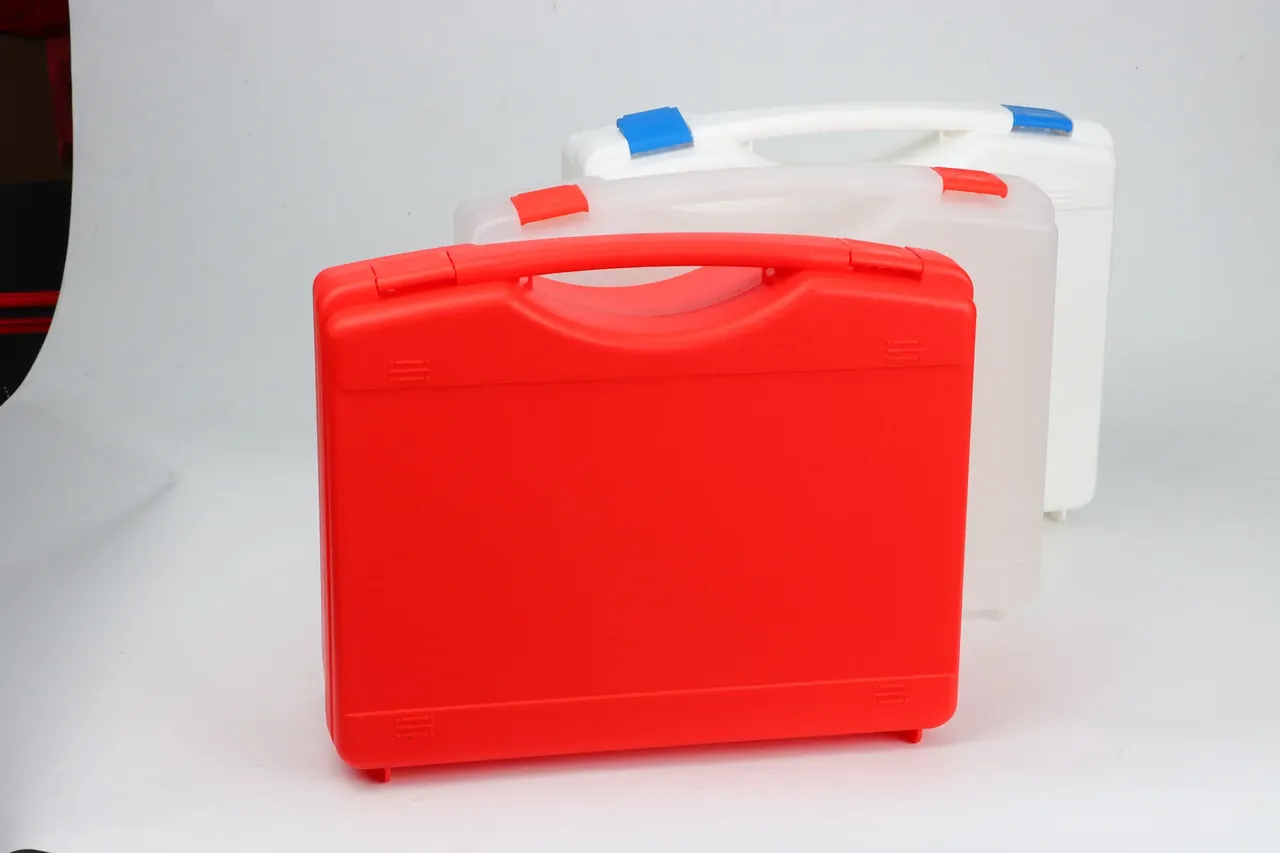
Quick answer: Securing cases in transit works back from a 0.5 g lateral load: two 25 mm PET straps per side at 350 N, and 18 pallets in a 20 ft box.
Table of contents
- Start with the Three Load Directions
- Straps: Angle, Count and Preload
- Pallets: Eight Cases on One
- Containers: Positions, Tiers and Bracing
- Six Checks After Loading
- FAQ
1. Start with the Three Load Directions
A case of 520 mm by 380 mm by 300 mm weighs 17 kg; eight on a 15 kg pallet make a 151 kg unit load. Securing follows three directions: braking along the length, cornering and ocean roll across the width, and squeeze from the tier above. The first two are estimated at 0.5 g, the third at two tiers, magnitudes that match GB/T 4857.4 tables and the ISTA 3E unit-load sequence.
Half a g on 151 kg gives 755 N. People guess higher, then over-tension to cover the guess.
The vertical sum is separate. The upper 151 kg rests on eight lower cases, so each carries about 19 kg over a 0.198 m² lid, roughly 0.94 kPa: two tiers are limited by height, not crush. The awkward part is that 755 N does not stay on one side. Thirty days of roll reverses it, and creep in the wall eats preload. The test is not how many straps were fitted, but how much survives three days. On a 25 mm PET strap, 350 N falls to about 300 N within 72 hours, a 15 percent loss; start at 400 N and 340 N remains. Friction closes the rest: four straps at 350 N on a 45 degree angle give 990 N, friction at 0.3 adds 444 N, and the 1434 N total leaves a factor of 1.9 against 755 N. Below 1.5, add a fifth strap.
2. Straps: Angle, Count and Preload
Strap size comes from breaking strength. A 25 mm PET strap breaks at 1200 N; a factor of 3 caps working load at 400 N, so preload sits between 300 N and 400 N.
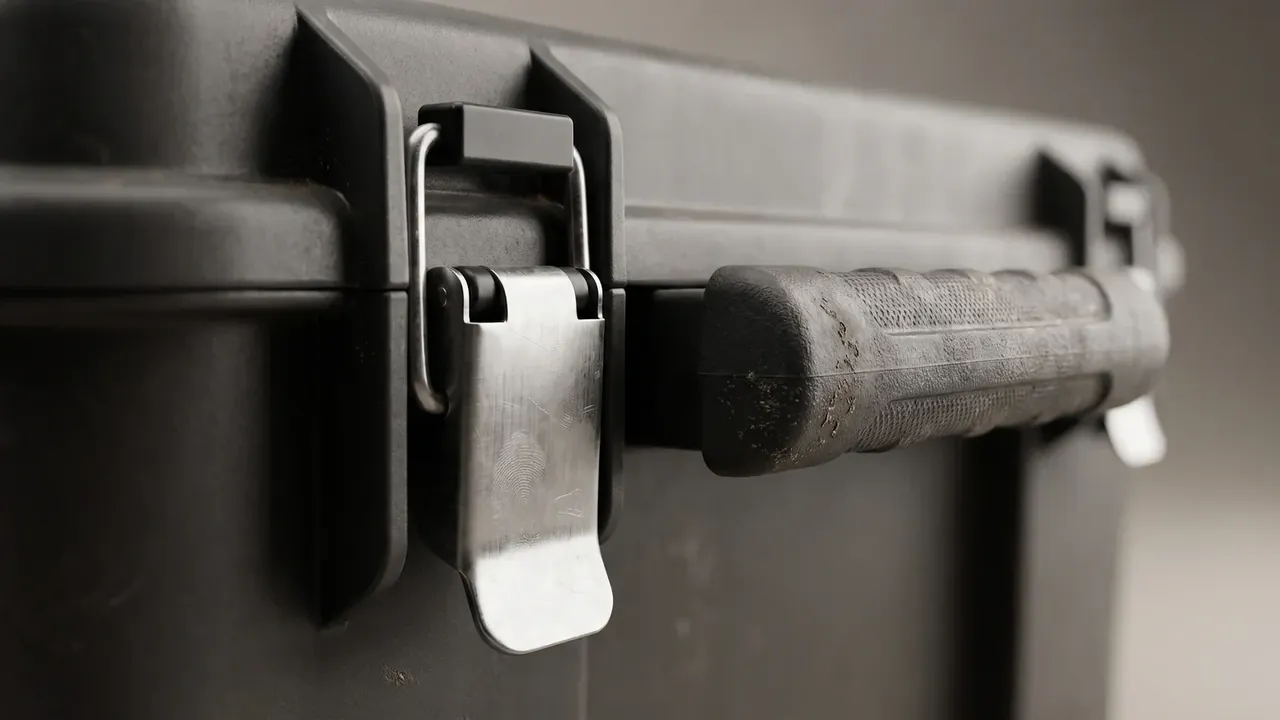
Two straps per side, four per pallet, spread the load over four points instead of dragging two to their limit. The angle is 45 degrees. Flatter, and horizontal share rises while vertical hold falls away; steeper, and it holds down well but resists sideways motion poorly. Forty-five is the compromise an operator can set by eye.
Tie points stay 100 mm or more from a corner, where stress concentrates and a strap crossing a radius both creeps and dents. In a paired trial, moving the tie point from 60 mm to 110 mm off the corner cut deflection on a 0.5 g table from 1.8 mm to 0.4 mm.
Measure compression after tensioning; 2 mm is the limit. A strap biting into the wall adds a permanent offset load, and a leak shows before the dent does. Nine minutes per pallet covers the routine for two people.
3. Pallets: Eight Cases on One
A 1200 mm by 1000 mm pallet takes four cases per layer, two along each edge, for eight cases over two layers. Pallet 144 mm plus cases 600 mm gives a 744 mm unit of 151 kg. Keep the outer edge 20 mm inside the pallet line.
Two bearers of 90 mm by 90 mm sit under the centre seam, so weight lands on timber rather than spanning air. A bearer 100 mm short leaves a dent in the base.
At 744 mm the unit stacks twice into 1488 mm, inside a 1.8 m ceiling; a third tier breaks it. Upper pallet feet belong on the frame of the lower cases, not in the middle of a lid.
| Method | What it holds | Typical failure | Re-check |
|---|---|---|---|
| PET strap | Unit to case | Buckle slip, preload loss | 300 N or more after 72 h |
| Pallet bearer | Load between tiers | Bearer shift, span dent | No shift, dent 0.5 mm or less |
| Wall bracing | Unit to wall | Timber loosening, creep | Gap filled, creep 10 mm or less |
4. Containers: Positions, Tiers and Bracing
A 20 ft box measures 5898 mm by 2352 mm inside. Pallets of 1200 mm by 1000 mm go two columns by four rows, eight units, and the 1098 mm left at the door takes one laid across, for nine positions. Two tiers of 1488 mm give 18 pallets and 144 cases.
A 40 ft box runs 12032 mm inside, so the same pattern gives twenty positions, forty pallets and 320 cases.
Fill the side gaps. Two columns of 1000 mm use 2000 mm of the 2352 mm width, leaving 176 mm per side. Brace with 90 mm by 90 mm timber every two rows, cut 5 mm oversize, plus one cross beam behind the doors.
Load from the nose back and keep the centre of gravity between 45 and 55 percent of box length; the cross-laid unit shifts it about 20 mm toward the door.
| Item | 20 ft | 40 ft |
|---|---|---|
| Internal length by width | 5898 mm by 2352 mm | 12032 mm by 2352 mm |
| Positions, two columns | 9 | 20 |
| Pallets after two tiers | 18 | 40 |
| Cases at eight per pallet | 144 | 320 |
| Side gap | 176 mm per side | 176 mm per side |
5. Six Checks After Loading
Six items are checked with the doors open: strap tension at 300 N or more, compression at 2 mm or less, side gap at 50 mm or less, bearer shift at zero, all eight latches engaged, seal number matched to the photographs.
Tension is measured, not estimated: hook a 200 mm push-pull gauge under the strap, pull 20 mm perpendicular, accept 300 N to 400 N. A spread above 40 N between straps means the buckles share unevenly. Record it for 2 years and hold load-shift incidents below 0.5 percent, one event per 200 pallets.
The criterion: before the doors close, one hand cannot move a unit load.
Conclusion
Securing cases in transit runs on three numbers: load, preload, margin. Load is 151 kg at 0.5 g, or 755 N. Preload is two 25 mm PET straps per side at 300 to 400 N, near 300 N after 72 hours. Margin is 990 N of restraint plus 444 N of friction against 755 N, a factor of 1.9. Eight cases on a 1200 mm by 1000 mm base stack to 1488 mm, and a 20 ft box turns nine positions into 18 pallets.
This article discusses only the container (case body) side of specifications and design intent, and does not cover any handling, loading or use of the contents.
Related Reading
- Loading and unloading a case shipment
- Three ways to pack: case, pallet, load
- How a stacking load test is run and read
- Case feet and what they carry when stacked
Related Products
- 8 Series — Gun Cases; Military Equipment Cases; Camera Equipment Cases; Drone Cases; Watch Cases; Knife Cases; First Aid Cases; Electronics Equipment Cases
- WL8-2812 PP Gun Case — model WL8-2812
- All protective cases and toolboxes: 7 series, 158 models