

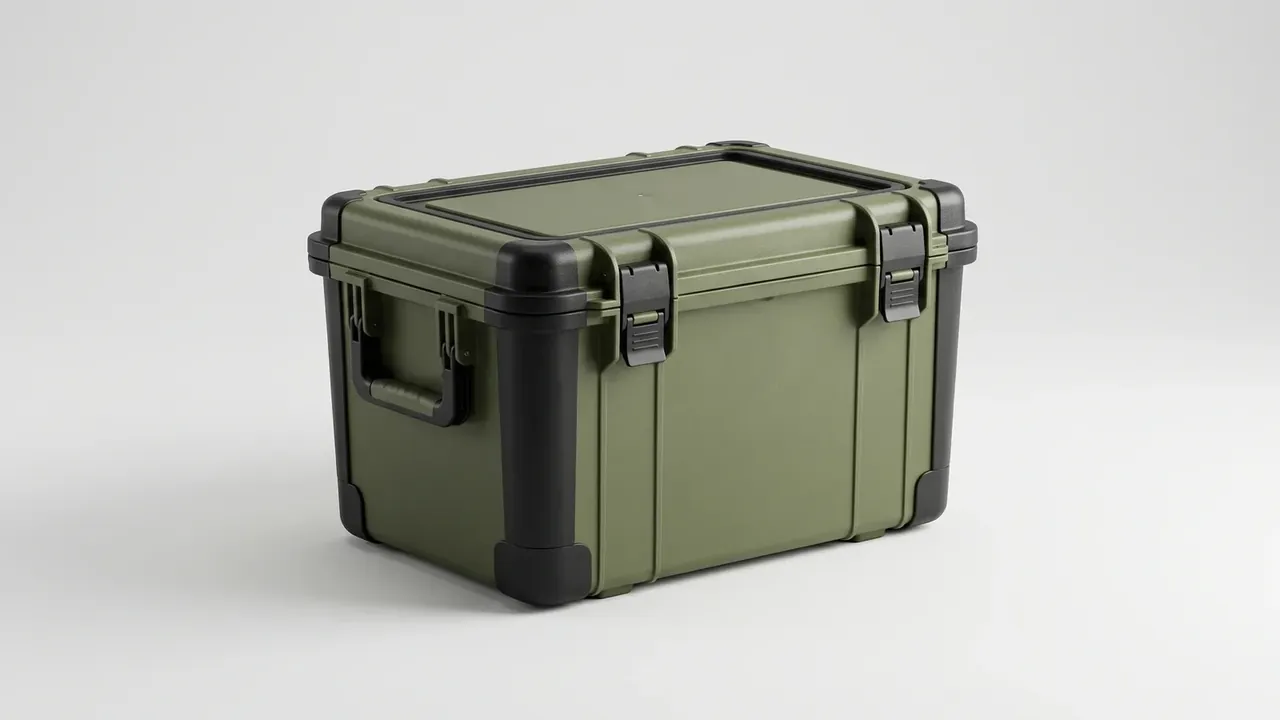
Quick answer: Case warehouse storage is cheap or expensive by cost per cycle, not by price. A 168 CNY hard case used 30 times over five years costs 5.6 CNY a trip; a 22 CNY carton used once costs 22 CNY. Return freight, floor space and rework decide the rest.
Table of contents
- Cost per Cycle, Not Cost per Case
- Against Cartons, Crates and Totes
- Four Situations Where It Does Not Fit
- Rework Cost: Swapping, Repairing, Floor Space
- Four Questions for the Quotation
- FAQ
1. Cost per Cycle, Not Cost per Case
Purchasing compares one unit price with another. Case warehouse storage only makes sense when cost is spread over time. A 168 CNY hard case cycling six times a year for five years lands at 5.6 CNY per trip, while a 22 CNY carton scrapped after one leg lands at 22 CNY. The gap is three to one; the price list suggests eight to one.
Three numbers feed that calculation: purchase price, cycles and service life. Cycles are the one most often overstated, because nobody records the actual use count.
| Carrier | Purchase price | Cycles | Cost per cycle |
|---|---|---|---|
| Hard case | 168 CNY | 30 (5 years x 6) | 5.6 CNY |
| Plastic tote | 96 CNY | 24 (4 years x 6) | 4.0 CNY |
| Timber crate | 340 CNY | 3 | 113 CNY |
| Carton | 22 CNY | 1 | 22 CNY |
2. Against Cartons, Crates and Totes
The real rival of a hard case is that a carton never comes back. On a 1200 km one-way export leg, return freight is billed by volume, and a 600 x 400 x 340 mm case costs about 9 CNY to send home, close to two cycles of use.
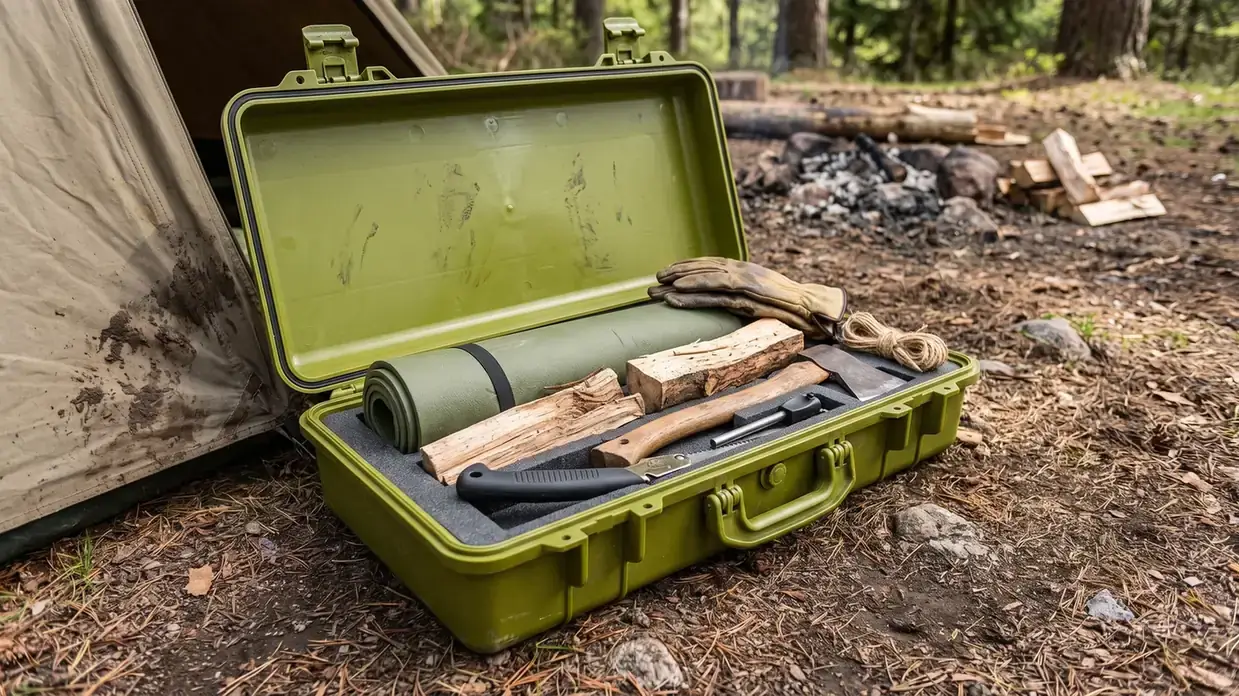
A timber crate looks like the worst buy at 113 CNY, but it replaces foam inserts and desiccant bags, so heavy and oversize items come out ahead.
The gap sits in four places: purchase, return freight, protection consumables and disposal. Compare only the first and the carton always wins; spread all four and case warehouse storage pulls ahead only above six cycles a year.
3. Four Situations Where It Does Not Fit
- One-way export, no empty return: 9 CNY of return freight eats two cycles of savings, so use a carton or a single-trip crate.
- Cavity changing every month: each change means new foam, so use a tote with adjustable dividers.
- Holding under 30 days, over 12 cycles a year: the case is scrapped before depreciation ends, so rent a tote by the day.
- Items over 40 kg or wider than 1200 mm: the handle was never designed for that load, so use a crate with lifting eyes.
The first three are cost problems; the fourth is structural, and structure is not a price question.
4. Rework Cost: Swapping, Repairing, Floor Space
Among the hidden costs of case warehouse storage, rework is the easiest to miss. One swap is 40 seconds of unwrapping, 25 seconds of relabelling and 90 seconds of re-checking, or 2 minutes 35 seconds. At 32 CNY an hour that is 1.38 CNY a time. A damage rate of 0.8 percent means eight swaps per thousand cases, 1.1 cents each. The figure is small only because it counts labour. Material loss is not in it. Downtime and floor space are not in it either.
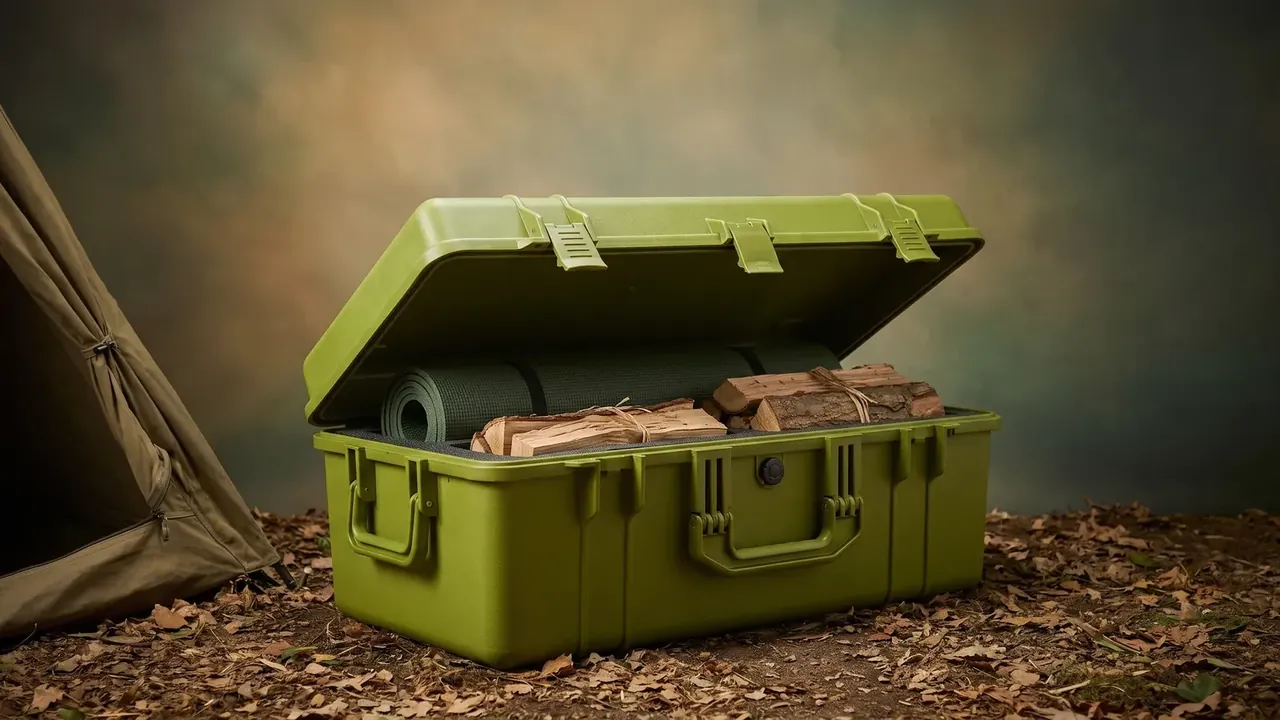
The real money sits in floor space. One pallet position takes 1.2 square metres, which at 420 CNY per square metre is 504 CNY. With twelve cases to a pallet, each case carries 42 CNY a year, seven times its cost per cycle. An empty case waiting three weeks for return freight occupies that money.
Repair cost depends on stoppage: a re-inspection after a collapsed insert stops the line four minutes, which at 60 CNY a minute is 240 CNY, the same as 43 manual swaps.
5. Four Questions for the Quotation
| Question | What to ask | Why it moves the unit cost |
|---|---|---|
| Cycle rating | Latch and hinge cycles the case is rated for | The rating is the denominator; 5000 against 2000 halves it |
| Return freight | Can empty cases nest, how many per pallet | Nesting cuts return volume by half |
| Insert replacement | Is the foam sold separately | A separate insert is about 30 percent of the price |
| Disposal | Is the material recyclable, and where | Charged by weight, and mixed material costs more |
Cycle rating matters most: a 12 percent price gap between a 5000-cycle case and a 2000-cycle one becomes 76 percent per cycle.
Quotations never list these four, so ask.
Conclusion
Case warehouse storage has to be costed by the year and by the trip, not by the unit price. Against cartons it wins on cycles and loses on return freight; against crates it wins on assembly and loses on oversize load; against totes it wins on sealing and loses on price.
This article discusses only the container (case body) side of specifications and design intent, and does not cover any handling, loading or use of the contents.
Related Reading
- How case warehouse storage is laid out and costed
- Cartridge box materials compared
- Tool box cover materials compared
- Industry requirements for cases compared
Related Products
- 8 Series — Gun Cases; Military Equipment Cases; Camera Equipment Cases; Drone Cases; Watch Cases; Knife Cases; First Aid Cases; Electronics Equipment Cases
- WL8-2812 PP Gun Case — model WL8-2812
- All protective cases and toolboxes: 7 series, 158 models