

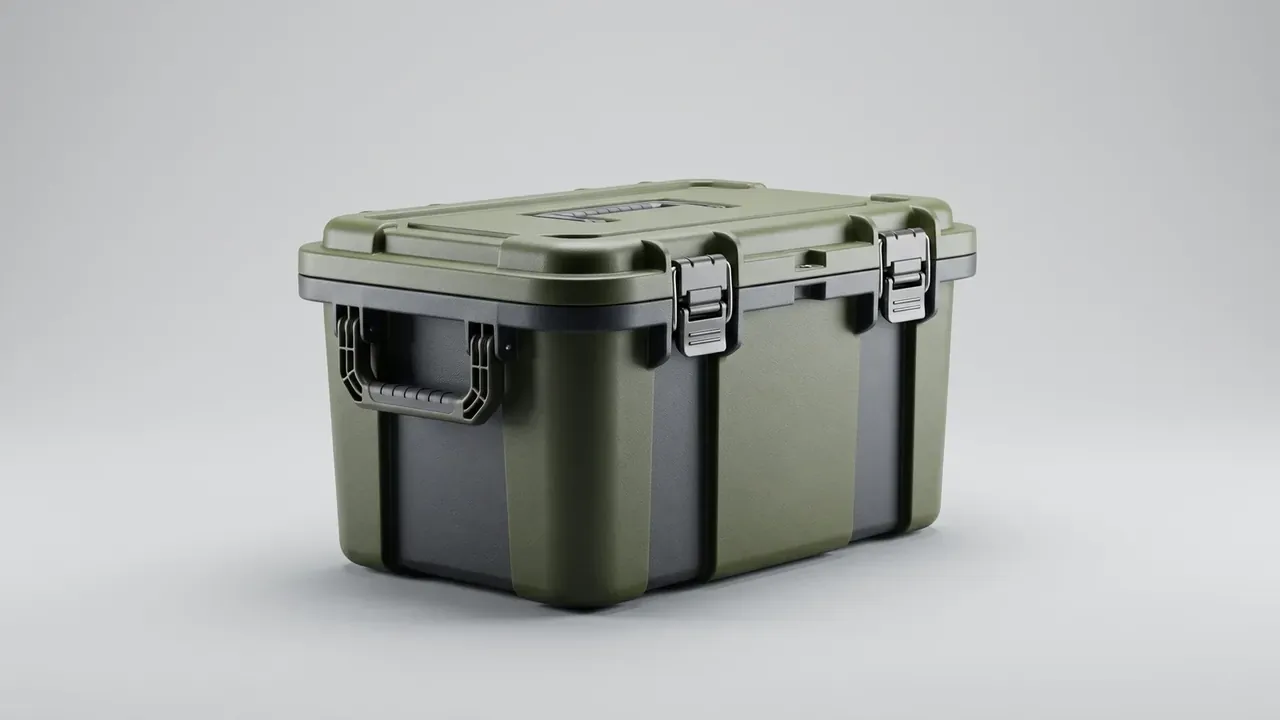
Quick answer: Do not open a case warehouse storage decision with rent per square metre. Start with four on-site tests: cost per case per month, creep at 38 °C, picks per hour, and a code readable at 1.5 m.
Table of contents
- Why per-square-metre pricing fails for Case Warehouse Storage
- Stack height: measure creep, not the rated layer count
- Handling: choose by picks per hour, not by vehicle price
- Codes and labels: readability sets the loading direction
- FAQ
1. Why per-square-metre pricing fails for Case Warehouse Storage
Three quotes per square metre line up easily, yet the number describes a floor, not a stock: the same 100 square metres holds more than twice as much in a drive-in as in floor stacking.
A quotation is written in square metres. Capacity is spent in cubic metres.
A 585 × 385 × 310 mm case at 7.4 kg sits six to a 1200 × 1200 mm pallet layer, so a two-pallet position carries 36 cases with 45 per cent of the floor in aisles; a beam-rack bay holds 18 at 30 per cent.
| Option | Floor used | Cases per 100 m2 | Cost per case per month |
|---|---|---|---|
| Floor stacking, two high | 55% | 1368 | 2.19 |
| Three-level beam rack | 70% | 2610 | 1.39 |
| Four-level drive-in | 78% | 3888 | 0.95 |
The cheapest row is not the answer. Drive-in reaches 0.95 and pays at the pick face, because a lane runs four pallets deep and the last one costs 3.6 moves; at two turns a week, handling eats the 0.44 saved.
Clear height rules out the second row sooner than expected: three layers on a pallet stand 1080 mm, each beam level 1150 mm, and top steel with sprinklers 450 mm, so three levels need 3.9 m.
2. Stack height: measure creep, not the rated layer count
A five-layer datasheet assumes 23 °C, empty cases and a 24-hour rest. A bay under a metal roof reaches 38 °C, the case carries 7.4 kg, and the batch sits for a quarter.
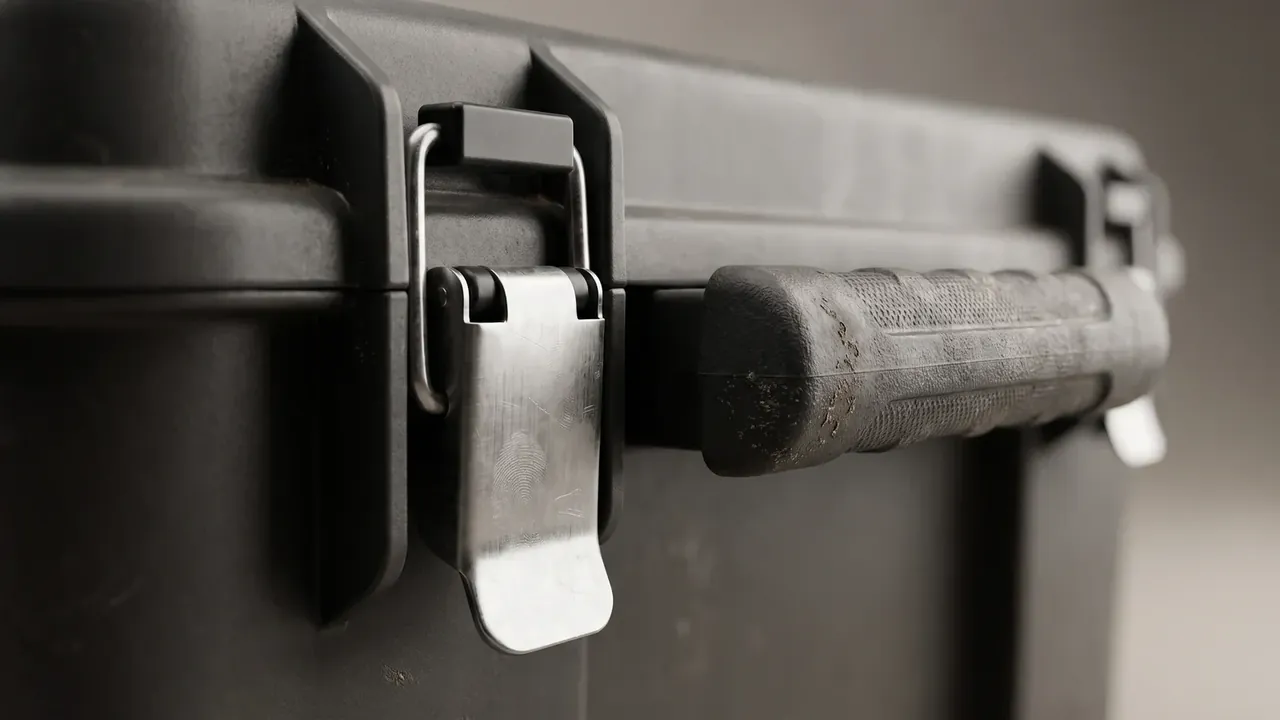
Replace that figure with temperature, duration and landing point: the hottest week in the building, three months of dwell, and where upper feet meet the lid.
Load three cases to working weight, hold a four-layer load at 38 °C for 72 hours, wait 30 minutes after release and measure: base deflection under 3 mm, lid diagonal under 2 mm. Fail either and the count drops a layer.
Every 10 °C below that test, one layer comes back.
Landing points fail more often than counts: feet on the lid ribs pass load into the side walls, feet in the middle label recess double deflection, and the tolerance is 15 mm.
The recess is for a label, not for load.
| Criterion | Datasheet says | Measurable test |
|---|---|---|
| Layer count | Stacks 5 high | Residual sink under 3 mm |
| Temperature | Ambient | Hottest week in the building |
| Landing point | Not stated | Foot to rib offset under 15 mm |
A 12 mm plywood interlayer buys one layer but adds 36 mm over four levels and eats fork clearance.
3. Handling: choose by picks per hour, not by vehicle price
Buyers ask what the truck costs. They should ask how many picks a lane sees in a day.
Aisle width follows the pick motion: 6 seconds walking, 22 opening and counting, 9 closing, so narrowing from 3.0 m to 1.8 m saves under 2 seconds and returns two locations per 100 square metres.
Four rules settle the choice:
- Up to 6 picks per hour, pallets under 400 kg: manual pallet truck, 1.5 m aisle.
- 7 to 20 picks per hour: stand-on stacker, 1.8 m aisle, lift to 4.5 m.
- Above 20 picks per hour: racks are wrong, so use flow racking at 12 seconds a pick.
- Over 15 per cent of picks needing a full pallet out: drive-in is out.
Flow has a quieter criterion, the lid direction: a case facing the wall needs half a turn at every pick, costing 8 seconds and two labour hours a month.
An aisle saves floor. A flow saves people.
4. Codes and labels: readability sets the loading direction
Location codes follow the rack: three levels of 12 bays picked from both sides need five digits, with 25 mm characters readable at 1.5 m.
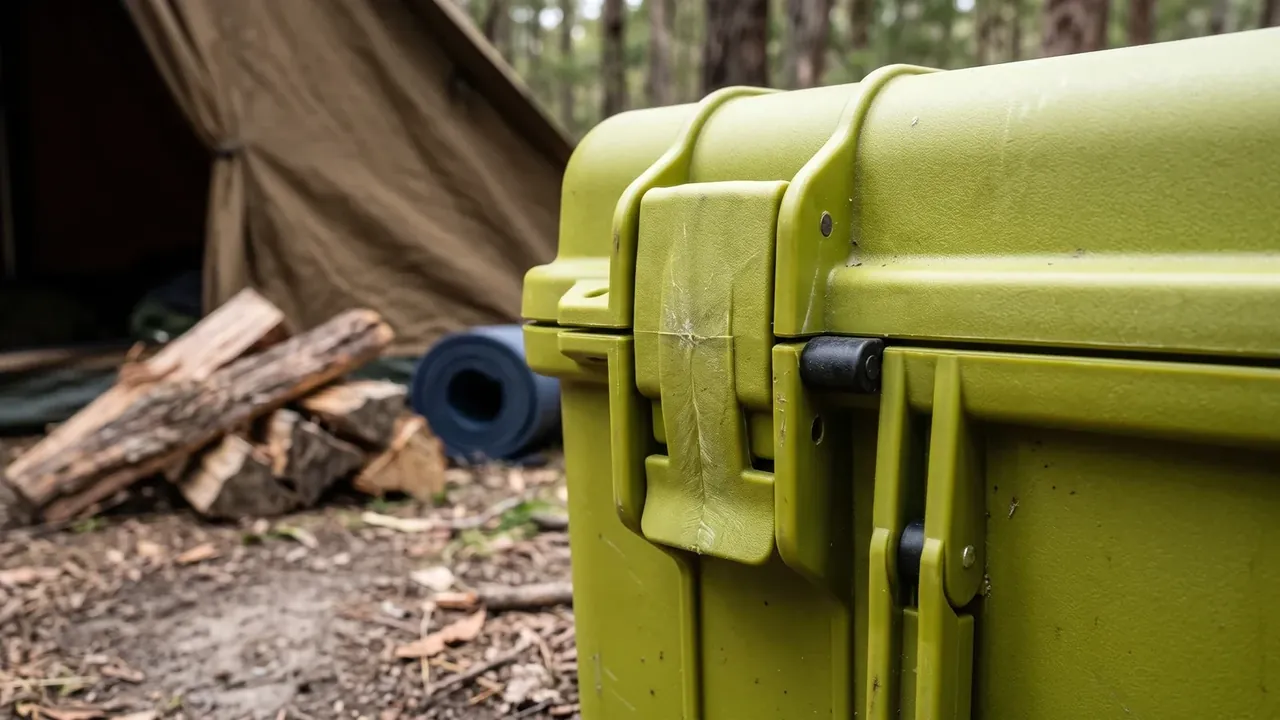
Two adjacent faces need marking at 90 degrees. Orientation belongs to the forklift, so a single printed face turns inward half the time; screening both costs under 0.3 per case.
Keep the mark 80 mm above the base and 40 mm from the corner, clear of forks and of a latch that can peel the edge.
| Method | Rub cycles | Re-codable | Cost per case |
|---|---|---|---|
| Silk screen | Over 200 | No | 0.6 |
| In-mould label | Case lifetime | No | 1.4 |
| Polyester label | About 20 | Yes | 0.15 |
One test covers the section: in a stock count, no more than 5 per cent of locations may need the case lifted before the code reads. Time 40 locations; a higher figure means the mark is wrong.
A code nobody can read is not a code.
Conclusion
Case Warehouse Storage selection rests on four numbers anyone can measure: cost per case, creep at 38 °C, picks per hour, and readable distance at 1.5 m. A scheme that fails them is not cheap, only expensive somewhere else, and the bill is finally paid per case. That is what makes Case Warehouse Storage a measurement job rather than a rent comparison.
This article discusses only the container (case body) side of specifications and design intent, and does not cover any handling, loading or use of the contents.
Related Reading
- Stack height, pallet choice and aisle width for storage
- Locking storage boxes: locks and cabinet selection
- Selecting a storage box for explosive materials
Related Products
- 8 Series — Gun Cases; Military Equipment Cases; Camera Equipment Cases; Drone Cases; Watch Cases; Knife Cases; First Aid Cases; Electronics Equipment Cases
- WL8-2812 PP Gun Case — model WL8-2812
- All protective cases and toolboxes: 7 series, 158 models