

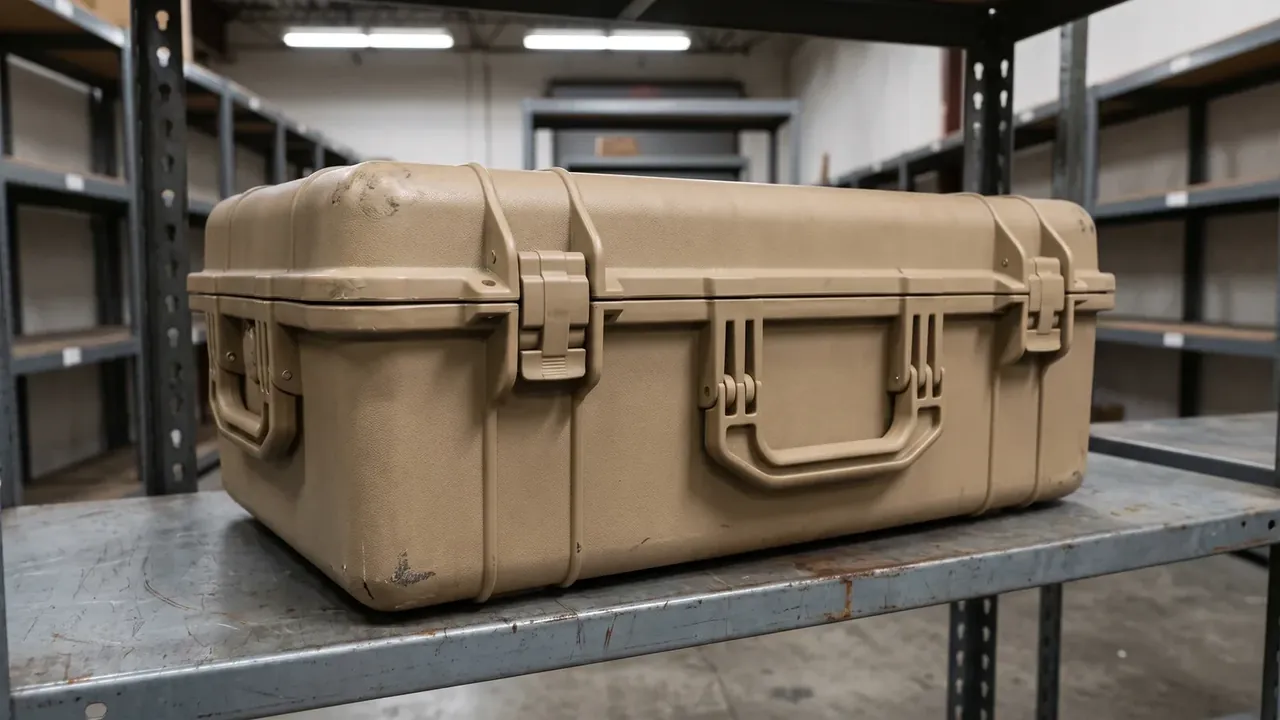
Quick answer: Case gasket cleaning tolerates very little: 70% isopropanol at most, two passes per spot, 30 min drying, or lip compression set passes 25%.
Table of contents
- The misjudgement: three alcohol passes
- Isopropanol limits and the two-pass wipe
- Neutral cleaner at 2% and pH 7 ± 1
- Post-clean checks: 25% set and 0.3 kPa
- FAQ
1. The misjudgement: three alcohol passes
Three cases from one batch went through the same shift with the same bottle of 95% alcohol: one pass, two passes, three passes. After 48 h the third case showed a white bloom along the lip, and a 3 s thumb press left a dent that took 40 min to flatten. That case then held 0.3 kPa for 60 s with a 0.11 kPa drop, which still passed; one month later the same test read 0.19 kPa and failed.
The bloom is filler coming up, not dirt. Stronger alcohol extracts the low-molecular plasticiser and antioxidant out of EPDM and TPE harder, and as the solvent flashes off it drags those fractions to the surface. In case gasket cleaning the least expendable step is controlling what the solvent takes with it.
The gap between 95% and 70% is not just concentration, it is the 25% to 30% water. Water pulls the solubility parameter away from EPDM, so extraction slows sharply while the surface still gets cleaned. For case gasket cleaning, 70% is a ceiling, not a starting point.
The lip only bites across 0.2 mm. Once that 0.2 mm hardens, the latches bottom out without compressing anything, and moisture walks in around the groove in two turns.
2. Isopropanol limits and the two-pass wipe
The two passes have fixed jobs. The first dissolves oil and hand sweat with 70% isopropanol, the second lifts the solvent and the loosened soil away with a damp cloth. One pass smears soil across the lip, three passes triple the extraction. The curve for case gasket cleaning peaks at two and declines from the third.
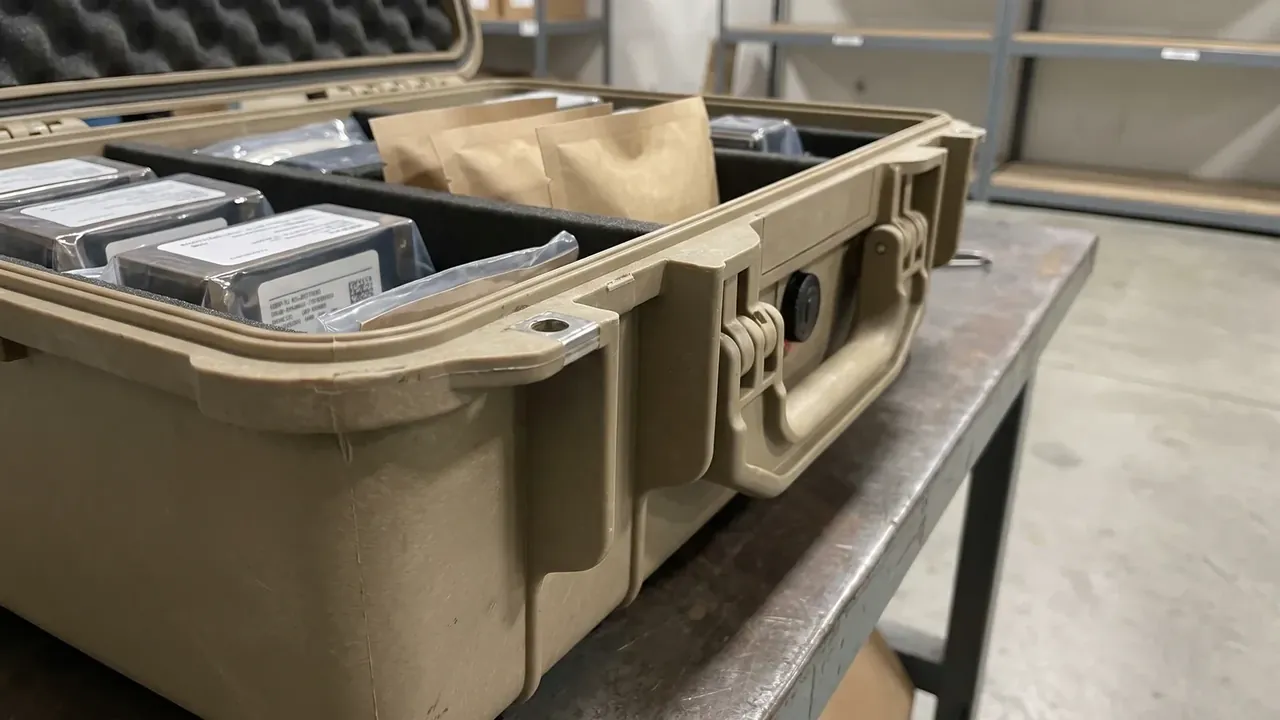
Use lint-free polyester, 20 cm square folded into 4 layers, 15 mL per charge. Work in 30 cm sections, straight strokes under 60 s per section, then turn to a clean face. Rubbing back and forth presses grit into the lip and leaves scratches; a 5 μm scratch is deep enough to trap soil.
| Liquid | Strength | Max contact | Where | Main risk |
|---|---|---|---|---|
| Isopropanol | 70% | 60 s | Lip, groove, shell | Plasticiser extraction |
| Isopropanol | 95% | Avoid | Spot work on hardware | Bloom, higher set |
| Ethanol | 75% | 60 s | Large shell areas | Film from additives |
| Neutral cleaner | 2% | 2 min | Mud, grease | Sticky residue |
| Water | — | No limit | Second pass | None |
| Acetone | Any | Banned | None | Swelling, cracking |
| Caustic | pH 11+ | Banned | None | Hydrolysis |
Solution temperature counts as 20–30 ℃. Every 10 ℃ roughly doubles the surface reaction, so a bottle left in the sun for 2 h reaches 45 ℃ and the 60 s ceiling becomes 30 s.
Leave 2 min between passes. The first pass needs time to pull oil out of the micro-pores, and wiping straight over it pushes the solvent back in. At 25 ℃ with 1 m/s airflow, 2 min is enough; in cold weather stretch it to 4 min. Latch seats and handle roots collect water, so wring the cloth until it stops dripping and spot-wipe 30 s with 70%.
Three things to avoid. Do not invert the case and let liquid run down the lid edge into the groove. Do not blow the groove out with an air gun, which drives soil to the bottom. Do not pull the whole gasket out and soak it in a basin, where it deforms without support.
3. Neutral cleaner at 2% and pH 7 ± 1
Two percent is by volume: 100 mL of neutral concentrate in 5 L of room-temperature water, stirred and left 1 min. That lands at pH 7 ± 1, and anything from 6 to 8 is usable; above 8, dilute further or change product. Stronger is not better, because 5% of the same bottle swells the lip noticeably more than 2%.
Judge with 0–14 wide-range paper, dipped 1 s and read against the chart. One pH unit resolves the 6 to 8 window; telling 7.5 from 8.5 needs 0.2 grade paper, and paper beats a cheap electrode that drifts on salt residue.
The banned list fits on the bench: acetone, thinner, chlorine bleach, caustic above pH 11 and any abrasive cream. Acetone swells a TPE lip almost instantly and the groove will not take the gasket back next morning; abrasive particles of 20–50 μm take roughness from Ra 0.8 μm to Ra 3.2 μm and double its appetite for soil.
Brush only where mud has packed into the groove. A soft brush with 2% solution, one direction, 2 min, bristles into a 0.3 mm gap is enough; skip toothpicks and paper clips. Follow with two water passes along the same path until the cloth shows no foam.
Water quality changes the result. Tap water above 300 mg/L hardness dries into a white scale line that reads like cleaner residue but is calcium and magnesium, so use deionised water for the 2% mix.
4. Post-clean checks: 25% set and 0.3 kPa
Drying belongs on the process card: 20–25 ℃, 60% RH, 1 m/s air, 30 min. Skip the heat gun, because air above 60 ℃ ages a damp lip faster than room air, and the surface reads dry while solvent stays inside.
Compression set is the only quantitative check after case gasket cleaning. Cut a 10 mm sample of the same compound, compress it to 25% of original thickness, leave 24 h at room temperature, release and measure after 30 min. If it recovers to less than 75% of thickness, set exceeds 25% and the gasket should be replaced, not cleaned again.
| Check | Method | Pass line | Action on fail |
|---|---|---|---|
| Lip appearance | Visual, 5× loupe | No bloom, no crazing | Replace gasket |
| Compression set | 25% compression, 24 h | ≤25% | Replace gasket |
| Air hold | 0.3 kPa for 60 s | Drop ≤0.15 kPa | Clear groove, retest |
| Residue | White cloth after 30 min | No mark | Dry 15 min more |
Run the hold test latched, at 20 ℃, with a 1 kPa gauge reading to 0.01 kPa. A failed drop is usually water or lint in the groove, so wipe, dry, retest, and condemn the part only after two failures.
Set the interval at 6 months, 3 in dusty shops, and log four fields: date, cleaner batch, set reading and pressure drop.
Conclusion
Case gasket cleaning reduces to two lines on the bench card. The first names the liquids: 70% isopropanol for lip and groove, 2% neutral cleaner for mud and grease, water as the closing pass, and nothing else. Acetone, thinner, caustic above pH 11 and abrasive cream stay out of the case. Two passes, dissolve then lift; a third starts damaging the compound. The second line is the check sheet: dry 30 min, set at or under 25%, hold 0.3 kPa for 60 s with a drop at or under 0.15 kPa, all three before the case goes back into service. Run it every 6 months, every 3 in dusty shops, and stop cleaning once two hold tests fail, because a new gasket is cheaper than a wet load.
This article discusses container-side specifications and design implications only, and does not cover any handling, loading or use of the contents.
Related Reading
- Cleaner chemistry and gasket compatibility
- Judging and sizing a gasket replacement
- Gasket and O-ring material properties
- Groove dimensions for case gaskets
Related Products
- 8 Series — Gun Cases; Military Equipment Cases; Camera Equipment Cases; Drone Cases; Watch Cases; Knife Cases; First Aid Cases; Electronics Equipment Cases
- WL8-2812 PP Gun Case — model WL8-2812
- All protective cases and toolboxes: 7 series, 158 models