

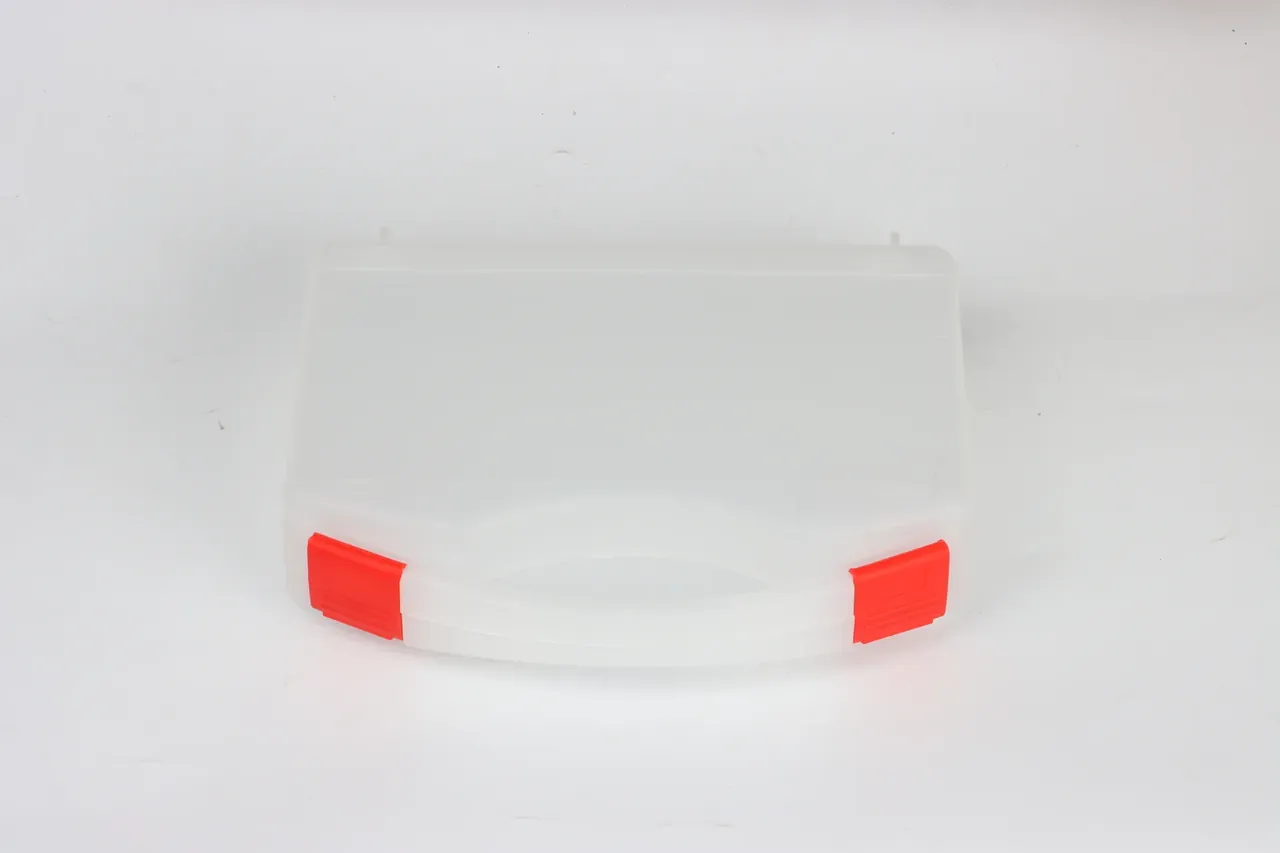
Quick answer: Two hours with a spectrophotometer, a caliper and a pull gauge settle most of a colored protective case verdict: ΔE within 1.5, wall at or above 2.6 mm, latch retention past 180 N.
Table of contents
- Seven measurable checks on a colored protective case sample
- The first hour after unboxing: seams, latches, handle
- Translating duty conditions into a case configuration
- When two sample sets both pass, compare the spread
- FAQ
1. Seven measurable checks on a colored protective case sample
Last November a buyer and I spent two days with twelve colored protective case samples: four orange, four dark grey, four olive.
| Check | Method | This batch | Release line |
|---|---|---|---|
| Color | Three lid points, worst ΔE | 0.7 to 1.4 | ≤ 1.5 |
| Wall | Base and side, minimum | 2.62 to 2.91 mm | ≥ 2.6 mm |
| Latch | Tongue pulled to release | 168 to 224 N | ≥ 180 N |
| Handle | 30 kg hung 1 hour | No whitening | No crack |
| Cold drop | 4 h at -25 °C, 1.2 m, six faces | One corner split | No crack |
| Salt spray | Neutral, 96 h | No red rust | No rust at 96 h |
| Batch match | Four per shade side by side | Two olive too yellow | Indistinguishable |
Color was never first to fail. Two olive units held only 168 N and 172 N at the latch; one dark grey case, frozen four hours and dropped 1.2 m, split 6 mm at a corner. Worst shade deviation was ΔE 1.4.
Latch and body share one core-pull structure, and where the mould vents poorly the tongue root runs short, dropping retention a fifth. Repigmenting a colored protective case does not touch it, so the defect follows the shade. Check mechanics first, color last.
2. The first hour after unboxing: seams, latches, handle
Do not spend the first hour against a color fan; look at what cannot be reworked.
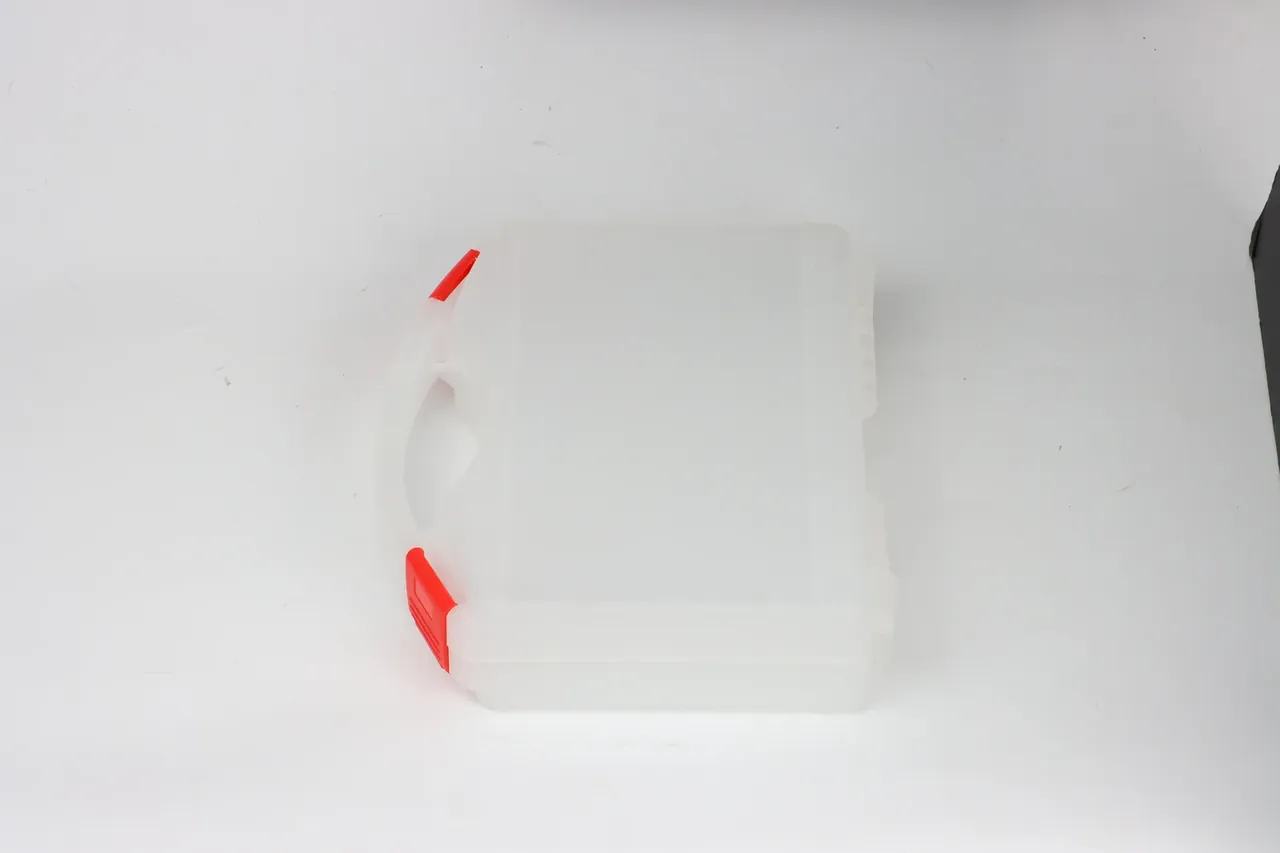
Run twelve through this sequence and an hour is enough:
- Parting line: a step above 0.3 mm means worn locating pins.
- Latches: ten cycles each; a dull thud means deformation.
- Handle: carry 15 kg five metres, watch the root for whitening.
- Mouth seal: trap paper, pull at four points, resistance should feel even.
- Liner: rebound slower than 3 seconds means under 25 kg/m³.
The order cuts cost. Seam, latch and handle sit outside the body, so no liner removal is needed; drop and spray tests destroy the sample, so one unit goes last. Run this way, twelve samples give up 30 percent more findings than a session of swatch comparison. The usual scene is a ring of people arguing over shade while nobody sees a whitened handle root.
3. Translating duty conditions into a case configuration
Purchase documents say the color follows the swatch card, which settles nothing. On a colored protective case, shade should follow the duty: night work needs reflectance, cold chain needs low heat absorption.
| Duty | Shade | Wall | Liner | Common mismatch |
|---|---|---|---|---|
| Night lifts | Orange or yellow, 50 mm tape | 3.0 mm | 20 mm EVA | Dark grey blends in |
| Cold store | Light grey | 2.8 mm | 30 mm PE | Black chosen, condensation |
| Field training | Olive or sand | 2.6 mm | Egg-crate foam | Foam too light |
| Lab instruments | Blue or white | 2.6 mm | Anti-static foam | Static fries boards |
| Airline | Orange-red | 3.0 mm | Corrugate plus foam | Single wall, crushed |
The column people skip is the last one. It records rework reasons: shade collides with the background, a dark body hits 62 °C on summer concrete, a single-wall shell collapses after one baggage belt. Fit is not whether the shade looks right, but whether the case is recognised at a glance.
4. When two sample sets both pass, compare the spread
Two suppliers clearing the line is normal. Compare differences, not totals.
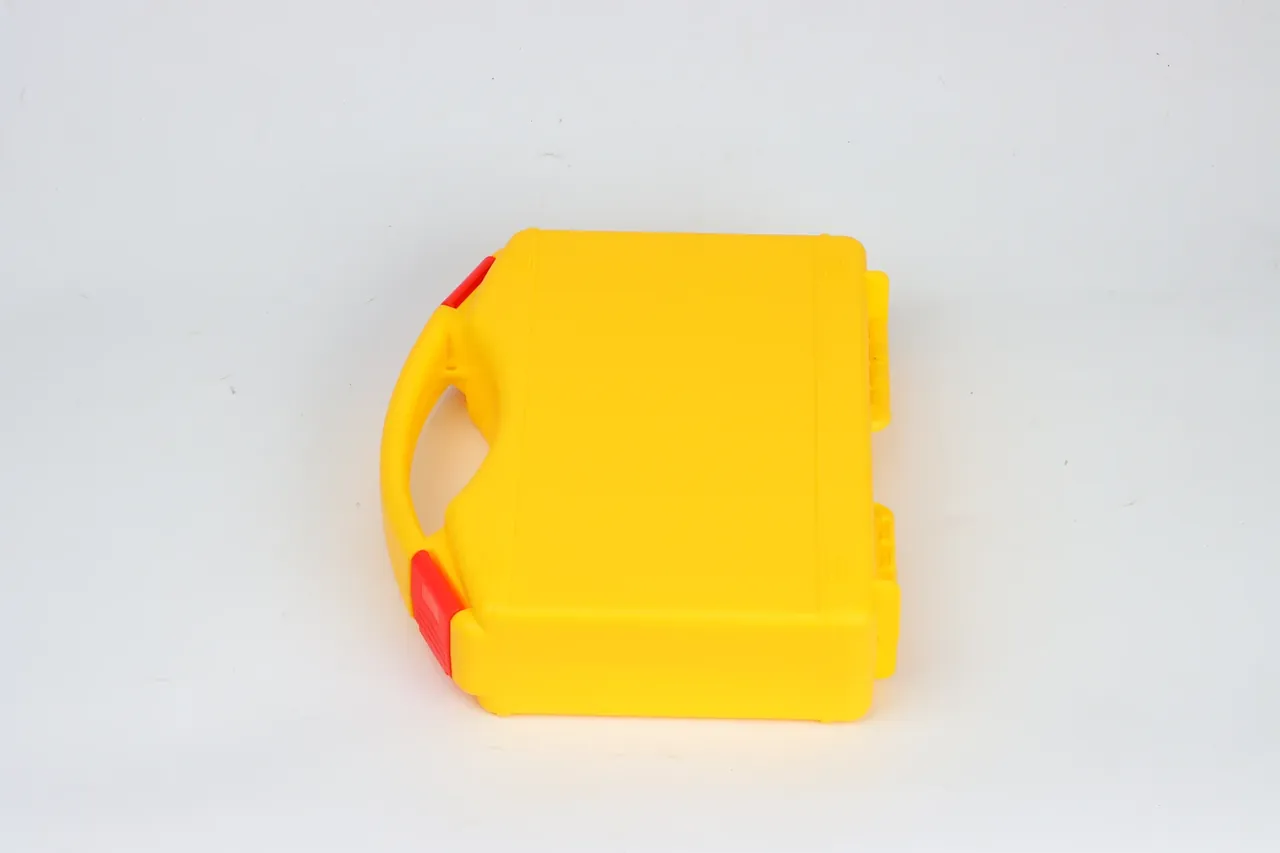
Measure same-shade samples side by side. A range within 0.4 means a formula shade; past 0.8 it is trimmed by hand and will drift.
Latch spread matters as much. A set reading 210, 196, 204 and 188 N is safer than 224, 180, 216 and 172 N — same average, but the second carries units ready to fall under the line. A supplier returning the first sample in 7 days and the second in 14 will slip again at volume. By year three the latch is usually the first failure, so ask whether it is swappable.
Conclusion
Most of a colored protective case verdict can be reached on site in two hours; batch data closes the rest. Test mechanics before shade, or rework points slip past. Choosing one is, in the end, translating a duty into numbers.
This article discusses only the container (case body) side of specifications and design intent, and does not cover any handling, loading or use of the contents.
Related Reading
- How the color of a protective case is made
- Color difference standards for colored cases
- Sizing a case from the gear inside
Related Products
- 8 Series — Gun Cases; Military Equipment Cases; Camera Equipment Cases; Drone Cases; Watch Cases; Knife Cases; First Aid Cases; Electronics Equipment Cases
- WL8-2812 PP Gun Case — model WL8-2812
- All protective cases and toolboxes: 7 series, 158 models