

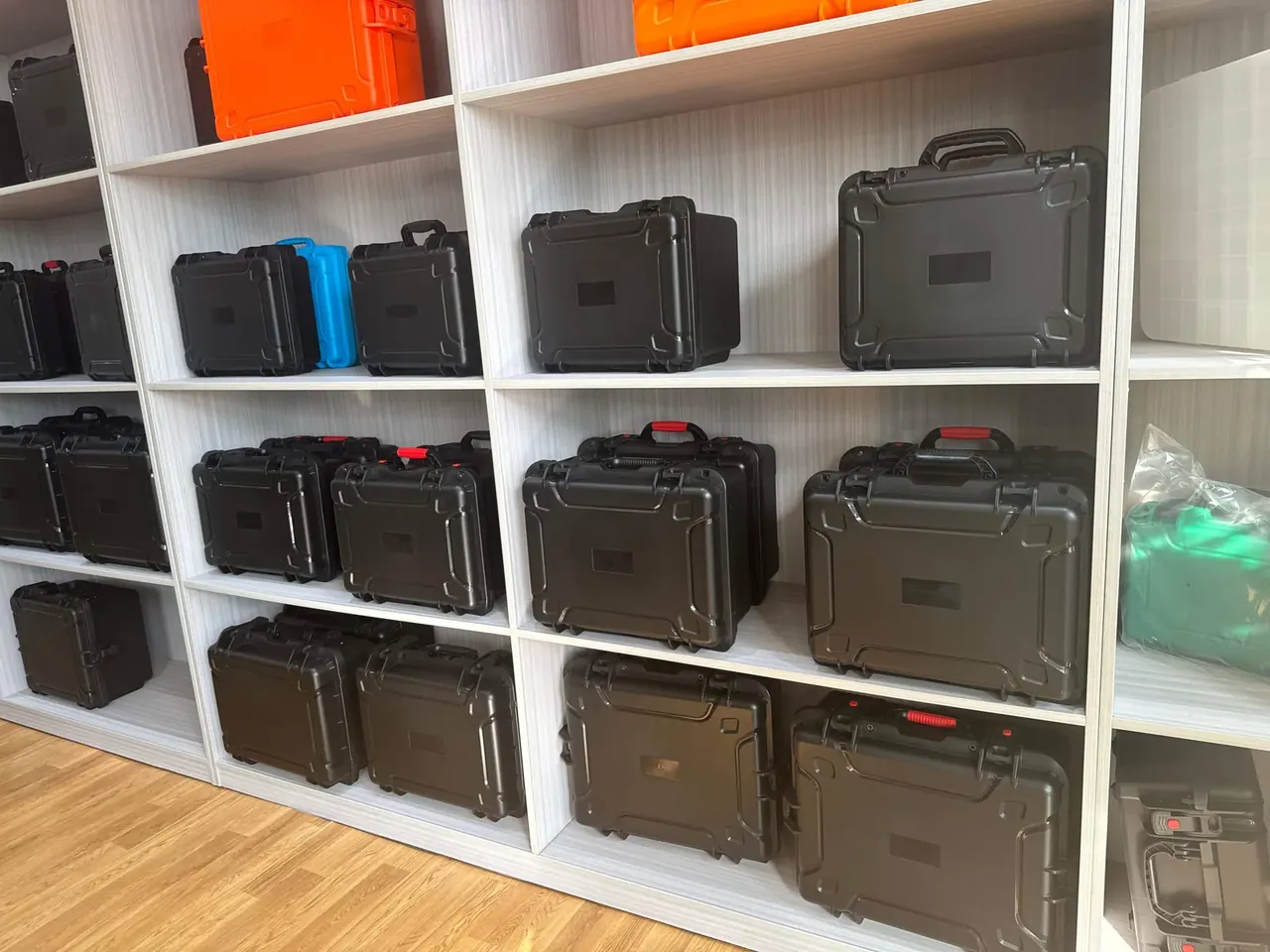
Quick answer: Judging colour on a Colored Protective Case starts with fixed conditions: D65 light at 1000 to 1500 lux, 45 degree illumination, viewing at 30 to 40 cm against mid grey. Read three points per case and keep the worst: Delta E00 up to 1.2 passes, 1.2 to 1.8 is a concession, above 1.8 is rejected.
Table of contents
- Three Axes of Colour Difference
- Colour Cards and In-House Codes
- D65 and the Viewing Booth
- Setting the Delta E Threshold
- Sampling, Verdict and Re-check
- FAQ
1. Three Axes of Colour Difference
Colour difference on a Colored Protective Case is three numbers, not one: L* for light to dark, a* for red to green, b* for yellow to blue, with Delta E collapsing them into a distance that can carry a limit.
L* off by 0.8 makes a case look older than its neighbour, an a* shift of 0.5 pushes orange toward red. Charcoal and olive are hardest on a Colored Protective Case, because their a* and b* space is narrow. Fix grain and gloss first; the same recipe on coarse grain differs by Delta E00 0.5.
| Axis | Symbol | Tolerance |
|---|---|---|
| lightness | L* | plus or minus 0.8 |
| red-green | a* | plus or minus 0.5 |
| yellow-blue | b* | plus or minus 0.6 |
| gloss | GU | plus or minus 3 |
2. Colour Cards and In-House Codes
A generic card is a starting point only. RAL and Pantone are paper systems, and paper reflects differently from polypropylene, so a card against a moulded part commonly shows Delta E00 1.5.
Production therefore runs in-house codes: family letter, three digit serial, two digit year, so O-214-26 is orange 214 released in 2026. Each release carries three plaques, upper limit, centre and lower limit, 3 mm thick, one mould, one grain, spaced 0.6 apart. The part is slotted between them and anything inside the window passes. Plaques are replaced at 24 months, or 18 for orange, since a yellowed plaque drifts Delta E00 0.4.
3. D65 and the Viewing Booth
A booth without a defined source has no common language. A Colored Protective Case is judged under D65 at 6500 K, colour rendering index 95 or better, 1000 to 1500 lux. Below 800 lux the fine steps in dark shades vanish; above 2000 lux grain reads as colour.
Geometry too: light at 45 degrees, probe at 0, viewer at 45 degrees and 30 to 40 cm, background mid grey near L* 60. D65 settles half of metamerism, so TL84 at 4000 K is used as a spot check, index under 0.5. Lamps run 8000 hours or 24 months.
| Source | Kelvin | Role |
|---|---|---|
| D65 | 6500 | main verdict |
| TL84 | 4000 | metamerism check |
| A | 2856 | domestic light |
4. Setting the Delta E Threshold
A threshold means nothing without its formula. Delta E*ab runs loose in the blues; Delta E00 weights lightness, chroma and hue and tracks the eye. One reddish orange reads 1.6 on the old formula and 1.0 on the new, so a contract silent on method cannot be arbitrated.
Three bands cover a Colored Protective Case: up to 1.2 passes, 1.2 to 1.8 is conceded, above 1.8 is rejected. A concession covers one batch and one face only. Lid and base are moulded separately, so their joint holds at 0.8, adjacent cases at 1.2, and orange or yellow pulls in to 1.0 internally.
| Check | Delta E00 | Action |
|---|---|---|
| part against plaque | 1.2 or less | pass |
| part against plaque | 1.2 to 1.8 | concession |
| part against plaque | above 1.8 | reject |
| lid against base | 0.8 | pair if over |
5. Sampling, Verdict and Re-check
A lot of 501 to 1200 pieces at general level II draws 80 samples. Colour counts as its own defect at Ac 3 while appearance runs at Ac 5. Each sample is read at lid top, base side and the radius where stress whitening shows, the spot where a Colored Protective Case most often reads pale; the worst point decides, and a spread over 0.6 flags uneven flow.
A failed lot is re-checked at 160 pieces with Ac 0, so one part over the line holds the lot for sorting or downgrade. Downgrade runs one way only, a light body becoming a dark fitting. The instrument is calibrated on a white tile each shift, with tile number, date and lamp hours logged.
Conclusion
Colour acceptance on a Colored Protective Case rests on fixed conditions: in-house codes with three plaques, D65 at 45 degrees, Delta E00 bands of 1.2 and 1.8, and 80 samples with a doubled re-check. Put the standard in a document and the readings in a record, and a Colored Protective Case has a boundary that can be judged.
This article discusses only the container (case body) side of specifications and design intent, and does not cover any handling, loading or use of the contents.
Related Reading
- Visual Colour Management on the Line
- Colour Customisation for Protective Cases
- How to Audit a Case Factory
- Pre-Shipment Inspection Cases
Related Products
- 8 Series — Gun Cases; Military Equipment Cases; Camera Equipment Cases; Drone Cases; Watch Cases; Knife Cases; First Aid Cases; Electronics Equipment Cases
- WL8-2812 PP Gun Case — model WL8-2812
- All protective cases and toolboxes: 7 series, 158 models