

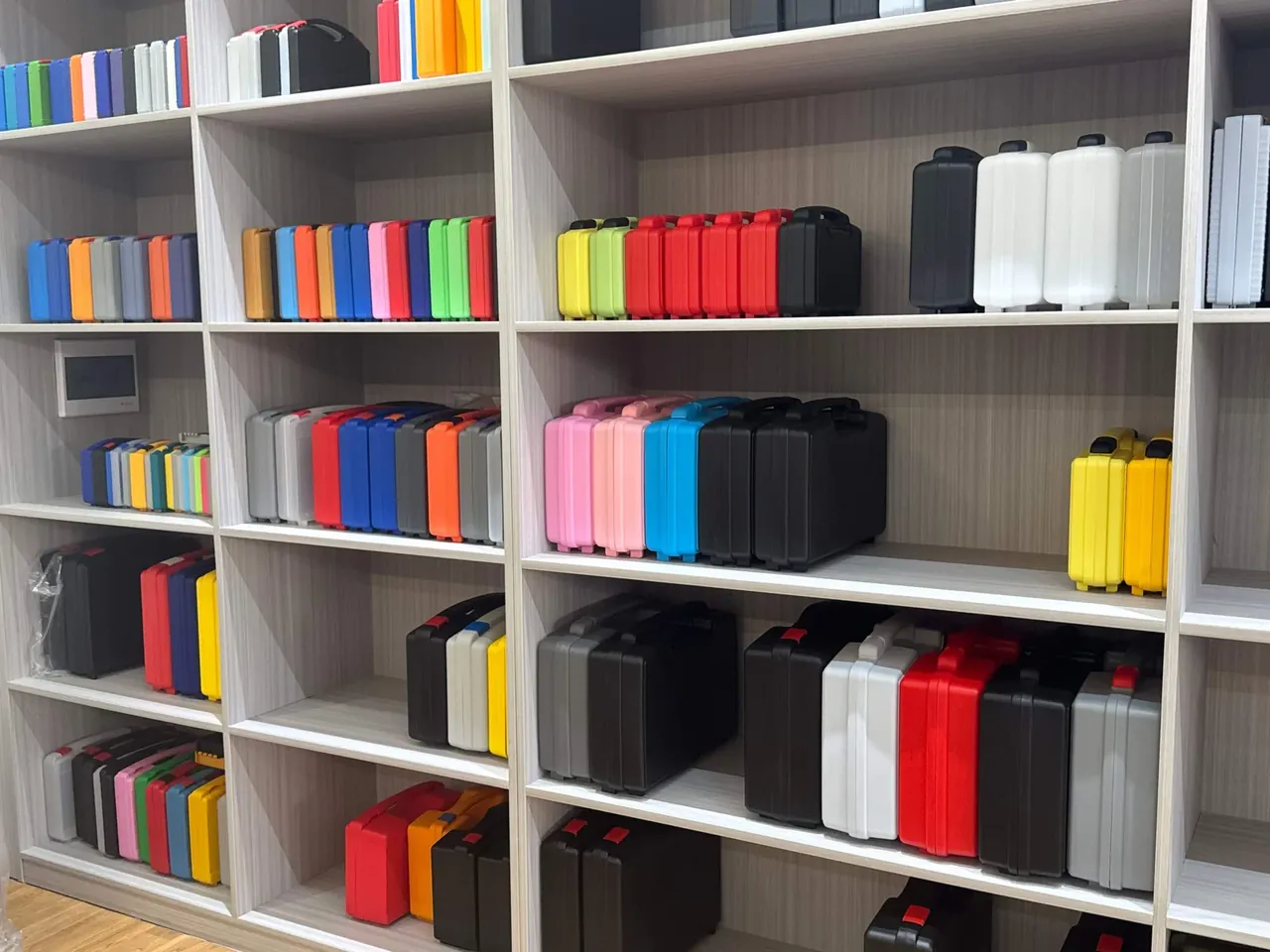
Quick answer: Every case colour complaint starts with one question: under what light was the sample seen? The same colour code reads ΔE 1.1 under D65 and 1.9 under illuminant A, and that 0.8 gap alone can read as two colours.
Table of contents
- Two routes behind a colour complaint
- Batch side: masterbatch, drying and mould heat
- Light side: colour temperature, angle and background
- Thirty cases side by side and four pieces of evidence
- Two decision lines: concession or replacement
- FAQ
1. Two routes behind a colour complaint
Of 40 case colour complaint files opened in a year, 26 fell to ΔE 1.2 or below once the sample was re-read in a D65 booth at 45°, so the light was wrong, not the resin. The other 14 stayed above 1.2 and only then went back to masterbatch and drying.
Melt side reads ΔE, dosing ratio and moisture; light side reads colour temperature, illuminance and angle. Both can be measured, but only one is fixed by turning a screw on the machine.
| Item | Melt side | Light side |
|---|---|---|
| Trigger | New masterbatch lot, 2 h stop | Sample seen in a shop or a car |
| Measured | ΔE, dosing ratio, moisture | K, lux, viewing angle |
| Typical | ΔE 1.6–2.8 under D65 | 0.8 gap, D65 versus A |
| First move | Re-dry 3 samples, mould again | Re-read at 45° in a booth |
Split first, argue second. Reverse the order and a lighting fault becomes a formula fault: the masterbatch is changed, and the same complaint returns two months later.
The split has one criterion, the ΔE of the retention sample under D65. Below 1.2 the melt side closes; above it, three parameters get checked in sequence.
2. Batch side: masterbatch, drying and mould heat
A repeat batch made three months after the first, on the same colour code, reads ΔE 1.1 against the original under D65. The gap usually sits in one of three readings.
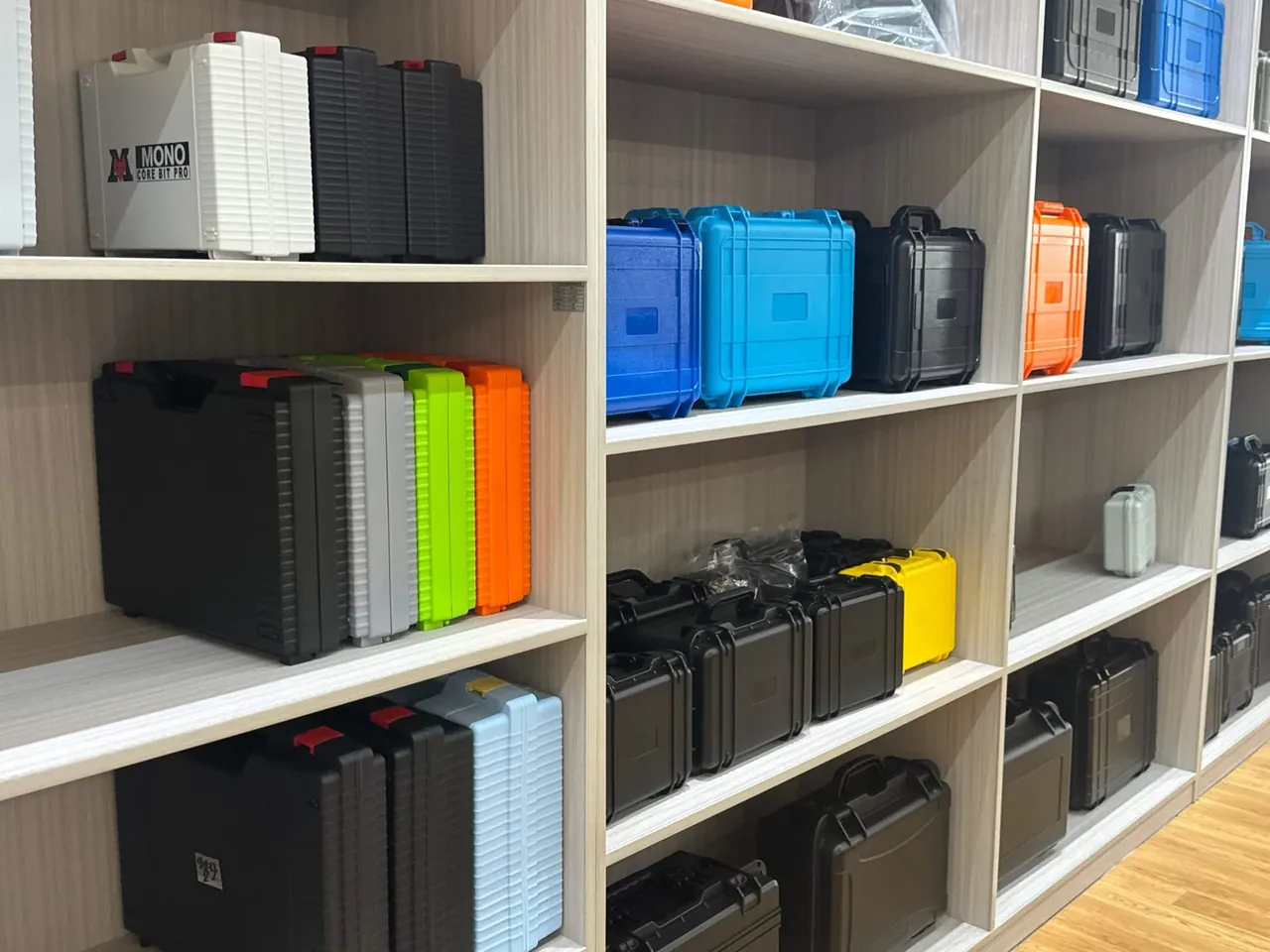
Masterbatch is dosed at 2%, so a 200 kg batch takes 4 kg. A scale error of 0.02 kg pulls the ratio to 1.99% for ΔE 0.2; a new masterbatch lot on another carrier adds 0.3 at the same 2%.
Drying runs 90 ℃ for 3 h and takes moisture from 0.12% to 0.03%. Skip those hours and the melt carries water, the surface turns hazy white and ΔE jumps 0.4, which reads as a paler colour when it is surface scatter.
Mould temperature of 55 ℃ drifting ±3 ℃ shifts skin crystallinity for another 0.3. This is the hardest to see, because an uncalibrated controller still shows 55 and only a contact probe on the cavity reveals the offset.
| Parameter | Set point | Drift | ΔE | Check |
|---|---|---|---|---|
| Masterbatch ratio | 2% | −0.01% | 0.2 | Re-weigh 3 batches |
| Drying | 90 ℃ / 3 h | 2 h short | 0.4 | Dryer log |
| Mould temperature | 55 ℃ | +3 ℃ | 0.3 | Contact probe |
| Melt residence | ≤ 4 min | 20 min stop | 0.5 | Production log |
The first three add up to about 1.1 while no single item reaches the replacement line. That is why a batch-type case colour complaint drags: each deviation is small enough to explain away and together they cross the line.
3. Light side: colour temperature, angle and background
One case reads ΔE 0.9 under D65 at 6500 K and 1.7 under illuminant A at 2856 K. Nothing changed in the part: warm light lifts reflectance in the yellow-green band and the case looks half a step yellow.
Shops run 3000 K to 4000 K spotlights and warehouses run tubes near 5000 K, so one pallet is judged as two colours an hour apart.
Angle is fixed at 45° from 300 mm at 1000 lx. Rotate to a straight 90° view and surface brightness rises, pale cases look whiter, dark cases look blacker.
Background joins in. The same mid-grey case looks dark on white paper at L\* 95 and returns to its own colour on neutral grey at L\* 60, a visible half step. An 18% grey card on the table removes half the argument.
One more case sits behind the light: glass. A dark grey case reads yellow through a car window and normal outdoors, so no formula change, only a second look.
None of this alters a molecule of the case, yet any of it makes a complaint valid or void. So the second move on a case colour complaint is to reproduce the customer's light, not his formula.
4. Thirty cases side by side and four pieces of evidence
One case against another proves only that they differ; 30 cases prove a distribution. Draw 30 from one batch: ΔE spreads from 0.3 to 0.9 under D65, and from 0.6 to 2.3 under A, where 7 of the 30 cross 1.2.
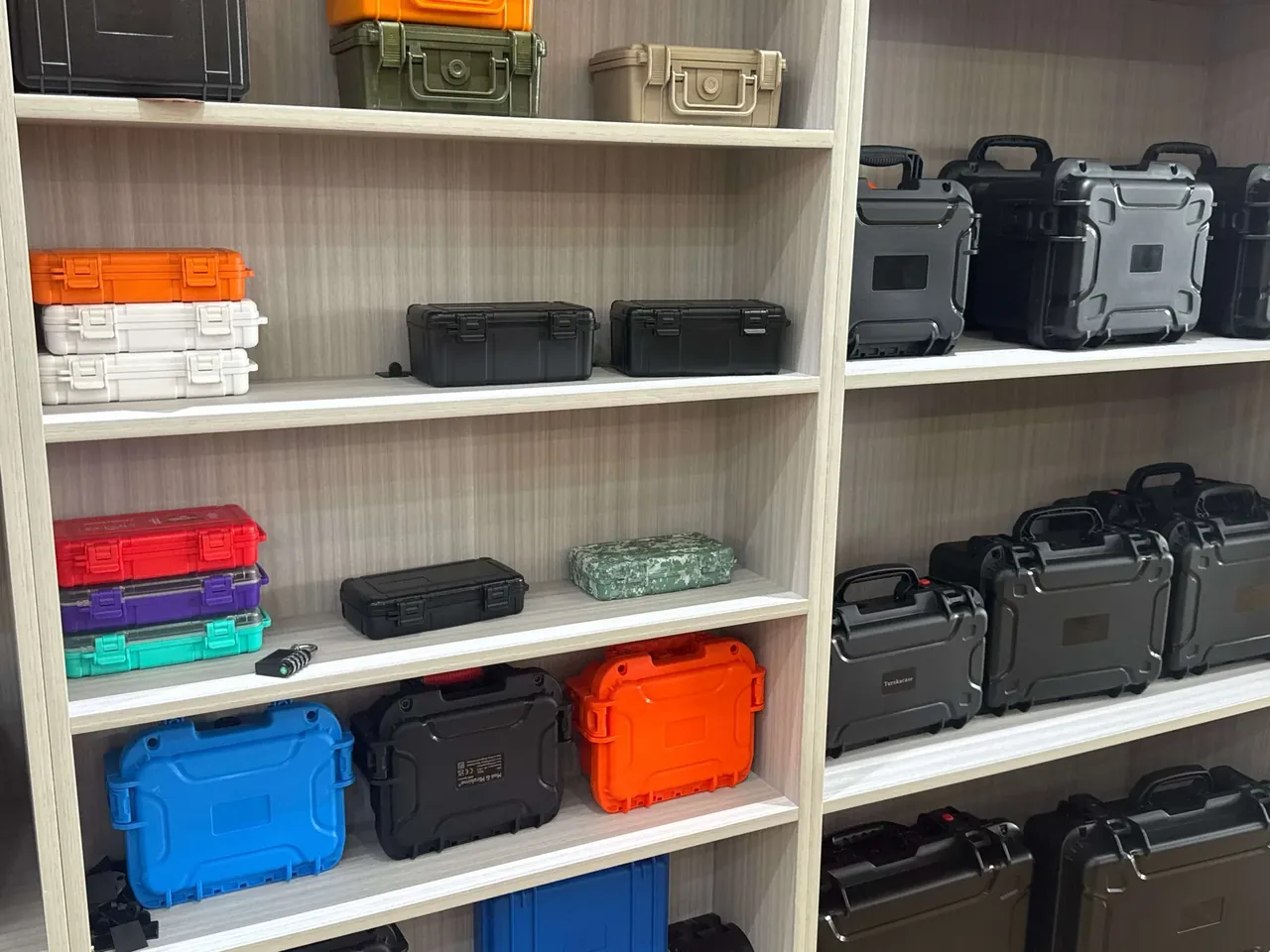
Those 7 all pass under D65, so the batch never drifted; the viewing condition pushed the edge of the spread over the line. Plot the spread and the complaint is settled.
Evidence comes in four parts: light source and colour temperature, written as D65 at 6500 K; angle and distance, 45° and 300 mm; retention samples, 3 from the same batch and colour code; batch number with production date.
Drop any one and the case colour complaint collapses into a description neither side can settle. The missing light is the usual gap: the photo shows a case, not a lamp.
A table of 30 readings beats 10 photographs: two phones disagree by 300 K on one case, a booth does not.
5. Two decision lines: concession or replacement
ΔE 1.2 is the acceptance line, 2.5 the tolerable ceiling, and concession lives between them.
| ΔE under D65 | Over line, of 30 | Action | Paperwork |
|---|---|---|---|
| ≤ 1.2 | 0 | Release | D65 re-read record |
| 1.2–1.8 | ≤ 3 | Concession, credit per case | Note naming the light |
| 1.8–2.5 | ≤ 8 | Concession plus batch fix | Plan with retest date |
| > 2.5 | Any | Full replacement | Replacement note, root cause |
Both lines sit under D65 because D65 is the one condition both sides reproduce. A reading under A is reference only, like measuring length with an uncalibrated rule.
When the customer reads 2.3 under A and the booth shows 0.9 under D65, post an 18% grey card and a colour chip for a second look under his own lamp, not a replacement order.
A concession note must name the light and the sample count. One sentence saying the colour is acceptable brings the batch back on the same argument, and the case colour complaint loops.
Conclusion
Four pieces of evidence settle a case colour complaint: light source and colour temperature, 45° at 300 mm, three retention samples from the same batch, and the batch number with its date. Then run two lines. Below ΔE 1.2 under D65 the batch is released and the 6500 K reading goes out with a suggestion to move shop spotlights above 4000 K. Between 1.2 and 2.5 it ships on a written concession with credit per case and the judging light named. Above 2.5 the batch is replaced. If only A crosses while D65 passes, re-read under D65 and hold the order, because in the batch where 7 of 30 failed under A, all 30 passed under D65. Print those four conditions and two lines on one sheet at the sample table, and fill it in before anyone touches the masterbatch.
This article discusses container-side specifications and design implications only, and does not cover any handling, loading or use of the contents.
Related Reading
- Reading colour difference: ΔE 2 versus ΔE 5
- How masterbatch and drying heat shift colour
- Custom colour minimum order quantities
- Visual colour control on the shop floor
Related Products
- 8 Series — Gun Cases; Military Equipment Cases; Camera Equipment Cases; Drone Cases; Watch Cases; Knife Cases; First Aid Cases; Electronics Equipment Cases
- WL8-2812 PP Gun Case — model WL8-2812
- All protective cases and toolboxes: 7 series, 158 models