

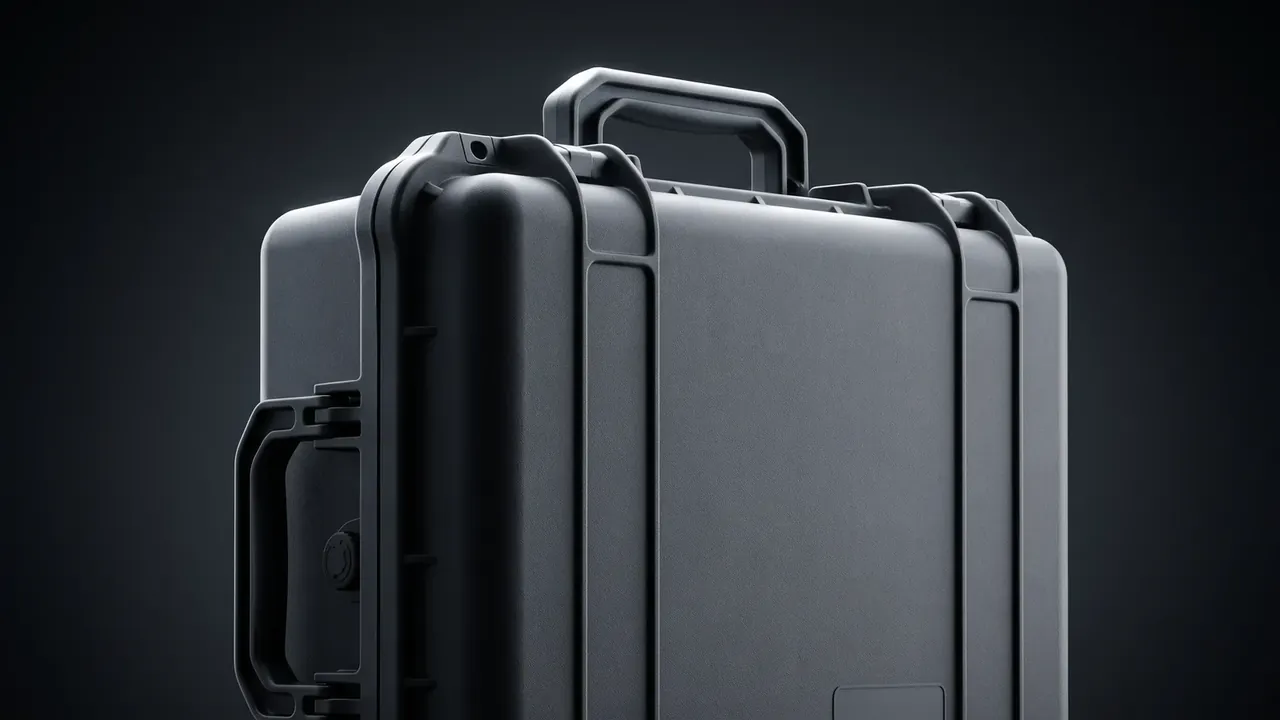
Quick answer: The scene sets the configuration. Field setup wants lid angle and cable entries, vehicle transfer wants stacking and lashing, a fixed site wants airflow, a store wants sealing and labels.
Table of contents
- Four places a communication equipment case gets used
- The scene shapes the shell: handle, valve and latches
- Field setup: a case that opens into a rack
- Vehicle and transfer: stacking, lashing and wheels
- Fixed sites and stores: seal, temperature, count
- FAQ
1. Four places a communication equipment case gets used
A communication equipment case ends up in four places: field setup, vehicle transfer, a fixed site, a spare-parts store. What separates them is who carries the case, how far, and how often it opens.
Field setup is short and intense: a six-hour drill unloads, opens, wires and packs the case twice a day. Vehicle transfer is long and rare: 300 km strapped and stacked, often into a store unopened. Fixed sites and stores are static, one powered for months, the other idle for three.
| Scene | Single use | Main exposure | Focus |
|---|---|---|---|
| Field setup | four to six hours | dust, rain | lid angle, entries |
| Vehicle transfer | around 300 km | vibration, stacking | lashing, wall stiffness |
| Fixed site | continuous power | indoor heat | airflow, earthing |
| Store | three months idle | humidity | seal, labels |
2. The scene shapes the shell: handle, valve and latches
Carried by hand, the handle is measured against a glove: a 110 mm clear width takes a padded grip, an 80 mm one forces a change of hand every 200 metres. Past that, add wheels rather than a thicker handle.
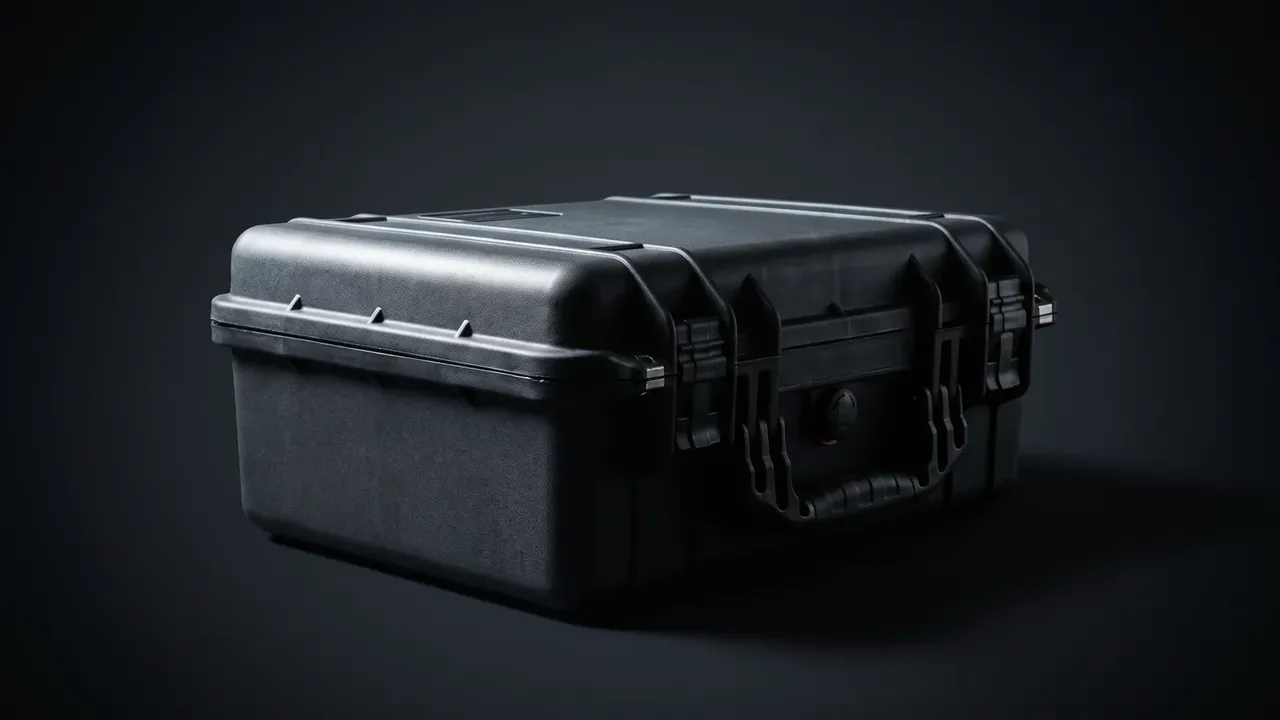
A valve matters for air freight and mountain work: a 12 mm disc on an M12×1.5 thread vents after half a turn. Latch spacing follows length, one centred latch under 600 mm and two 260 mm apart above it.
3. Field setup: a case that opens into a rack
A field case runs 520 by 420 by 220 mm internally, enough for two rows of 300 mm panels. Two M25 holes and one M16 with waterproof glands let cable in at the side without crossing the gasket, and an M6 stud keeps earth apart from signal wiring.
Setup is counted in actions: ten seconds to open, two minutes to raise the panel, eight to wire, five to earth, so fifteen minutes passes and twenty-five means wrong entries.
| Action | Configuration | Time |
|---|---|---|
| Open and hold | hinge stop at 100 degrees | ten seconds |
| Raise the panel | lid stay or folded flange | two minutes |
| Cable entry | two M25 holes at the side | eight minutes |
| Earth and check | M6 stud, label | five minutes |
4. Vehicle and transfer: stacking, lashing and wheels
In a vehicle, a communication equipment case starts with the floor: rails at 25 mm pitch and 35 mm webbing match, and a strap over the lid loads the reinforced flanks.
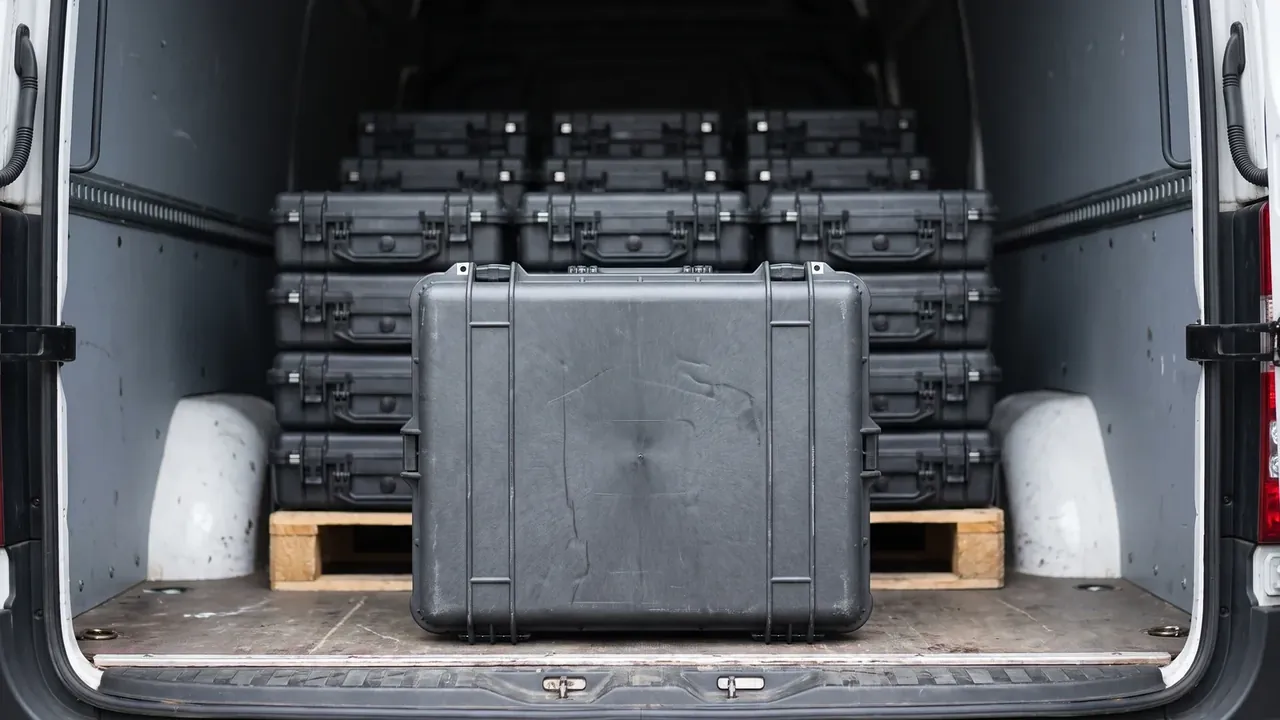
At 60 kg per case, four high is the usual ceiling, beyond which the bottom walls bulge. An upright case saves floor but carries nothing, so it rides on top. A 50 mm wheel clears a threshold, 80 mm fouls the bay, and wheeled cases need thickened bottom corners.
5. Fixed sites and stores: seal, temperature, count
At a fixed site a communication equipment case runs on power for months, so airflow comes first: inlet and outlet should not face each other. Low in and high out, with a removable filter, is usual.
A store wants the opposite: 40 to 60 percent humidity, 200 g of desiccant per case each quarter, since above 70 percent the gasket hardens within two years. Rated from minus 20 to 55 °C, the foam stiffens first outside that band. Labels carry the count: a 40 by 20 mm label at the top right, barcode out, the same on every case.
| Check | Interval | Pass mark |
|---|---|---|
| Gasket | quarterly | rebounds when pressed |
| Desiccant | quarterly | under 20 percent gain |
| Latches | monthly | no play, no whitening |
| Labels | yearly | barcode scans |
Conclusion
Configuring a communication equipment case means turning frequency and environment into structure: setup reads the lid and entries, transfer reads stiffness and lashing, a fixed site reads airflow, a store reads seal and labels. Fix the main scene first and the details follow, and the communication equipment case still works at the second site.
This article discusses only the container (case body) side of specifications and design intent, and does not cover any handling, loading or use of the contents.
Related Reading
- How an electronic equipment case is configured for its use
- Deployable hard case structure and field deployment
- Hand-carry hard cases in mobile work
- Sealing and acceptance of a waterproof hard case
Related Products
- 8 Series — Gun Cases; Military Equipment Cases; Camera Equipment Cases; Drone Cases; Watch Cases; Knife Cases; First Aid Cases; Electronics Equipment Cases
- WL8-2812 PP Gun Case — model WL8-2812
- All protective cases and toolboxes: 7 series, 158 models