

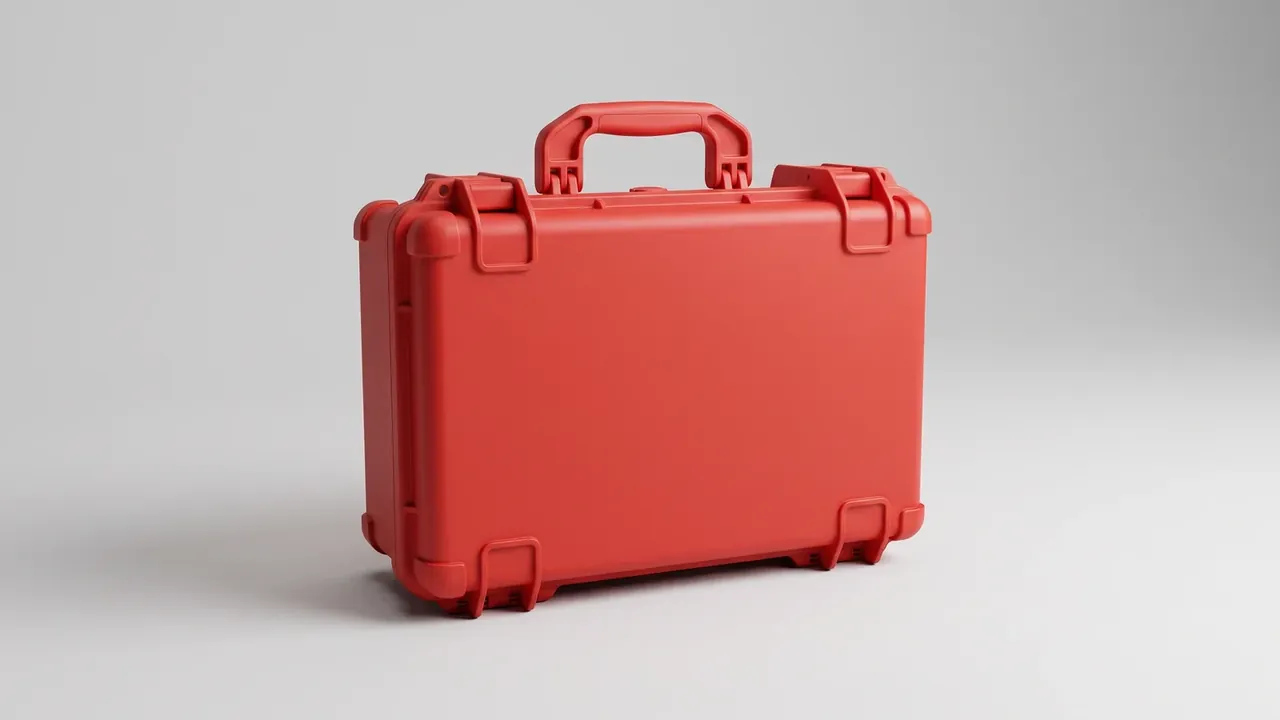
Quick answer: A communication equipment case is compared on four axes: shell impact tolerance, how much of it can be repaired part by part, how the interior holds equipment still, and the weight a given volume costs. It prices above a crate or tote and usually closes the gap by year two.
Table of contents
- What the Comparison Actually Measures
- Rotomolding vs Sheet Metal
- Seals: The Gasket Sets the Ceiling
- Dividers Before Foam
- The Three-Year Cost Ledger
- FAQ
1. What the Comparison Actually Measures
A communication equipment case rarely loses a tender on unit price. It loses when the buyer reads only that number: replacement rate, repairability and leak downtime all sit outside it.
Impact is the first axis. A rotomolded shell absorbs a drop by flexing back; sheet metal stays bent. Mass is the price: the same volume runs about thirty percent heavier than a thin steel cabinet, irrelevant or decisive depending on who lifts it.
| Item | Communication Equipment Case | Injection-molded tote | Sheet metal cabinet | Wooden crate |
|---|---|---|---|---|
| Wall | 4.5 mm, even at corners | 2.5 to 3 mm with ribs | 1.2 mm folded steel | 12 mm plywood |
| Seal | Twin-lip EPDM in a groove | Single lip with clips | Sealant bead | None |
| Repair | Latches, handle, gasket sold loose | Broken clip retires the box | Hinges only | Box replaced |
| Lead time | 25 to 35 days | 7 days | 30 days | 5 days |
Read the repair row first. Latch, handle and gasket are separate parts, so a fitter changes one in the field. A tote's clips are molded into the body: one broken corner retires it.
2. Rotomolding vs Sheet Metal
Rotomolding loads polyethylene powder into a mold, heats it while the mold turns, and builds the wall layer by layer. The result is one seamless cavity, and because thickness follows the powder charge, corners do not thin out.
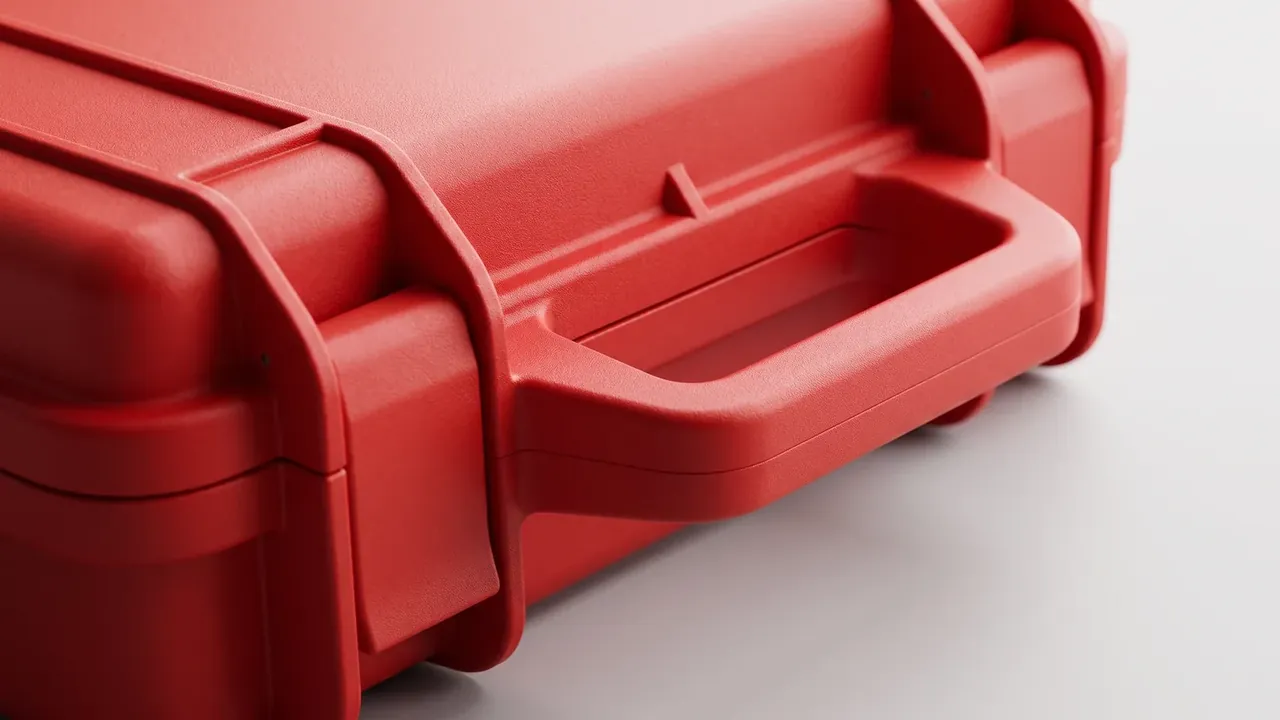
Molding the latch seats with the ribs is the quiet advantage. Sheet metal rivets each seat on with a doubler plate, otherwise opening pulls the panel out of shape. On a rotomolded body the seat is simply more material.
Tooling draws the batch line: a rotomold tool runs thirty to sixty thousand yuan for a few hundred to two thousand pieces, while injection tooling starts near three hundred thousand and pays back past three thousand.
3. Seals: The Gasket Sets the Ceiling
Protection comes from the sealing face, not the wall. A twin-lip EPDM gasket sits in a groove, and on closing, two lips land separately, one stopping water and one stopping dust. A single lip is one line of defense, and a grain of sand lifts it.
The vented version separates this case from a general tote: a valve equalizes pressure when altitude or temperature swings, so the gasket is never pushed open. Ratings are static, and transport vibration still shifts the lid; one lip stays loaded within a millimeter.
4. Dividers Before Foam
Interior layout is the most underrated part. Dividers carry load and set zones; foam closes gaps and takes shock. An 8 mm PP divider drops into slots molded into the wall and splits the cavity into two or three bays.
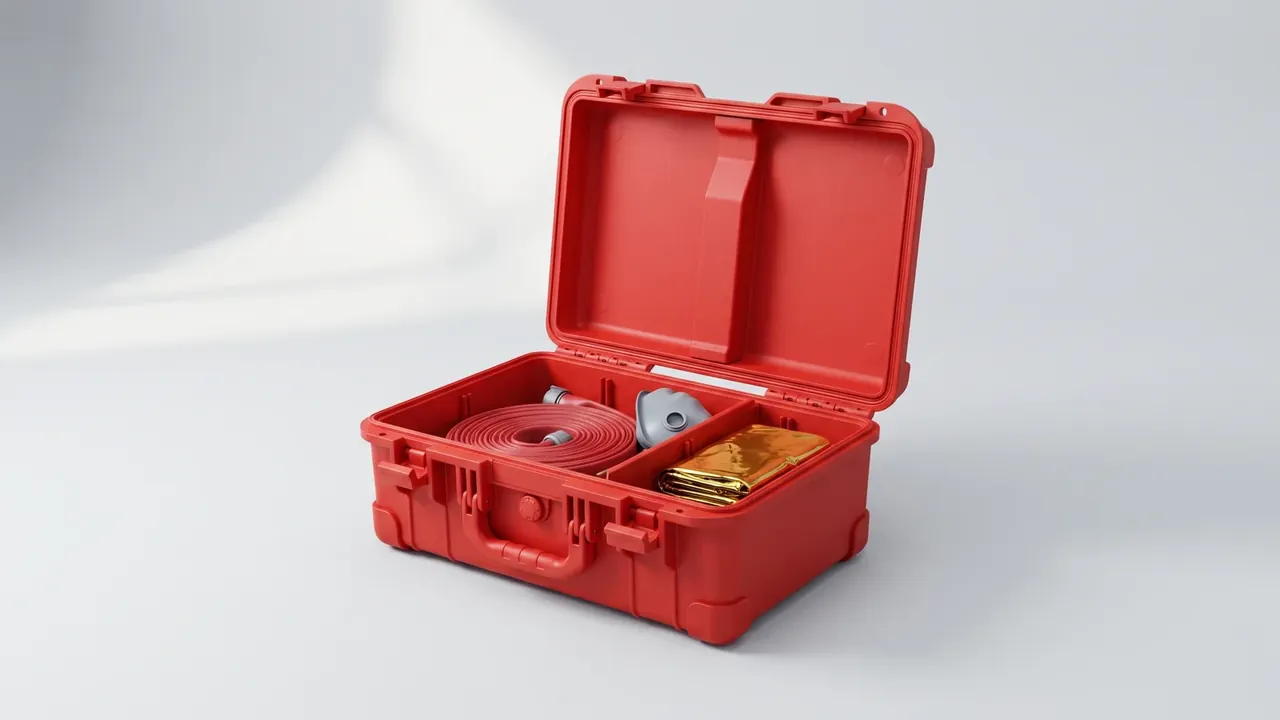
EPE at 25 kg per cubic meter suits light equipment; EVA holds cut edges for sharp items. Dividers also come out, so a change of equipment means a new insert, not a new box.
5. The Three-Year Cost Ledger
The purchase price is higher than a crate, so the ledger runs three years: repair, replacement, downtime. A latch costs tens of yuan against hundreds for a box, and downtime is billed by the day.
| Line (100 units, three years) | Communication Equipment Case | Injection-molded tote | Wooden crate |
|---|---|---|---|
| Purchase | 48,000 yuan | 26,000 yuan | 15,000 yuan |
| Repair and spares | 3,200 yuan | 6,000 yuan | 2,000 yuan |
| Units replaced | 4 | 22 | 60 |
The repair line is misread most often. It is not the lowest because every worn part is genuinely renewed; the crate looks cheap because it has nothing to renew, and pays in replacements instead.
Conclusion
Each option puts its cost somewhere different: a crate in the purchase price, a steel cabinet in fabrication, a communication equipment case in structure and spares. Count how often the boxes will be opened, rained on and re-configured over three years, and the structure stops looking like surplus in a communication equipment case.
This article discusses only the container (case body) side of specifications and design intent, and does not cover any handling, loading or use of the contents.
Related Reading
- Choosing a communication equipment case
- Common faults and field fixes
- Rotomolded cases against alternatives
- How internal dividers are specified
Related Products
- 8 Series — Gun Cases; Military Equipment Cases; Camera Equipment Cases; Drone Cases; Watch Cases; Knife Cases; First Aid Cases; Electronics Equipment Cases
- WL8-2812 PP Gun Case — model WL8-2812
- All protective cases and toolboxes: 7 series, 158 models