

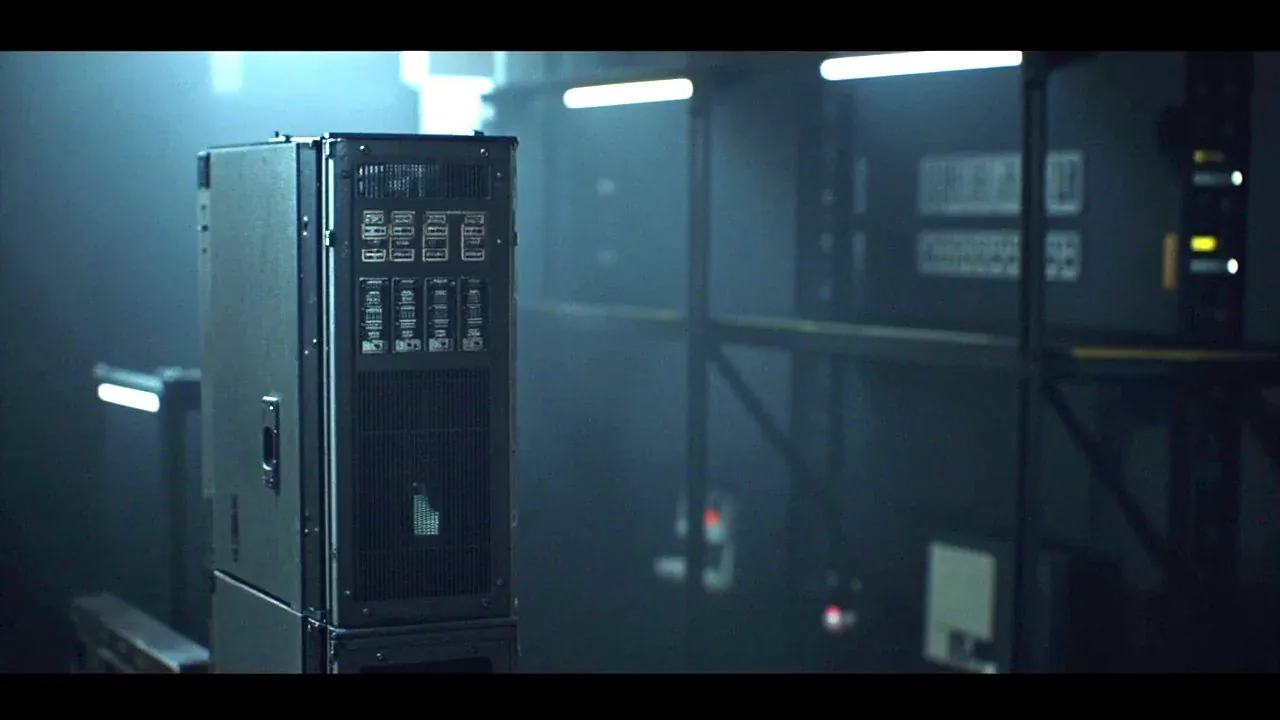
Quick answer: Three items decide a communication equipment case: rack size with shock mounting, cable routing with sealing, and cooling method with power headroom. Cooling is the one most often missed: seal it well and the heat stays in.
Table of contents
- The three selection elements
- Rack and shock mounting
- Cabling: prepared ports and shielding
- Cooling: three methods
- Acceptance and common mismatches
- FAQ
1. The three selection elements
Rack size sets how much equipment fits: nineteen-inch rails must carry the weight and the inertial load of transport. Without shock mounting, impact reaches the front panels and connectors directly.
Cabling decides whether it works at all: interconnects, antenna and power must leave the case through prepared, sealable routes. Cutting holes on site destroys both sealing and shielding.
Cooling decides stability: under fifty watts natural convection suffices, above a hundred needs forced air or a conduction path. A sealed case sheds heat only through its walls, and insufficient area pushes internal temperature twenty degrees above ambient.
| Element | Typical | Test | If short |
|---|---|---|---|
| Rack | 19-inch rails | load and shake | connector load, panel distortion |
| Cabling | sealable entry ports | count ports and sizes | field drilling breaks sealing |
| Cooling | natural below 50 W | measure internal temperature loaded | throttling, crashes |
| Shock | rail isolators | check torque marks after transport | screws loosen |
2. Rack and shock mounting
Two rack types: fixed rails, simple and cheap for short hauls, and floating rails with isolators between equipment and case, which absorb high-frequency vibration and cut connector load.
Isolator hardness must match the weight: too hard does nothing, too soft lets the equipment move and adds low-frequency displacement. Give the supplier the weight and let them match the durometer.
3. Cabling: prepared ports and shielding
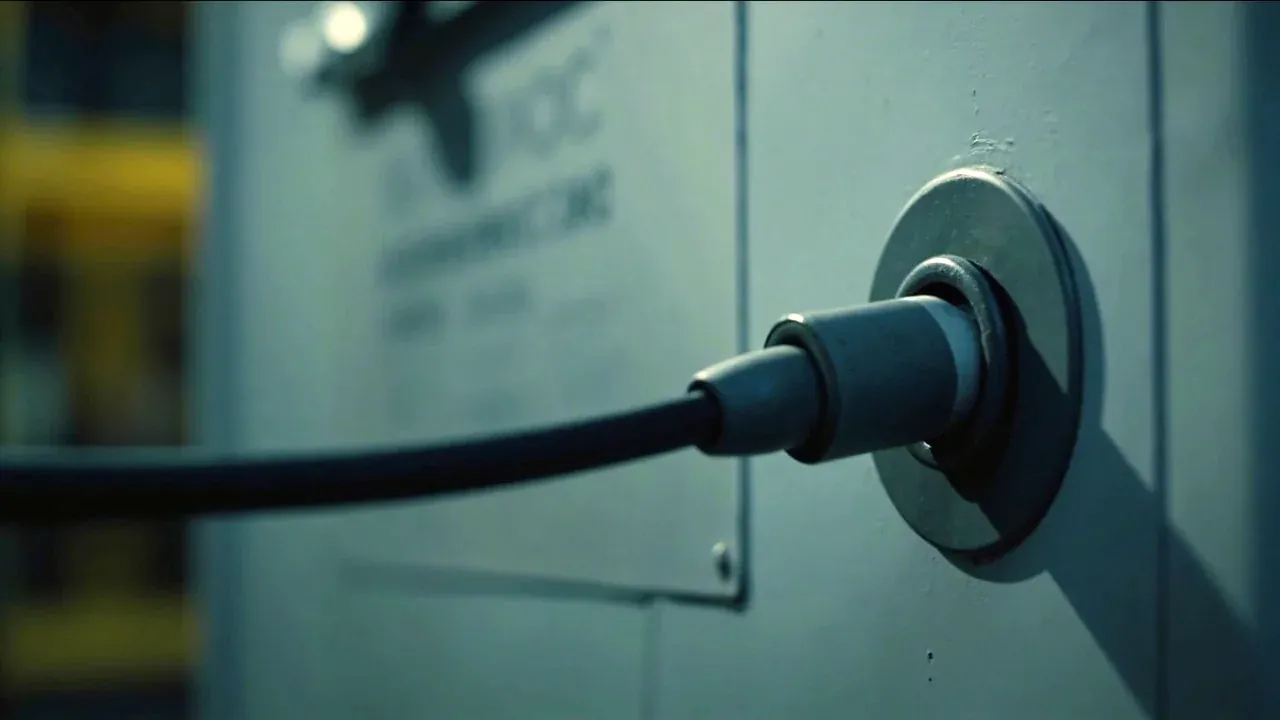
At least three port types: power, antenna and interconnect, kept apart so power does not run parallel to signal. Each needs a gland sized to the bundle — too large leaks, too small crushes the cable.
Ports also break shielding: a metal case relies on a continuous conductive surface, and a plastic case needs a conductive coating with earthing at each opening. That matters where the electromagnetic environment is busy.
4. Cooling: three methods
First, conduction: equipment sits on a thermal pad against the wall, under fifty watts, fully sealed. Second, forced air with fans and filters, strong but dependent on filter changes. Third, heat exchangers or Peltier units for sealed high-power use, at the highest cost.
Choose by power density rather than total watts: a hundred watts in half a cubic metre is fine passively, in a small case it is not. Calculate with surface area and the temperature difference the site actually sees, since that figure decides whether passive cooling can work at all.
5. Acceptance and common mismatches
Four actions: shake the loaded case for rail movement, run two hours and measure internal temperature, water-test the ports, check earth resistance. An hour covers rack, cooling, sealing and shielding.
Two mismatches recur in a communication equipment case: a fully sealed unit with eighty watts inside, past sixty degrees in summer; and louvres opened for cooling in a dusty site, blocked within six months. Neither is a manufacturing fault; both are selection faults, and both appear in the first summer. Both come from reading one figure without the environment, which is exactly the part a datasheet cannot show.
Conclusion
Three items: rack and shock decide survival, cabling and sealing decide usability, cooling decides stability. Calculate all three with power density and environment, or you end up with eighty watts in a sealed case.
This article covers container-side specifications and design implications only, not the handling, loading or use of the contents.
Related Reading
- Communication case problems and fixes
- What an electronic equipment case is
- Electronic cases in test and field use
- Case seal materials
Related Products
- 8 Series — Gun Cases; Military Equipment Cases; Camera Equipment Cases; Drone Cases; Watch Cases; Knife Cases; First Aid Cases; Electronics Equipment Cases
- WL8-2812 PP Gun Case — model WL8-2812
- All protective cases and toolboxes: 7 series, 158 models