

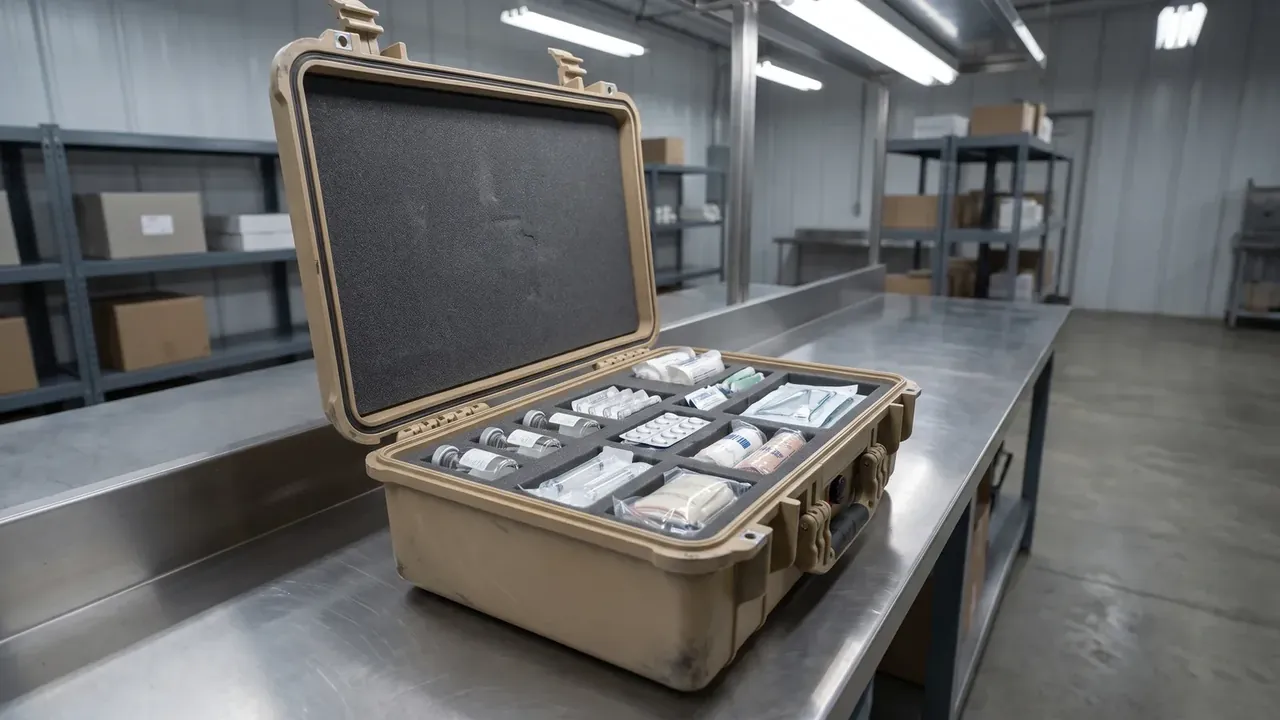
Quick answer: Community medical inspection portable gear box is shaped by four daily moves: 2.8–3.6 kg empty, 40–60 lid cycles, 25 kg handle.
Table of contents
- Pulling Out: The Boot Comes First
- Three Minutes at the Point of Call
- Doorstep: Posture on the Stairs
- Reset at the Station
- Three Places That Fail First
- FAQ
1. Pulling Out: The Boot Comes First
A community medical inspection portable gear box opens forty to sixty times a shift, and what breaks it is not the fifteen kilometre round but the eighteen steps at the door. The boot stage is overrated because nothing holds the case down there: a hard stop, a speed bump and the tailgate pressing from above arrive in turn.
Empty weight sits between 2.8 and 3.6 kg. Under 2.8 kg the wall loses material, the corner bumpers thin out and foam starts holding the shape. Over 3.6 kg the wrist complains by the fourth lift. Spend the saved grams on the corners and the handle root, the two places that get hit.
The worst event is the slide, not the bounce. Pinned by luggage and thrown forward, a community medical inspection portable gear box takes lid compression and two corner hits at once. Bumpers wrapped 15 mm up the side wall and lid ribs at 40 mm pitch decide the year.
| Load path | Event | Structure that absorbs it |
|---|---|---|
| Base corners | Lurch on a speed bump | Radiused corner, wrap-around bumper |
| Handle root | Lift off the tailgate | Boss moulded into the wall |
| Lid rim | Bags stacked on top | Rib height matched to latches |
| Mid wall | Case flat under cargo | Vertical stiffening ribs |
Load it, drive a stretch of speed bumps, then feel the corners for blush. A community medical inspection portable gear box shows its weak corner on that trip.
2. Three Minutes at the Point of Call
At the kerb the case goes from boot to folding table, and three minutes must cover the lid, the first item and the lid again. Lid angle and cavity order are tested together here.
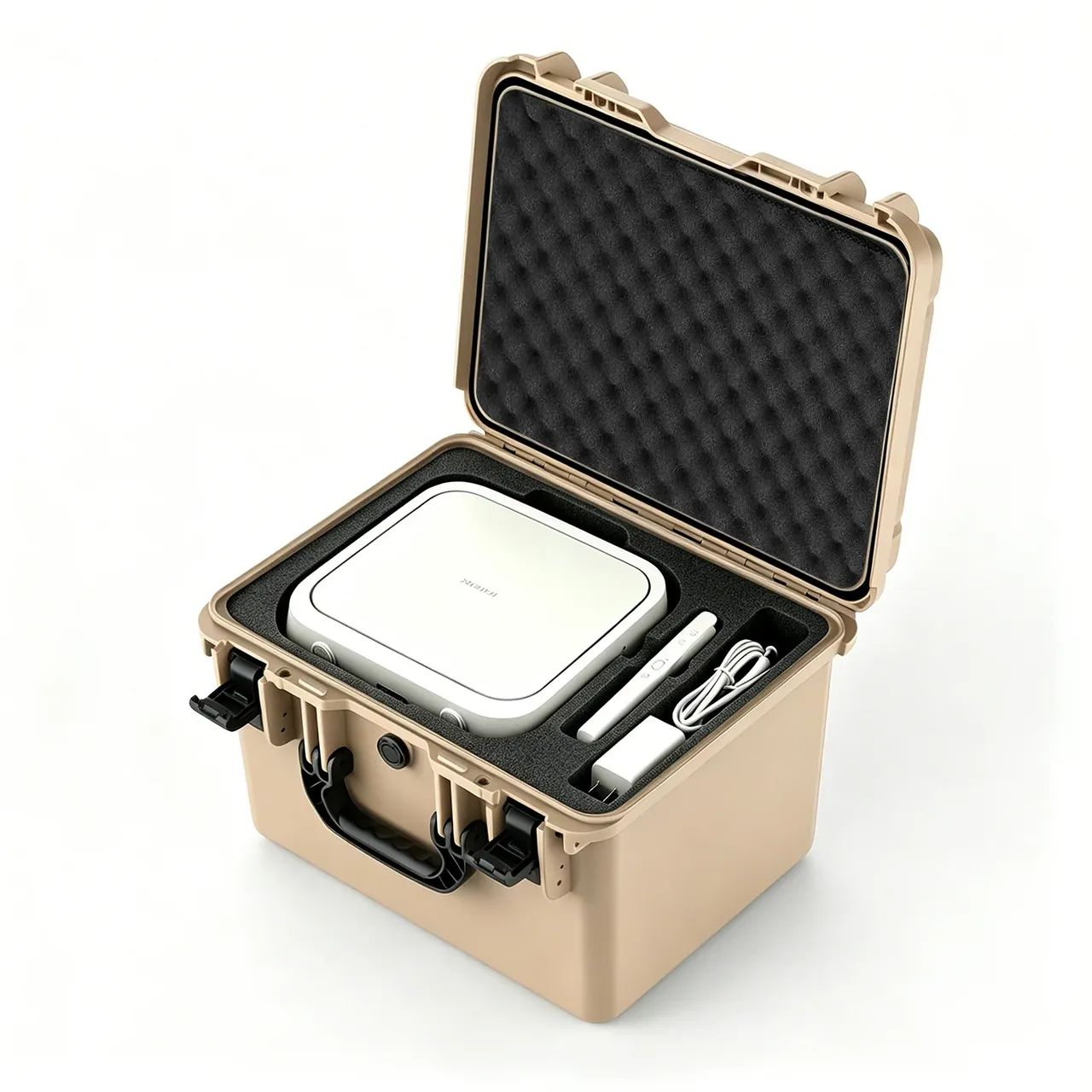
The lid stops near 105 degrees on a hinge rib. At 90 degrees the wrist works around an upright lid; at 120 degrees the lid mass passes the hinge line and tips a narrow table. A community medical inspection portable gear box is rated for 20,000 lid cycles, which is a new hinge inside eighteen months at this rate.
Cavity order follows the hand: dressings take the hinge end, and the heaviest unit takes the latch end where both hands can go under it.
| Cavity | Contents | Reached | Handling |
|---|---|---|---|
| Hinge end | Dressings, gauze | First | One hand, lid stays up |
| Middle upper | Bottles, blister strips | Second | Two fingers, upright |
| Middle lower | Ampoules, syringes | Third | Tray lifts whole |
| Latch end | Unit and probe | Last | Both hands, cable first |
A cavity is not a divider. Drop-in dividers jump their slots after two bumps and bottles roll next door; a routed block cannot move. The 1–2 mm clearance per side is the whole tolerance on a community medical inspection portable gear box: tighter and the bottle will not lift, looser and it rattles.
3. Doorstep: Posture on the Stairs
Eighteen steps and two turns separate the kerb from the flat. The case switches to side carry, and the first thing it meets is the corner, not the floor.
The handle is rated 25 kg against a 9 kg load. That reserve covers the half second when one hand releases and the other takes over, with the whole weight on one side of a community medical inspection portable gear box.
Face the lid to the chest: the load sits over the feet, the eyes clear the top edge, and the free hand finds the 30 mm grip recess on the side wall. Lid outboard forces a forward lean and brings the corner nearer the wall at every turn.
Keep the base off the treads. Carried 20 mm clear the bumpers hold their edge; dragged up a flight, they fuzz where a crack starts.
4. Reset at the Station
Back at the station the first job is venting, not restocking. The vehicle has been shut for an hour, and a community medical inspection portable gear box releases the heat in its foam only once the lid comes up.
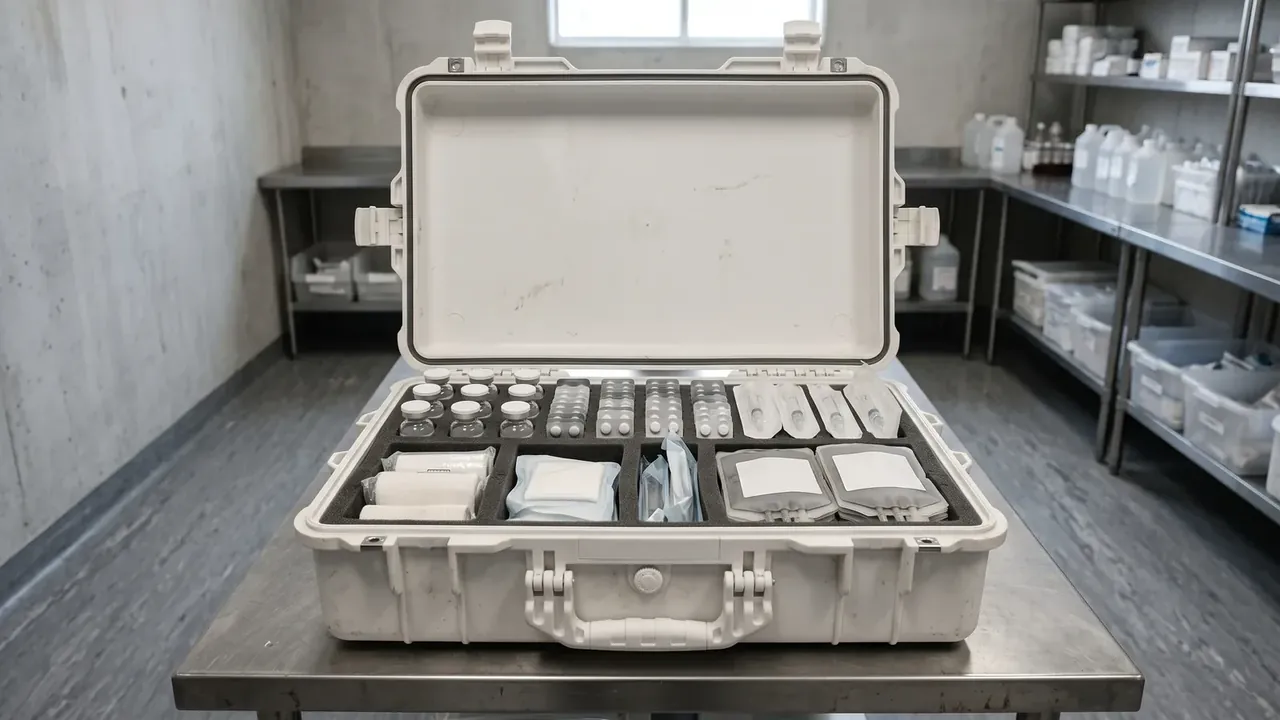
Reset means putting consumed stock back in its own bay, not repacking. Twenty-eight lines each have a bay and the sheet inside the lid is struck off in pencil.
Temperature needs its own slot. The 15–25 °C band describes the stock, not the shell; after a summer boot at fifty degrees, a community medical inspection portable gear box stands open 2 h before closing.
| Reset item | Action | Pass mark |
|---|---|---|
| Bays | Refill each in place | No empty bay |
| Lid sheet | Strike off, then count | Matches contents |
| Temperature | Vent, then close | 15–25 °C inside |
A half-finished reset turns three minutes into five. Restock before the latches close, never on the morning run.
5. Three Places That Fail First
Withdrawal rule: a community medical inspection portable gear box showing more than 2 mm of lid warp or any cavity shift after six months of continuous use leaves the round. The line counts cycles, not years, and forty to sixty a day reaches eight thousand in half a year.
The lid crown goes first. Pressed from above while foam pushes back, it warps in the middle and the ends stay flat, so the centre meets and the corners keep a gap. Ribs at 60 mm pitch show that arc within six months.
The hinge bosses go second. Twenty thousand cycles is four hundred working days, right at the withdrawal line; once the boss opens, the lid rocks before it lifts and the gasket loses a layer on each rock.
Cavity shift goes third. Compressed foam does not return, bay walls lean in and bottles slide next door. On a routed block it shows as a collapsed wall, so a community medical inspection portable gear box looks serviceable while every pick needs a second feel.
Two of the three gone and the case retires. A round case is a workstation, not luggage: workstations are shaped by movement, luggage by volume.
Conclusion
Four stages test four things: structure in the boot, cavity order at the kerb, handle and grip on the stairs, reset at the station. Walk the day before specifying. A community medical inspection portable gear box is a workstation, and the carrier learns that on the fourth flight.
This article discusses only the container (case body) side of specifications and design intent, and does not cover any handling, loading or use of the contents.
Related Reading
- How a first aid case is divided for fast access
- Layout logic for emergency medical equipment cases
- Setting the standard for a field medical case
- Plastic cases versus wooden crates
Related Products
- 8 Series — Gun Cases; Military Equipment Cases; Camera Equipment Cases; Drone Cases; Watch Cases; Knife Cases; First Aid Cases; Electronics Equipment Cases
- WL8-2812 PP Gun Case — model WL8-2812
- All protective cases and toolboxes: 7 series, 158 models