

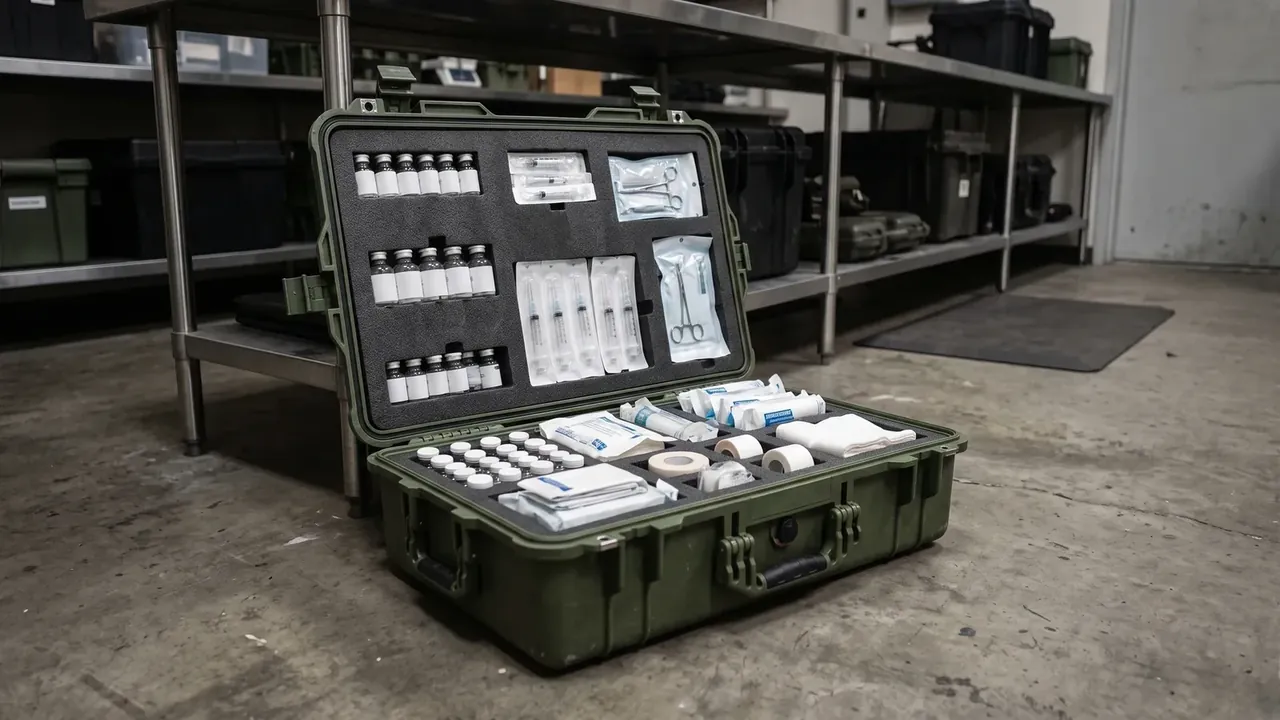
Quick answer:A Compartmentalized Medical Equipment Case is laid out by reach order first, then by instrument family: a 28 L shell reaches 82% cell utilisation, retrieval drops from 45 s to 18 s, and cell deviation stays inside ±1.5 mm with a 1.2 mm flock layer doing the gripping. Until that sequence is written down, cell size, divider thickness and flock depth have nothing to measure against.
Table of contents
- Sequence before cells
- Drawing cells by instrument family
- Splitting high and low frequency across tiers
- Dividers, flocked trays and foam
- Sizing cells and locking tolerances
- FAQ
1. Sequence before cells
A case that has lost its order shows at the first reach: the hand shifts gauze before it can touch a vial, and the scissors sit under the dressings. A Compartmentalized Medical Equipment Case begins on paper, with the order in which hands enter the box during one procedure.
The record is easy: walk the routine once, list each item in the order taken, and count how often a reach lands on the same side. Overlapping landing spots mean the cells were drawn against the habit. Card templates on a bench show the blocked lane at once.
Capacity comes later. Rounded corners, latch bosses and the recessed handle each take a slice, so what remains for cells is a fraction of the nominal area. Protecting the first three reaches and giving the corners to low-frequency items is how 82% cell utilisation is reached rather than assumed.
2. Drawing cells by instrument family
Grouping by family beats grouping by department: one family shares a footprint, so one cell size serves it, while a department split forces a new insert on every floor.
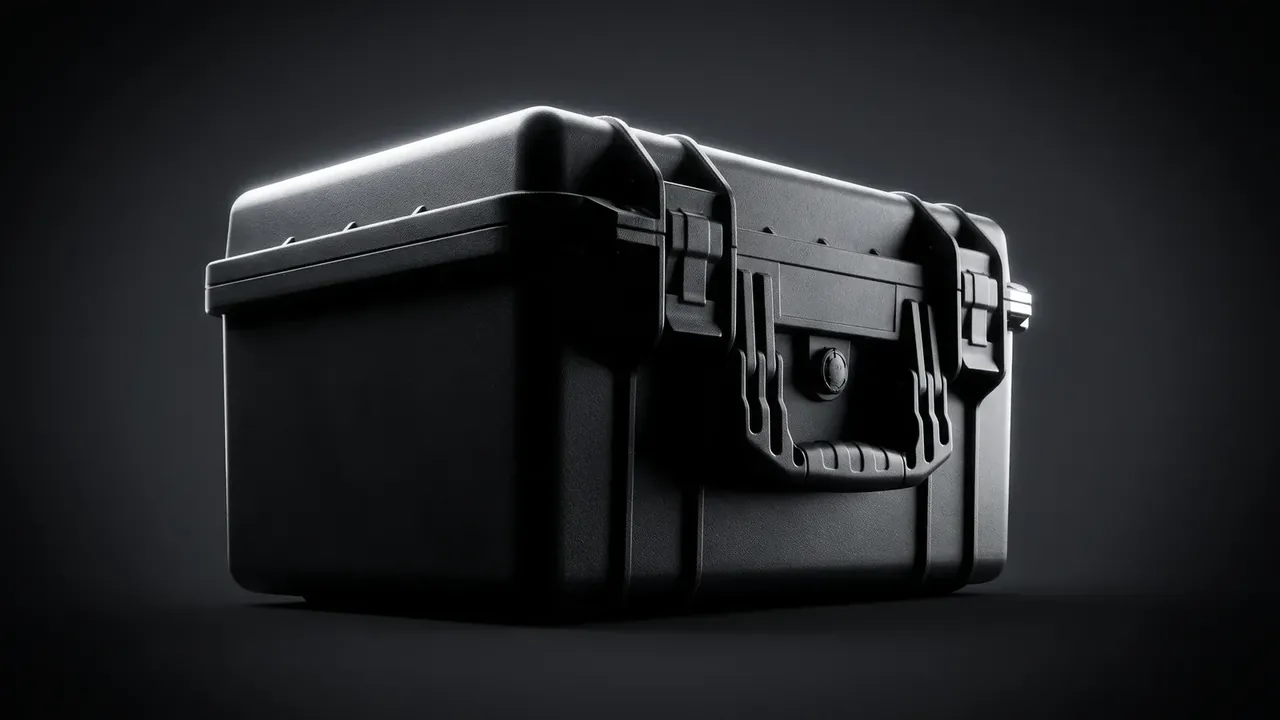
| Family | Cell mouth | Depth | Retained by |
|---|---|---|---|
| Vials and ampoules | 50 mm × 50 mm | 60 mm | Round well, flocked wall |
| Syringes and cannulas | 120 mm × 40 mm | 30 mm | Long slot, stop bar |
| Gauze and dressings | 150 mm × 100 mm | 25 mm | Flat bed, edged lip |
| Scissors and forceps | 180 mm × 30 mm | 20 mm | Elastic strap, angled |
A well is cut 3 mm over the vial diameter and flocked, so the vial neither rattles nor wears its label. The syringe slot takes a 5 mm stop bar at one end.
Scissors and forceps are the items most often dropped in anywhere: long, thin, blades ending up under something else. A 180 mm slot on a 3 mm divider floor needs only a pinch.
3. Splitting high and low frequency across tiers
The top tier takes high-frequency items and the bottom tier the rest. What the eye meets when the lid opens is the top tier, one hand away; the bottom tier asks for a lean. Items used a dozen times a day move up, weekly items go down.
Depth on the top tier stays shallow. Past 60 mm a vial sinks below the cell mouth; between 30 mm and 40 mm the cap stands proud. The bottom tier runs the other way at 80 mm, where heavier items settle through a drop.
The split follows the centre of gravity. Weight on one side tips the shell as it lifts, and thirty metres of single-hand carry finds that out through the wrist. The heaviest cell belongs under the handle, two sides within 1 kg.
4. Dividers, flocked trays and foam
Each approach has an edge: a divider stops an item by rigidity, a flocked tray holds a base by friction, foam absorbs the gap by compression. The choice turns on whether the item moves, whether the cell changes, and how it cleans.
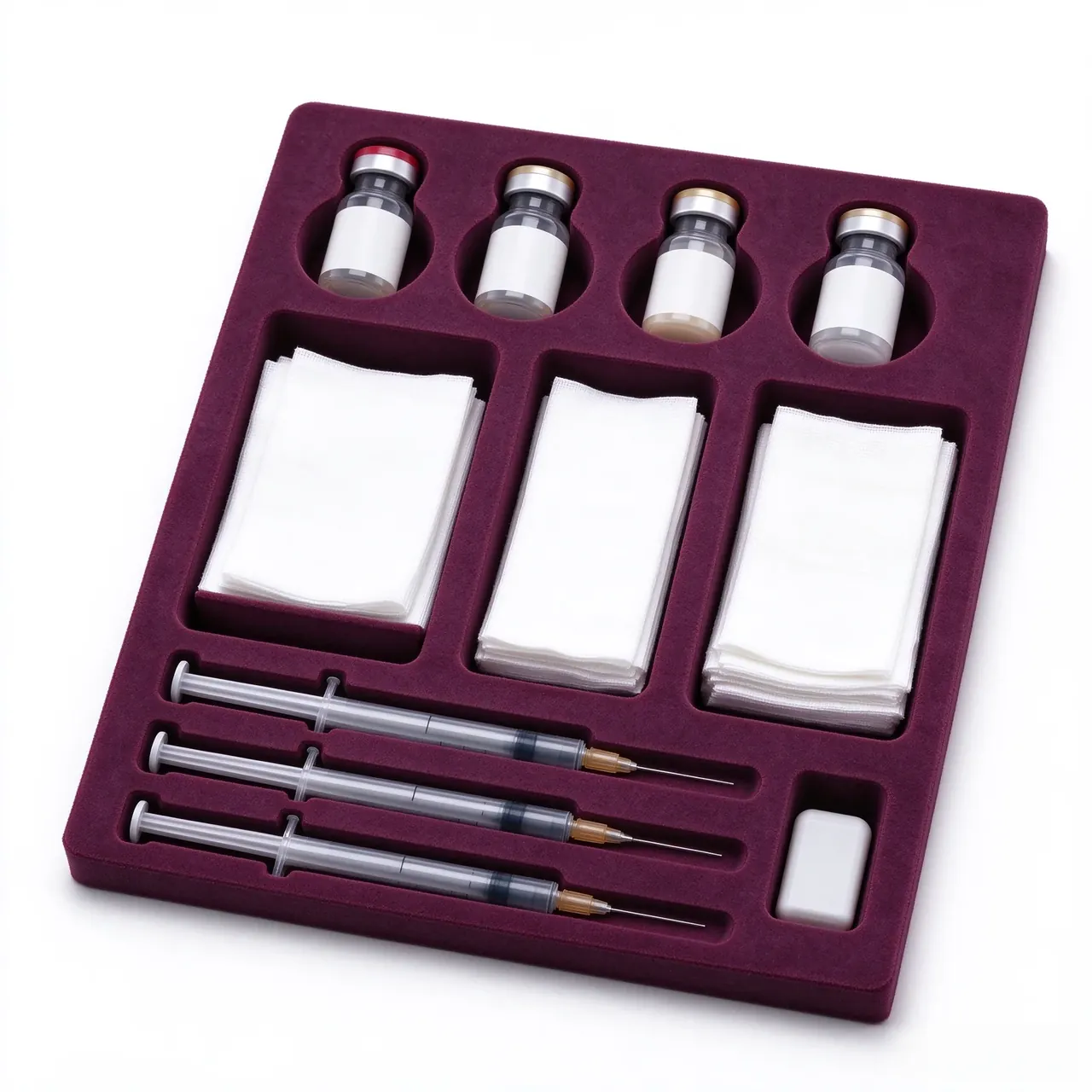
| Approach | Usual thickness | Cushion travel | Cost of a change |
|---|---|---|---|
| PP dividers | 3 / 5 / 8 mm | Almost none | New plate only, lowest |
| Flocked tray | 1.2 mm flock | 1 mm to 2 mm | New tray tool, mid |
| EVA foam | 20 mm to 40 mm | 5 mm to 10 mm | New cutting die, highest |
Divider thickness follows the span: 3 mm under 80 mm of cell width, 5 mm at 150 mm, 8 mm past 200 mm, where thinner plates soften. Leave 0.5 mm where the plate enters the wall groove, or a tight fit binds once the shell contracts in the cold.
Flock gives friction and finish: a 1.2 mm layer keeps the vial base off hard plastic and the label intact, though fibres trap dust and a tray that will not clean is replaced whole. EVA at 45 kg/m³ sits between the two.
5. Sizing cells and locking tolerances
Tolerance is the last step in sizing, and the drawing figure is only a start. Shrinkage, flock thickness and divider tolerance stack up, so the moulding differs from the drawing by a visible margin. A deviation of ±1.5 mm covers the 1.0% to 2.5% shrinkage band of PP and still leaves flock something to press against.
Measure three places: cell mouth length, mouth width, and the wall between two cells. All three inside ±1.5 mm means a divider that goes in and comes out; outside it, the plate jams or rattles and takes the instruments with it.
| Field symptom | Root cause | Correction |
|---|---|---|
| Vials topple in a row | Well more than 3 mm over the diameter | Line the well with 1.2 mm flock |
| Gauze spills on opening | Flat bed with no edge | Add a thin pad in the lid |
| Scissors slide out | Slot has no end stop | Fit a 5 mm stop block |
| Dividers work loose | Gap to the wall above 1 mm | Move to 5 mm plate with a tenon |
Time ten openings before and after a change, lid release to first item out. A Compartmentalized Medical Equipment Case falling from 45 s to 18 s has its cells right, if items and operator stay the same.
Related Reading
- Working out usable volume and the space corners take
- Custom foam inserts for medical cases
- How to frame a medical case specification
- How hospital transfer cases divide their interior
Conclusion
A Compartmentalized Medical Equipment Case turns a working sequence into coordinates: write the order hands enter, draw cells by family, split the tiers by frequency, then hold each cell with a divider, a flocked tray or foam. The 28 L shell at 82%, the 18 s retrieval and the ±1.5 mm deviation only work as a set.
This article covers the case side of the specification only, not the use or loading of the equipment inside.
Related Products
- 8 Series — Gun Cases; Military Equipment Cases; Camera Equipment Cases; Drone Cases; Watch Cases; Knife Cases; First Aid Cases; Electronics Equipment Cases
- WL8-2812 PP Gun Case — model WL8-2812
- All protective cases and toolboxes: 7 series, 158 models