

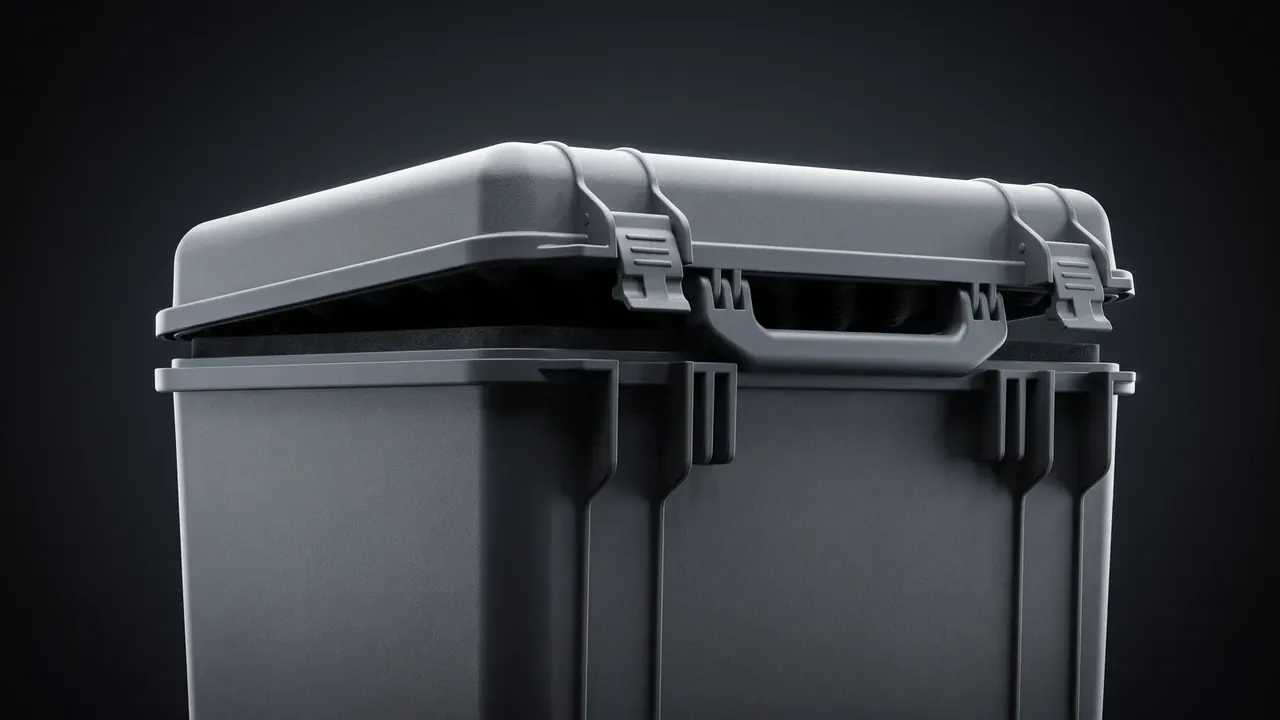
Quick answer: A Consolidated Tool Kit runs on four intervals against six limits: cord rebound, air drop at 15 kPa, latch force, jaw wear, liner collapse and label peel, each with a watch band and a line.
Table of contents
- Consolidated Tool Kit Service Intervals
- Cleaning the Shell and Lubricating Moving Parts
- Seal and Latch Replacement Criteria
- Liners, Labels and Damp Storage
- Records and Spare Stock
- FAQ
1. Consolidated Tool Kit Service Intervals
A Consolidated Tool Kit runs on four events. Monthly walk-rounds check shell, latch feel and labels. Quarterly service samples 25 percent, full below 12 units, adding groove cleaning and hinge grease. The annual one strips seals, liners and labels, and a return check follows any issue within 48 hours. Storage is rated -25°C to 55°C at 70 percent humidity.
| Event | Interval | Scope |
|---|---|---|
| Walk-round | Monthly | Shell, latches, labels |
| Quarterly | 3 months | 25% sample, grease |
| Annual | 12 months | Seals, liners, labels |
| Return | 48 hours | Shell, handle, latches |
Bands are pass, watch at 30 days, and replace; two watch results in a row send a unit to the bench. Denser is not better: each seal removal creases the groove.
2. Cleaning the Shell and Lubricating Moving Parts
Wash with neutral detergent at pH 6.5 to 7.5, 1 percent, under 40°C; rinse, dry within 30 minutes and blow the groove clear. Acetone, chlorinated solvents and strong alkali bloom the shell and swell the cord, which then fails rebound for good.
Hinge pins take 0.2 g of silicone grease every 1,000 cycles or six months. Latch pivots take dry PTFE, since lithium grease traps dust and lifts opening force. Coastal stores rinse quarterly for five minutes, keeping the jet off the spring bore.
3. Seal and Latch Replacement Criteria
The EPDM cord is 65 Shore A with a 10 mm free height. Compressed to 7 mm for 24 hours it must return above 9.2 mm; 8.8 to 9.2 mm is watch, under 8.8 mm is scrap. Set at 70°C for 24 hours it passes below 20 percent and fails past 28 percent.
Pressure testing at 15 kPa, settled 30 seconds and held 45 seconds; a 1.2 kPa drop passes, 2.5 kPa fails. Soap on rim lip, latch seat and insert roots shows a bubble over 0.5 mm.
Latches open at 90 N new, go on watch at 130 N, are replaced at 160 N or on self-release; jaw wear past 0.6 mm retires them.
| Item | Pass | Watch | Replace |
|---|---|---|---|
| Cord rebound | Above 9.2 mm | 8.8–9.2 mm | Below 8.8 mm |
| Compression set | Below 20% | 20–28% | Above 28% |
| Air drop at 15 kPa | Below 1.2 kPa | 1.2–2.5 kPa | Above 2.5 kPa |
| Latch force | 90–130 N | 130–160 N | Above 160 N |
4. Liners, Labels and Damp Storage
EVA liners at 45 kg/m³ are replaced when a cavity wall collapses past 1.5 mm or crumbs lift; set at 25 percent strain and 70°C for 24 hours stays under 12 percent. Vacuum only, since solvent swells the foam tacky.
Labels are 25 by 15 mm, peel above 6 N per 25 mm and hold from -20°C to 60°C; renew any lift over 1 mm, and past 5 percent loss fit a riveted plate. Damp storage leaves the foam near 0.8 percent water after 30 days.
5. Records and Spare Stock
Records hold three fields: event, measured value, band. A blank blocks submission, and the band comes from the limit table; numbers bind to the position, so a pressure curve outlives every swap.
| Spare | Specification | Per unit | Stock | Replace when |
|---|---|---|---|---|
| Cord | EPDM, 10 mm | 3.6 m | 8% | Rebound below 8.8 mm |
| Latch | PA66, 30% glass | 2 | 6% | Force above 160 N |
| Hinge pin | 316 stainless, 5 mm | 4 | 5% | Play above 0.35 mm |
| Liner | EVA, 45 kg/m³ | 1 set | 4% | Collapse above 1.5 mm |
| Label | 25 by 15 mm | 12 | 15% | Lift above 1 mm |
Labour plus parts past 35 percent of a new case ends its life; cracks scrap it at any length.
Conclusion
Servicing a Consolidated Tool Kit is threshold work: rebound, pressure drop, force, jaw wear, collapse and peel each own a band and a line. Intervals spread the work across the year, and records turn readings into a trend. With seals and latches holding the barrier, a Consolidated Tool Kit stays serviceable for years.
This article discusses only the container (case body) side of specifications and design intent, and does not cover any handling, loading or use of the contents.
Related Reading
- Specifications behind a consolidated tool kit
- Where consolidated tool kits are used
- Servicing a metal tool chest
- Maintaining reusable storage containers
Related Products
- 8 Series — Gun Cases; Military Equipment Cases; Camera Equipment Cases; Drone Cases; Watch Cases; Knife Cases; First Aid Cases; Electronics Equipment Cases
- WL8-2812 PP Gun Case — model WL8-2812
- All protective cases and toolboxes: 7 series, 158 models