

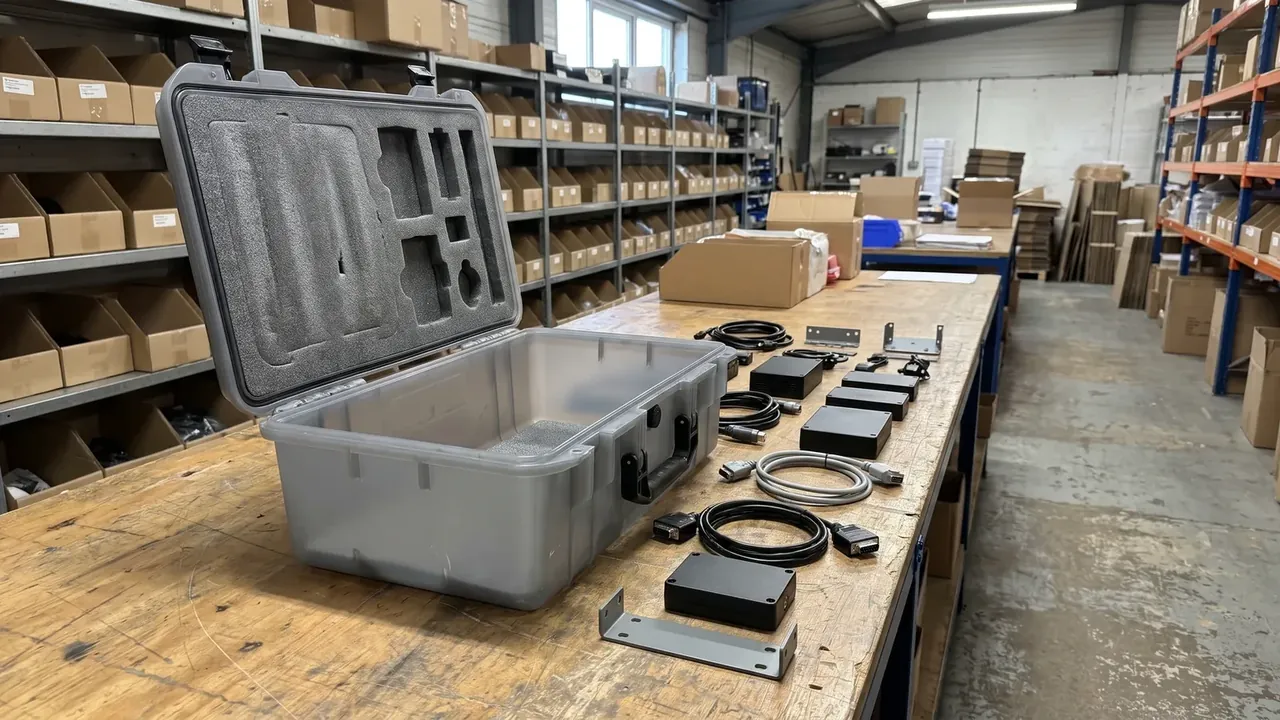
Quick answer: A Construction Site Equipment Case survives open storage through three structures: a 6 mm rabbet step, 8×5 mm gasket compression and a 3 kPa vent.
Table of contents
- Open Storage for a Construction Site Equipment Case
- The Rabbet Step and the Path Rain Travels
- Gasket Section and Compression
- Vent Cracking Pressure and Condensation
- Inspection Rhythm Through the Wet Season
- FAQ
1. Open Storage for a Construction Site Equipment Case
On most sites the box has no roof over it, and once rain starts the gasket is the only line left.
A Construction Site Equipment Case at 600×450×300 mm outer, 5.5 mm wall and 7.2 kg empty takes two people to lift. Stacked 3 high, the bottom body carries (own weight + load) × (layers − 1), so the third box down holds tens of kilograms for weeks. The range is written -15 to 55 °C; sun pushes interior air toward 50 °C, night drops it to 20 °C and reverses the differential, and the gasket is compressed far more often than the lid is opened.
Rain reaches the interior by three routes: the lid joint, the latch pin bores and the vent membrane. Sealant recovers none of them, because it cracks first under thermal cycling.
| Storage grade | Structure | Interior RH after 2 h of rain |
|---|---|---|
| Open grade | Single rabbet, no vent | Above 85% |
| Eaves grade | Single rabbet plus drip lip, vent facing down | 70% to 80% |
| Double rabbet grade | 6 mm rabbet step plus vent | Below 65% |
Take the storage grade that still holds interior humidity below 65% after 2 h of rain; dropping one rabbet leaves a box fit only for a covered yard.
2. The Rabbet Step and the Path Rain Travels
The rabbet on a Construction Site Equipment Case is the step where lid edge meets rim. Its 6 mm height forces water through two bends: onto the outer lid edge, down the vertical face, and only then to the sealing face. That path is all the resistance wind-driven rain meets.
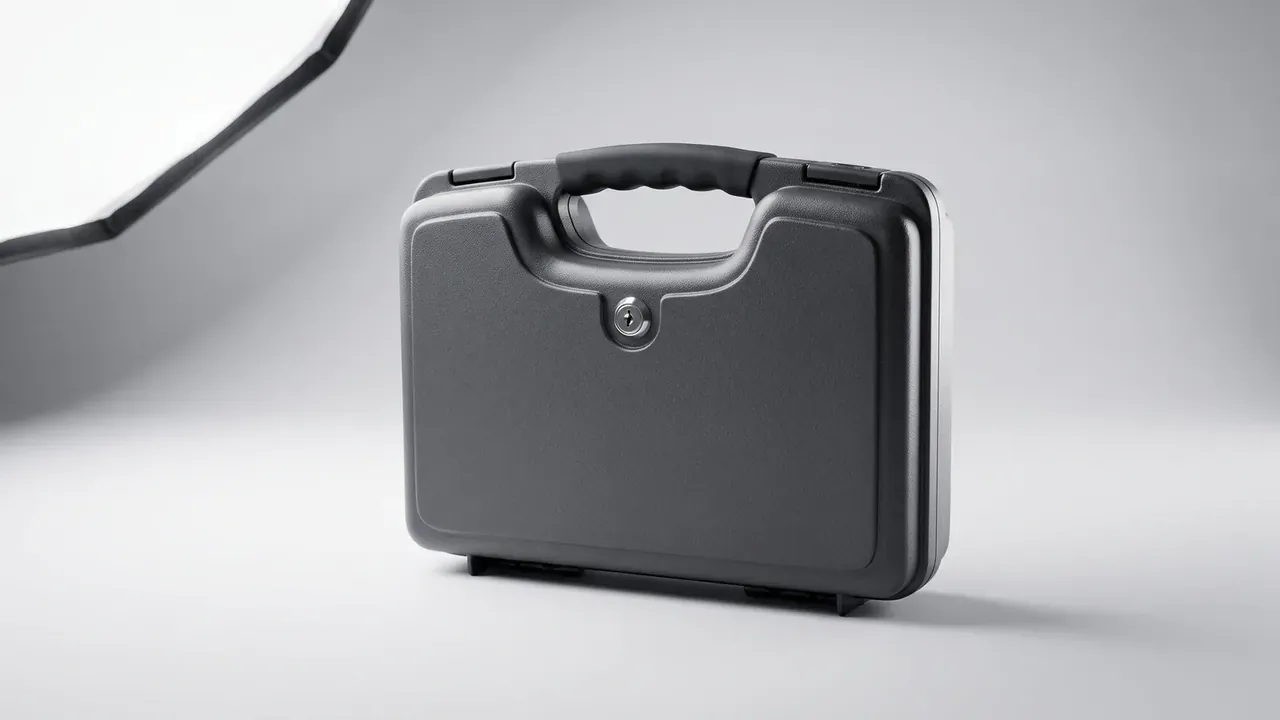
The horizontal face needs a 1° to 2° fall, or a flat step holds a water film that capillary action walks into the groove. Keep the step 6 mm wide with 0.5 mm of clearance outboard.
PP shrinks 1.5% to 2.5% on moulding, so across a 600 mm rim the two halves offset by a fraction of a millimetre. Let parts sit 48 h before a full dimensional check, with unmarked tolerances to IT14, roughly ±1.5 mm over 500 mm.
3. Gasket Section and Compression
The gasket section on a Construction Site Equipment Case is 8×5 mm EPDM with a free height of 8 mm. At 30% compression the groove is 5.6 mm, the strip squeezes 2.4 mm and 5.6 mm stays as rebound reserve. EPDM normally runs 25% to 35%: less starves contact stress, more accelerates compression set.
Cut the groove 0.3 to 0.5 mm wider than the strip and hold fill ratio at or under 0.80; under ISO 3302-1 class E2 an 8 mm strip carries ±0.25 mm, about ±3 points of compression, which a 30% nominal absorbs.
| Seal level | Section and groove | Lid length served |
|---|---|---|
| Single-lip grade | 8×5 mm single lip, 6.2 mm groove | Up to 500 mm |
| Twin-lip grade | 8×5 mm twin lip, 5.6 mm groove | 500 to 800 mm |
| Moulded-corner grade | 8×5 mm twin lip, four moulded corners | Above 800 mm |
Past 800 mm of lid length on a Construction Site Equipment Case, corners become the weak point: a mitred joint carries load only through the bond, which salt spray and UV reach first. Moulded corners vulcanise three runs into one piece at about 80% of parent strength.
At -15 °C EPDM hardens and rebounds slowly, so compression at the instant of closing falls short; at 55 °C it softens and takes permanent set faster.
4. Vent Cracking Pressure and Condensation
The vent on a Construction Site Equipment Case is φ12 mm, cracking at 3 kPa. A sealed body under a 30 °C swing builds roughly 10 kPa, so the vent opens before the differential reaches a third of that and the gasket is never levered up.
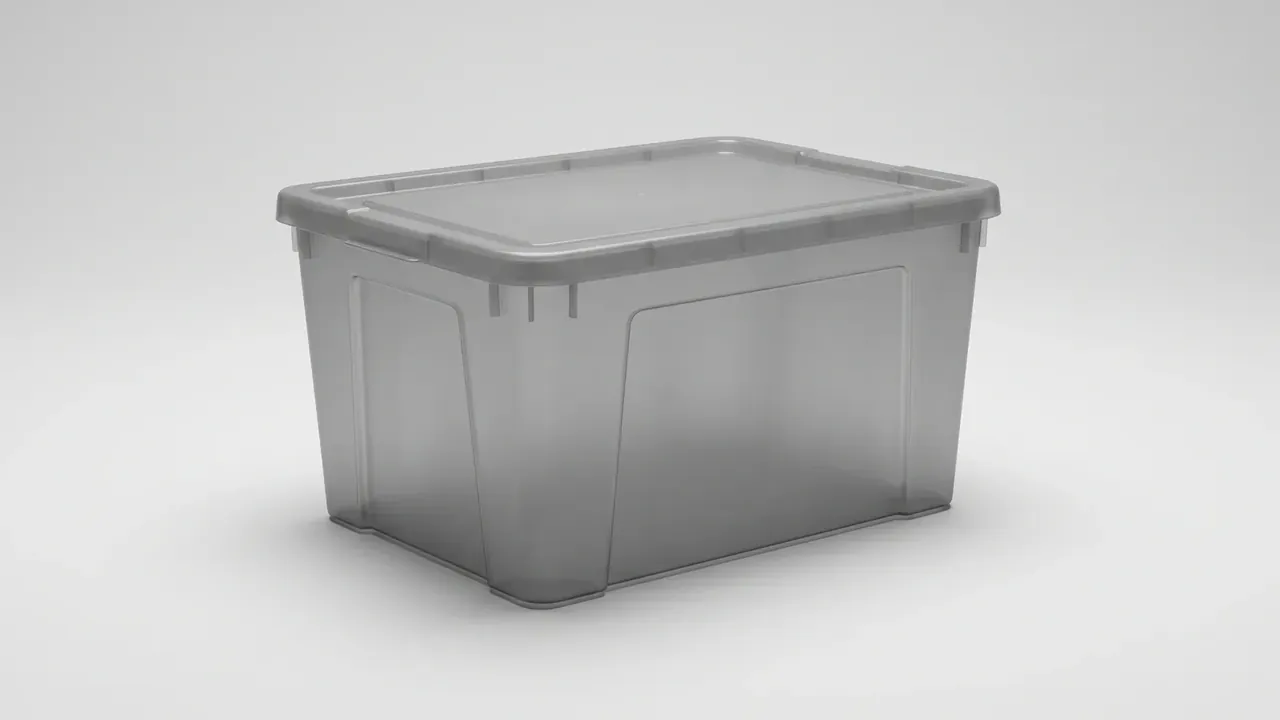
The vent balances pressure; it does not dry the box. ePTFE pores sit at 0.1 to 1 μm, so vapour passes and liquid does not. What pulls humidity down is the 25 mm isolation gap between equipment surfaces and the wall, where condensate forms instead.
Condensation peaks on the first clear night after rain, when the wall cools while interior air still holds the day's heat. Mount the vent in the lid side wall, not the top face, and condensate will not run through the bore.
Fouling causes most failures: mud, cement slurry or release oil blinds the membrane, cracking pressure climbs from 3 kPa to the teens, the gasket levers open and water enters at the latch bores. Clean with water and a soft brush; solvent strips the hydrophobic layer.
5. Inspection Rhythm Through the Wet Season
The round for a Construction Site Equipment Case is set at 7 days and reads four things that move: step pooling, gasket witness marks, vent airflow and latch bores.
| Inspection interval | Action | Decision |
|---|---|---|
| Daily grade | Check lid face and step for pooling | Continuous pooling over 100 mm means re-pitching |
| 7-day grade | Open and read gasket witness marks | Breaks totalling over 50 mm mean a new strip |
| Monthly grade | 2 h rain at 3 L/min | Interior above 65% fails the box |
Do not open a Construction Site Equipment Case straight after rain, when interior air is wet and the outside is still dripping; wait 2 h, then open, inspect and wipe the step dry.
Conclusion
The wet-season account settles on three structures: the 6 mm rabbet step decides how far water travels, the 8×5 mm gasket compression decides where it stops, and the 3 kPa vent whether the differential can lever the gasket open. Fix those three and a Construction Site Equipment Case holds interior humidity below 65% through an open-air wet season.
Related Reading
Related Products
- 8 Series — Gun Cases; Military Equipment Cases; Camera Equipment Cases; Drone Cases; Watch Cases; Knife Cases; First Aid Cases; Electronics Equipment Cases
- WL8-2812 PP Gun Case — model WL8-2812
- All protective cases and toolboxes: 7 series, 158 models