

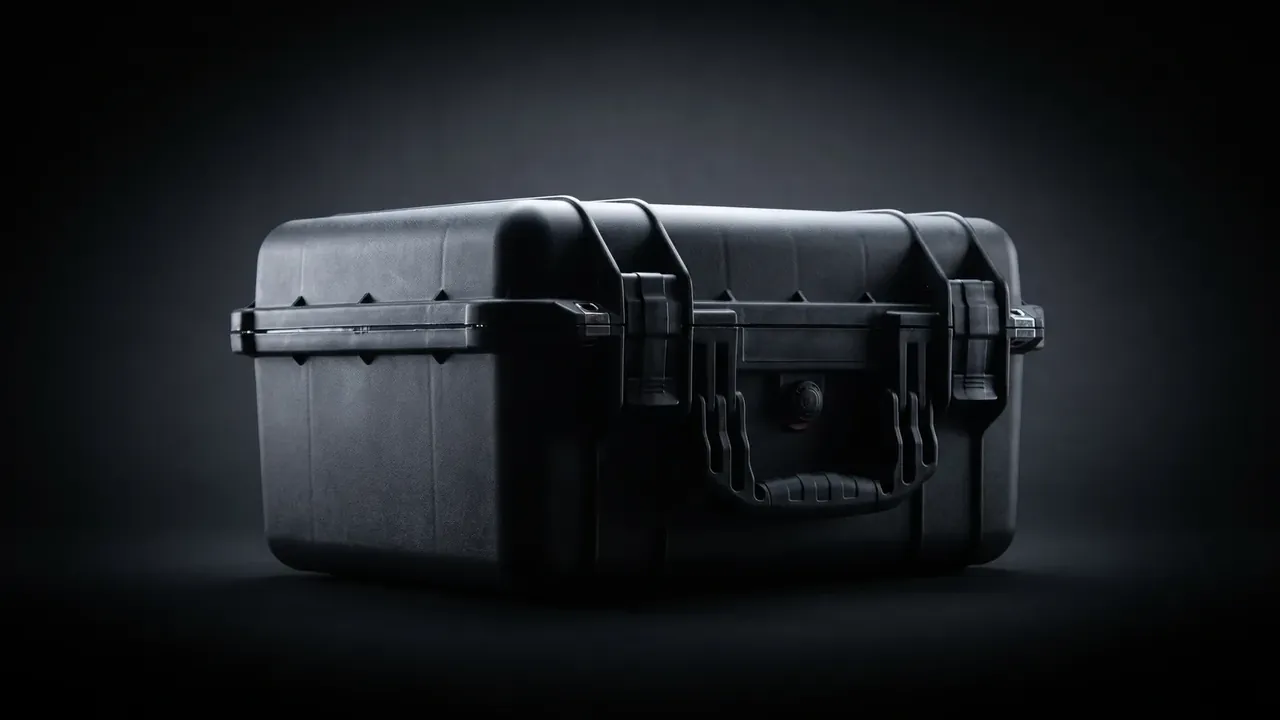
Quick answer: A construction site tool case is defined by three numbers: 2.5 mm of HDPE over a 5.0 mm wall, 12 mm stand-offs, and 1.2 mm of wear after 500 m.
Table of contents
- Where a Construction Site Tool Case Meets the Ground
- Abrasion Layer and Stand-Off Height
- Handle Rating and Two-Person Carry
- Latch Sealing Against Mud and the Wash Port
- The Daily Walk-Around
- FAQ
1. Where a Construction Site Tool Case Meets the Ground
No site has flat ground, and the shell starts wearing on contact. A construction site tool case lands on three or four points: mortar lumps on a slab, 20 mm graded gravel in the spoil heap, soft mud in a backfilled trench. At 4.6 kg empty, that load sits on a few square centimetres.
Three ground classes change the specification for a construction site tool case. A hardened slab wears evenly under fine grit; a gravel yard dents before it wears, because angular stone concentrates stress; wet backfill grips the feet and turns the lift into a diagonal pull. Stacking adds a fourth case: four-high piles load the bottom lid for weeks, and offset ribs let the panel sag.
| Ground class | Typical surface | What the base sees |
|---|---|---|
| Hardened slab | Concrete, cutter slurry | Fine grit, steady loss |
| Gravel yard | 20 mm graded stone | Point loads, dents first |
| Wet backfill | Soft soil, wet sand | Suction on the feet |
Gravel is hardest on the base. A case dragged over a slab for a quarter may lose less than in one month among crushed stone, which is why a construction site tool case carries a separate floor layer rather than a thicker whole wall: thickening the mould adds weight and cycle time.
2. Abrasion Layer and Stand-Off Height
The floor of a construction site tool case carries cavity load, landing impact and sliding friction at once. In the 560 × 380 × 250 mm format the main wall is 5.0 mm, with 2.5 mm of HDPE fused in the same shot so wear is read across the pair.
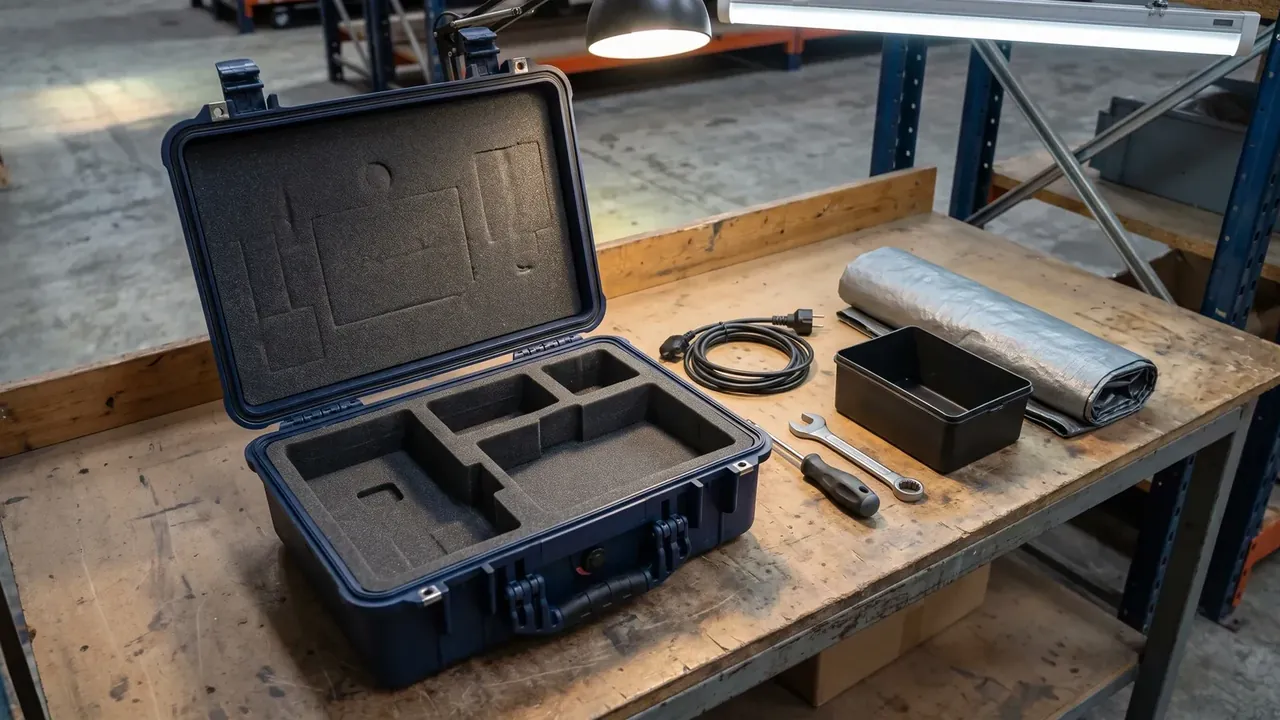
Taber testing to ASTM D4060 gives 20 to 60 mg lost per 1,000 cycles, enough for daily dragging over stone. Friction of 0.20 to 0.35 keeps the case sliding on wet concrete without a second pair of hands.
Stand-offs hold the floor 12 mm clear: water does not soak the base, and only four replaceable feet touch the ground. A foot worn below 8 mm is swapped before the base takes over the rubbing.
3. Handle Rating and Two-Person Carry
45 kg and 80 kg are not interchangeable. The 45 kg figure is the static rating of one handle, with the whole load passing into the lid joint; 80 kg is the ceiling for two people, each taking half so a side sees about 40 kg with margin for the lift.
Real carries are uneven. One person on the handle and one under the base shifts the centre of gravity; two people on the ends sag the body and bend the handle root. An uneven split can peak above 45 kg, which is why the total for a construction site tool case is capped at 80 kg.
| Carry method | Load per side | Case weight |
|---|---|---|
| One-hand carry | Up to 45 kg | Under 20 kg, short haul |
| Two-person ends | About 40 kg each | 40 to 80 kg |
| Sling under base | Handle unloaded | Above 80 kg, or lowering |
On a construction site tool case the handle is moulded with the body: a grip wide enough for a gloved hand, an 8 mm root, an R6 radius at the lid. Cracks start at that radius, show as a white mark first, then part.
4. Latch Sealing Against Mud and the Wash Port
Two latches sit on the long sides of a construction site tool case. The dust cover holds a 0.8 mm gap to the seat, below common grit size, so slurry that creeps in dries into a block and the tongue never seats. At 1.5 mm, grit jams the tongue, the gasket goes slack and an IP65 jet test fails.
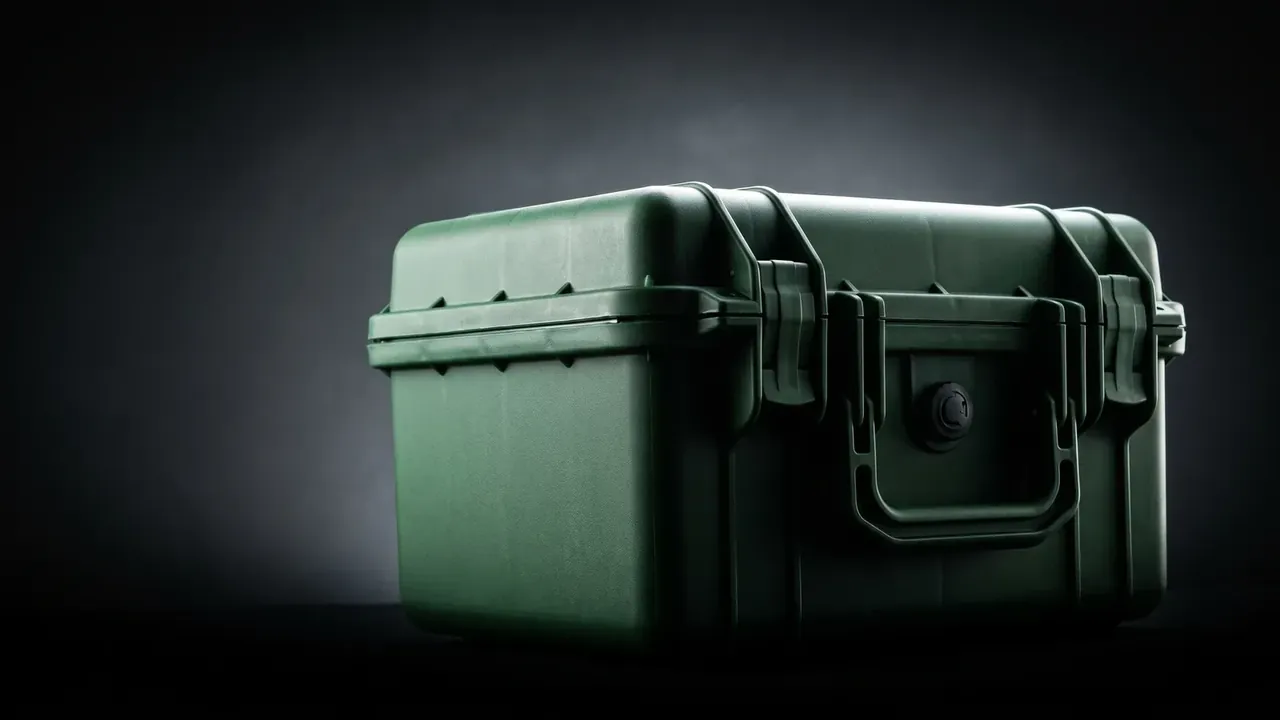
The lip is chamfered at 30°, pushing mud out on closing, so the operating force stays flat as grit collects.
The wash port is φ30 mm at the lowest point, screw-capped with an O-ring. Stand the case up, flush through the latch side, drain. IP65 covers jets, not immersion, so trapped water has to be let out or the back of the gasket grows mould.
5. The Daily Walk-Around
The daily check on a construction site tool case needs no disassembly: look at the floor, stand on the feet, press the handle root, work the latches shut.
| Check item | How to judge | Limit |
|---|---|---|
| Base wear | Steel rule on the mark | Stop above 1.2 mm |
| Foot height | Caliper on the foot | Replace below 8 mm |
| Handle root | Look for whitening | Replace on a crack |
| Latch travel | Close empty, listen | Clean if it will not seat |
Records go in per shift and wear is summed weekly. The curve is linear, so a sudden rise points to a new surface or a longer drag route, and scrapping follows the batch spread.
Wear to 1.2 mm is not a hole: half the HDPE is gone but the 5.0 mm PP beneath is intact, and only puncture resistance drops. Keeping 1.2 mm as the stop line preserves that reserve of solid wall.
Conclusion
The life of a construction site tool case is set by the floor layer and the feet, then by how the handle load is split, then by latch and port upkeep. Fix the wall at 5.0 mm with 2.5 mm of HDPE, the feet at 12 mm, one handle at 45 kg and a carry at 80 kg, and the shell survives a gravel yard. A 1.2 mm wear line is what gets it replaced before it becomes a hole.
Related Reading
- How Site Cases Get Customised
- Insulated Storage for Jointing Tools
- Weighing Wooden Crates Against Plastic Cases
Related Products
- 8 Series — Gun Cases; Military Equipment Cases; Camera Equipment Cases; Drone Cases; Watch Cases; Knife Cases; First Aid Cases; Electronics Equipment Cases
- WL8-2812 PP Gun Case — model WL8-2812
- All protective cases and toolboxes: 7 series, 158 models