

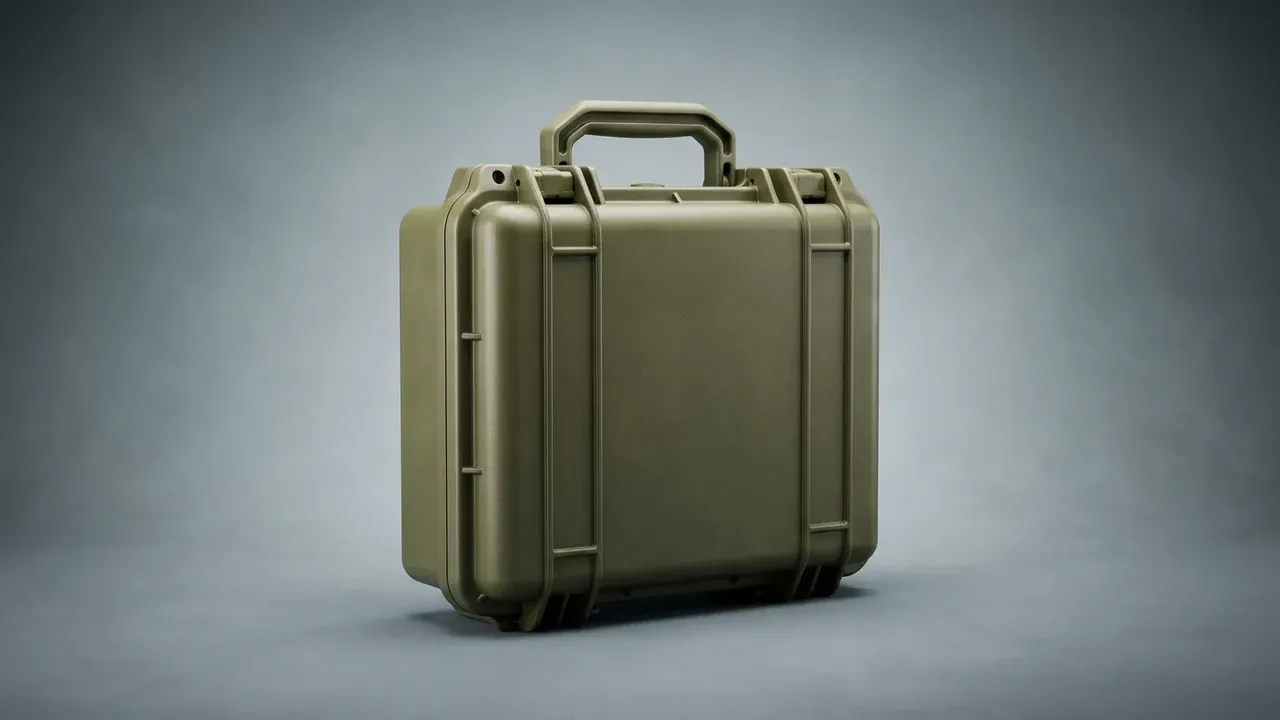
Quick answer: A fiber container, ammunition, fiber wins on weight and salt spray and loses on point load, heat sag and field repair. Weigh the empty case, count the stack height, then test a dropped striker and the storage temperature ceiling. If two of the three fail, buy rotomoulded PE or aluminium instead.
Table of contents
- Twelve sample sets: where the weighing starts
- Point load: where the layup steps aside
- Salt spray and temperature: the measured gap
- A scene-by-scene list of who wins
- FAQ
1. Twelve sample sets: where the weighing starts
The job began at a floor scale. The buyer needed a lid for a 1120 mm carrier with a 400 by 300 mm interior, and ordered twelve sample sets across three candidates: continuous glass layup, rotomoulded polyethylene, folded aluminium.
Round one took three readings on one scale to 0.05 kg.
| Candidate | Empty weight | Wall | Interior L × W × D (mm) | Sample lead time |
|---|---|---|---|---|
| Continuous glass layup | 7.4 kg | 3.2 mm | 1120 × 400 × 300 | 28 days |
| Rotomoulded PE | 11.8 kg | 6 mm | 1105 × 395 × 295 | 21 days |
| Folded aluminium | 9.2 kg | 1.5 mm | 1118 × 398 × 300 | 35 days |
Four kilos looks harmless in a table and stops being harmless on a shoulder. Twelve sets went out with six people over an 8 km hill route; the three carrying the fiber container, ammunition, fiber averaged nine beats per minute lower and did not stop in the last kilometre. That is the first argument for the layup: weight comes out of the case, not the payload.
2. Point load: where the layup steps aside
Round two dropped a 25 kg striker with a 60 mm head from 0.9 m onto the centre of the lid, three times on one spot. The layup dented 4 mm and cracked the gel coat. The rotomoulded lid dented 1.5 mm and recovered.
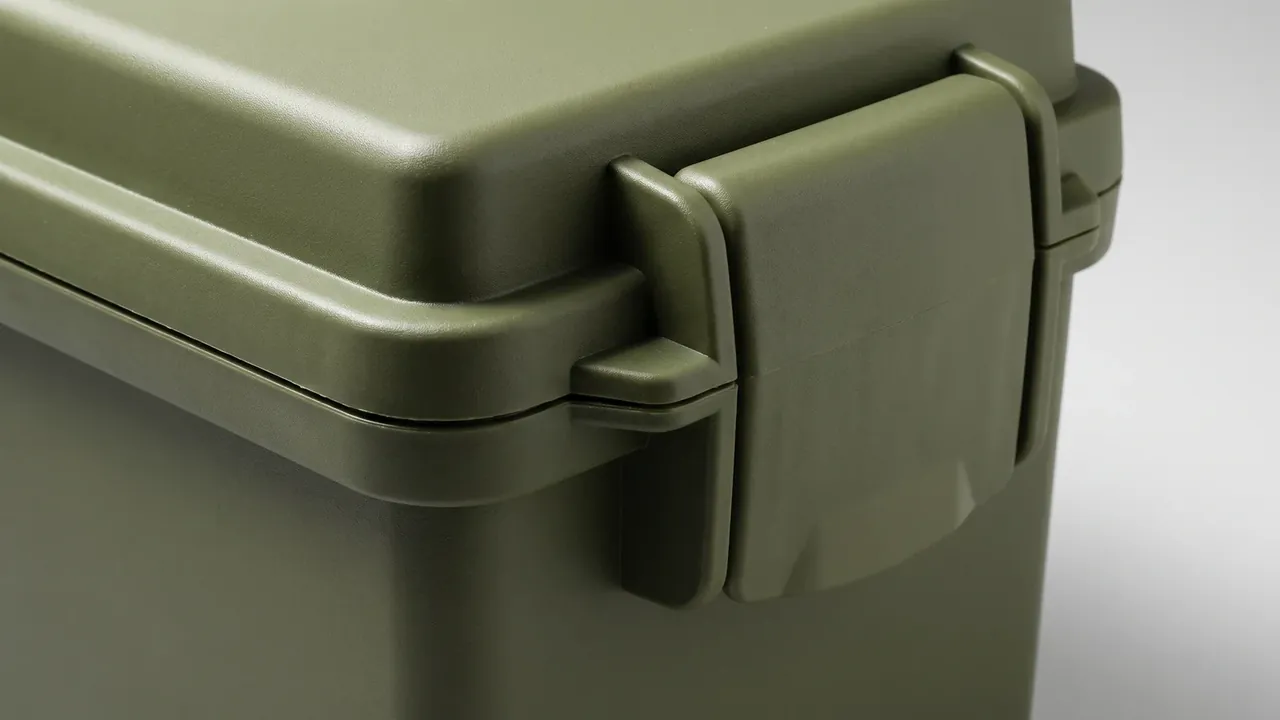
The difference is load path, not material strength. A layup spreads force along the fibres, so a small hard point loads a handful of filaments, and once they shear the wall loses capacity in one step. Polyethylene yields instead, and a dented wall still carries load. Repair is the second wall. A damaged layup needs a tapered grind, a patch cut to the same fibre angle, resin and 24 hours of ambient cure, none of which happens in a field workshop. A rotomoulded shell takes a hot-air welder and 20 minutes; aluminium takes a riveted patch. With a two-person maintenance team, that line decided the preference.
3. Salt spray and temperature: the measured gap
Round three ran 480 hours of neutral salt spray, five cycles from minus 40 °C to 71 °C, and 48 hours held at 71 °C.
| Check | Continuous glass layup | Rotomoulded PE | Folded aluminium |
|---|---|---|---|
| 480 h salt spray | No rust, slight gloss loss | No change | White rust at edges |
| Size change after cycling | 0.6 mm | 1.8 mm | 0.3 mm |
| 48 h at 71 °C | Softening, 2.1 mm lid sag | Normal | Normal |
| Field repair | Grind and patch, 24 h cure | Hot-air weld, 20 min | Riveted patch |
Salt spray is not close. Glass does not rust, the resin seals the filaments, and a coastal store leaves dulled gel coat. Aluminium fails at cut edges and rivet holes, where no oxide film forms and white rust creeps inward.
Heat reverses the ranking. At 71 °C a general-purpose polyester sits near its heat deflection range, so the lid creeps; 2.1 mm of sag leaves the gasket under-compressed.
Thermal cycling exposes something else. Glass moves about fifteen parts per million along the fibre, polyethylene nearer one hundred and fifty. On a 1120 mm length, 1.8 mm of growth stretches the gasket groove on every cycle, and after five passes the seal took a permanent set. Leak-down fell from 30 kPa to 12 kPa.
4. A scene-by-scene list of who wins
Three rounds turned selection into a list of scenes.
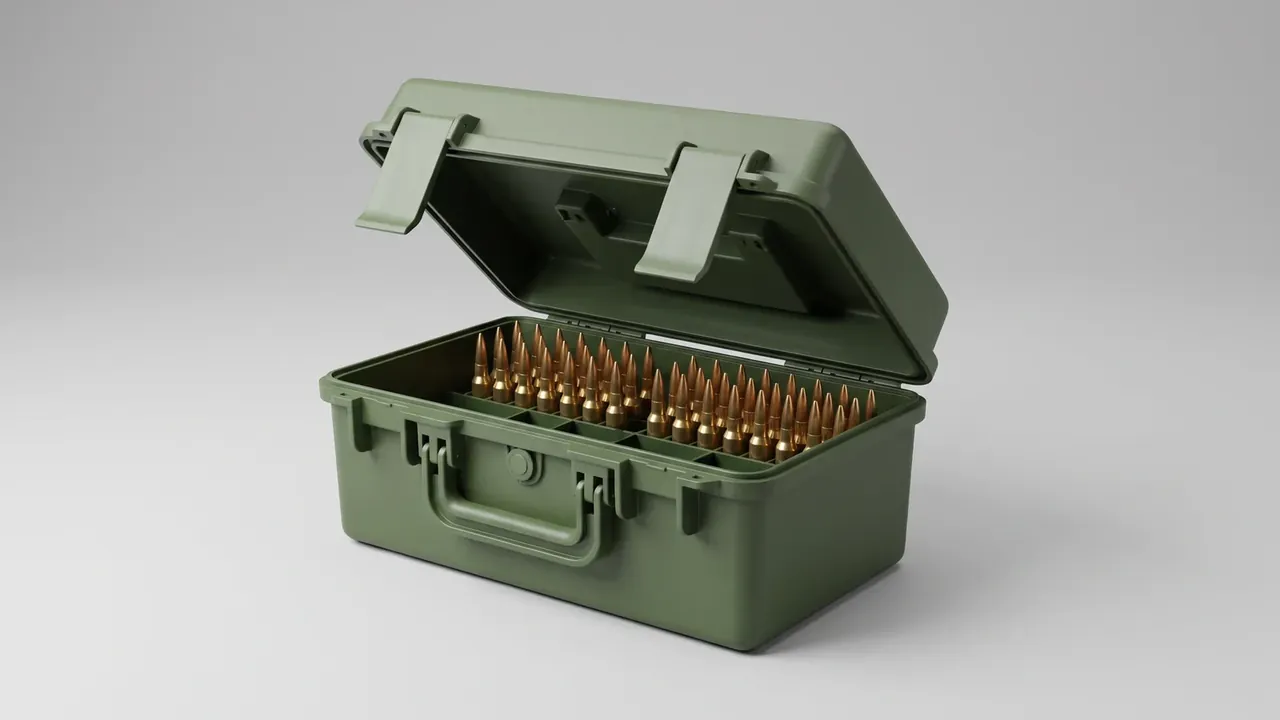
- Carried on foot, total load under 8 kg, more than 8 km a day: take the layup, weight converts into endurance.
- Vehicle-mounted, stacked three high, steel racking both sides: take rotomoulded PE for point load and recovery.
- Stored near an engine bay: take aluminium, no sag at 71 °C.
- Opened more than 20 times a day: take PE or aluminium.
- Coastal warehouse above 80 percent humidity: take the layup, corrosion resistance is inherent.
- Remote sites where repair happens on the spot: take aluminium, a riveted patch restores service.
- First order under 50 sets at 600 CNY: take rotomoulding, tooling amortises.
No line calls the layup worst, and none calls it best. The fiber container, ammunition, fiber owns lines one and five and yields the rest. Once written down, the 300-unit order split: 120 layup sets for hill and coastal routes, 180 rotomoulded sets for vehicles and stores.
Conclusion
Choosing a fiber container, ammunition, fiber is a trade of weight, point load and heat, not a price. Put it on a back or in a salt-laden store and it wins outright; put it under a stack beside steel racking and it loses just as clearly. A scene-by-scene list survives a real order better than any total score.
This article discusses only the container (case body) side of specifications and design intent, and does not cover any handling, loading or use of the contents.
Related Reading
- Three case materials compared side by side
- How the four wall layers of a fiber case divide the work
- Material and process routes for metal ammunition boxes
Related Products
- 8 Series — Gun Cases; Military Equipment Cases; Camera Equipment Cases; Drone Cases; Watch Cases; Knife Cases; First Aid Cases; Electronics Equipment Cases
- WL8-2812 PP Gun Case — model WL8-2812
- All protective cases and toolboxes: 7 series, 158 models