

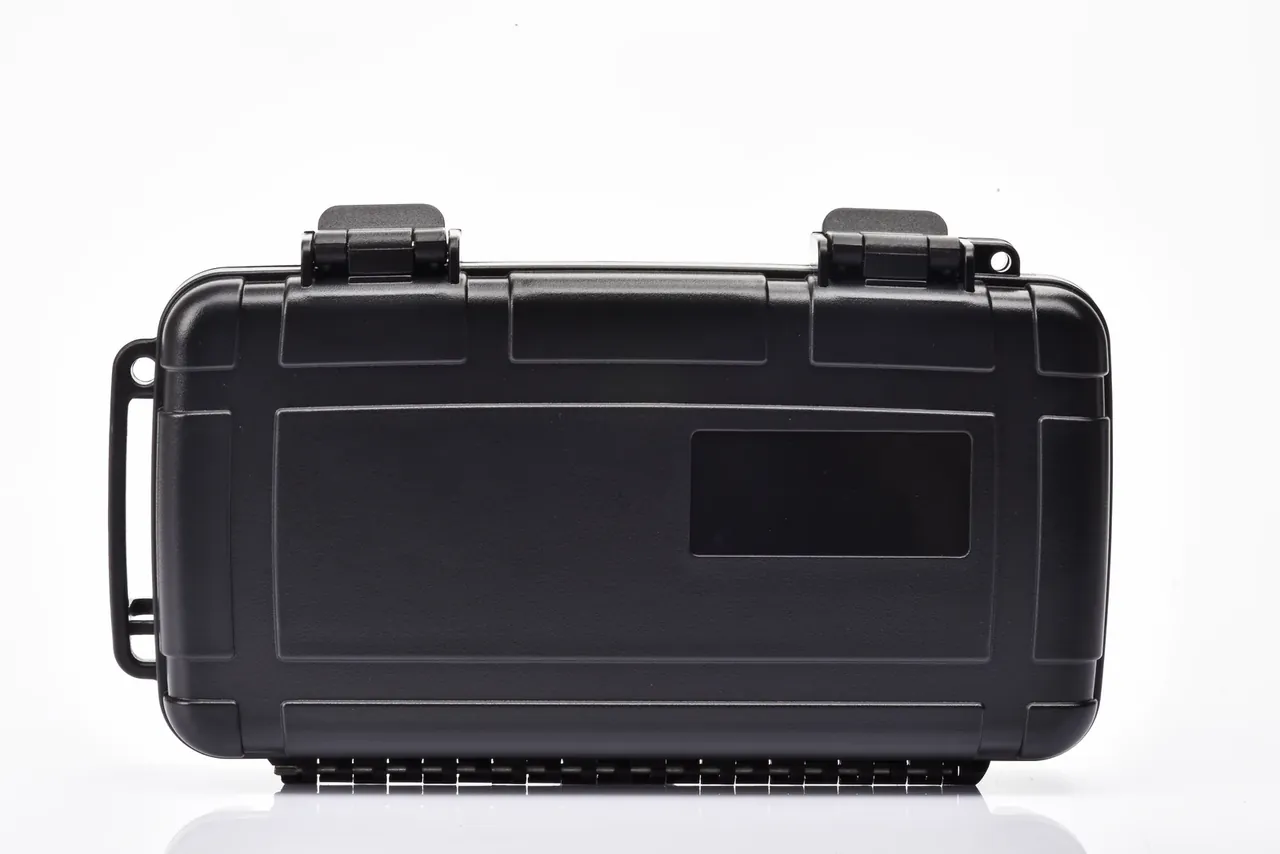
Quick answer: A fiber container, ammunition, fiber in the trade sense is a case whose load-bearing wall is continuous fibre laid in resin under a protective coat. Strength comes from the layup, not from extra thickness. It wins on weight, salt spray and non-magnetic behaviour; it loses on point load, heat and repairability. The test that separates it from a plastic case is whether the wall holds continuous fibre.
Table of contents
- What a fiber container, ammunition, fiber is: four wall layers
- Fibre and resin: which layer carries the strength
- Moulding routes: press, infusion and rotomoulding
- The weight ledger: where each kilogram goes
- Protection limits: what it does and does not do
- FAQ
1. What a fiber container, ammunition, fiber is: four wall layers
Cut the wall open and it is four layers, not one material. The liner faces the interior and handles sealing. The continuous fibre layer follows the load paths and sets how much bending and impact the case survives. The resin bonds the fibres into one body and passes shear between them.
That is where it parts from an injection-moulded case. Moulding is isotropic. A layup is anisotropic: load travels along the fibres and the stacking angle decides which direction ends up strong. One question separates the two at quotation stage, continuous filament or chopped strand.
| Layer | Typical material | What it does |
|---|---|---|
| Load-bearing | Continuous glass, aramid, carbon | Bending and impact |
| Matrix | Epoxy, vinyl ester, polyurethane | Bonds fibre, passes shear |
| Liner | Thermoplastic film, gel coat | Sealing and cleaning |
| Outer coat | Abrasion-resistant gel coat | UV and grit |
2. Fibre and resin: which layer carries the strength
Three numbers pick the fibre: density, tensile modulus, elongation. Glass is cheap with a middling modulus. Aramid stretches further and resists cutting. Carbon is stiffest but costs more and corrodes against aluminium.
The matrix is undervalued. Fibres carry tension and little compression; the resin restrains them against micro-buckling. Too little resin leaves no shear path between filaments, so an impact delaminates the wall. Too much drops the fibre fraction, usually held between fifty and sixty-five percent by volume. Stacking angle then decides where that strength points.
3. Moulding routes: press, infusion and rotomoulding
Prepreg pressing cures impregnated cloth in a heated mould: clean faces, stable dimensions, expensive tooling, best for a settled model. Vacuum infusion wets dry cloth under vacuum: mid-priced tooling, suited to large parts and shorter runs.
Rotomoulding has no fibre in it. Powder fuses inside a rotating mould into a hollow shell — even wall, low cost, free shapes, but stiffness bought with thickness. Both are black hard shells; the difference is inside the wall.
4. The weight ledger: where each kilogram goes
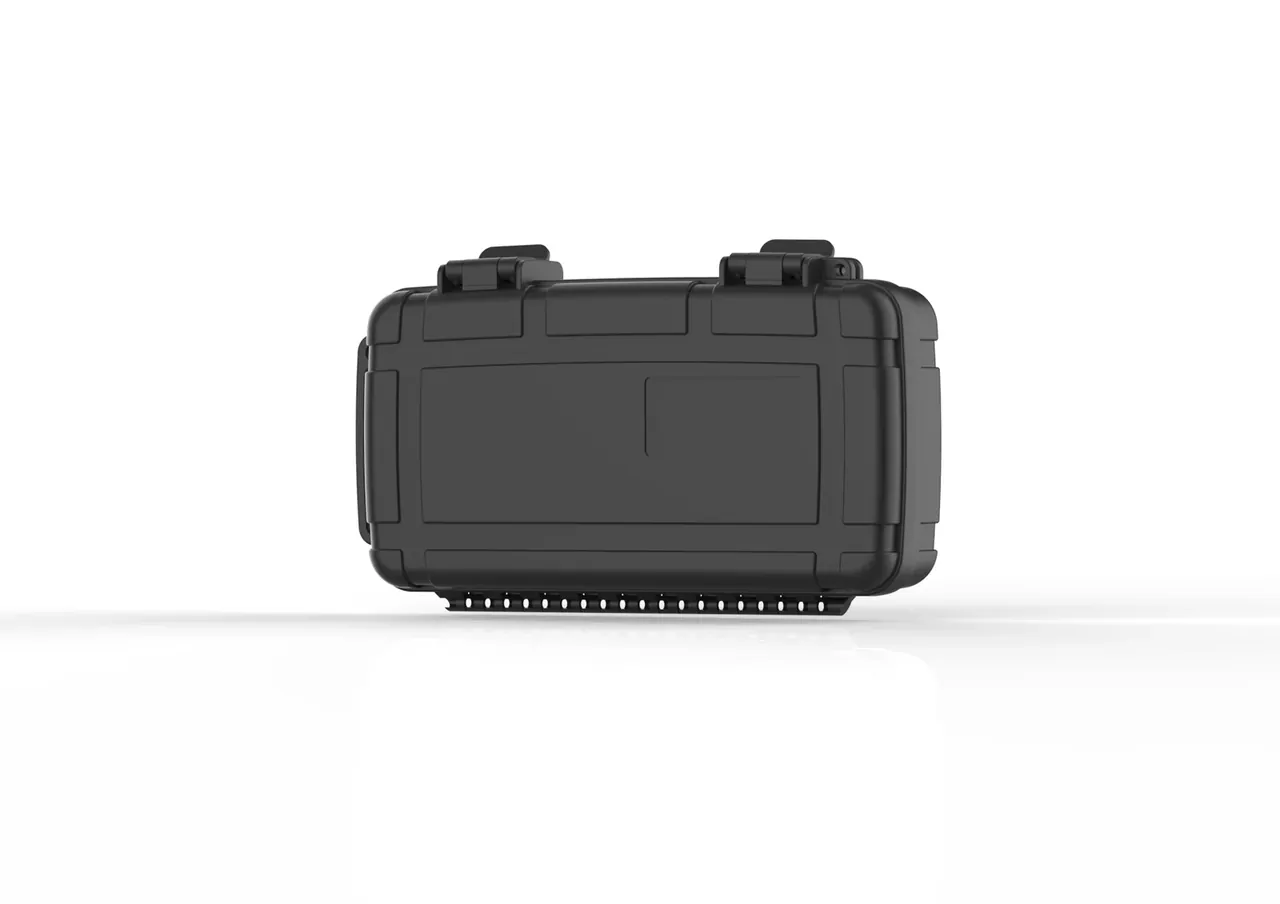
On the same interior, a fibre case runs about thirty percent lighter than cold-rolled steel and ten to twenty lighter than aluminium. Structural efficiency explains it: fibre sits only where load runs, instead of margin in every direction.
There is a floor. Latches, hinges, valves and gaskets stay metal and rubber, and they hold twenty to thirty percent of finished weight. Shrink the case and those parts do not shrink with it.
| Part | Material | Share of weight |
|---|---|---|
| Shell | Layup in matrix | 65 to 75 percent |
| Latches, hinges | Plastic, stainless | 10 to 15 percent |
| Gasket | Silicone, EPDM | 5 to 8 percent |
5. Protection limits: what it does and does not do
It does three things well: drop and side impact, salt spray, radio transparency. Energy spreads through the layup and the radiused corners stop it concentrating on one point; the resin takes no part in galvanic corrosion; glass and aramid neither distort a field nor block RF.
Sharp feet press dents into the wall until it delaminates. Epoxy service stays under 120 °C. UV chalks the coat. A penetrating break takes a bonded patch, not a hammer.
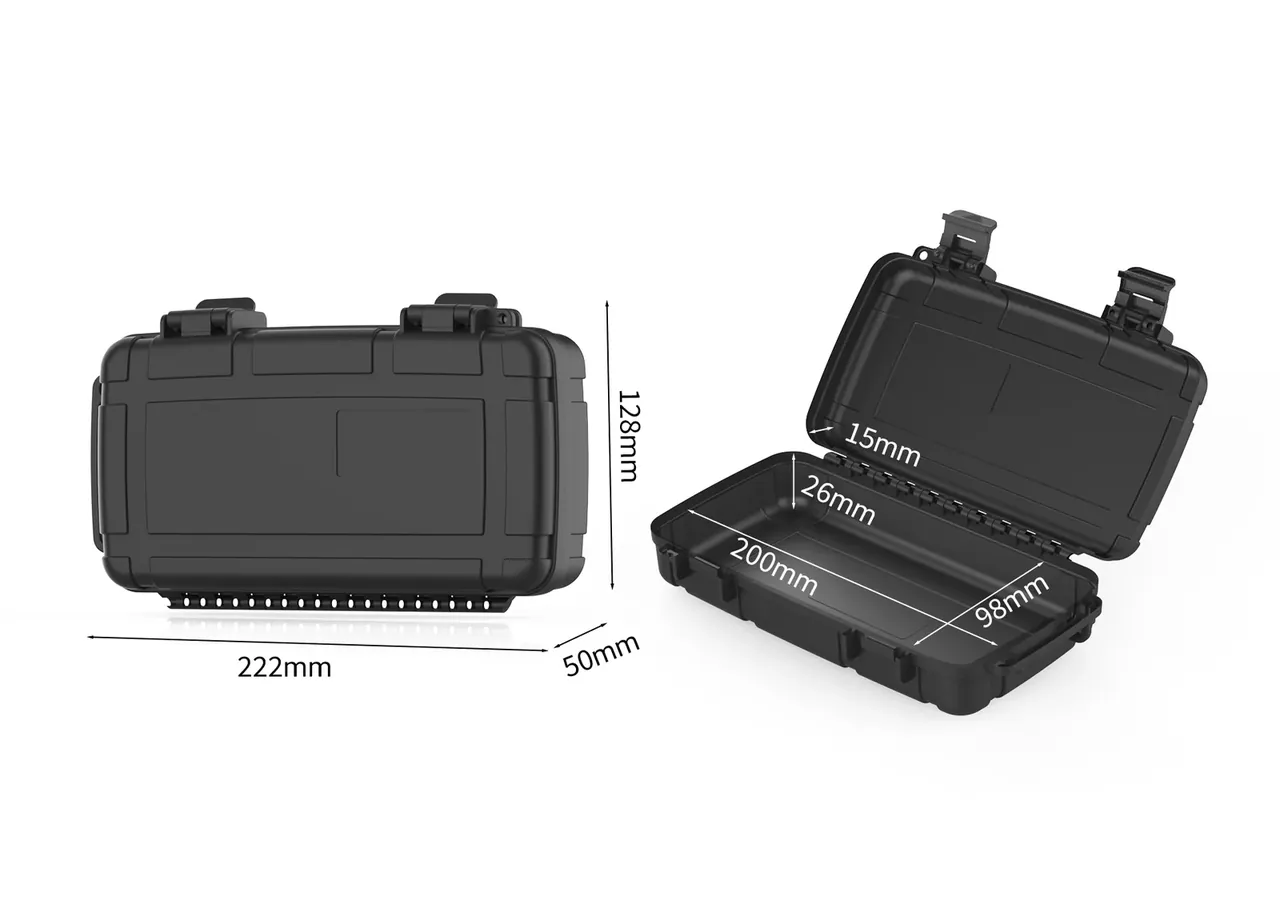
Conclusion
The position is clear: where weight, corrosion or RF transparency drive the choice, the composite wins; where point load, field welding or sustained heat drive it, metal still does. Read the load case first, then decide whether the wall needs fibre at all.
This article covers container-side specifications and design implications only, not the handling, loading or use of the contents.
Related Reading
- Moulding routes for fibre-reinforced cases
- metal-ammunition-box-material-comparison
- What metal ammunition case specs mean
- Structural design of composite cases
Related Products
- 8 Series — Gun Cases; Military Equipment Cases; Camera Equipment Cases; Drone Cases; Watch Cases; Knife Cases; First Aid Cases; Electronics Equipment Cases
- WL8-2812 PP Gun Case — model WL8-2812
- All protective cases and toolboxes: 7 series, 158 models