

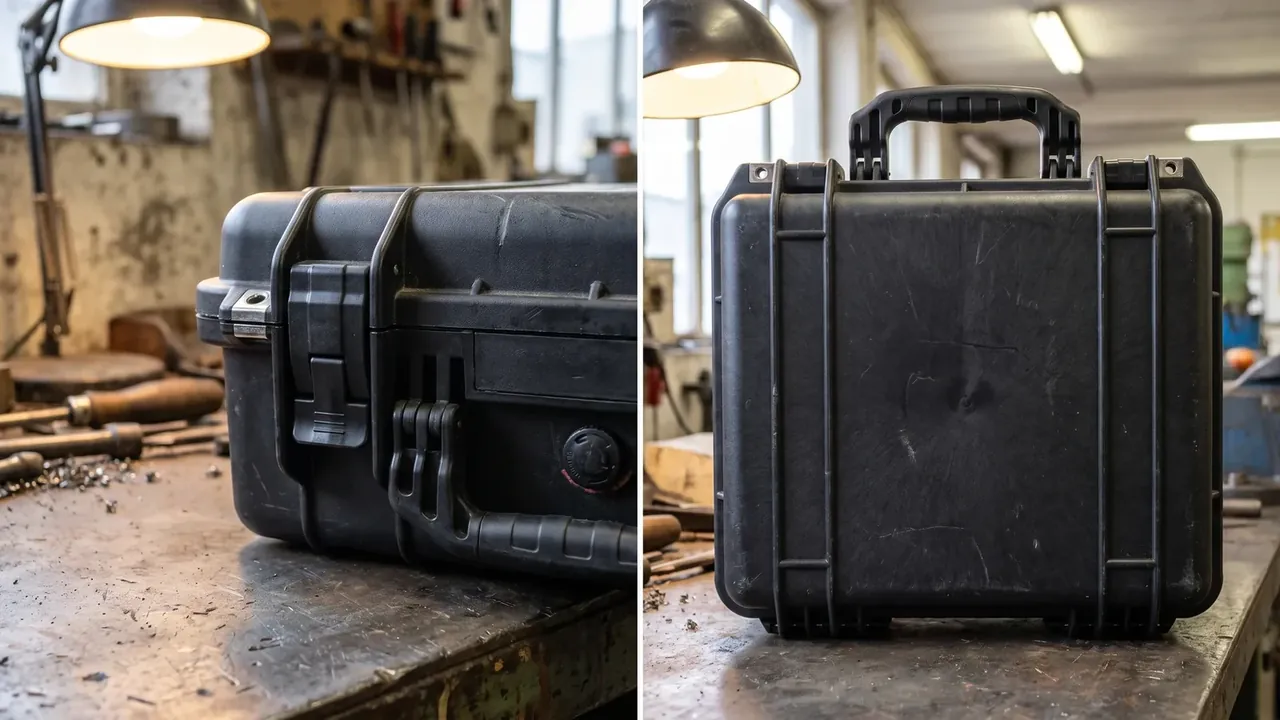
Quick answer: Ask for five price lines, then pin down three numbers: minimum order quantity, who owns the tool, and the day lead time starts. Figures below are priced at 200, 800 and 3,000 units, so a buyer can check each one.
Table of contents
- Where the Five Lines of a Quote Come From
- MOQ and Tooling Ownership: Three Order Tiers
- When the 45-Day Lead Time Actually Starts
- Samples, Factory Audits and Payment Terms
- The Five Traps in Every RFQ
- FAQ
1. Where the Five Lines of a Quote Come From
A quote for a Container, Ammunition, Fiber build arrives as one number. It is five: material, press time, hardware and seals, tooling, packaging and testing. Suppliers merge them on purpose, because a buyer who accepts a single figure has nothing left to negotiate.
Material is priced by net weight. A 1,100 mm by 400 mm by 260 mm cavity gives a 6.8 kg case at 28% fiber, and the line lands at 38% of the unit price. A cheaper resin grade saves 6% and takes the drop height from 1.2 m to 0.9 m.
Press time is the hardest line to check. A 1,600 t press runs a 240 s cycle and yields 92 good shots per eight-hour shift; the line holds 22%. On a 1,200 t machine the cycle passes 300 s and the price rises.
| Quote line | Basis | Share | Room to move |
|---|---|---|---|
| Material | 6.8 kg net, fiber 28% | 38% | Low, ±6% by grade |
| Press time | 1,600 t, 240 s cycle | 22% | Medium, 5% idle |
| Hardware | 2 latches, 1 valve | 15% | Medium, USD 1.1 |
| Packing | 80 sampled, AQL 1.5 | 7% | Low, USD 0.4 |
| Tooling | USD 12,000 amortized | 18% | High, waived |
2. MOQ and Tooling Ownership: Three Order Tiers
Plants answer an RFQ under 200 units with a flat no, and the mold is the reason. USD 12,000 of core work needs far more than 200 shots to repay. At 3,000 units the same tool amortizes to USD 4 a case.
Tooling money comes in three shapes: paid in full, the tool is the buyer's and can be moved; split 50/50, title is shared and the balance settles before any move; waived, the plant keeps it and grants three years of exclusivity.
| Tier | Unit price | Tooling | Ownership |
|---|---|---|---|
| 200 units | USD 67 | USD 12,000 | Buyer, movable |
| 800 units | USD 57 | USD 6,000 | Shared, settled |
| 3,000 units | USD 50 | Waived | Plant, 3 years |
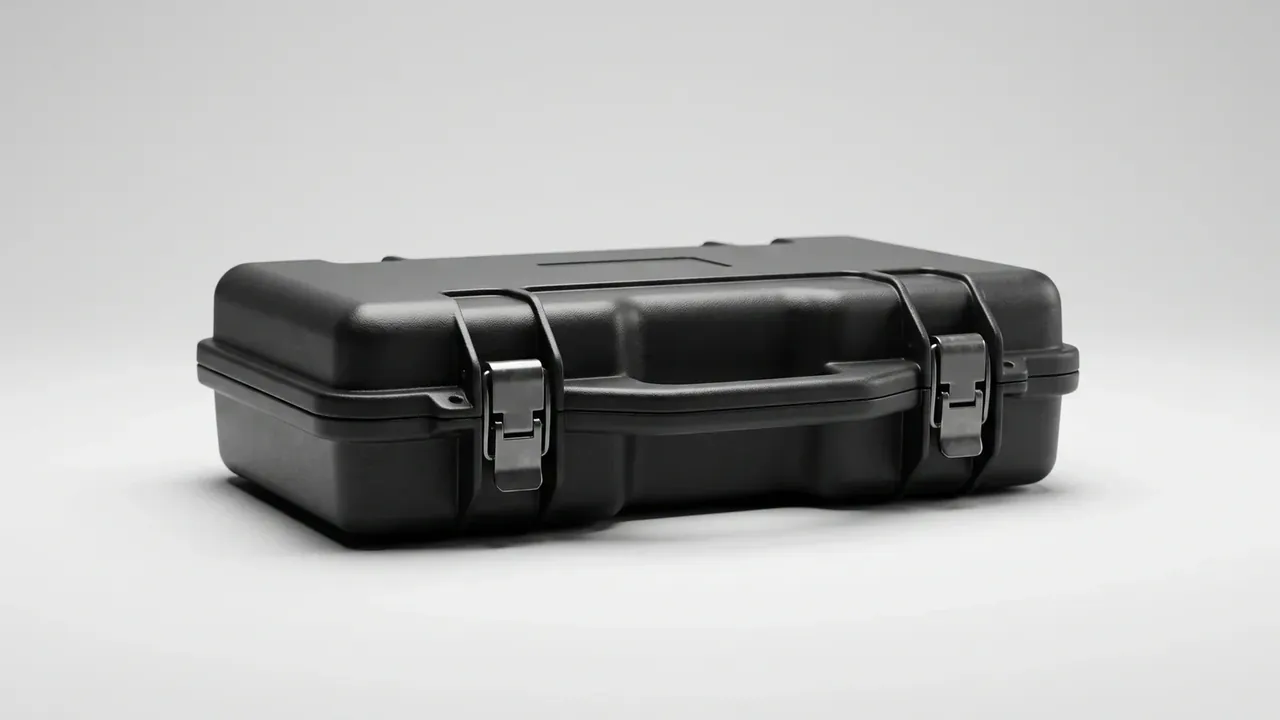
Three sentences belong in the contract: who holds the core drawings, what permits a move, how long the tool is stored. A 24-month window with one stock count a year beats the phrase kept safe, and at 30,000 shots USD 12,000 is USD 0.40 a case.
3. When the 45-Day Lead Time Actually Starts
Three start dates hide in one contract: order date, deposit cleared, drawing sign-off. The spread is 9 days, one press batch, so settle the start date before arguing the total.
The 45 days are 5 for drawings, 18 for tool build, 4 for first article, 12 for the first batch, and 6 for inspection and packing. Only the first-article window belongs to the buyer, which is why it is the one worth compressing.
| Stage | Days | Clock starts | Waiting on |
|---|---|---|---|
| Drawings | 5 | Letter of intent | Buyer |
| Tool build | 18 | Drawing sign-off | Plant |
| First article | 4 | Sample sent | Buyer |
| First batch | 12 | Article approved | Plant |
| Inspection | 6 | Line off-load | Third party |
Capacity decides the rest. A plant rated at 1,200 units a month splits a 2,000-unit order into two batches and adds 15 days, so 45 days at that volume already carries a delay.
4. Samples, Factory Audits and Payment Terms
Sampling costs USD 360 and 7 days. Do not haggle; tie it to credit instead, with full credit at 500 units.
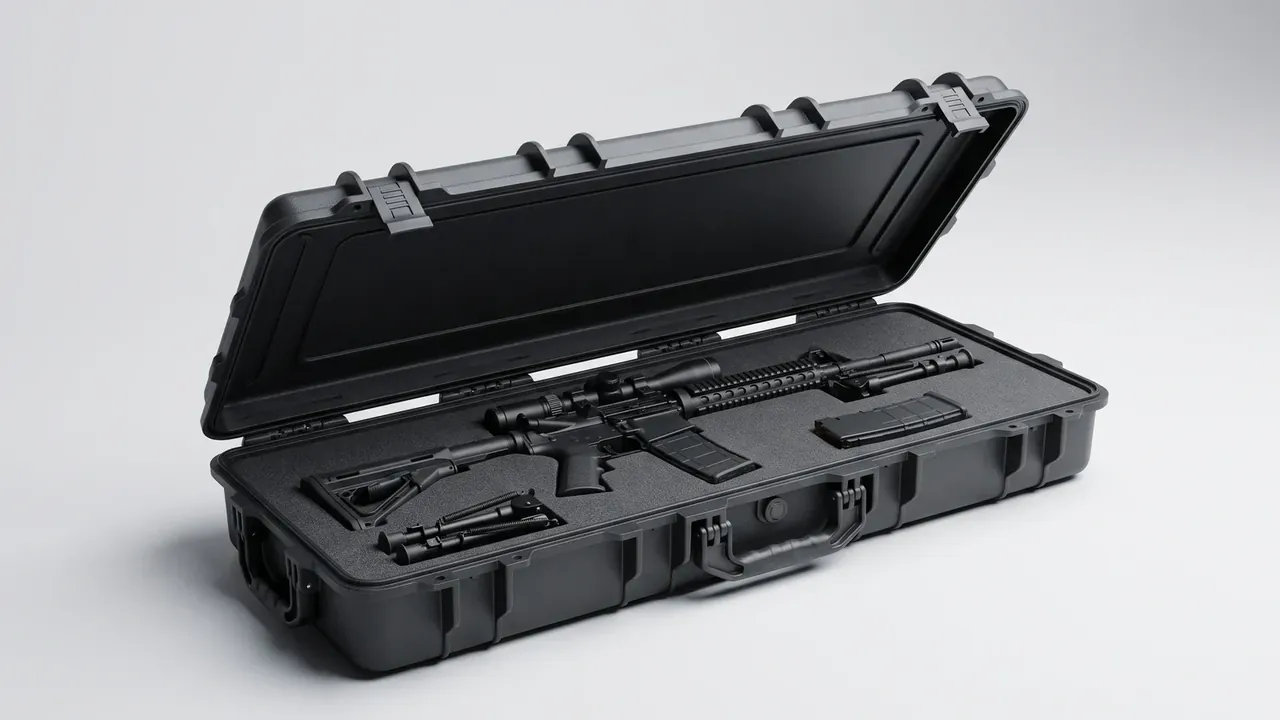
An audit needs three stops: the press count, a numbered tool register, and instruments beyond calipers. Under three presses, rush orders get subcontracted and tolerance drift follows.
Terms move cash more than price does. A 30% deposit with 70% against the bill of lading is standard; 45 days adds 2.5%, or USD 3,800 on 3,000 units. Quotes advertising 60-day terms often bury that deposit in an annex. Resin moves about 3% a month, so 30-day validity is normal; anchor adjustments to a 5% threshold.
5. The Five Traps in Every RFQ
Tooling folded into the unit price is trap one: of a USD 67 quote, USD 24 is amortization charged again on every reorder. The lead-time clock is trap two, where 45 days from deposit lands on day 54.
Trap three is a material-only quote with USD 6 of hardware pushed into options. Trap four is a sample cut on a different tool: 7 days off a CNC block and flawless, while production molds at 4.0 mm instead of 4.5 mm, 0.5 kg lighter. Trap five is inspection billed at USD 1.7 a unit.
Each is defensible alone; together they lift USD 50 to USD 61 landed, the only figure worth comparing across suppliers.
Conclusion
The negotiation covers five price lines, three start dates, and one mold whose title decides who can walk away. A 30,000-shot tool life and a written move clause are worth more than a 5% discount, since most risk in a Container, Ammunition, Fiber purchase sits in the start date and the tool title.
This article discusses only the container (case body) side of specifications and design intent, and does not cover any handling, loading or use of the contents.
Related Reading
- How fiber and resin split the wall
- Weight and cost against metal cases
- Deriving cavity and wall from load
Related Products
- 8 Series — Gun Cases; Military Equipment Cases; Camera Equipment Cases; Drone Cases; Watch Cases; Knife Cases; First Aid Cases; Electronics Equipment Cases
- WL8-2812 PP Gun Case — model WL8-2812
- All protective cases and toolboxes: 7 series, 158 models