

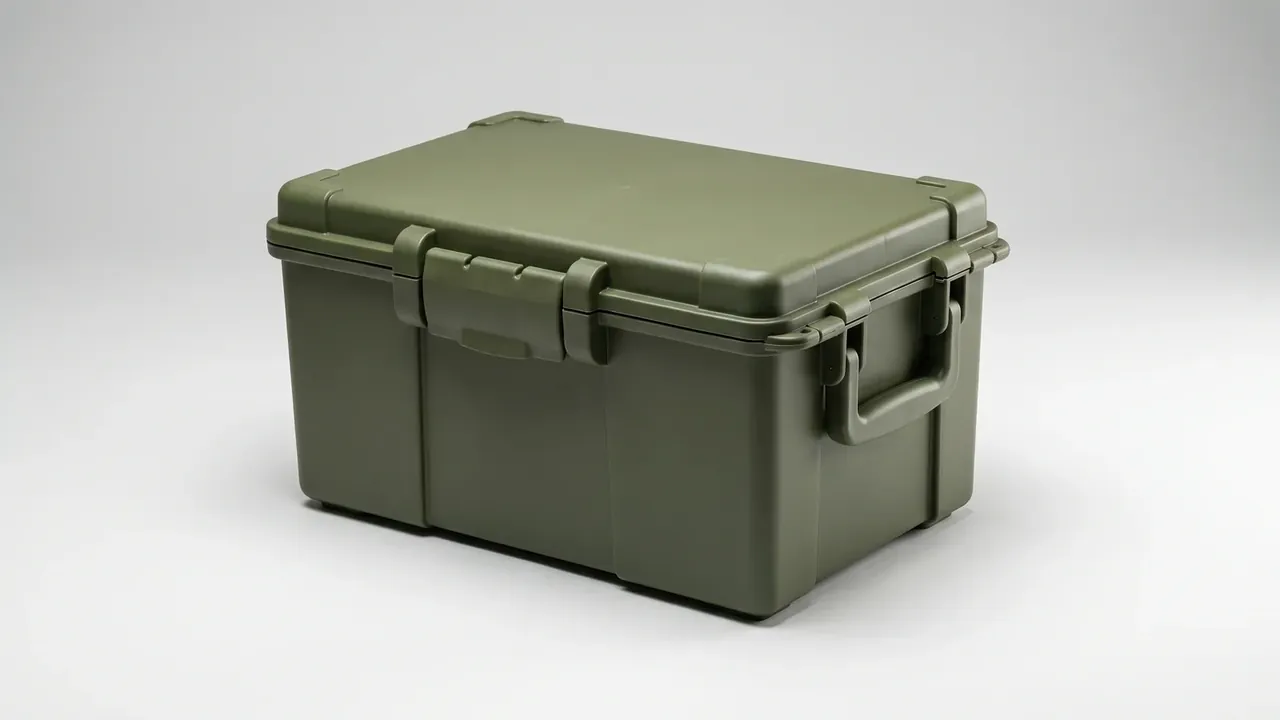
Quick answer: A container, ammunition, fiber is accepted on measurements taken at the case rim, not on the certificate in the box. Wall thickness spread, pressure drop and latch retention are read on a bench in twenty minutes, and no stamp rescues a case that fails. Fix the thresholds in the contract first, then argue about sampling.
Table of contents
- Why a certificate verifies nothing
- Four bench actions, four failure modes
- Thresholds written as readable numbers
- Disposition of nonconforming units
- FAQ
1. Why a certificate verifies nothing
The standard practice is to flip through the mill report at goods-in, see the stamps, and sign. That works passably on a steel case and fails badly on a container, ammunition, fiber, because the strength sits in a layup nobody can see. The tensile figures on the report come from a witness coupon, not from the box on the pallet.
Inside one batch, the side that ran against the cold half of the mould can lose a fifth of its interlaminar shear strength while looking identical.
What acceptance can hold onto is the ring of geometry at the rim, where the mould halves meet and seal, latch and wall thickness all cross.
2. Four bench actions, four failure modes
Four bench actions cover four failure modes in twenty minutes.
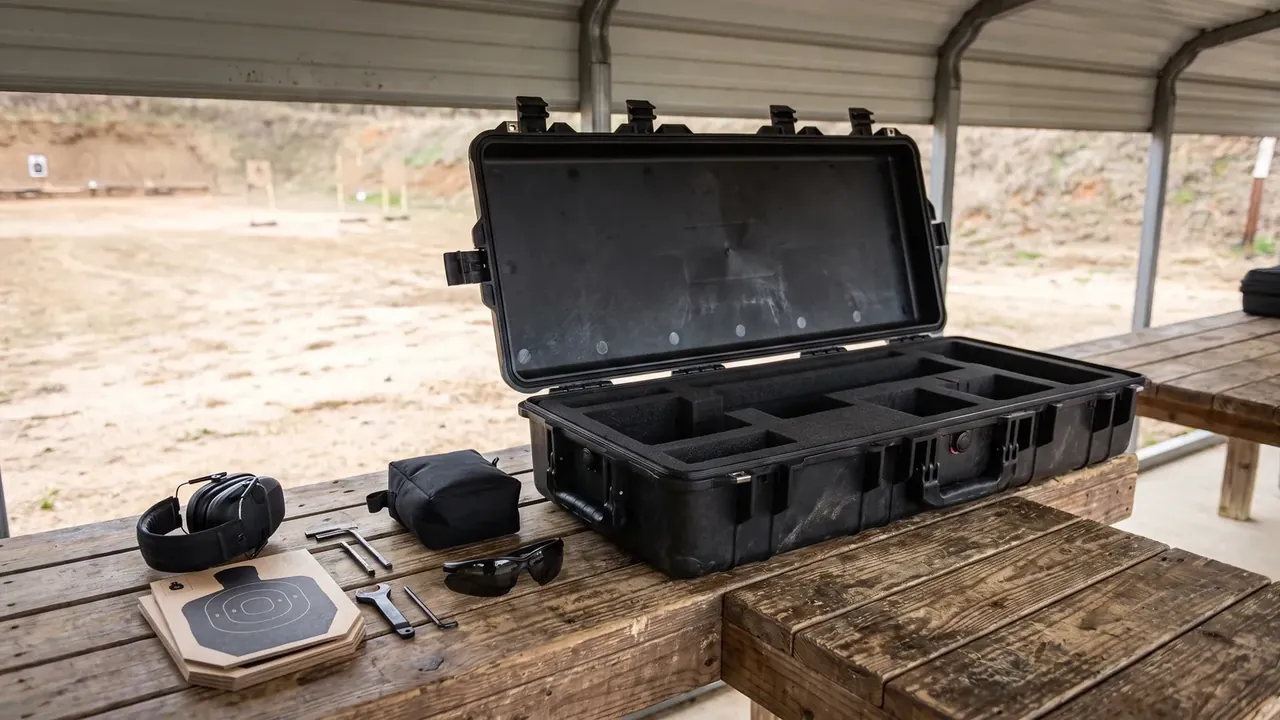
The first action is thickness. An outside micrometer takes two points on each of four sides and three on base and lid, fourteen total. A spread beyond 0.5 mm means the layup is uneven, and that case will open at its thinnest point in a drop.
| Check | Reference | Bench action | Limit |
|---|---|---|---|
| Thickness spread | Drawing tolerance | 14-point micrometer | Spread ≤ 0.5 mm |
| Airtightness | Product specification | 20 kPa held 60 s | Drop ≤ 1 kPa |
| Latch retention | Hardware data sheet | Pull gauge, one by one | ≥ 160 N each |
| Drop | Transport package test | 1.0 m loaded, base edge corner | No rim gap |
The second action is pressure. Blank the valve, charge to 20 kPa from the valve seat, hold 60 seconds. More than 1 kPa means a break in the gasket.
The third is the pull gauge. Four latches, one at a time; anything under 160 N was hanging on the flex of the plastic.
The fourth is the drop: 1.0 m fully loaded on base, edge and corner, then a look at the rim.
3. Thresholds written as readable numbers
Vague thresholds turn acceptance into a price negotiation. These six lines can go straight into a technical agreement.
- Wall thickness: nominal plus or minus 0.5 mm, with a 0.5 mm spread across fourteen points.
- Cavity diagonals: difference no more than 1.5 mm, or cut foam will not seat.
- Airtightness: 20 kPa held 60 seconds, drop no more than 1 kPa.
- Latches: retention at least 160 N, opening force between 60 and 90 N.
- Salt spray: 240 hours neutral, no exposed substrate.
- Temperature: minus 40 °C and plus 70 °C for 4 hours each, no cracking or distortion.
The first four finish at the receiving bench; the last two go to a laboratory. Samples for those must be drawn at random from the batch rather than supplied by the maker, or the report will never match the goods.
Sampling rules belong beside the thresholds. Under 500 units take 13 for appearance and dimensions at level II, test pressure and latches on every unit, draw one unit per batch for drop and salt spray, and set the critical acceptance number at zero with a major AQL of 1.5.
4. Disposition of nonconforming units
A failed check should not automatically mean a rejected batch. Splitting disposition into rework, concession and rejection keeps repairable cases out of the scrap bin.
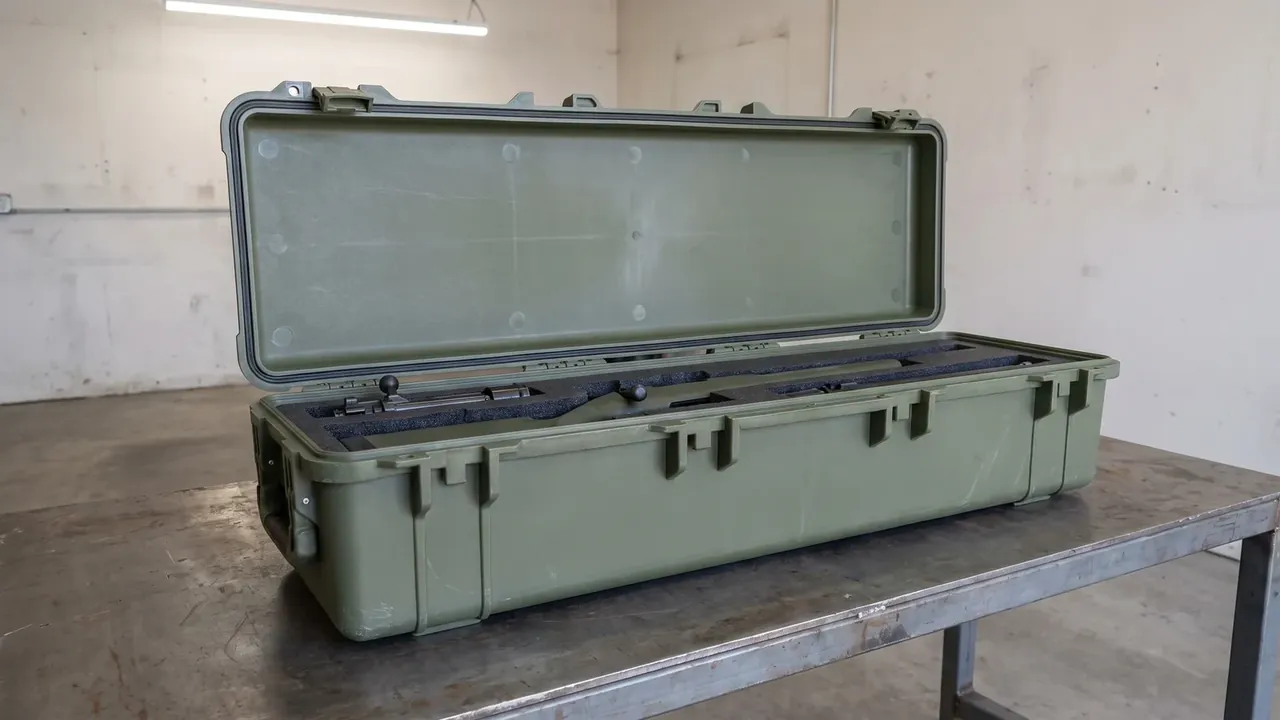
The first tier is rework: low latch retention, a leaking valve seat, liner coming unglued. All three are a part swap or a bead of adhesive, retested against the original item.
| Defect | Verdict | Disposition |
|---|---|---|
| Wall more than 0.5 mm under nominal | Not repairable | Reject |
| Delamination or fibre bloom in the cavity | Not repairable | Reject |
| Pressure drop 1 to 3 kPa | Repairable | New gasket, retest |
| Latch retention 140 to 160 N | Repairable | New latch, retest |
| Colour shift and light scuffing | Concession | Downgrade to sheltered use |
The second tier is concession. Colour shift and shallow scuffs that leave seal and strength intact can be taken at a reduced price, provided the note restricts them, for instance no open yard stacking.
The third tier is rejection. A wall more than 0.5 mm under nominal, or delamination in the cavity, cannot be reworked: the fault sits in the layup.
Keep three units from a rejected batch for destructive sectioning so ply count and angle can be measured.
Conclusion
Acceptance comes down to finding measurable quantities outside the paperwork. On a container, ammunition, fiber the three that matter are thickness spread, pressure drop and latch retention, all in the same ring at the rim, readable with a micrometer, hand pump and pull gauge. Fix the thresholds in the agreement, let sampling follow the item rather than a flat percentage, and sort failures into rework, concession and rejection.
This article discusses only the container (case body) side of specifications and design intent, and does not cover any handling, loading or use of the contents.
Related Reading
- How the wall layers of a fiber case divide the work
- Inspection items and records for ammunition packing
- Acceptance criteria for small arms cases
Related Products
- 8 Series — Gun Cases; Military Equipment Cases; Camera Equipment Cases; Drone Cases; Watch Cases; Knife Cases; First Aid Cases; Electronics Equipment Cases
- WL8-2812 PP Gun Case — model WL8-2812
- All protective cases and toolboxes: 7 series, 158 models