

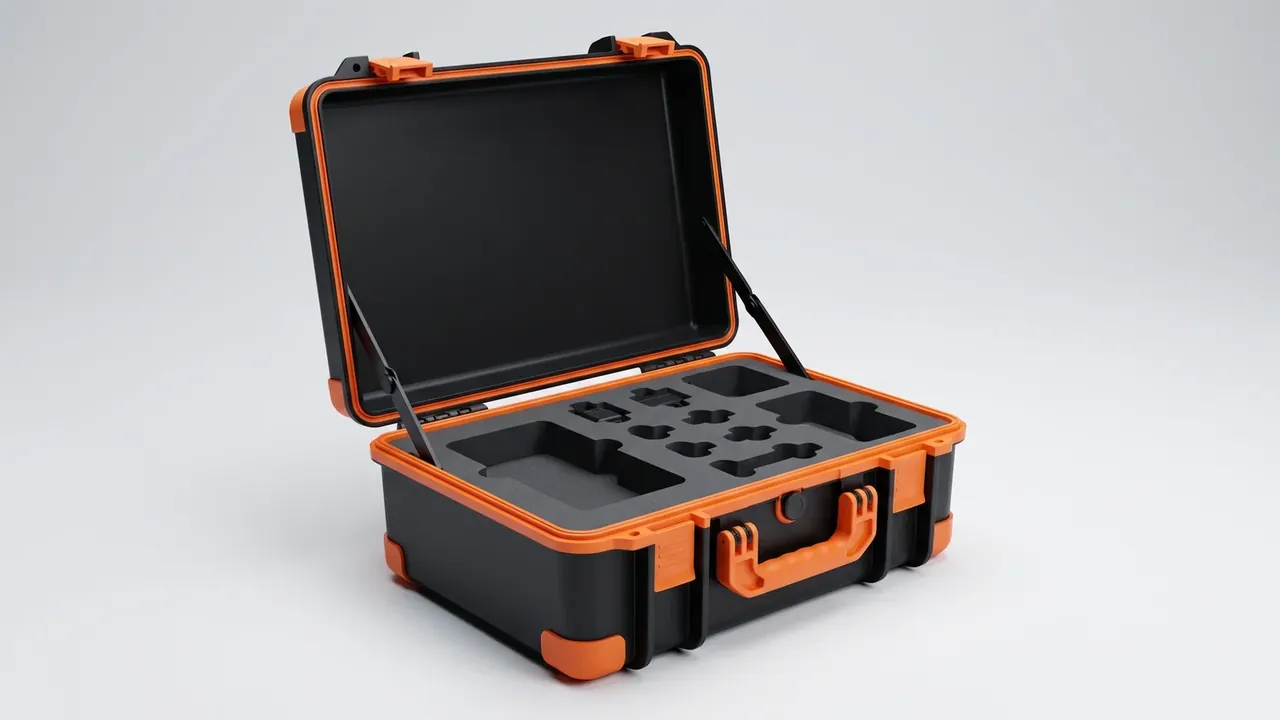
Quick answer: Judge contract manufacturing plastic cases on five tests: press and tooling capability, tooling ownership, quote structure and MOQ, schedule, and traceability plus IP. Clamp force runs 350 to 450 kg per square centimetre, tooling life is 300,000 shots, sampling takes 7 days, first article 15, production 35.
Table of contents
- Five Tests for Contract Manufacturing Plastic Cases
- Press Capacity and Tooling Ownership
- Quote Structure and Minimum Order
- From Sample to Mass Production
- Traceability and Intellectual Property
- FAQ
1. Five Tests for Contract Manufacturing Plastic Cases
Contract manufacturing plastic cases are not bought on unit price. Five things must reach paper: who can mould it, who owns the tool, the cost, the schedule, and who pays on failure.
Press capability first: maximum projected area and cavity count, not tonnage. Tooling second: who pays the 80,000 CNY and whether it moves at contract end. Then quote structure, since one lump price hides the split.
| Test | What to read | Warning sign |
|---|---|---|
| Press capacity | tonnage, projected area, cavities | tonnage without area |
| Tooling | cost, location, portability | no tooling clause |
| Schedule and trace | sample date, lot code, drawing ownership | one promised date |
2. Press Capacity and Tooling Ownership
Clamp force is projected area times 350 to 450 kg per square centimetre, the upper figure for deep cavities. A 500 × 350 mm case projects 0.175 square metres and needs 610 to 790 tonnes, leaving 650 tonnes on the edge.
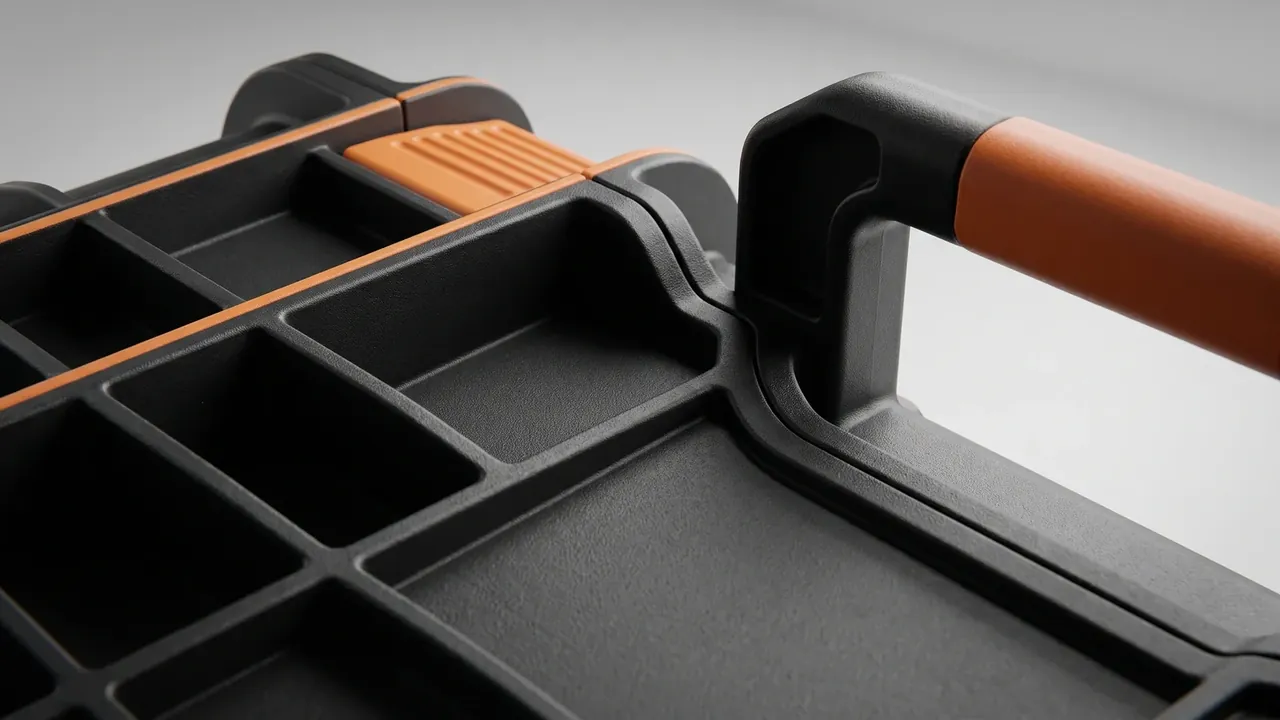
Runner area counts: two cavities add 15 percent, so the case runs on 650 tonnes single-cavity and 800 with two.
Tooling ownership in contract manufacturing plastic cases causes damage later: the buyer pays 80,000 CNY over 24 months, the tool stands in the supplier plant but belongs to the buyer. Keep a register of cavity number, steel grade, shot counter and location.
Life follows steel: P20 about 300,000 shots, S136 up to 500,000; end of life means polishing the cavity and new ejector pins, about 5 days.
3. Quote Structure and Minimum Order
Split the quote or skip it: material about 45 percent, moulding 25, hardware 15, packaging under 10, the rest overhead and margin.
Moulding follows cycle time: 65 seconds down to 55 cuts about 15 percent per part, though the water line change eats half a year of savings. Flat pack saves just over one CNY a case.
| Cost line | Typical share | Where buyers push |
|---|---|---|
| Material | 45% | thinner compound, not advised |
| Moulding | 25% | shorter cycle, needs water lines |
| Hardware | 15% | lighter latches |
| Packaging | 8% | flat pack and protectors |
MOQ changes price: 500 units run 18 percent above 3,000, and tooling adds 1.1 CNY per case at 3,000 a month, 6.7 at 500.
Material needs a clause: polypropylene moving 8 percent a year is normal, and a fixed price returns in the second shipment. Index it quarterly, trigger beyond 5 percent.
4. From Sample to Mass Production
Four legs: 7 days to the T1 sample, 15 to the first article report, 35 to the first batch, then 20 to 30 days of freight.
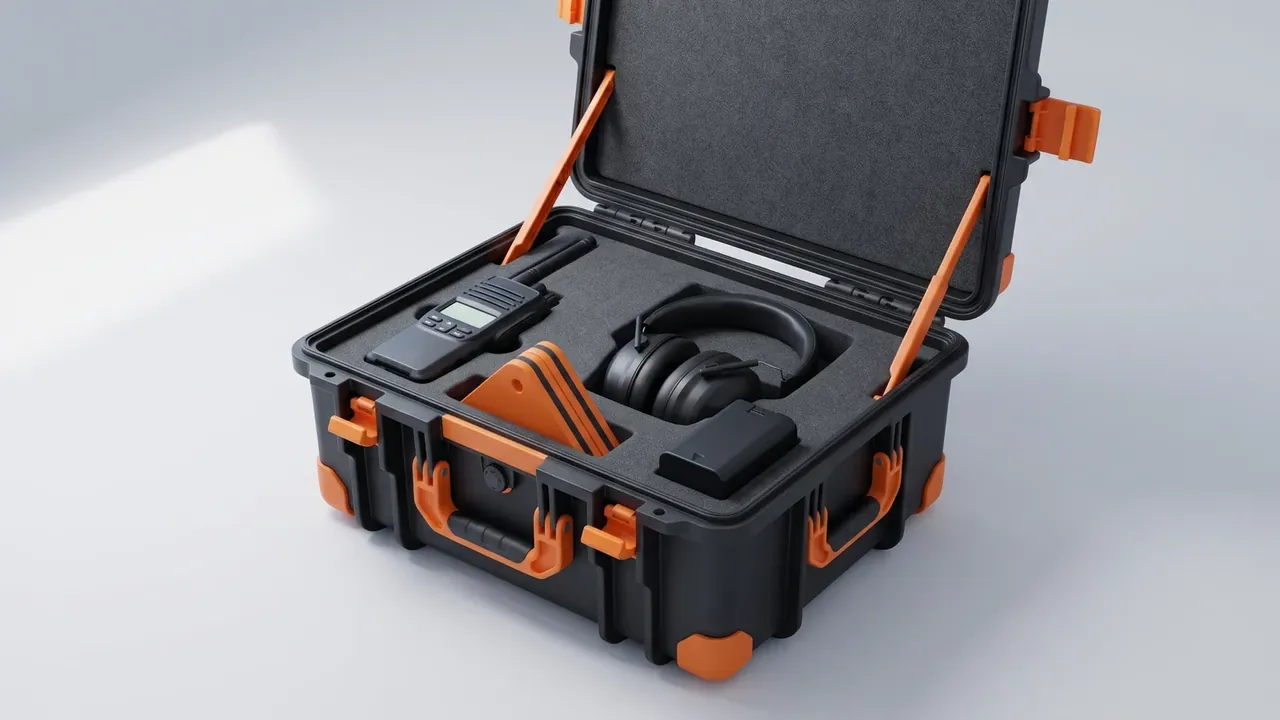
Trial shots are free up to three, the fourth at 5 percent of tooling. Beyond three rounds, the specification was never settled.
The first article report carries 12 items: outside and cavity size, five wall readings, colour, weight, lid gap, latch retention, pressure drop, hardware torque, marking, foam fit and packed drop. A report with gaps is useless.
| Stage | Duration | Deliverable |
|---|---|---|
| Sampling | 7 days | 3 T1 parts |
| First article | 15 days | 12-item report |
| Production | 35 days | first 3,000 units |
5. Traceability and Intellectual Property
An eight-digit lot code, four for year and month, four for press and shift, traces one case to shot count, compound batch and inspector. Rework carries a suffix.
Capability sits at Cpk 1.33 on cavity length, lid gap and latch boss thickness, checked on 30 cases per lot; AQL 1.0 means 125 pieces from 3,000.
Three IP clauses matter: drawings stay with the buyer, the same case may not be built for a third party during the term, and the tool is sealed or transferred at the end. The second is hard, since two millimetres of cosmetic change makes a new model. Penalties need numbers: 0.3 percent of contract value per day late, capped at 5 percent.
Conclusion
Contract manufacturing plastic cases come down to five numbers: 610 to 790 tonnes of clamp force, 80,000 CNY of tooling, a 500-unit minimum, 35 days to production and Cpk 1.33. Numbers that add up make a partnership, and contract manufacturing plastic cases vetted this way keep schedule and quality in the agreement.
This article discusses only the container (case body) side of specifications and design intent, and does not cover any handling, loading or use of the contents.
Related Reading
- A checklist for supplier qualification
- What an inquiry reply should contain
- Cost structure of small-batch custom work
- How a supplier scorecard is scored
Related Products
- 8 Series — Gun Cases; Military Equipment Cases; Camera Equipment Cases; Drone Cases; Watch Cases; Knife Cases; First Aid Cases; Electronics Equipment Cases
- WL8-2812 PP Gun Case — model WL8-2812
- All protective cases and toolboxes: 7 series, 158 models