

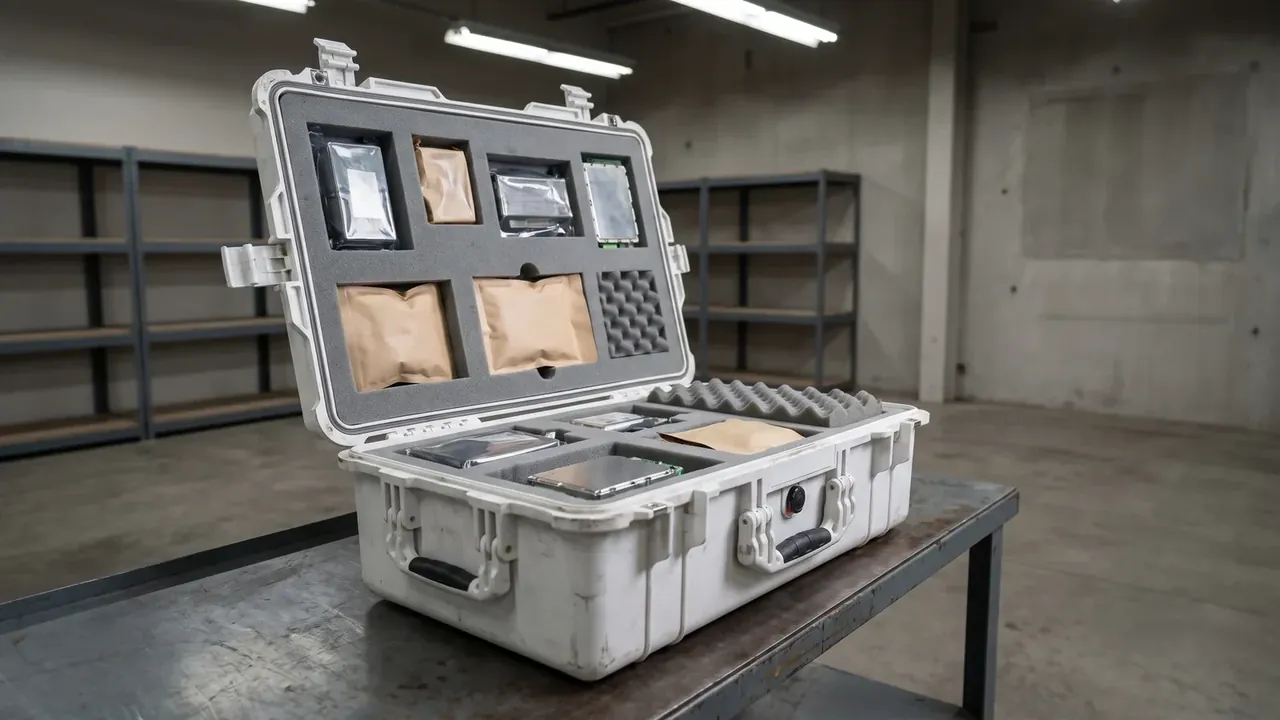
Quick answer: A custom box is specified from the inside out: cavity, height, pocket pitch, lip, lid gap, then wall thickness and single-unit load.
Table of contents
- Setting the Cavity of a Custom Box
- Compartments, Dividers and the Lip Fit
- Wall Thickness and Single-Unit Load
- Lid Gap and Closing Features
- Shrinkage, Warpage and Tolerances
- FAQ
1. Setting the Cavity of a Custom Box
A cavity is an addition, not a copy: the largest part, plus take-out clearance, plus the divider. At this scale 0.8 mm in 180 mm is four parts in a thousand.
| Level | Definition | Example | Tolerance |
|---|---|---|---|
| Cavity | Floor to lid face | 180 × 120 × 45 mm | ±0.2 mm |
| Clear cavity | Minus dividers and lid boss | 176 × 116 × 39 mm | ±0.25 mm |
| Outline | Clips and lid rim included | 196 × 136 × 58 mm | ±0.3 mm |
| Packed unit | Plus bag and stacking clearance | 200 × 140 × 62 mm | — |
The 8 mm per side between 180 and 196 splits into 2.2 mm of wall, 2.3 mm of rib zone and 3.5 mm of radius relief, set by load, moulding and the shape inside.
Depth is the trap: a 45 mm cavity loses 6 mm to the lid boss, leaving 39 mm usable.
2. Compartments, Dividers and the Lip Fit
In a one-part-per-pocket custom box the pocket matters more than the cavity: 42 × 38 mm on 1.5 mm dividers, ±0.15 mm pitch.
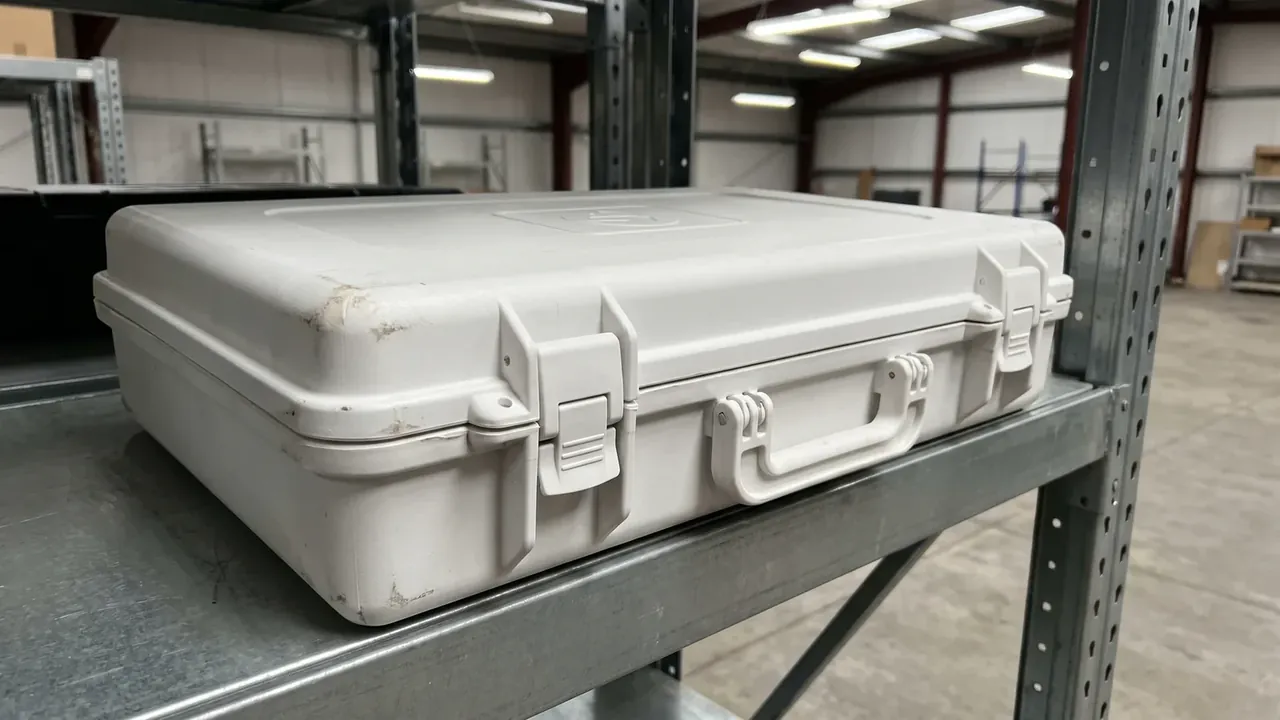
The lip is the feature most often drawn wrong: 2.5 mm high, 1.2 mm wide, 0.15 mm clearance per side. At 3.5 mm the rim lifts before the clips seat; at 1.5 mm side load lands on the dividers.
Grid count drags wall thickness with it: six pockets to twelve doubles divider length and drops fill pressure at the far end by 15 percent, short-shotting 1.5 mm dividers; the fix is a gate change or 1.8 mm dividers.
3. Wall Thickness and Single-Unit Load
Walls are graded by zone: 2.2 mm sides, 2.6 mm base, 2.0 mm lid, ribs 1.6 mm at the root tapering to 1.0 mm at the crest, since a 0.4 mm step unbalances flow.
Judge load by base deflection: a 2.4 L custom box carrying 8 kg sits on a 3 × 4 rib grid with 4 mm ribs and holds under 0.5 mm; without the centre rib the same load sinks 1.4 mm.
Carrying is separate: the handle root runs 2.8 mm and holds 8 kg for 24 hours without whitening, below R3 the stress concentration doubles.
4. Lid Gap and Closing Features
Design the lid gap at 0.4 mm inside a 0.3 to 0.5 mm window: under 0.3 mm the rim binds, over 0.5 mm the body rocks and dust walks in.
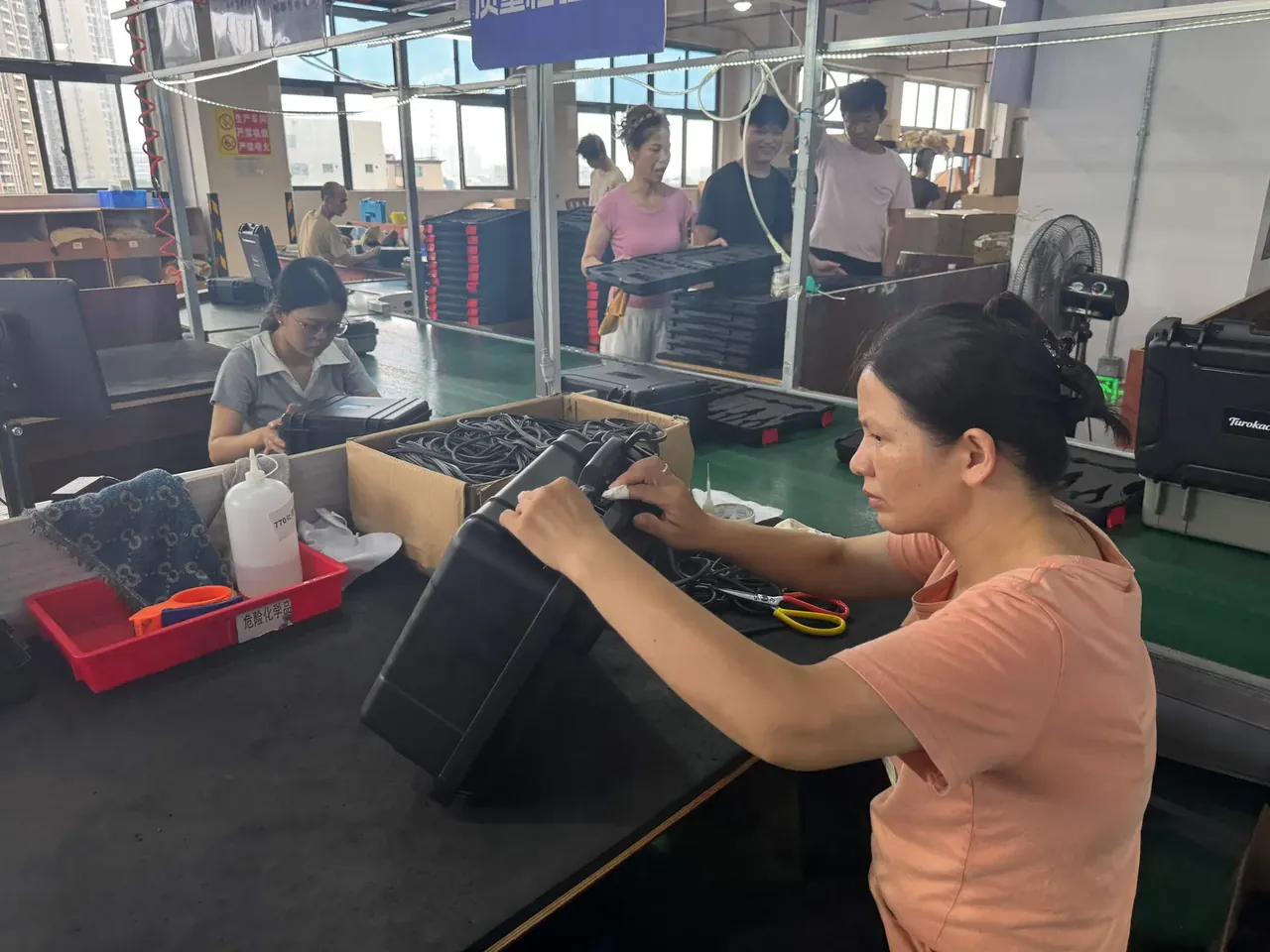
Clips carry force and life: 60 N holding, 25 to 35 N to open, a 2.0 mm root, under 15 percent loss after 5,000 cycles. A living hinge runs a 0.8 mm film, and at 1.2 mm it whitens within thirty folds.
Sealing decides the gap: a plain lip uses 0.4 mm as a labyrinth, while a gasket needs a 2.0 by 1.5 mm groove and a 0.2 to 0.3 mm gap.
5. Shrinkage, Warpage and Tolerances
Tolerances run one grade tighter than on a case: ±0.2 mm on the cavity, ±0.3 mm on the outline, ±0.15 mm on pocket pitch.
| Feature | Nominal | Tolerance or range | Method |
|---|---|---|---|
| Cavity | 180 × 120 mm | ±0.2 mm | CMM |
| Outline | 196 × 136 mm | ±0.3 mm | Calipers |
| Pocket pitch | 42 × 38 mm | ±0.15 mm | Projector |
| Lid gap | 0.4 mm | 0.3 to 0.5 mm | Feeler gauge |
| Warpage | — | 0.4 mm per 100 mm | Plate and shim |
Polypropylene shrinks 1.5 to 2.0 percent, so the 196 mm length takes 3.5 mm at 1.8 percent, and 0.2 of a point in crystallinity moves that edge 0.4 mm, the whole tolerance.
Warpage follows temperature and packing: mould halves within 3 °C, 3 seconds of pack, and a 2.0 mm lid over a 2.6 mm base stays inside 0.4 mm per 100 mm on a 350 tonne press.
Conclusion
A custom box carries more specification per litre than any large case: cavity, clear height, pocket pitch, lip, gap, wall grades and a shrinkage allowance that eats the outline tolerance when guessed. One drawing with a method beside each makes the custom box specification hold.
This article discusses only the container (case body) side of specifications and design intent, and does not cover any handling, loading or use of the contents.
Related Reading
- How internal dividers are built and divided
- PP against ABS: stiffness and shrinkage
- Where small plastic cases are used
- Routine care for box moulds
Related Products
- 8 Series — Gun Cases; Military Equipment Cases; Camera Equipment Cases; Drone Cases; Watch Cases; Knife Cases; First Aid Cases; Electronics Equipment Cases
- WL8-2812 PP Gun Case — model WL8-2812
- All protective cases and toolboxes: 7 series, 158 models