

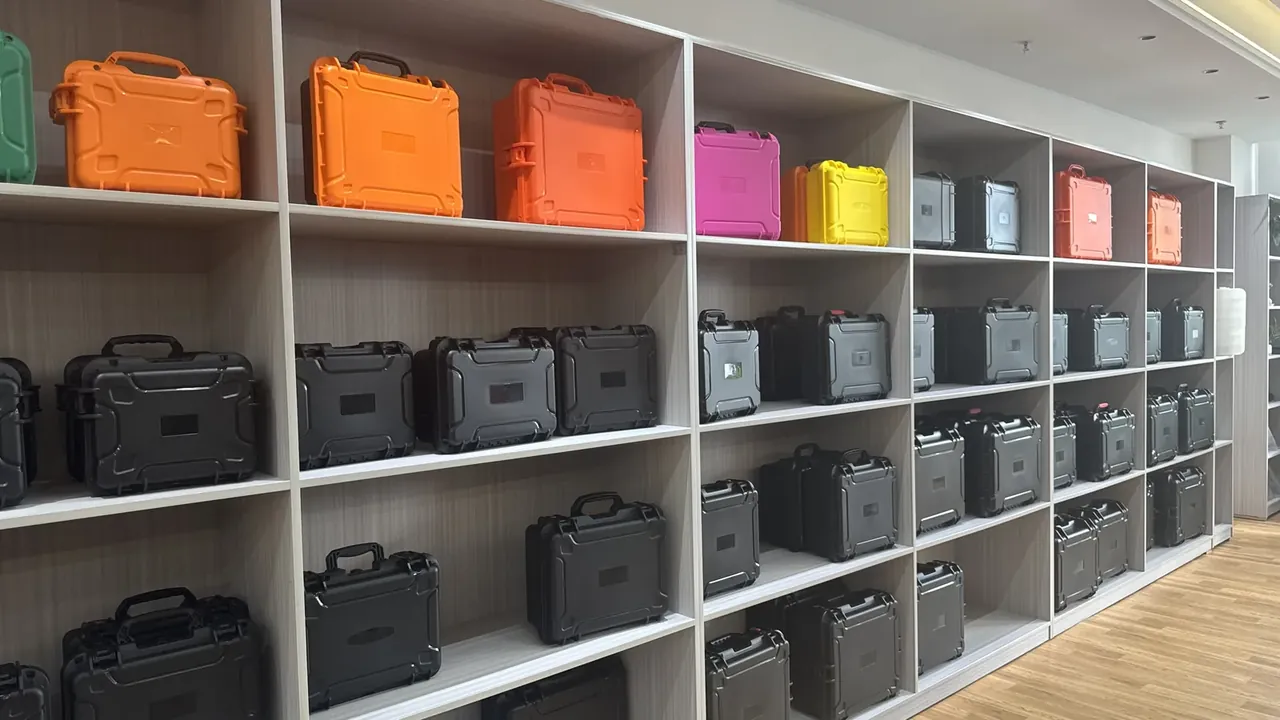
Quick answer: A case handle custom order turns on three numbers: 25 kg static, 15 kg dynamic and the colour batch size. New material adds 6 and new colour adds 2, but 10 kg more load needs a fresh tool.
Table of contents
- Case handle custom: the order of three parameters
- Material: PP against glass-filled nylon
- Colour: masterbatch and powder thresholds
- Load: static and dynamic values
- Fit: grip, hole pitch and clips
- FAQ
1. Case handle custom: the order of three parameters
One moulded handle tells the story. PA66+GF30 adds 6 per unit and a new colour adds 2, but lifting the rating from 15 kg to 25 kg reopens a small tool at 11,000 and 18 days. Case handle custom quotes spread that far apart because the three parameters get negotiated as a single number.
The order is fixed: load first, material second, colour last. Load is structural, deciding root ribs, clip count and wall thickness. Material is environmental, deciding whether the part shatters at −20 ℃. Colour is a batch question, deciding masterbatch against powder.
| Change | Added cost | Lead time | Tool work |
|---|---|---|---|
| PA66+GF30 | +6 per unit | 3 days | none |
| New colour, masterbatch | +2 per unit | 5 days | none |
| Load 15 to 25 kg | +9 per unit | 18 days | new small tool, 11,000 |
| Colour by powder | −0.4 per unit | 7 days | none, 500 minimum |
The expensive row is load. Ten more kilograms pushes the root section from 12 mm to 16 mm and the clips from two points to three, so the slider is recut. Amortised over 3000 units that is 3.7 each; over 30,000 units it is 0.37, which is why load is frozen before sampling rather than after.
Ask for three lines in the enquiry: material, colour at 2% masterbatch, load at 25 kg for one hour. Written apart, replies become comparable.
2. Material: PP against glass-filled nylon
PP copolymer runs 30 MPa tensile and 1400 MPa flexural modulus, enough for a 25 kg static rating until temperature drops. Charpy impact falls from 45 kJ/m² at room temperature to 18 kJ/m² at −20 ℃, and the break is clean and brittle with no whitening.
PA66+GF30 runs 165 MPa tensile and 9000 MPa modulus, holding 60 kJ/m² at −20 ℃, at a cost of 6 per unit and 1.5% moisture uptake. That uptake grows a 160 mm hole pitch by 0.2 mm in a humid summer, so the handle needs a mallet to seat and more force to pull.
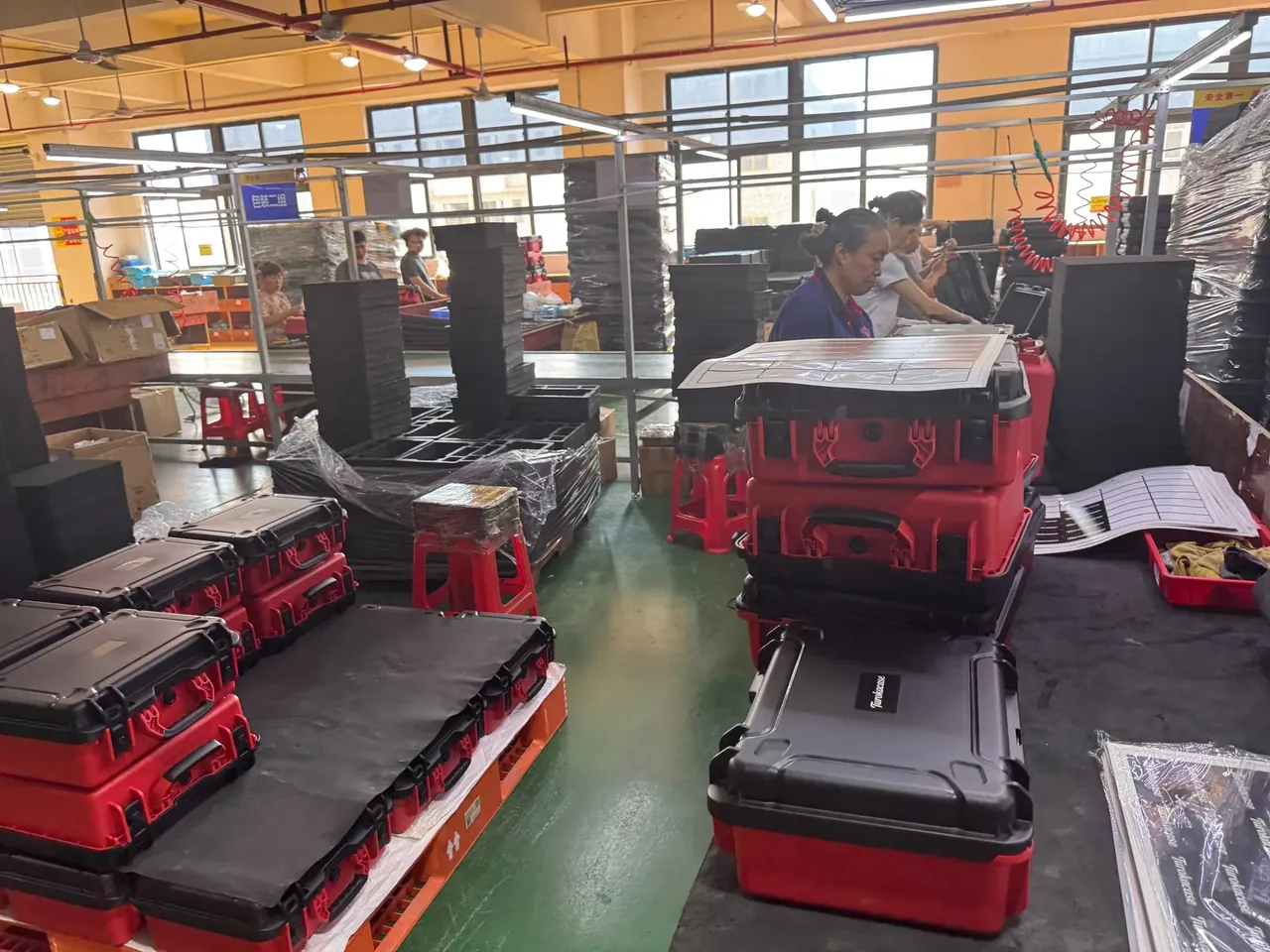
Temperature sets the dividing line. Above −10 ℃ at destination, PP is enough and the 6 stays in the price. Below −20 ℃, air freight or cold regions, go straight to glass-filled nylon; thickening PP does not help, because 18 kJ/m² simply breaks a thicker section.
Purge is its own cost line. PA66+GF30 back to PP takes 2 h of cleaning and 8 kg of scrap, multiplied by every batch in a mixed order, so one base resin per handle project.
3. Colour: masterbatch and powder thresholds
Masterbatch doses at 2%, so a 180 g handle carries 3.6 g, and the 25 kg minimum covers 6900 handles. Colour powder blends straight into the resin at 0.4 less per unit, but the minimum run is 500 handles; below that no supplier starts the machine.
Depth decides the process. Dark grey, olive and black cover well with 2% masterbatch over natural PP. Off-white, light grey and pale blue need a natural base underneath, otherwise regrind yellow shows through at ΔE 2.8, visible at arm's length.
The hidden cost is purging: black to off-white means 2 h through barrel, hot runner and cavity plus 5 kg of scrap. Three colour changes a day eat 6 h and cut that line's output by 25%, so colours belong grouped by depth.
Colour is also the only lever that moves after tooling: new masterbatch, no tool touch, 5 days.
4. Load: static and dynamic values
Static load is 25 kg hung for 1 h, sag at the grip centre under 1.5 mm, recovery inside 0.3 mm after 24 h. The test measures creep, and PP creeps about 1.1 mm in that hour, just inside the line.
Dynamic load is 15 kg at 2 Hz for 5000 cycles, roughly 42 min of continuous vibration. Taking 60% of static is convention, because the dynamic test measures clip and pin wear rather than strength; clip clearance opens from 0.2 mm to 0.35 mm, and 0.4 mm fails.
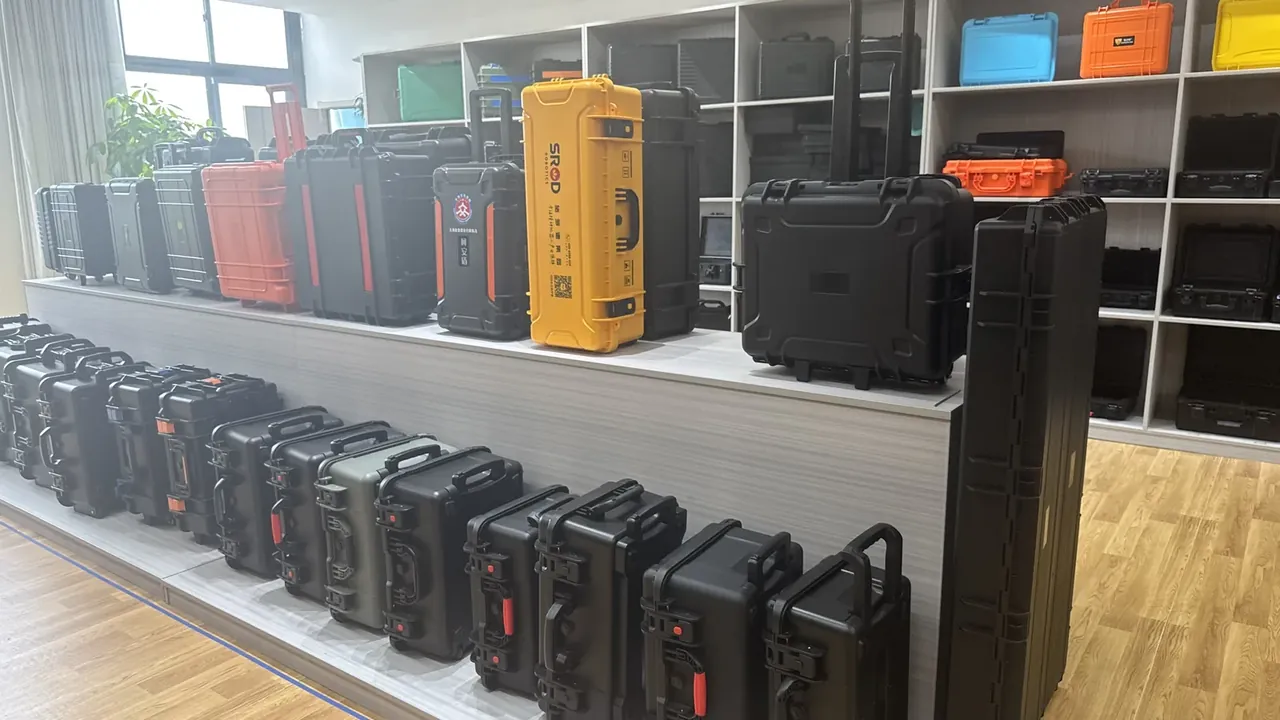
Cold drop is the third gate. After 4 h at −20 ℃, a 1 kg hammer falls 400 mm onto the fillet between grip and shell, delivering 4 J; the shell may whiten but must not crack through. PP fails with hairline cracks about three times in ten, glass-filled nylon almost never.
Test order matters: static first, dynamic second, cold drop last, otherwise a drop failure tells you nothing about whether the cause was material or geometry.
| Test | Condition | Pass line |
|---|---|---|
| Static | 25 kg, 1 h hang | sag ≤1.5 mm, recovery ≤0.3 mm |
| Dynamic | 15 kg, 2 Hz, 5000 cycles | clip clearance ≤0.4 mm |
| Cold drop | 4 h at −20 ℃, 4 J | no crack-through, whitening allowed |
Ratings need conditions attached: a bare 25 kg invites an 8 h hanging inspection, where creep runs 2.4 times the one-hour figure and sag reaches 2.6 mm. Sampling belongs in the contract too, at 8 pieces per 500 for static and three a quarter for the destructive tests.
5. Fit: grip, hole pitch and clips
The grip section is 32 mm, a number shared by tool and assembly. Under 28 mm the melt will not fill the thin section and the back of the grip sinks; over 36 mm the gap to the wall closes until fingers and fixtures no longer fit.
The 160 mm pitch is set by the wall ribs. Both screw centres must land between two vertical ribs, and a 5 mm offset cracks the rib. Pull the pitch to 120 mm and the wall bows outward 0.6 mm under 25 kg, opening the gasket.
Two clips, 12.5 kg each, with the line between them perpendicular to the lift. Otherwise the handle rotates about that line, one clip releases, and the other takes the full 25 kg. Fit tolerance is ±0.3 mm, since forcing an oversize part whitens the clip root.
Sequence shows in repair rates: hook both clips, press the centre, drive the screws last. Screwed first, the clips must be forced into place and loosen within 2000 dynamic cycles. Screws follow the pitch as well, φ4.2 mm self-tapping at 1.8 N·m, because over-torque splits the rib.
Conclusion
A case handle custom brief has three levers, and most of the money is lost by pulling them in the wrong order. Freeze load with 25 kg static for one hour and 15 kg dynamic for 5000 cycles; pick material by destination temperature, PP above −10 ℃ and glass-filled nylon below −20 ℃, judging the middle band by the 4 J cold drop; leave colour last and group it by depth so the 2 h purge spreads across a day. Written as three lines on the enquiry, quotes differ by three numbers instead of three explanations.
| Combination | Added cost | Minimum | Typical use |
|---|---|---|---|
| PP, stock colour, 15 kg | baseline | 300 | indoor handling, dry storage |
| PP, custom colour, 25 kg | +8 | 1000 | heavy indoor use, brand colour |
| PA66+GF30, custom colour, 25 kg | +14 | 1000 | −20 ℃ regions, air freight |
| PA66+GF30, powder colour, 25 kg | +13.6 | 500 | trial lots, relaxed shade |
This article discusses container-side specifications and design implications only, and does not cover any handling, loading or use of the contents.
Related Reading
- Working out handle load capacity
- Static versus dynamic handle testing
- Minimum order for a custom case colour
- Colour control for case hardware
Related Products
- 8 Series — Gun Cases; Military Equipment Cases; Camera Equipment Cases; Drone Cases; Watch Cases; Knife Cases; First Aid Cases; Electronics Equipment Cases
- WL8-2812 PP Gun Case — model WL8-2812
- All protective cases and toolboxes: 7 series, 158 models