

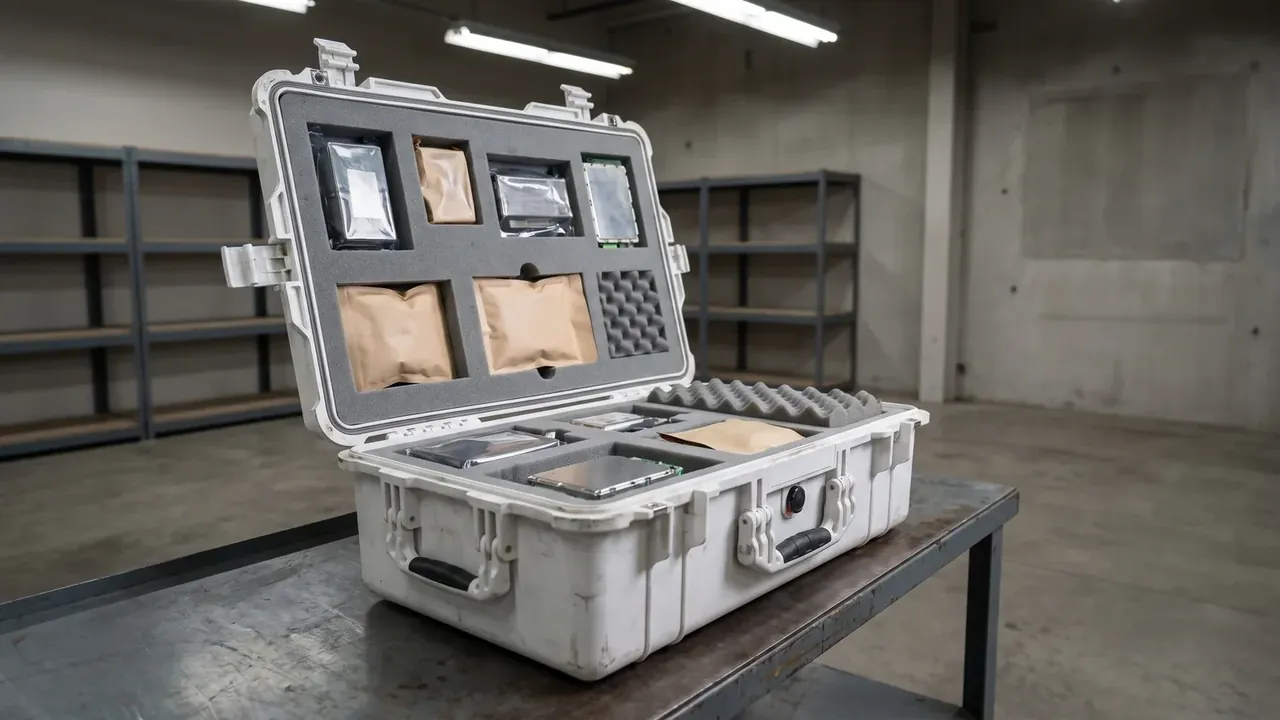
Quick answer: A Custom Interior Protective Case is not just foam. Dividers, straps, brackets and screw points decide whether it lasts, so the sheet must fix board thickness and slot depth, strap preload, and bracket fixing torque.
Table of contents
- What Sits Inside a Custom Interior Protective Case
- Dividers: Board Thickness and Slot Depth
- Straps and Hold-Downs: Tension and Release
- EVA Formed Parts and Metal Bracket Fixings
- Inspecting and Documenting the Interior
- FAQ
1. What Sits Inside a Custom Interior Protective Case
Quotations for a Custom Interior Protective Case usually list one liner and stop. Foam only conforms and absorbs shock; what separates parts is the hard structure.
Five groups carry the work: dividers stop lateral movement, straps stop vertical lift, brackets carry heavy parts, EVA parts follow odd shapes, and fixings tie it to the shell.
| Structure | What it does | What the sheet must state |
|---|---|---|
| Dividers | Lateral location, separate bays | Board thickness, slot depth, clip pitch |
| Straps | Vertical hold while closing | Webbing width, preload, release force |
| Brackets | Carries heavy parts | Plate thickness, span, fixing count |
| EVA parts | Conforms to odd shapes | Density, thickness, compression |
| Fixings | Ties structure to the shell | Thread, torque, pull-out load |
2. Dividers: Board Thickness and Slot Depth
Dividers are usually 4 mm PP twin-wall board. 5 mm also works, at the cost of one bay in the same cavity, because a thicker board needs a wider slot.
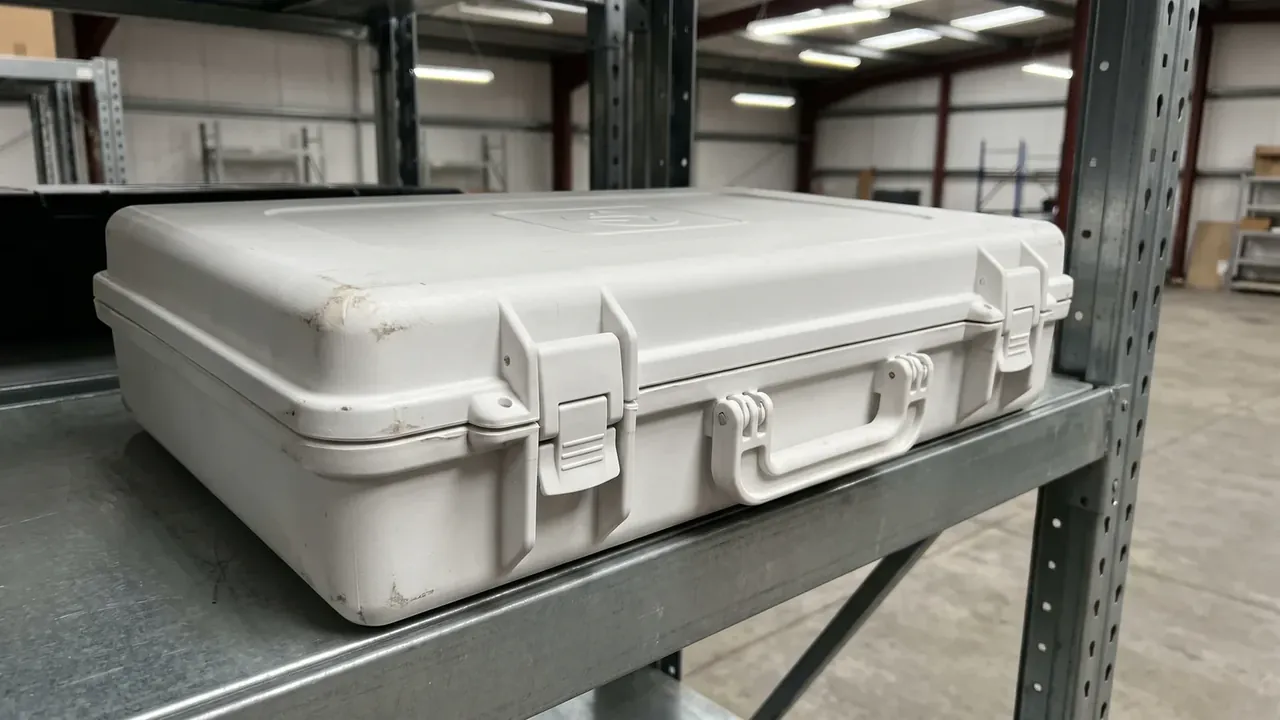
Slot depth runs at 75 percent of board thickness: 3 mm deep for 4 mm board, with a 4.5 mm slot leaving half a millimetre of float. Too tight and the divider will not seat; too loose and the box tilts it over, pushing parts into one corner.
Clips go every 150 mm, and dividers stand 5 mm below the rim. A divider touching the lid bows on each closure and loosens its slot; the gap lets the lid liner press the top edge flat.
Bay count follows the handling motion, not the part count. Two parts per bay drags the second out, so a Custom Interior Protective Case does better with one bay fewer.
3. Straps and Hold-Downs: Tension and Release
Straps are 25 mm nylon webbing with metal or engineering-plastic buckles, and the sheet needs three numbers: preload, release force and anchor pitch. Preload sits near 40 N, enough to hold the part without creeping through the buckle.
Release force belongs around 60 N. Lower and vibration works the buckle loose; higher and a gloved hand cannot open it, so the crew cuts the webbing instead. Anchors go no further apart than half the part length, or the middle lifts.
4. EVA Formed Parts and Metal Bracket Fixings
EVA formed parts follow odd shapes at 60 kg/m³ and from 12 mm thick. Below that the foam springs back too little to hug a curve; above it, the foam fights the part instead of conforming.
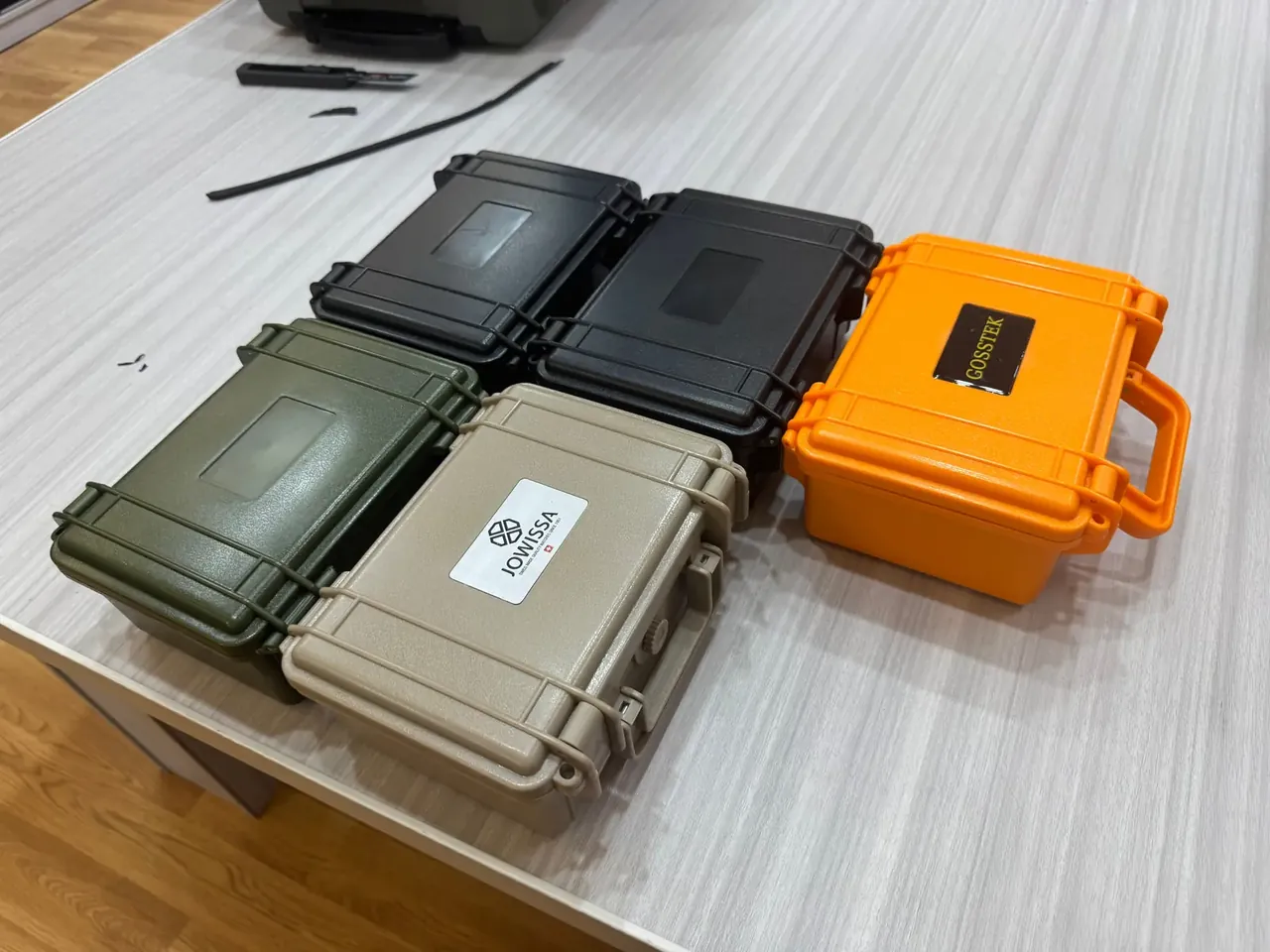
Brackets are 1.5 mm cold-rolled steel with a span of 250 mm or less and a rib beyond that. Fix them with brass inserts and M4 machine screws: 300 N pull-out per insert, 0.9 N·m torque, four points per bracket.
Self-tapping screws into the wall are risky: the wall is 3 to 4 mm thick and strips after two removals, so anything serviceable needs a stiffening plate inside.
5. Inspecting and Documenting the Interior
Inspection runs in three steps: static size, assembly motion, dynamic sampling. Static checks slot depth and bay clearance to plus or minus 0.8 mm; dynamic sampling covers 10 percent of the batch.
| Check | Method | Accept |
|---|---|---|
| Slot depth | Caliper, three points | 3 mm plus or minus 0.3 |
| Bay clearance | Tape across diagonals | Within 0.8 mm |
| Strap preload | Gauge after closing | 40 N plus or minus 5 |
| Bracket fixing | Torque wrench re-check | 0.9 N·m, no movement |
Four drawings ship with the order: interior layout, bracket detail, strap routing and assembly sequence, all sharing one origin at the lower left cavity corner.
Close with a whole-case check: load equivalent weights, invert twice, then look for shifted dividers, slack straps and bracket marks. That record is the sign-off.
Conclusion
A Custom Interior Protective Case holds its layout through five parts working together: dividers locate, straps press, brackets carry, EVA conforms and fixings tie it to the shell. Write thickness, depth, preload and torque as numbers, and the Custom Interior Protective Case will take years of handling.
This article discusses only the container (case body) side of specifications and design intent, and does not cover any handling, loading or use of the contents.
Related Reading
- How internal dividers are built and what they do
- Conditions for choosing case dividers
- Organising the inside of a case into bays
- Locating and fixing an insert inside the case body
Related Products
- 8 Series — Gun Cases; Military Equipment Cases; Camera Equipment Cases; Drone Cases; Watch Cases; Knife Cases; First Aid Cases; Electronics Equipment Cases
- WL8-2812 PP Gun Case — model WL8-2812
- All protective cases and toolboxes: 7 series, 158 models