

Quick answer: Where the mark sits and how it is applied depends on who owns the case. Brand owners need it to last as long as the shell; distributors need it replaceable when the agency changes; end users need it abrasion-resistant and traceable.
Table of contents
- Three buyers of a Custom Logo Case
- Brand use: a mark that ages with the shell
- Channel use: a mark that can be covered
- End-user sites: a mark that survives abrasion
- Process comparison and order of choice
- FAQ
1. Three buyers of a Custom Logo Case
The same Custom Logo Case plays three roles. A brand owner wants the mark to last as long as the shell; a distributor wants it swapped when the agency changes; an end user needs it to survive three years of handling. The demands conflict: durability carries the highest minimum order.
| Buyer | Priority | Position | Order | Change cycle |
|---|---|---|---|---|
| Brand owner | lasts with the shell | lid panel | 100–300 | product cycle |
| Distributor | coverable | front recess | 300–500 | agency change |
| End user | wear-resistant | side wall | 50–100 | 3–5 years |
Ranges follow the process: an in-mould tool only pays back beyond five hundred units.
2. Brand use: a mark that ages with the shell
Screen ink lifts at the edges within two years; in-mould graphics sit within 0.3 mm of the surface, so abrasion removes plastic and leaves colour.
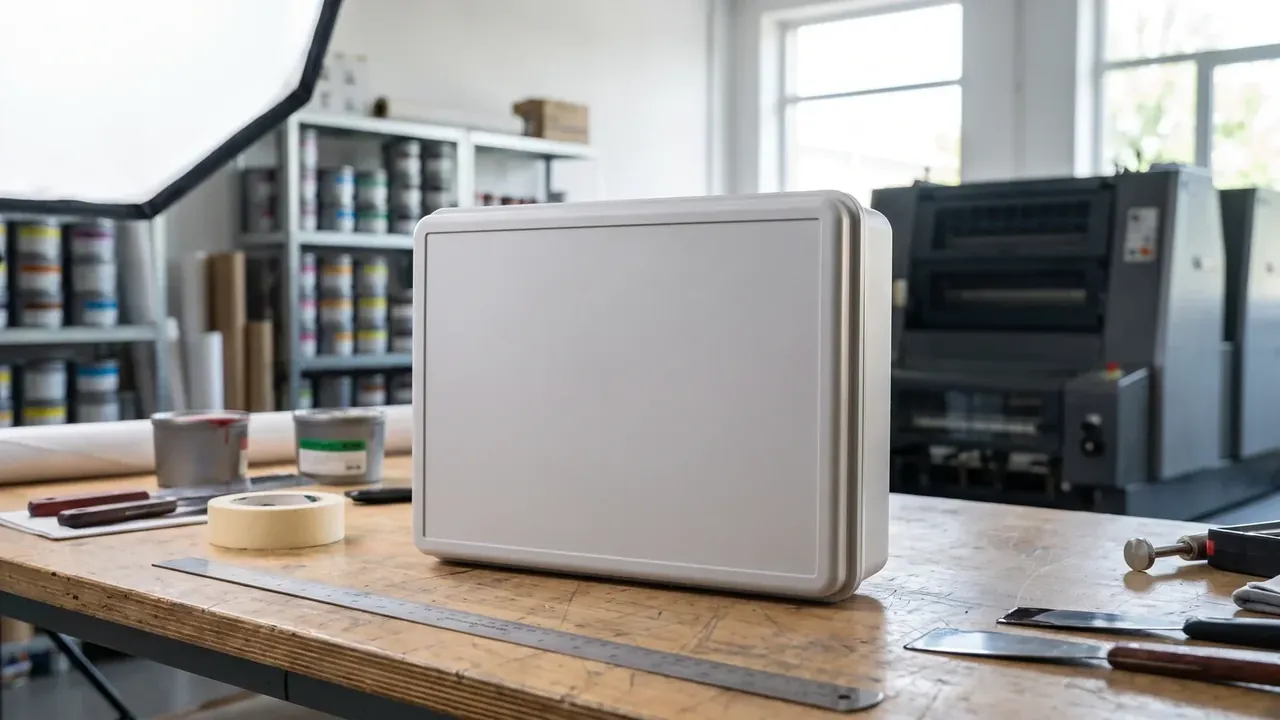
The lid offers about 280 × 180 mm inside a 3 mm edge radius that distorts anything printed across it, so keep a 15 mm margin. Minimum text is 4 mm high with a 0.3 mm stroke.
| Position | Usable area | Content | Constraint |
|---|---|---|---|
| Lid panel | 280 × 180 mm | primary mark | 15 mm margin |
| Front centre | 180 × 90 mm | series name | clear of latches |
| Side wall | 90 × 60 mm | serial, QR code | 30 mm off ground |
Acceptance rests on three numbers: cross-hatch 4B, five hundred eraser strokes, colour difference within two units.
3. Channel use: a mark that can be covered
Reprinting is the channel problem: the mark names one brand this year, another next year, while the shells stay. The answer is a 120 × 60 mm recess, 1.2 mm deep, with the name on an aluminium plate. Only the plate changes; the primary mark moves to the lid. The commonest waste is printing five hundred, losing the agency in six months and storing three hundred.
4. End-user sites: a mark that survives abrasion
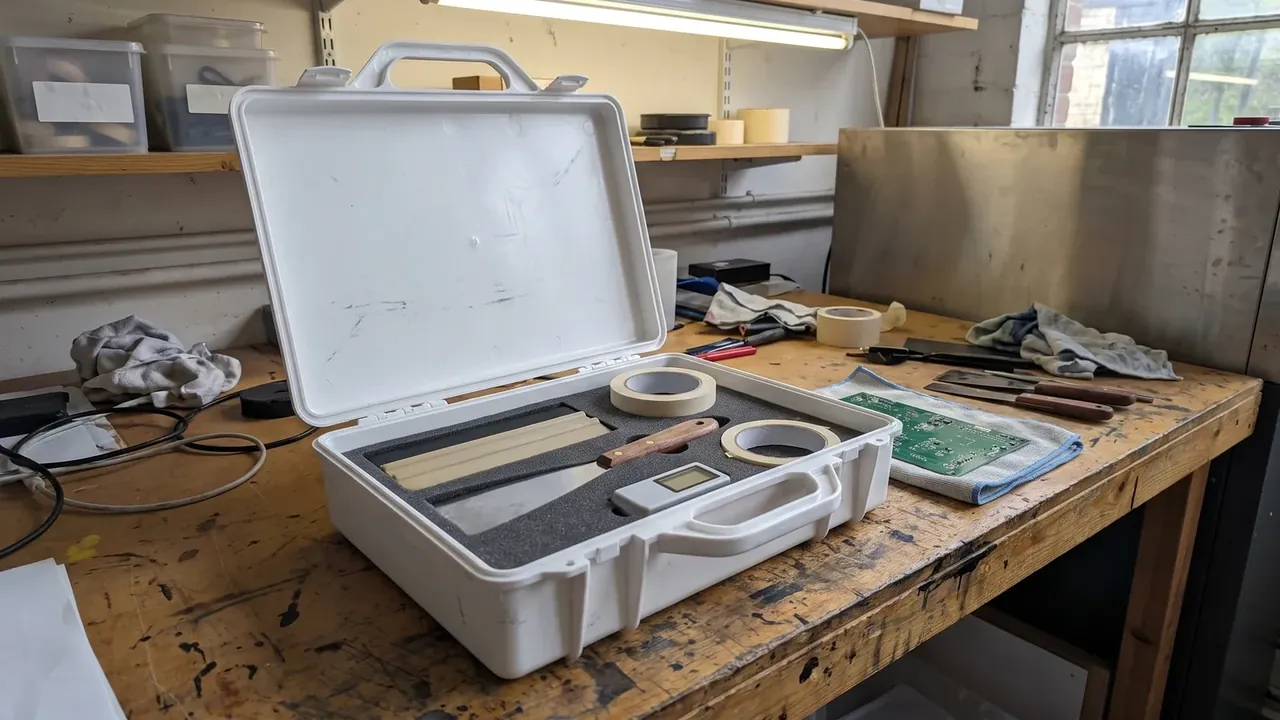
Field wear comes from grit, chemicals and stacking. UV with a matte laminate handles the first two; laser marking burns colour 0.05 mm into the surface and handles the third. Put the serial and QR code in the 30 mm band above the base, where handling cannot reach it. In rental and project supply the number matters more than the graphic. Alcohol wipes whiten screen print at twenty passes, UV at fifty, in-mould not at all.
5. Process comparison and order of choice
| Process | Adhesion | Colours | Min. text | Life | Cost | MOQ |
|---|---|---|---|---|---|---|
| Screen printing | 4B | 1–3 | 4 mm | 3–5 years | low | 100 |
| UV flatbed | 4B | full colour | 3 mm | 5–8 years | medium | 50 |
| In-mould | 5B | 1–2 | 5 mm | 8+ years | high | 500 |
| Laser marking | 5B | single | 5 mm | 8+ years | medium | 100 |
| Metal plate | 5B | full colour | 2 mm | 10+ years | high | 50 |
Work backwards: eliminate by service life, then colour count, then check volume against the minimum.
Conclusion
A Custom Logo Case is used in only three ways: brand owners put the mark into the surface, distributors make it a replaceable plate, end users make it an abrasion-resistant number. Ask how many years the case will serve before asking what the mark should look like.
This article covers container-side specifications and design implications only, not the handling, loading or use of the contents.
Related Reading
- Case logo printing options
- Logo printing methods for protective cases
- Minimum order baseline for custom cases
- Colour and appearance customisation
Related Products
- 8 Series — Gun Cases; Military Equipment Cases; Camera Equipment Cases; Drone Cases; Watch Cases; Knife Cases; First Aid Cases; Electronics Equipment Cases
- WL8-2812 PP Gun Case — model WL8-2812
- All protective cases and toolboxes: 7 series, 158 models