

Quick answer: Choose a Custom Logo Case in one order: shell colour, process, position, minimum order. Colour decides which process shows true colour, the process decides how long the mark lasts, position decides who sees it, MOQ decides whether it is affordable.
Table of contents
- Start with the shell colour
- Three hard limits
- Where the mark goes
- Colour and process pairing
- MOQ and sampling
- FAQ
1. Start with the shell colour
Most buyers open with screen print or UV, which is the wrong end. The same screen prints true on white but needs a base coat on black or the colour reads grey; laser marking disappears on white.
So begin with shell colour. White takes full colour, black takes light single-colour marks and laser, a coloured shell takes only white ink or a plate. Fix the colour and half the processes drop out.
The second question is service life: a Custom Logo Case usually runs three to eight years, and a shorter-lived process means refinishing halfway.
2. Three hard limits
Processes differ by boundary, not quality.
Colour count comes first: screen print needs one screen per colour, and 0.2 mm registration shows on a large mark. UV flatbed prints full colour in one pass.
Wide screens print unevenly, and a mark over 200 mm goes light at both ends: larger marks point to a plate or in-mould label.
A domed lid needs a fixture for screen and UV, charged per piece; pad printing follows small curves.
Abrasion is the quiet fourth limit: at fifty alcohol wipes screen print whitens while laser barely changes, so solvent cleaning rules it out.
3. Where the mark goes
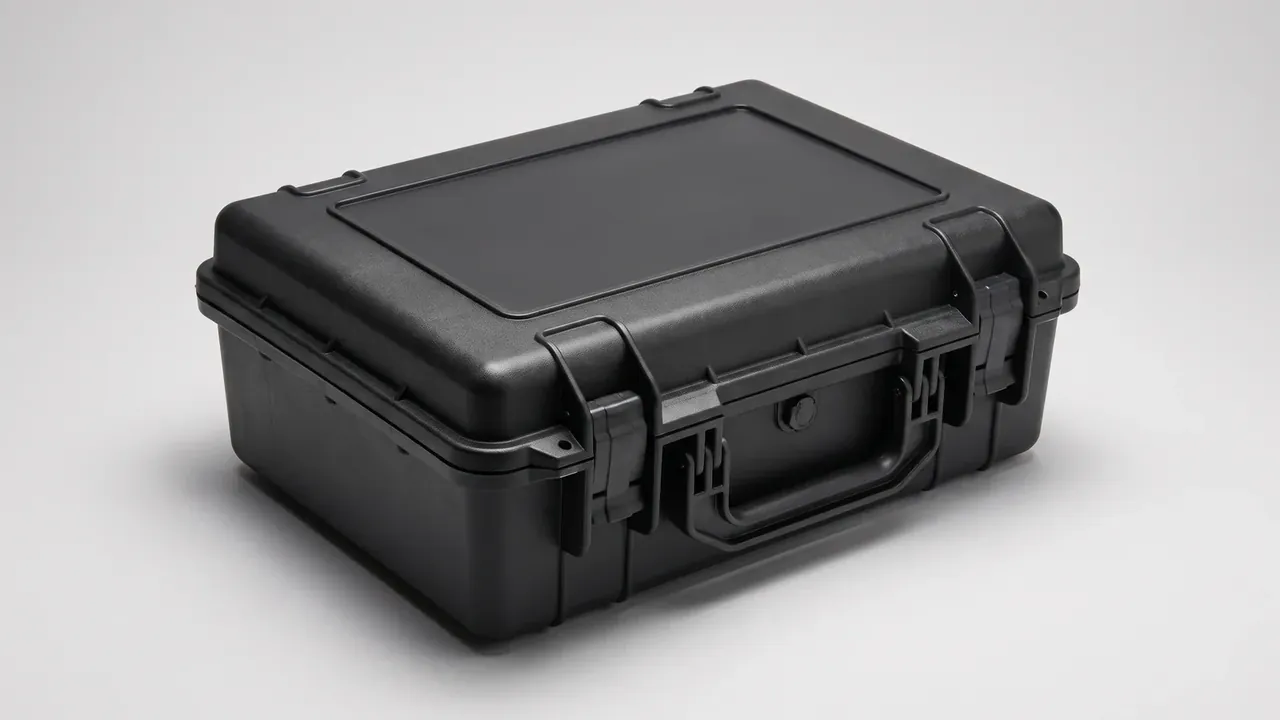
The lid panel is the largest area and faces the user, so it carries the main logo. Its edges carry a 3 mm radius, so keep a 15 mm margin or the mark distorts.
The front face sits between two latches: small but facing whoever carries the case. Keep 10 mm clear of the latch travel or the ink gets scraped.
The short side takes part numbers and QR codes, at least 30 mm above the base to clear forklifts and floor abrasion. In rental or project supply, that number is scanned more than the lid is read.
4. Colour and process pairing
Shell colour is fixed at moulding, which is why it comes first. White reproduces full-colour UV well; black absorbs light, so a light mark needs a white base and a dark mark disappears.
A coloured shell is the worst case: narrow gamut, ink matched by hand, thirty percent extra for a white base. Keep multi-colour marks off it.
| Shell | Recommended | Avoid |
|---|---|---|
| White | UV flatbed, screen print | white laser |
| Black | laser, UV over white | dark ink direct |
| Coloured | metal plate, in-mould | multi-colour screen |
5. MOQ and sampling
Minimum order follows tooling, not the case: the same Custom Logo Case can shift tenfold with a change of process.
UV and laser need no tooling and run one piece, which suits trade-show samples. Screen print needs a screen per colour and starts at 100. In-mould needs a badge insert and pays back from 500; a metal plate sits at 50.
| Process | MOQ | Tooling |
|---|---|---|
| UV flatbed | 50 | none |
| Laser | 50 | none |
| Screen print | 100 | screen per colour |
| Metal plate | 50 | low |
| In-mould | 500 | insert |
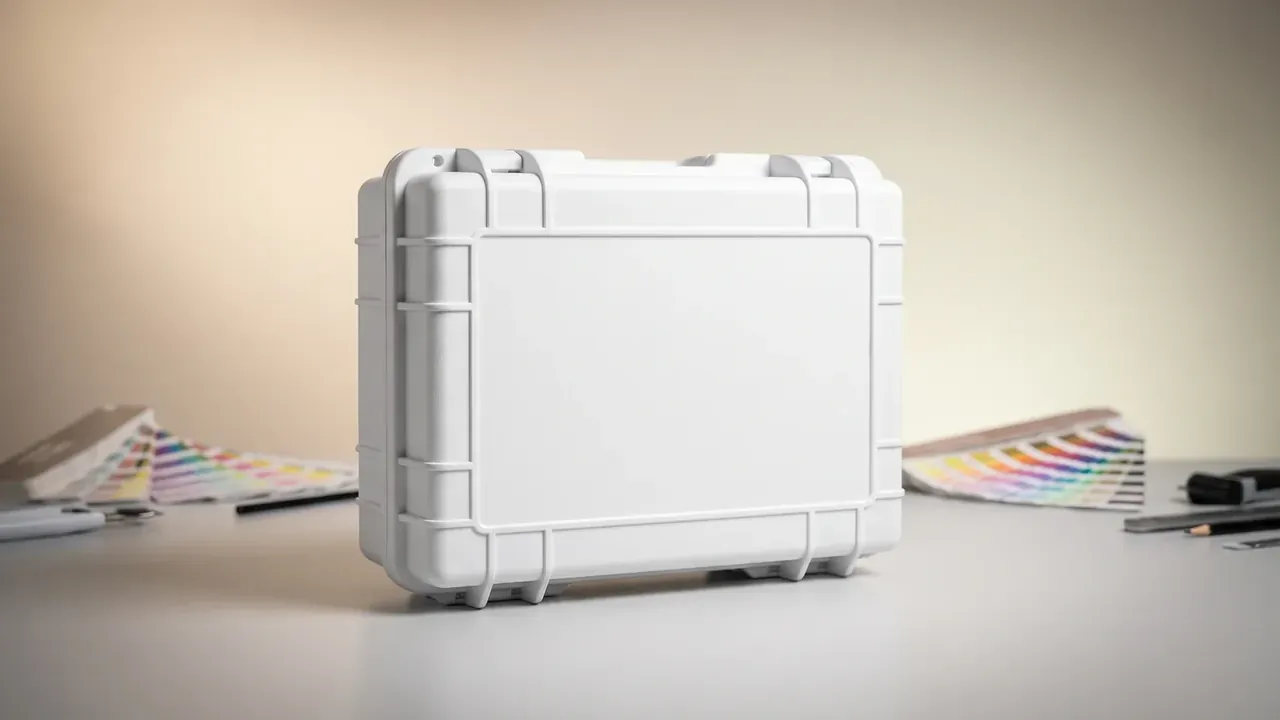
Sampling confirms three things: colour, position, adhesion. Check colour on a Pantone deck in daylight, measure mark edge to case edge, and pull tape fast to see whether ink lifts. Keep the approved sample.
Conclusion
The choice runs one way: colour sets process, process sets life, position sets visibility, MOQ sets cost. Ask how many years the case must serve and how many units, then the Custom Logo Case still looks right in year three.
This article covers container-side specifications and design implications only, not the handling, loading or use of the contents.
Related Reading
- Printing options for case branding
- Comparing logo methods on protective cases
- MOQ baselines for custom orders
- Colour and appearance customisation
Related Products
- 8 Series — Gun Cases; Military Equipment Cases; Camera Equipment Cases; Drone Cases; Watch Cases; Knife Cases; First Aid Cases; Electronics Equipment Cases
- WL8-2812 PP Gun Case — model WL8-2812
- All protective cases and toolboxes: 7 series, 158 models