

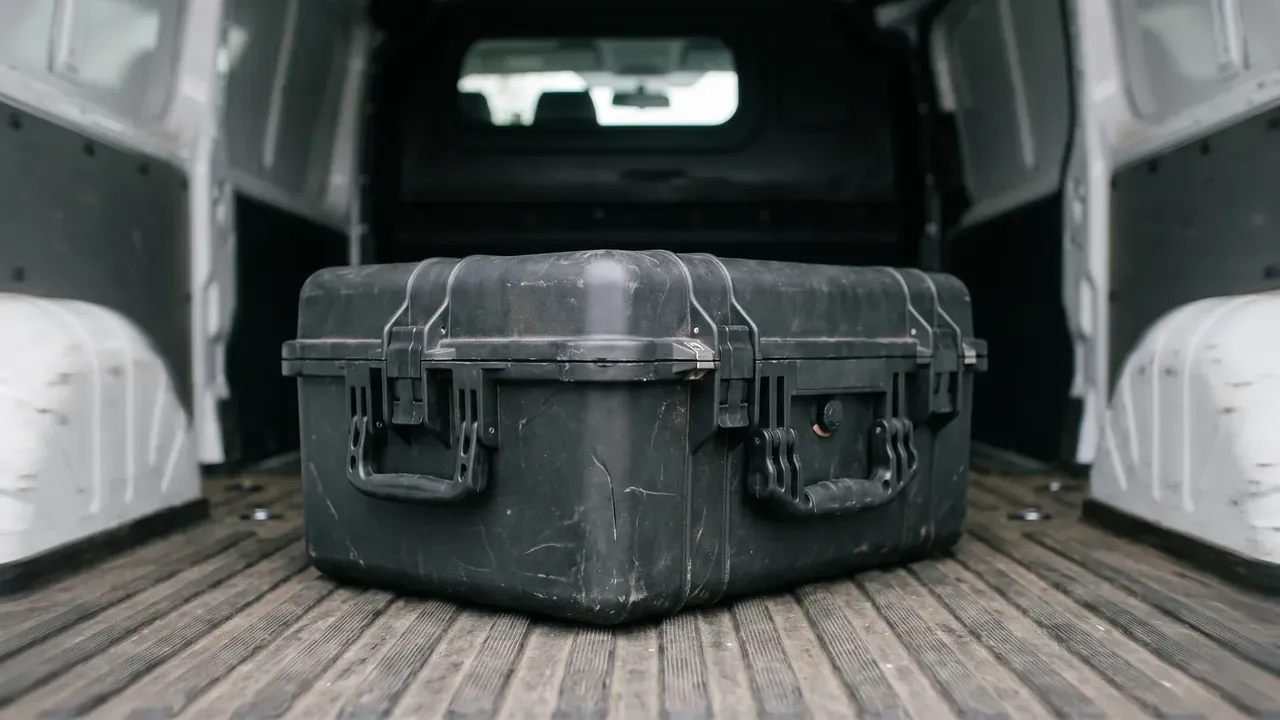
Quick answer: A dental equipment tool case earns its keep with 3 drawers on 260 mm slides, 18 positions at 22 mm pitch and 12 N of pull force per hand.
Table of contents
- Layered Sequence Inside a Dental Equipment Tool Case
- Drawer Slides and Detent Stops
- Position Depth and Pitch
- Pull-Force Curve for One Hand
- Counting and Return Routes
- FAQ
1. Layered Sequence Inside a Dental Equipment Tool Case
Open the lid and eighteen positions have to be countable at a glance, which is a matter of drawer order rather than box size. Spread 18 across one tray and only a finger's width separates neighbours, so lifting one piece means pushing two aside; split them into 3 drawers of 6 and the eye sweeps down once.
Depth is the payoff. Short pieces sit on top, longer ones in the middle, cabled ones below, and every position in a layer shares one depth so nothing leans. A dental equipment tool case measures 430 × 320 × 220 mm outside and 395 × 285 × 185 mm inside on a 3.6 mm wall, at 5.8 kg empty.
| Drawer level | Positions | Length band it takes |
|---|---|---|
| Upper | 6 | Short pieces, within 35 mm |
| Middle | 6 | Medium length, flat |
| Lower | 6 | Cabled pieces, coiled |
2. Drawer Slides and Detent Stops
At 260 mm of travel a drawer clears the case mouth and the last row becomes visible. Anything shorter leaves a strip hidden in the lid shadow, so hands reach in blind. A dental equipment tool case uses three-section slides.
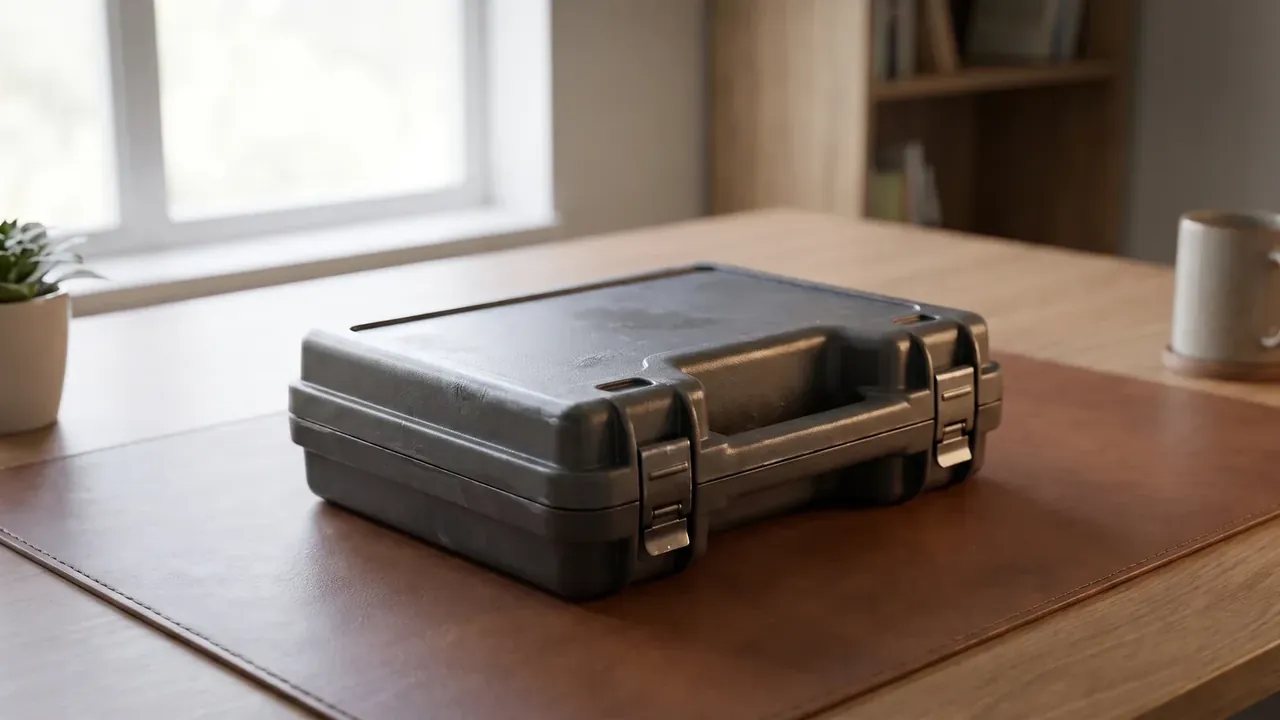
Two stops make the arrangement workable. The first holds at 80% and keeps the drawer in during daily use; the second sits at 100% and needs a release tab pressed before the drawer leaves for cleaning. A single-stop slide either never opens fully or drops out on the first pull.
Load is rated at 4 kg per drawer. Slide catalogues quote a figure for vertical side mounting, and horizontal mounting cuts that to about a quarter, so the printed number cannot be read straight across. A dental equipment tool case pairs each drawer to 4 kg, against a 100,000-cycle reference for a light three-section slide.
| Slide travel | Extension | Where it is used |
|---|---|---|
| 260 mm, full | 100% | Daily access and counting |
| 208 mm, first stop | 80% | One-handed work on a bench |
| 130 mm, half out | 50% | Tight space inside a van |
3. Position Depth and Pitch
A pitch of 22 mm and a depth of 35 mm decide whether 18 positions fit a 395 × 285 mm cavity. At 22 mm pitch a row of 6 takes 132 mm and leaves width for fingers to pinch a piece. Depth matters more than pitch: a shallow position lets a long piece stand until vibration tips it over, while at 35 mm its centre of gravity sits inside the wall and a 30° tilt throws nothing out.
The array of a dental equipment tool case is moulded in one shot, rib at 0.6 times the wall, 0.5° of draft at the root and 1° at the top. Too little draft whitens the rib on ejection, and a whitened rib cracks first in the cold, somewhere between −10 ℃ and +55 ℃ where the case is expected to work.
4. Pull-Force Curve for One Hand
Force does not stay flat along the stroke. Breaking static friction at the start is the peak, sliding friction is lower, and the detent spring adds a hump near the stop. A dental equipment tool case keeps all three under 12 N, so a hand on the lid will not drag the body across a bench.
High force comes from assembly more often than from the slide. Rails that are not parallel make one side run ahead and put a step in the curve, and a sidewall that bows during moulding tilts the rail seat. The release line is one sentence: with 260 mm of travel and two stops, a dental equipment tool case must still open under 12 N with one hand. Past that people use two hands, the drawer skews, and the raceway takes a mark that raises force for good.
5. Counting and Return Routes
Counting is a walk along a fixed route. On a dental equipment tool case it runs left to right on the upper drawer, then the middle, then the lower, six positions each, numbered 1 to 18 in a recess on the floor rather than the wall, where a piece would rub the number away. The return route matches it, so one sequence is memorised rather than two.
| Position number | Layer | Return action |
|---|---|---|
| 1 to 6 | Upper | Pull to first stop, replace in order |
| 7 to 12 | Middle | Pull to first stop, replace in order |
| 13 to 18 | Lower | Pull to full travel, replace in order |
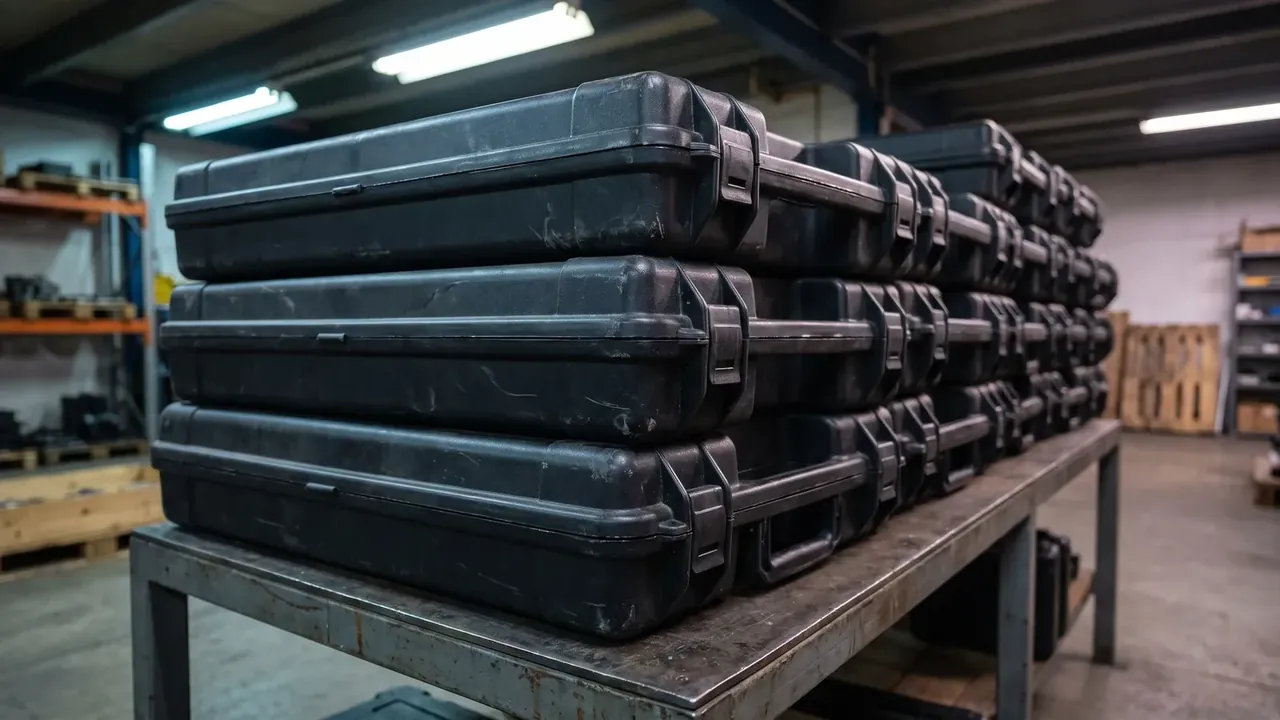
Two latches rated 240 N close the lid, and the closed case is rated IP54 against dust and splashing, which is not standing water. Stacked 4 high, the bottom lid carries the units above for weeks, so its ribs need to line up with the base of the unit above. At 5.8 kg each, four come to under 24 kg, a storage load, which is why a dished lid warns earlier than a stiff latch.
Conclusion
Usability starts with drawer order, is held by travel and stops, and ends at the numbering and the return route. Fix 3 drawers holding 18 positions, 260 mm of travel, two stops and a 12 N pull, and a dental equipment tool case opens to a count read at a glance while the 5.8 kg body stays put on the bench.
Related Reading
- The Usable-Volume Calculation
- Plastic Case versus Wooden Crate
- Structure Trade-offs in Portable Dental Cases
Related Products
- 8 Series — Gun Cases; Military Equipment Cases; Camera Equipment Cases; Drone Cases; Watch Cases; Knife Cases; First Aid Cases; Electronics Equipment Cases
- WL8-2812 PP Gun Case — model WL8-2812
- All protective cases and toolboxes: 7 series, 158 models