

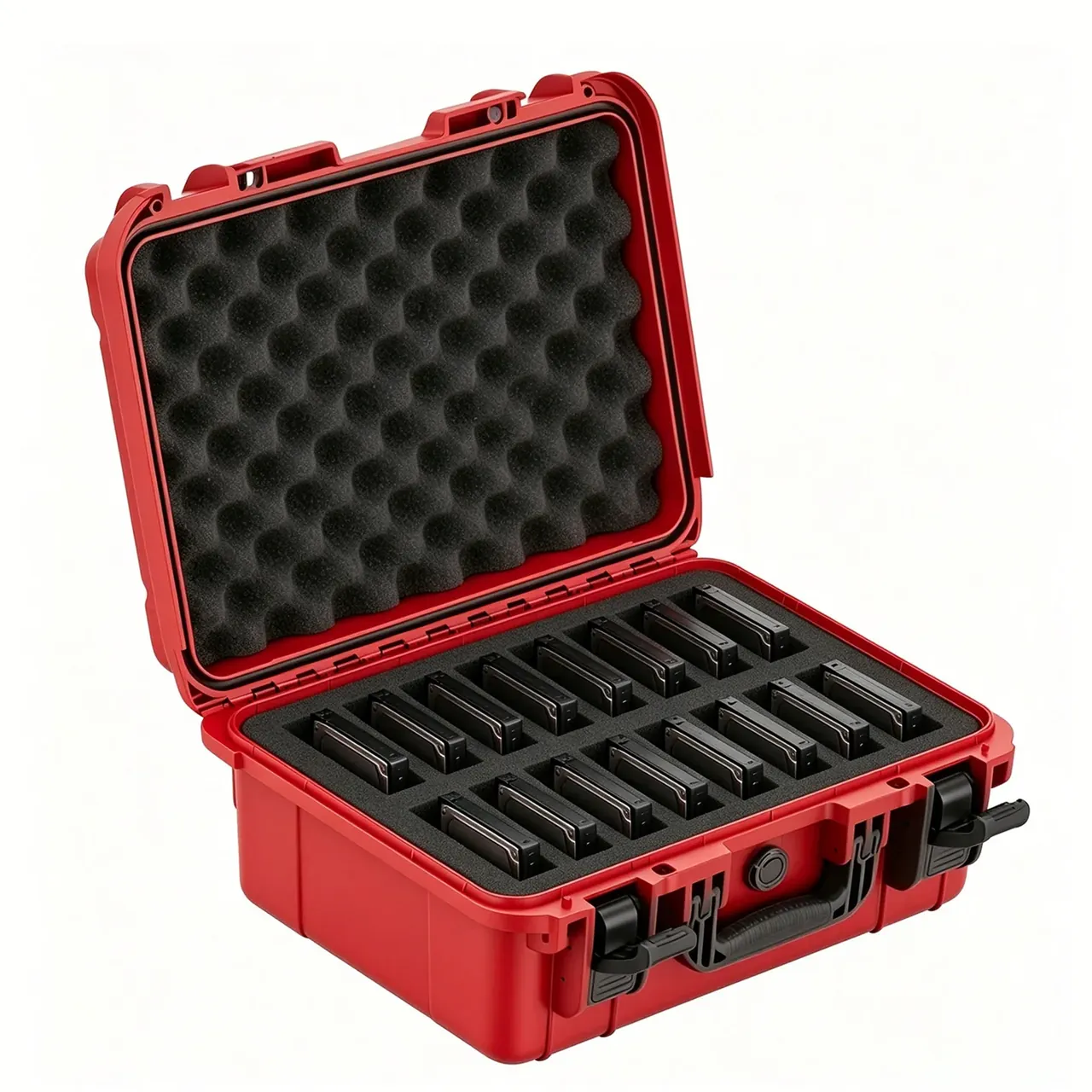
Quick answer: A dental portable treatment equipment case typically runs 520×420×230 mm outside, 470×370×180 mm inside and 6.2 kg empty, on a 3.0 mm wall with 25 mm EVA under the load. The three chairside positions differ by 130 mm of lid clearance, a 28 mm fold-flat handle and a 15 kPa valve.
Table of contents
- Dental portable treatment equipment case at three chairside positions
- Working back from counter height to outside and cavity
- Gasket and valve split the job under daily wipe-down
- Wall, corner brackets and foam hardness
- Handle, castors and a three-high stack
- FAQ
1. Dental portable treatment equipment case at three chairside positions
The chairside trolley is where a dental portable treatment equipment case spends most of its life. The frame leaves 430 mm of clear width outside the arm, so a 420 mm body sits flush against the uprights and the base ends up 620 mm off the floor. The tight number is the lid: at 100° a 230 mm tall body sweeps 230×sin10°, about 40 mm, and the hand adds 90 mm, so 130 mm has to stay clear.
A surgery cupboard applies a different limit. The shelf gap is 300 mm, which a 230 mm case clears, but the door opening is 400 mm and a fixed handle catches the frame on the way out. A 150 mm strap that folds to 28 mm passes at any angle from 0° to 35°.
The car boot is the third position. The sill sits at 700 mm, and 6.2 kg has to clear it before travelling 900 mm into the well.
| Position | Binding limit | Shell response |
|---|---|---|
| Trolley side | 130 mm to the chair | 100° lid, 40 mm sweep |
| Surgery cupboard | 400 mm door opening | handle folds to 28 mm |
| Car boot | 700 mm sill, 900 mm depth | 6.2 kg empty, lift points both sides |
2. Working back from counter height to outside and cavity
The outside of a dental portable treatment equipment case starts at the counter. Worktops sit at 750 mm, and with the lid at 100° the assembly tops out at 630 mm, so a seated clinician reaches in. That fixes 520×420×230 mm outside, a 22 mm tongue and a 3.0 mm wall, which lands the cavity at 470×370×180 mm with 25 mm per side split between gasket groove and latch seat.
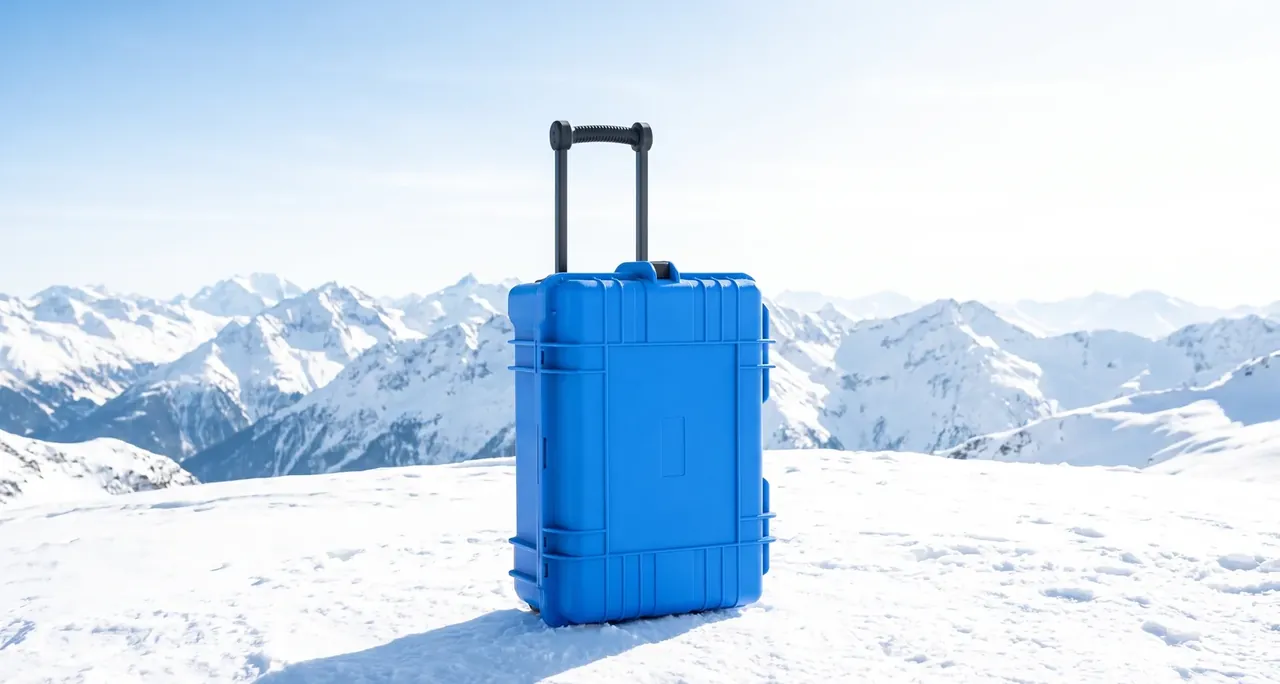
The 180 mm cavity depth is the compromise at this size. Egg-crate foam takes 20 mm, 25 mm of EVA sits under the load, and 135 mm of clear depth is left; going deeper pushes the body to 260 mm and raises the bending moment at the trolley arm from 40 N·m to 55 N·m.
Four vertical ribs run down each side, 5 mm proud at 85 mm pitch. Hanging on a trolley, the case touches the uprights on two ribs only, around 2600 mm² of contact, which spreads 6.2 kg to under 0.03 MPa.
3. Gasket and valve split the job under daily wipe-down
Wiping is unavoidable. At six passes a day with 0.5% sodium hypochlorite, an EPDM gasket at 70 Shore A rebounds best between 25% and 30% compression; below 20% the corners open and water tracks in.
The valve opens at 15 kPa. A 31 L cavity moving from a 5 ℃ surgery to a 35 ℃ car makes about 6 kPa, which never lifts the disc; altitude does, since pressure drops roughly 11 kPa per 1000 m.
Wipe-down tests the rubber. EPDM soaked 72 h swells under 5% and loses 3 points of hardness; nitrile swells 12% and lifts out of its groove.
| Elastomer | 72 h swell | Hardness change |
|---|---|---|
| EPDM 70 Shore A | under +5% | −3 points |
| Nitrile 70 Shore A | +12% | −8 points |
| Silicone 60 Shore A | +3% | −2 points |
4. Wall, corner brackets and foam hardness
A 3.0 mm wall takes four stainless corner brackets, eight M4 screws, 1.2 mm bracket stock. The brackets steer impact from the corner into the side ribs; without them a 1.2 m drop puts everything into a 30 mm corner radius and the plastic whitens before it splits.
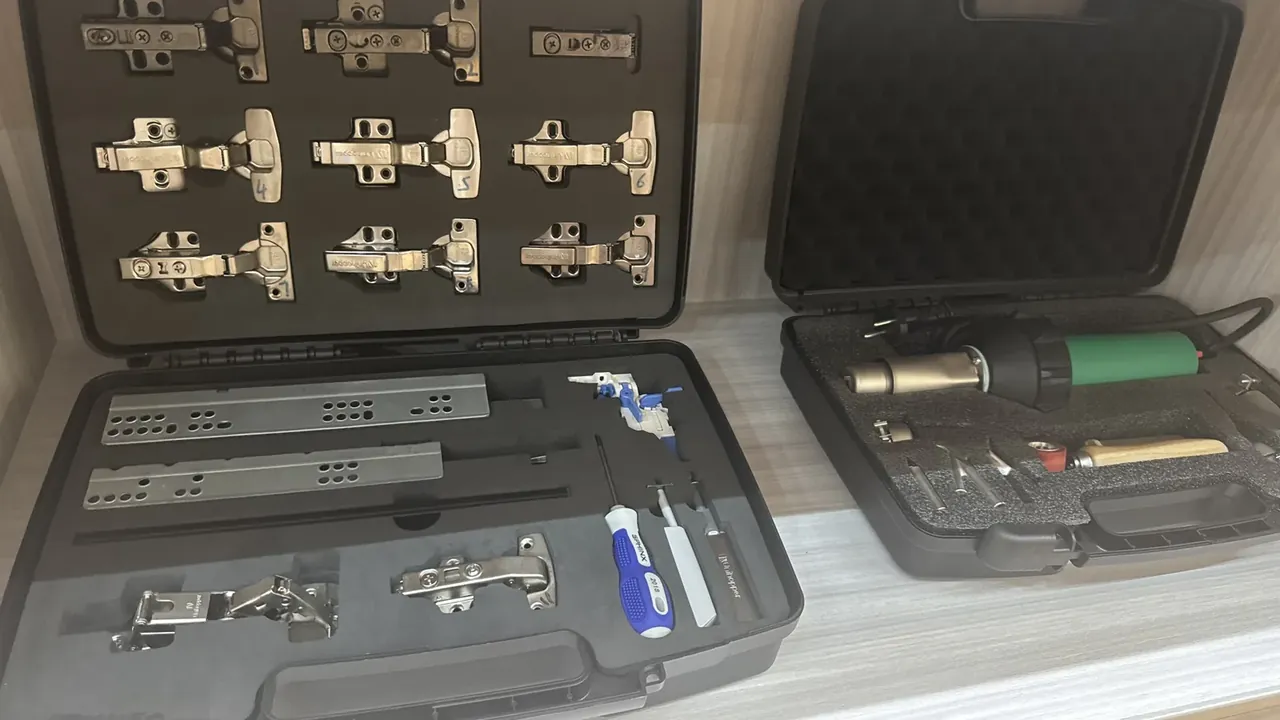
The load sits on 25 mm EVA at 65 kg/m³. Softer foam bottoms out at 8 mm when a 6.2 kg case tips sideways; above 90 kg/m³ it stops springing back and fingers need a 10 mm gap to lift anything.
Lid and base need not match. The lid carries 25 mm egg-crate, which recovers after 50% compression; the base carries 25 mm flat EVA, which stops at 15% and bears the load.
5. Handle, castors and a three-high stack
The handle is 28 mm wide, which spreads 6.2 kg to about 0.11 MPa over a ten-minute carry; at 20 mm the same load reaches 0.15 MPa.
Castors are φ50 mm, two front wheels braked. Floors step 2 mm at thresholds, and a 50 mm wheel lifts the body about 3 mm, which the base foam absorbs; at φ35 mm the same threshold lifts it 6 mm.
Three high is normal in a store room. Three cases put 18.6 kg on the lid, about 0.004 MPa, and the centre deflects under 1.5 mm; a fifth layer takes it to 31 kg and the lid edge lifts off the gasket.
| Load case | Value | Shell response |
|---|---|---|
| One-hand carry | 6.2 kg, 28 mm handle | soft overmould, 0.11 MPa |
| Threshold crossing | 2 mm step, 50 mm wheel | braked front pair, 3 mm lift |
| Three-high stack | 18.6 kg | 4 mm lid rib, 1.5 mm deflection |
Conclusion
Three positions reduce to one set of numbers: 520×420×230 mm outside, 470×370×180 mm inside, 130 mm of lid clearance, a 15 kPa valve. Once a dental portable treatment equipment case is drawn to those figures, handle width, foam hardness and bracket count all follow. A chairside day is harsher than a datasheet suggests.
This article covers the container side only, meaning shell specifications and their design consequences, and does not address handling, loading or use of anything carried inside.
Related Reading
- Cleaning and disinfecting a case
- Cavity height against foam thickness
- How case hardware is assembled
- Incoming batch inspection and sampling
Related Products
- 8 Series — Gun Cases; Military Equipment Cases; Camera Equipment Cases; Drone Cases; Watch Cases; Knife Cases; First Aid Cases; Electronics Equipment Cases
- WL8-2812 PP Gun Case — model WL8-2812
- All protective cases and toolboxes: 7 series, 158 models