

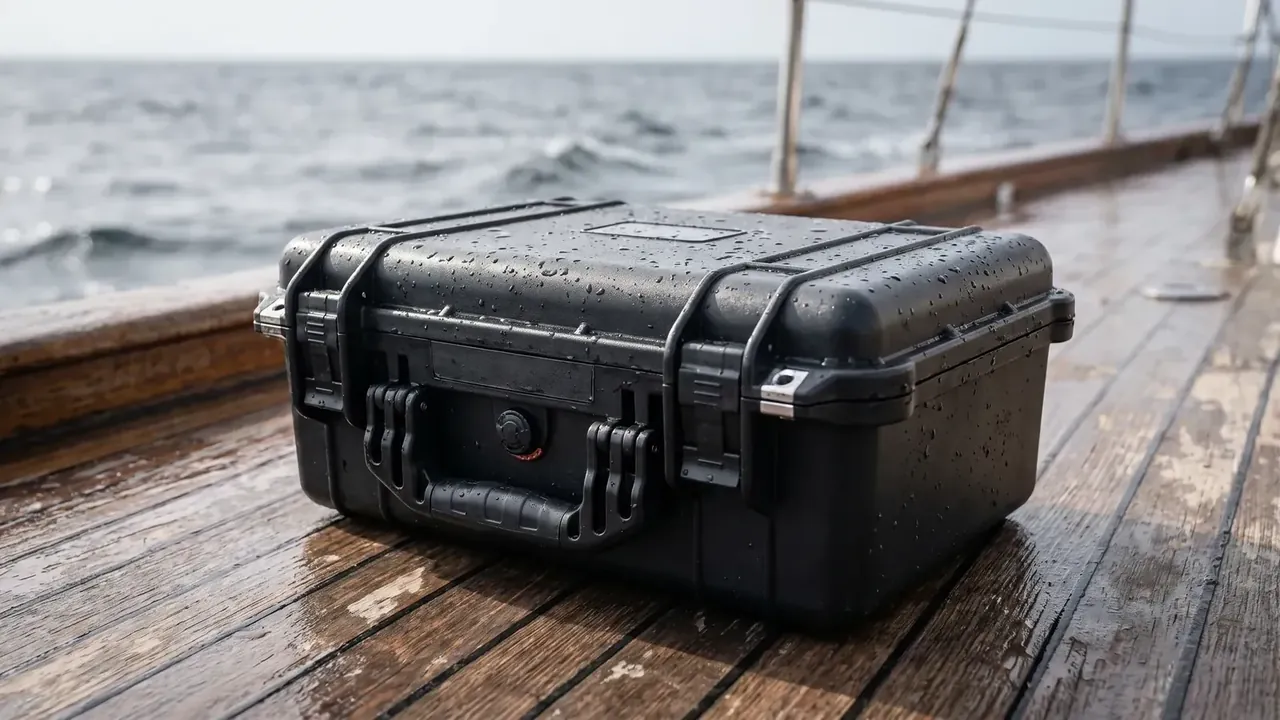
Quick answer: A Deployable Hard Case is judged by how fast it turns into a working surface. Command posts want a bench and power, relay sites want routing and shielding, medical teams want temperature control. Scenario first, then liner, cutouts and stacking.
Table of contents
- Where a Deployable Hard Case Works: Five Roles
- Field Command Post: Surface First, Power Second
- Relay and Medical Forward: Routing and Temperature
- Test, Repair and Field Lab: Cutouts and Load
- The Configuration Matrix
- FAQ
1. Where a Deployable Hard Case Works: Five Roles
Closed in transit, a Deployable Hard Case stacks better when small and light; open on site, the same body must become a bench, a rack or a tray of drawers. Flattening the lid for working area costs compression strength; thinning the wall costs stiffness at every bore.
Four constraints hold in every role: first tool out within 90 seconds, an opened lid taking three times its own weight in side push, cutouts moulded rather than drilled, lifting points shared with the stacking marks.
| Role | Cycle | Job and constraint |
|---|---|---|
| Field command post | 2 to 6 hours | Bench and cable hub, load |
| Relay site | 30 minutes to 2 hours | Rack and patch box, shielding |
| Medical forward | 15 minutes to 1 hour | Drug bench, temperature |
| Test and repair | 20 minutes to 3 hours | Tool trays, compartments |
| Field laboratory | 4 hours to 2 days | Instrument base, load |
2. Field Command Post: Surface First, Power Second
A command post Deployable Hard Case is a bench first: a detachable lid drops back over the rim, flush with the opening, giving an 800 × 600 mm work area with the document pockets facing down.
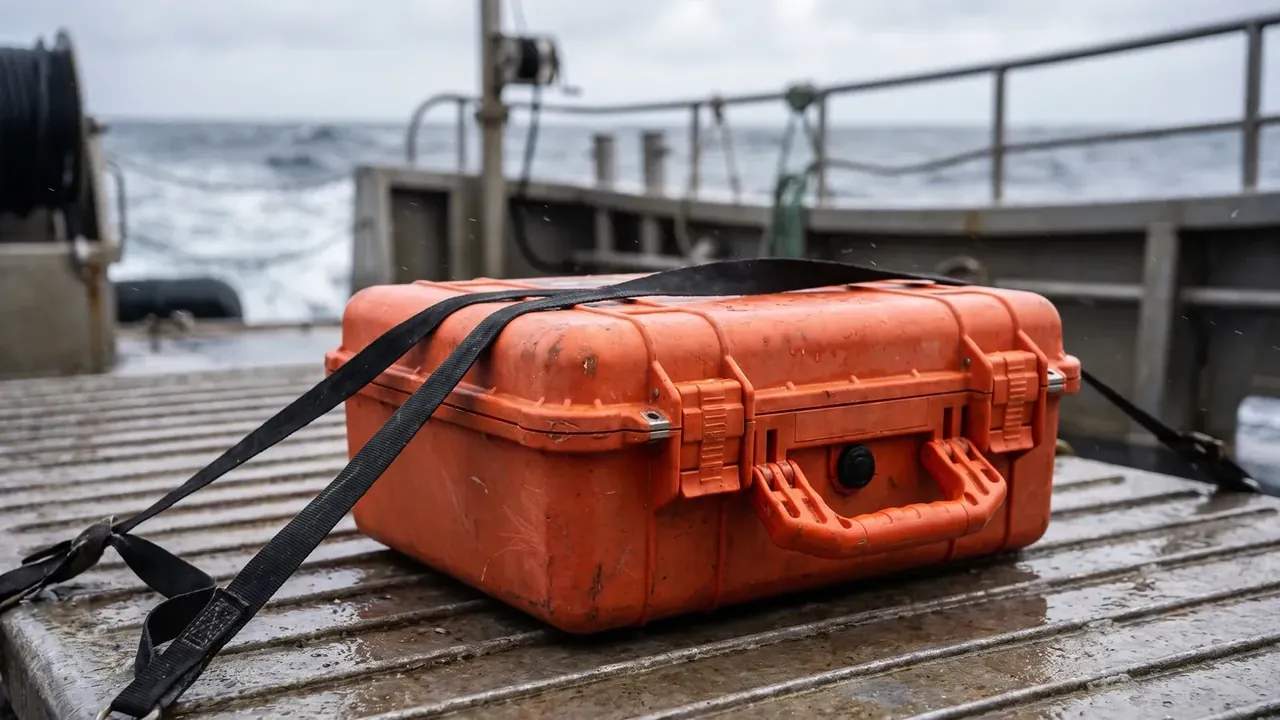
Power comes second: two 32 mm bores with M32 glands, wiring in wall channels, mains and 24 V on separate breakers, the panel recessed 15 mm, the M6 earth stud on a frame insert. Stacking is three high, under 42 kg, on 8 mm cones.
3. Relay and Medical Forward: Routing and Temperature
At a relay site the cutout matters most. RF cable needs a bend radius of five times its diameter, and the bore sits 40 mm from the inner wall. A conductive gasket holds 0.5 mm; without it shielding drops from 60 dB to 30 dB. Louvres face down behind a filter, and a 2 mm plate set 12 mm off the wall lets heat out at the base.
Medical work starts at 2 to 8 °C for six hours: a 30 mm polyurethane liner, 12 mm phase-change slots near the wall, a liner that lifts out whole, R15 corners.
4. Test, Repair and Field Lab: Cutouts and Load
A repair case behaves like a drawer cabinet: three trays at 15 kg each on side rails, one 20 mm bore in the upper third of the wall, clear of the tray travel.
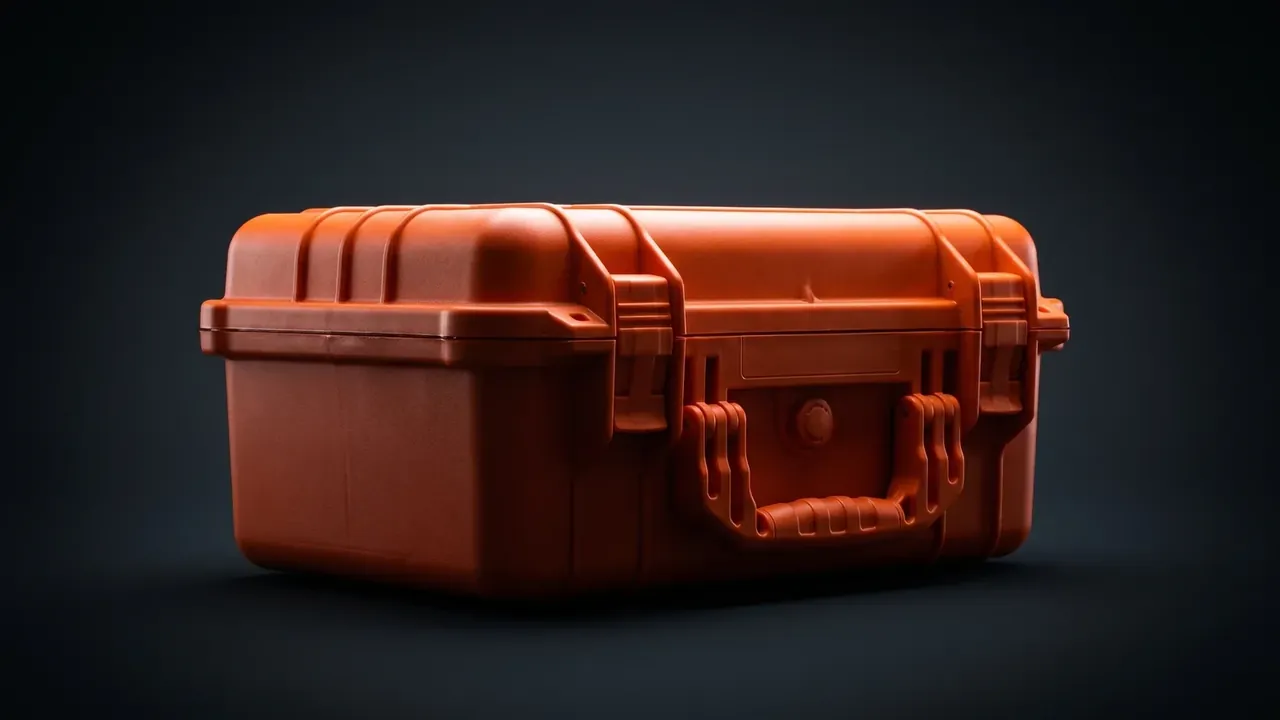
A field lab uses the body as a base: a 60 kg bench, 10 mm pads, four feet at ±10 mm, four DN50 ports, two in and two out. Both sit under 350 mm high, keeping the centre of gravity low.
5. The Configuration Matrix
Read the matrix in one order: liner, cutouts, stacking. Reverse it and the bores are redone.
| Scenario | Liner | Cutouts | Stack, rating |
|---|---|---|---|
| Command post | 25 mm EVA, lid pockets | 2 × M32, M16 earth | 3 high, IP65 |
| Relay | 30 mm EVA on alloy plate | 2 × M25 with gaskets | 2 high, IP66 |
| Medical forward | 30 mm PU, phase-change slots | 1 × M20 probe port | 2 high, IP65 |
| Test and repair | 15 mm EVA, three trays | 1 × M20 test port | 3 high, IP54 |
| Field laboratory | 20 mm EVA, instrument pads | 4 × DN50, M32 inlet | 1 high, IP54 |
Borrowing across roles is the usual mistake. A command post case on repair duty has its bore blanked by the top tray; a medical case built like a repair box has corners too tight to free the liner.
Conclusion
What separates one Deployable Hard Case from another comes down to four settings: liner form, cutout position, stack height and rating. Settle them at drawing stage and no bore is blocked, no liner trapped, no vent shut, and that is what a Deployable Hard Case is for.
This article discusses only the container (case body) side of specifications and design intent, and does not cover any handling, loading or use of the contents.
Related Reading
- What a deployable hard case is and how it opens on site
- Field configuration of emergency supply cases
- Compartment and access design in medical cases
- Cable routing and shielding in communication cases
Related Products
- 8 Series — Gun Cases; Military Equipment Cases; Camera Equipment Cases; Drone Cases; Watch Cases; Knife Cases; First Aid Cases; Electronics Equipment Cases
- WL8-2812 PP Gun Case — model WL8-2812
- All protective cases and toolboxes: 7 series, 158 models