

Quick answer: A Deployable Hard Case is measured against flight cases, aluminium-magnesium cases, rotomoulded cases and soft bags with an insert. It loses on speed to the bag and on weight to the alloy case. It wins on cycles, ingress rating, stacking and repairability at the same time.
Table of contents
- How a Deployable Hard Case Is Compared
- Deployment Speed Comes Down to Moves
- Opening Cycles and Ingress Ratings
- Weight and Volume Efficiency
- Repairability and the Verdict
- FAQ
1. How a Deployable Hard Case Is Compared
The alternatives: a flight case of 9 mm plywood edged in 30 mm aluminium, an alloy case folded from 1.2 mm sheet, a rotomoulded 4.5 mm PE shell, and a soft bag of 1000D nylon over an insert.
Every figure uses one internal size, 600 × 400 × 300 mm, or 72 L, at 18 kg, with empty weight and single-latch cycles.
| Design | Empty weight | Rating | Rated cycles |
|---|---|---|---|
| Deployable Hard Case | 7.2 kg | IP67 | 5000 |
| Flight case | 12.5 kg | IP54 | 800 |
| Alloy case | 5.4 kg | IP67 | 3000 |
| Rotomoulded case | 9.8 kg | IP67 | 5000 |
| Soft bag, insert | 2.6 kg | None | 1500 |
2. Deployment Speed Comes Down to Moves
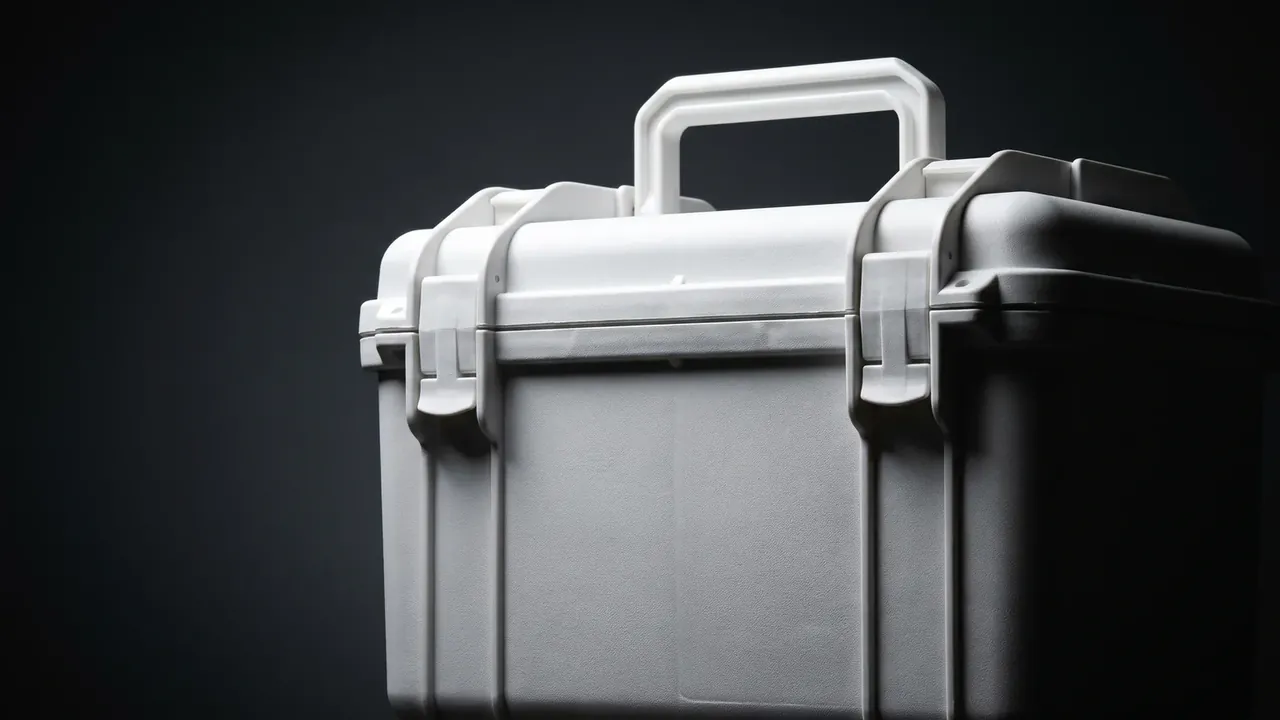
A Deployable Hard Case opens in 7 seconds: two latches, one movement each, and the lid stops at 100 degrees. A flight case took 6 minutes 20 seconds for the same task, half of it fitting four castors.
Move count explains it: 2 here, 4 on a rotomoulded case, 11 on a flight case, one zip on a bag, at about 8 seconds per gloved movement. The bag is fastest, but only until its zip drags at 300 moves.
3. Opening Cycles and Ingress Ratings
Cycles ran at -20 °C and +50 °C for 500 each, then at room temperature. At 5000 cycles this latch wears 0.2 mm and keeps 85 percent of its preload, while a flight case at 800 has 0.8 mm of play and a 1.5 mm lid sag.
IP67 means 30 minutes at 1 m, met here by a moulded groove and a gasket compressed 30 percent. A flight case clamps its gasket under extrusion and reaches IP54, and a rotomoulded case claims IP67 but with ±0.8 mm of wall tolerance leaves compression uneven.
At 1.8 m on six faces the frame spreads load into four edges, where a flight case bends its corner castings.
4. Weight and Volume Efficiency
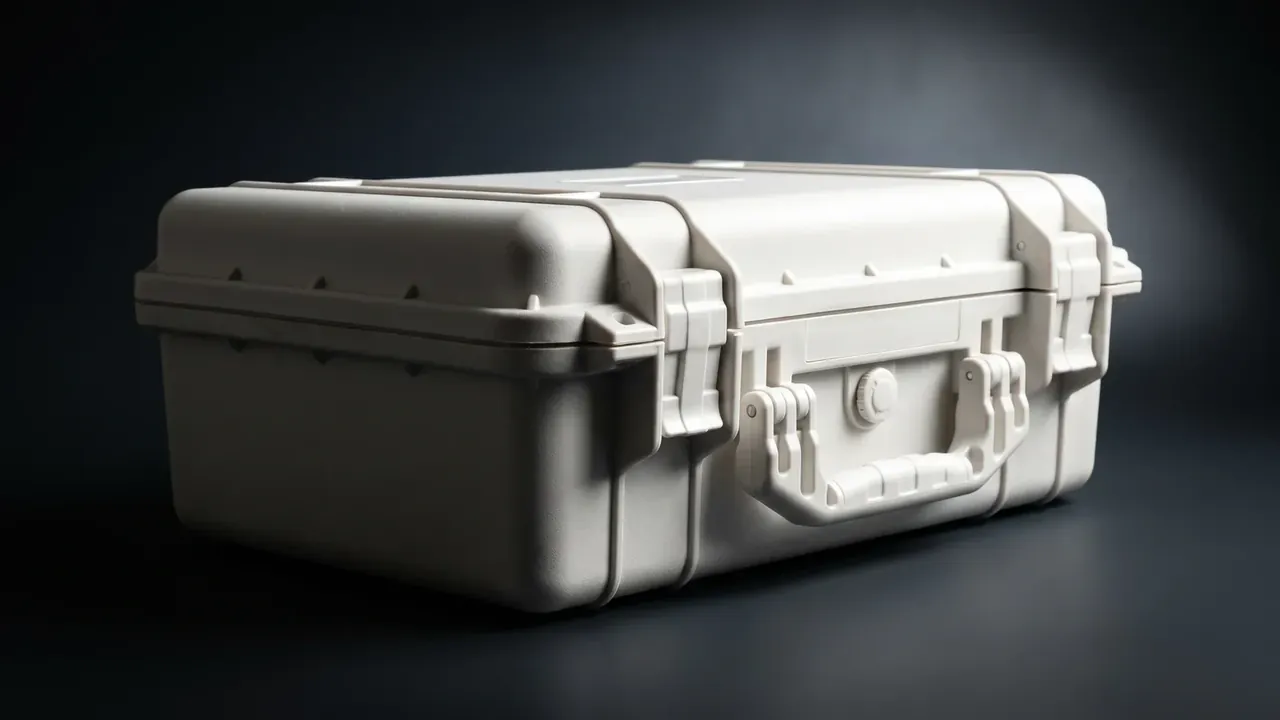
Volume efficiency is interior over exterior, which decides how many units fit a truck. This case is 660 × 450 × 350 mm outside, or 104 L, so 72 L of interior gives 69 percent; a flight case sits at 56 percent, a bag at 91 percent.
Weight per litre runs 100 g here, 98 g for the flight case, 59 g for the alloy, 83 g for the rotomoulded, 33 g for the bag. The alloy wins until a dent leaves a seal face that never returns to IP67.
| Design | External volume | Efficiency | Weight per litre |
|---|---|---|---|
| Deployable Hard Case | 104 L | 69% | 100 g |
| Flight case | 128 L | 56% | 98 g |
| Alloy case | 91 L | 79% | 59 g |
| Rotomoulded case | 118 L | 61% | 83 g |
| Soft bag, insert | 79 L | 91% | 33 g |
Six high against four puts 144 units in a 4.2 m body against 96.
5. Repairability and the Verdict
Repairability asks whether the part swaps alone, what tool it needs, and what the spare weighs. A latch here takes 4 minutes and a 4 mm hex key at 0.12 kg; the gasket takes 12 minutes at 0.3 kg. A flight case latch is drilled out and re-riveted in 35 minutes.
Aluminium is the worst column: a dent needs a 40 minute panel swap and 1.8 kg of spare, and a rotomoulded crack retires the whole body. Beyond six months with stacking, lifting and repair, this design holds all four.
Conclusion
Across five columns, a Deployable Hard Case is never first: the bag is faster, the alloy case lighter, both better on volume. It wins on the combination of 5000 cycles, IP67, 69 percent efficiency, six-high stacking and a 4 minute part swap. Which weakness can be lived with matters more than a champion, and a Deployable Hard Case trades weight for repair.
This article discusses only the container (case body) side of specifications and design intent, and does not cover any handling, loading or use of the contents.
Related Reading
- What a deployable hard case is and how it opens on site
- Choosing a deployable hard case for mobility and stacking
- How a flight case is built and where it is used
- Rotomoulded cases against the alternatives
Related Products
- 8 Series — Gun Cases; Military Equipment Cases; Camera Equipment Cases; Drone Cases; Watch Cases; Knife Cases; First Aid Cases; Electronics Equipment Cases
- WL8-2812 PP Gun Case — model WL8-2812
- All protective cases and toolboxes: 7 series, 158 models