

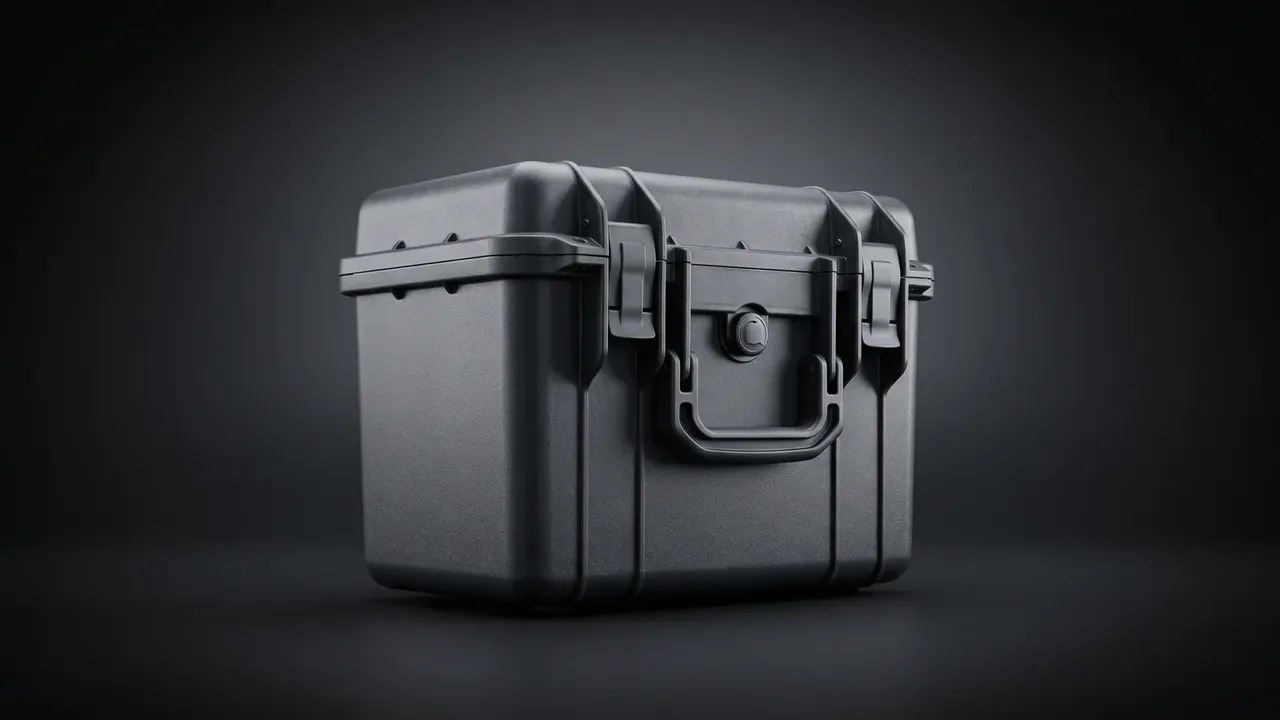
Quick answer: A road case is a one-piece shell built to be loaded, stacked and reopened hundreds of times, and three positions decide whether it survives: corner guards, wheel set, and the step pressed into the lid for stacking.
Table of contents
- What a road case is, and how it differs from a protective case
- Corner guards: the only part allowed to wear through
- Wheels: diameter, housing and brake
- Stacking: the lid step and the load ribs
- Holding the load inside, marking the outside
- FAQ
1. What a road case is, and how it differs from a protective case
A road case is the touring trade's name for a case that travels repeatedly: not one shipment, but a hundred loadings in a season. Plywood with aluminium extrusion takes any size but weighs more and seals poorly; a one-piece rotomolded shell weighs thirty to forty percent less and carries a full-perimeter gasket. The difference is not wall thickness but load path.
| Item | Plywood and extrusion | One-piece shell |
|---|---|---|
| Load path | Extrusion, ball corner | Guard, wheel housing, lid step |
| Sealing | Gasket in a jointed frame | Full-perimeter gasket |
| Weight | Higher | Thirty to forty percent lower |
2. Corner guards: the only part allowed to wear through
The four bottom corners take the hardest duty: dragged into a truck, set down hard, crushed in a stack, so they are separate parts screwed to the corner post and replaced alone. A shell radius of 15 to 25 mm needs the guard wrapped 15 mm onto the wall; stop at the tangent and wear migrates onto the shell.
| Position | Form | What fails first |
|---|---|---|
| Four bottom corners | Separate guard, screwed | Edge worn through |
| Four top corners | Thickened molded pad | Pad crushed, lid dished |
3. Wheels: diameter, housing and brake
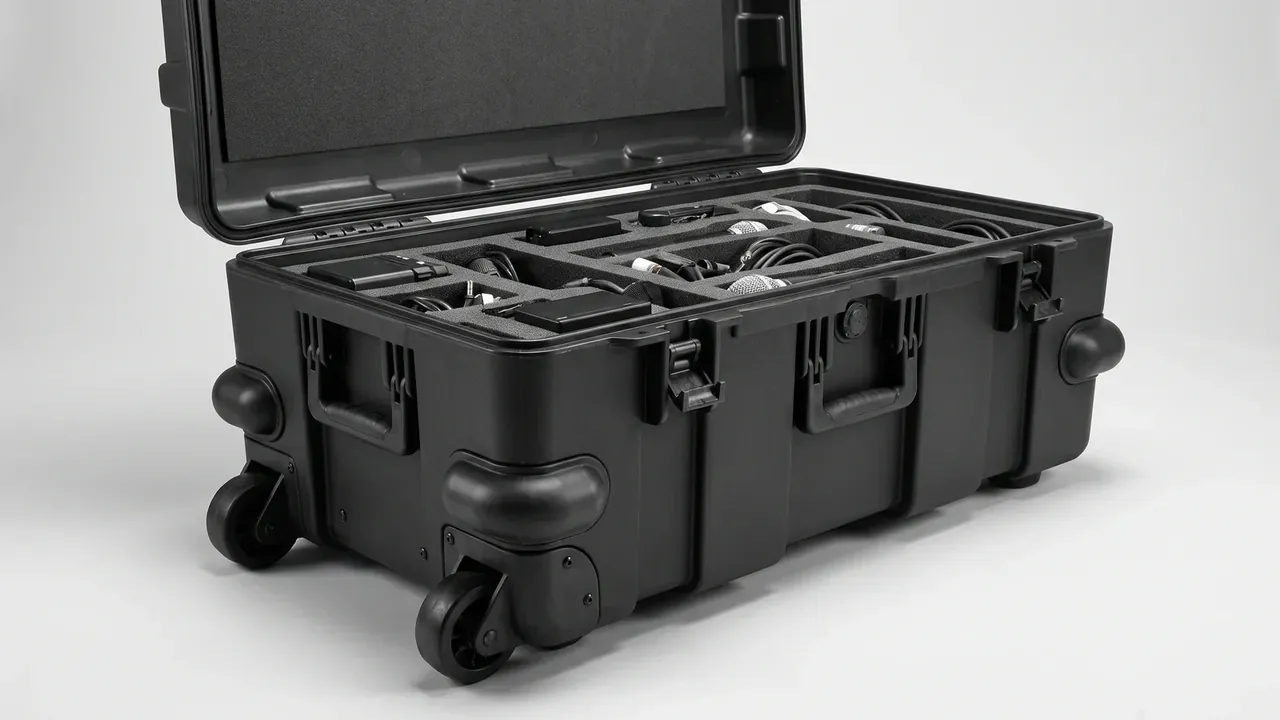
Wheel diameter sets threshold ability: 50 mm must be lifted over a 20 mm lip, 75 mm rolls over it, 100 mm is easier on gravel. Polyurethane rolls well indoors, PP is cheap and loud, TPR is quiet but short-lived. A wheel is rated 30 to 50 kg, yet a four-wheel case is rated at three times one: a threshold leaves only the diagonal pair down.
| Diameter | Ground | Rating per wheel |
|---|---|---|
| 50 mm | Indoor floors, truck beds | 30 kg |
| 75 mm | Concrete, thresholds | 40 kg |
| 100 mm | Grass, gravel, sites | 50 kg |
4. Stacking: the lid step and the load ribs
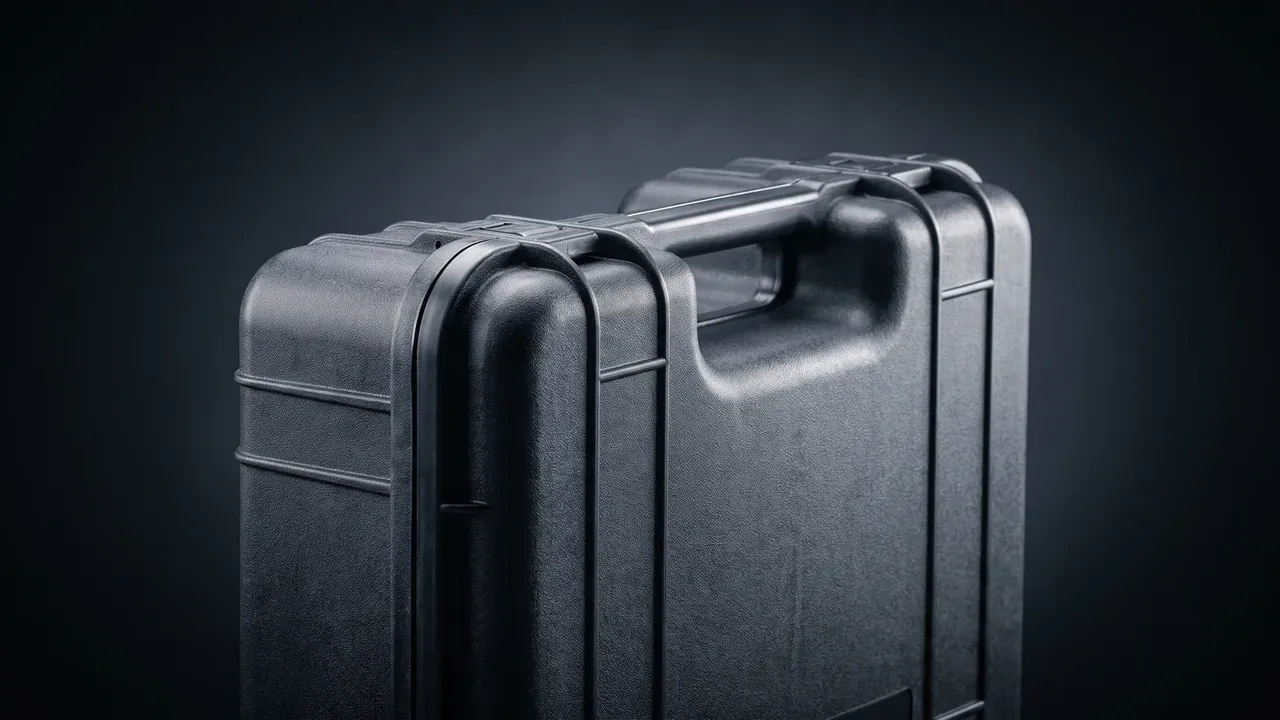
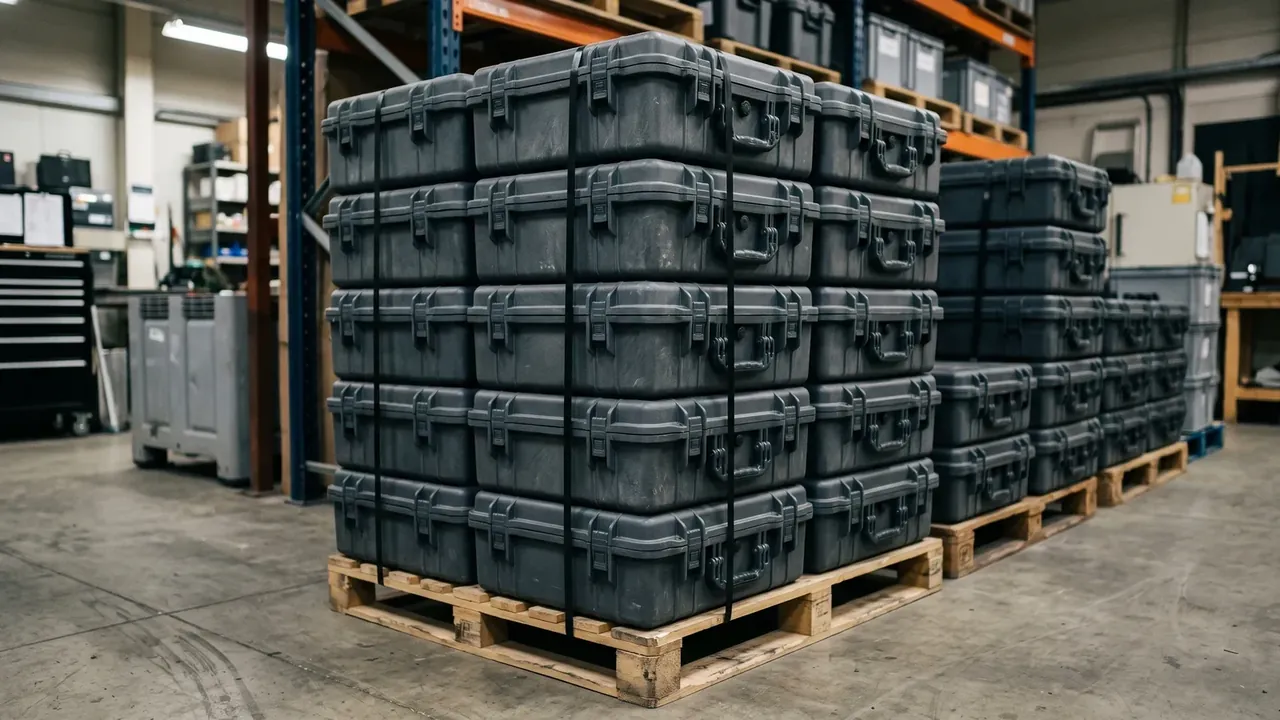
Stacking works on a step, not a flat face. The lid is pressed with a recess 8 to 12 mm deep, 2 mm larger than the base, so the case above drops in; without it, cases slide at the first bump. Two to four ribs spread load into the side walls, and four pads under the base carry it down the corner posts, not through the lid centre. Three tiers empty, two loaded; acceptance stacks three tiers for twenty-four hours and fails above 2 mm.
5. Holding the load inside, marking the outside
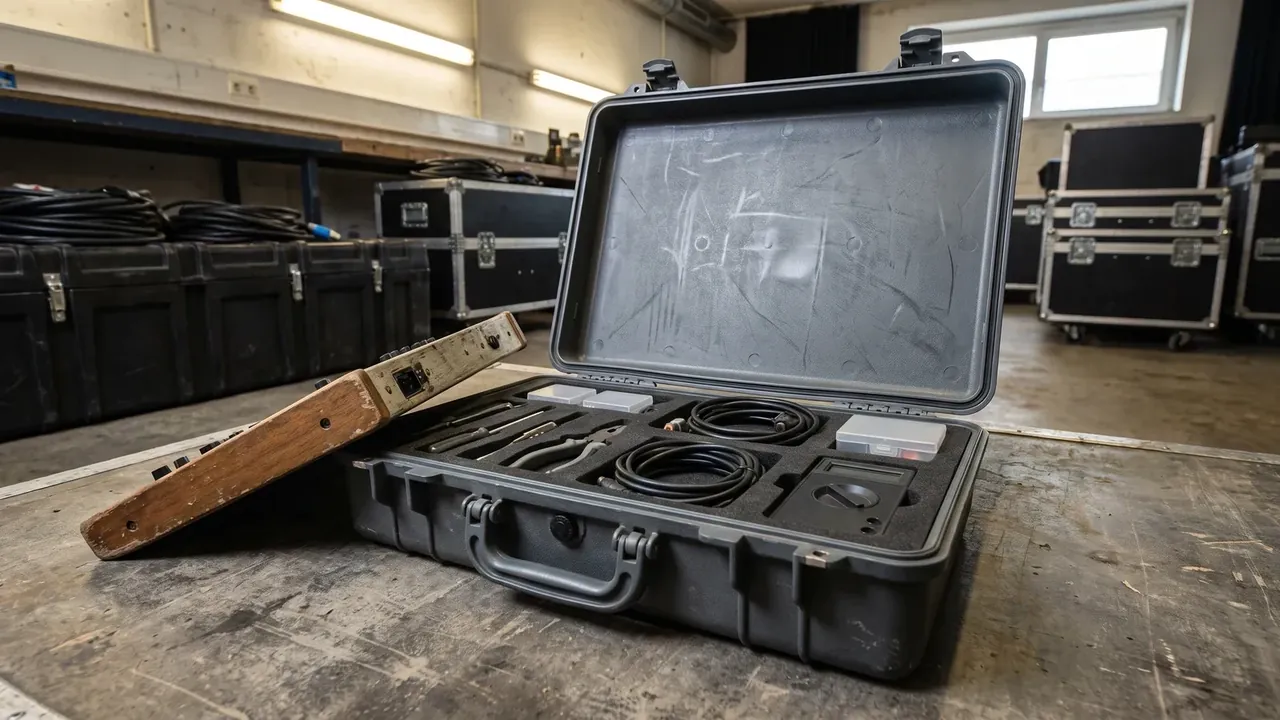
Foam pockets are cut 3 to 5 mm shallower than the equipment so the lid compresses it; heavy items get a plate and strap so foam never carries alone. Dividers are 9 mm plywood dropped into wall slots, and in a layered case they also brace the stack. Marking drives turnaround: a number on the front and both ends, tier limit and centre of gravity on the lid. Molded characters last a season; paint is gone by the third load.
Conclusion
The differences in a road case hide in three places: whether guards can be replaced, wheels dragged, the lid step holding the case above. Get those right and half a millimetre of wall barely matters; skip them and extra wall will not last a season. Specify a road case from those three.
This article covers container-side specifications and design implications only, not the handling, loading or use of the contents.
Related Reading
- Matching wheels and trolley handles
- Case stacking structure and load paths
- Why stacked cases collapse at the corner
- Flight case versus road case construction
Related Products
- 8 Series — Gun Cases; Military Equipment Cases; Camera Equipment Cases; Drone Cases; Watch Cases; Knife Cases; First Aid Cases; Electronics Equipment Cases
- WL8-2812 PP Gun Case — model WL8-2812
- All protective cases and toolboxes: 7 series, 158 models