

Quick answer: Maintenance on a Deployable Hard Case runs on measured checks: gasket rebound, air drop at 20 kPa, hinge pin wear, insert torque loss, caster and handle load, and relief valve cracking pressure. Each item needs a watch band beside its line.
Table of contents
- Deployable Hard Case Inspection Cycles
- Seal Compression and Air Drop
- Hinge Pins and Insert Torque
- Casters, Handles and the Relief Valve
- Replacement Lines and Spares
- FAQ
1. Deployable Hard Case Inspection Cycles
Four events set the rhythm: incoming inspection covers 22 items, routine checks fall every 90 days on a 20 percent sample, the annual check adds a pressure hold and torque re-read, and return checks follow any deployment within 24 hours. Storage is rated from -30°C to 55°C.
Results sit in three bands: pass, watch at 30 days, replace. Numbers follow the unit, so two consecutive watch results go to the bench.
| Event | Scope | Record |
|---|---|---|
| Incoming, after rebuild | All 22 items | Number on frame plate |
| Routine, every 90 days | Seal, latches, casters, valve | 20 percent sample |
| Annual, every 12 months | Pressure hold, torque re-read | Written report |
| Return, within 24 hours | Shell, hinges, latches | Escalate if odd |
2. Seal Compression and Air Drop
The gasket is a 12 mm EPDM cord at 70 Shore A, judged by rebound: compress to 9 mm for 24 hours; free height should return above 11.4 mm; 10.8 mm is scrap. Compression set at 70°C passes at 25 percent, fails at 32 percent.
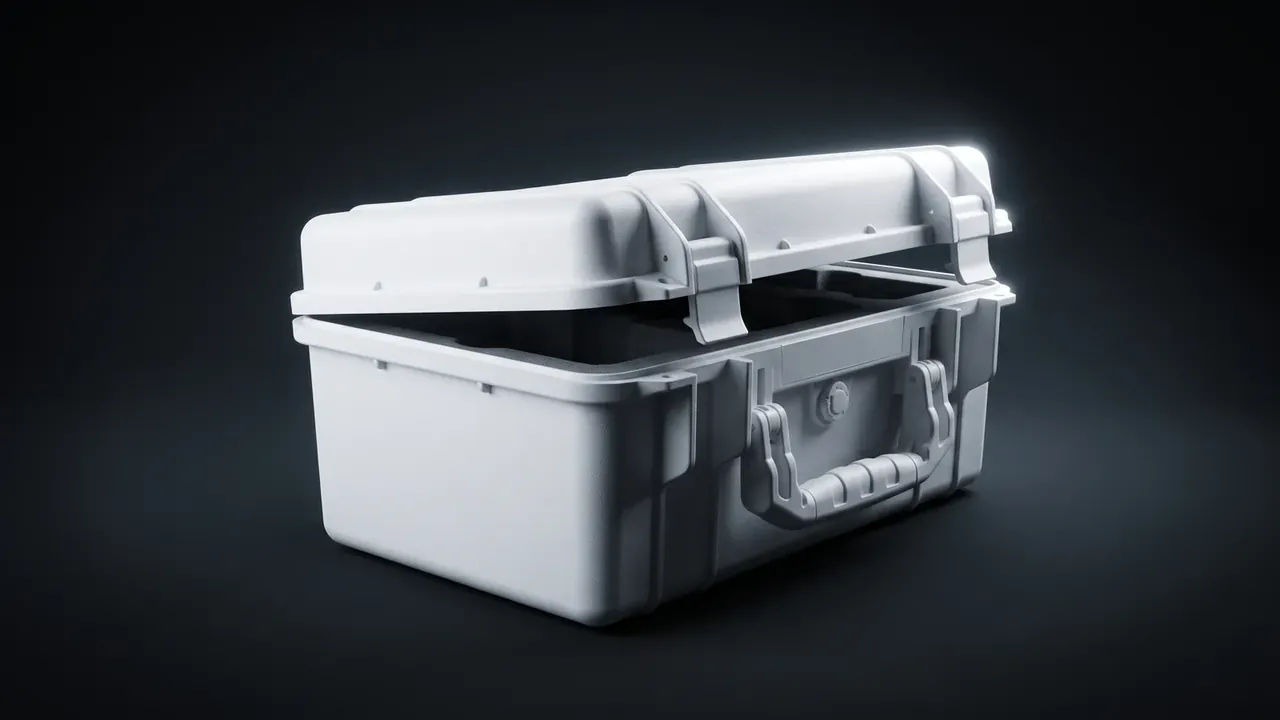
Air drop is the figure to defend: charge to 20 kPa, hold 30 seconds, then 60 seconds; 1.5 kPa or less passes, 1.5 to 3 kPa goes on watch. A continuous 0.5 mm soap bubble at the rim lip, valve seat or insert roots marks the leak.
| Item | Method | Pass | Watch | Replace |
|---|---|---|---|---|
| Gasket rebound | Caliper on free height | Above 11.4 mm | 10.8 to 11.4 mm | Under 10.8 mm |
| Compression set | 70°C for 24 hours | 25 percent | 25 to 32 percent | Above 32 percent |
| Air drop | 20 kPa, 60 seconds | 1.5 kPa | 1.5 to 3 kPa | Above 3 kPa |
| Valve cracking | Step pressure up | 3 to 8 kPa | 8 to 12 kPa | Above 12 kPa |
3. Hinge Pins and Insert Torque
A 6 mm stainless hinge pin is replaced once wear passes 0.15 mm or axial play passes 0.4 mm. Enlarged play lets the lid swing sideways and shear the gasket, so failed pressure tests often trace to hinges. Re-grease with low-volatility silicone every 500 cycles.
Inserts lose torque: an M6 insert set at 8 N·m is retightened under 6 N·m and replaced if it drops again 30 days later, since 30 days at 55°C costs 15 percent of set torque. Pull-out on a 5 mm wall is 2 kN.
4. Casters, Handles and the Relief Valve
Casters are rated 60 kg dynamic and 150 kg static per wheel, replaced on tread past 1.5 mm, bearing play past 0.5 mm, or a brake that rolls under 200 N. Tread goes first at about 0.3 mm per 20 km, so monthly rolling reaches watch at 18 months.
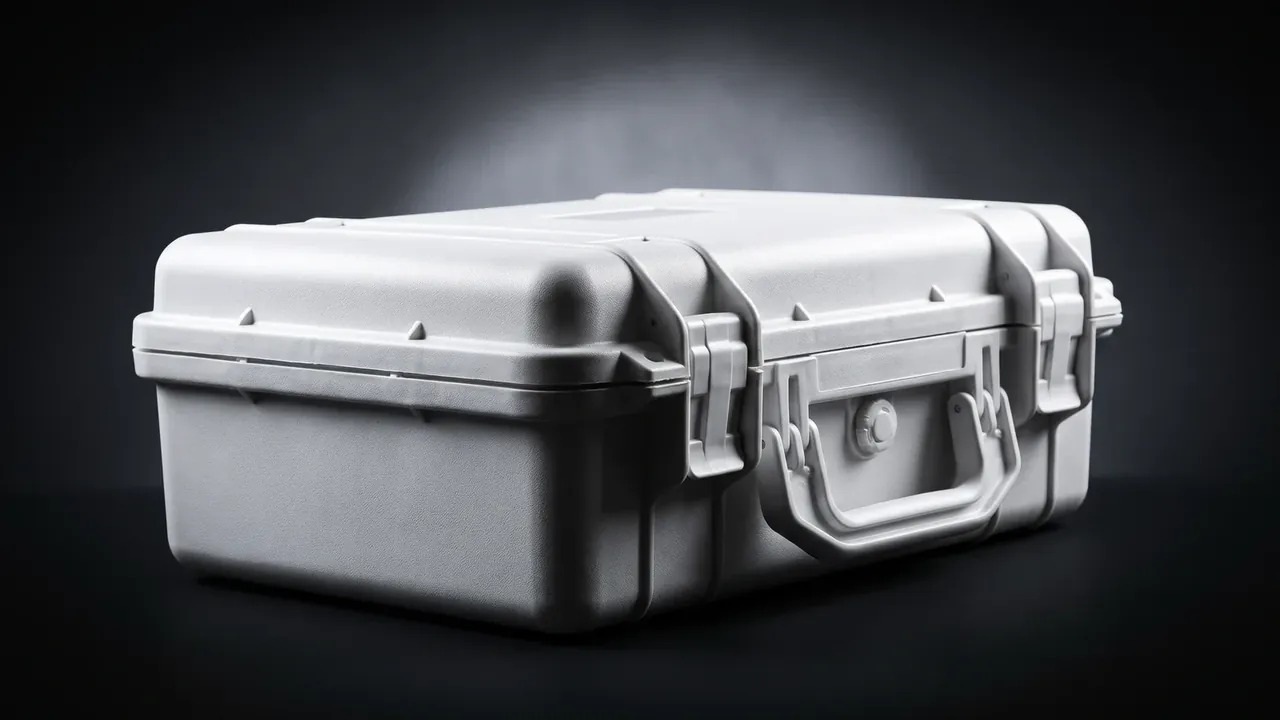
Handles take a 500 N static pull for 5 minutes with under 2 mm of set; at -20°C breaking load drops 30 percent, so cold units are tested at 400 N. The relief valve should crack at 3 to 8 kPa and equalise within 1 kPa in 30 seconds; a dust-choked disc pushes cracking past 12 kPa.
5. Replacement Lines and Spares
Replacement lines belong on the inspection sheet; stock is a share of the installed base.
| Spare | Specification | Replace when |
|---|---|---|
| Gasket, 4.2 m per case | EPDM cord 12 mm | Rebound under 10.8 mm |
| Hinge pin, 6 per case | 316 stainless, 6 mm | Wear over 0.15 mm |
| Latch, 4 per case | PA66, 30 percent glass | Over 200 N, or self-release |
| Caster, 4 per case | 100 mm polyurethane | Tread over 1.5 mm |
| Valve disc, 1 per case | Silicone, 0.8 mm | Cracking over 12 kPa |
Whole-unit replacement is a cost test: past 40 percent of a new case in labour and parts, it is swapped. Structural cracks scrap it at any length, as the wall there is under 2 mm.
Conclusion
Maintenance on a Deployable Hard Case is threshold management: gasket rebound, pressure drop, hinge play, insert torque, caster tread and valve cracking each own a slice of life. Once cycles, thresholds and lines agree, the availability of a Deployable Hard Case holds steady.
This article discusses only the container (case body) side of specifications and design intent, and does not cover any handling, loading or use of the contents.
Related Reading
- How a deployable hard case is built
- Choosing a deployable hard case
- Maintenance points for wheeled protective cases
- Servicing rotationally moulded cases
Related Products
- 8 Series — Gun Cases; Military Equipment Cases; Camera Equipment Cases; Drone Cases; Watch Cases; Knife Cases; First Aid Cases; Electronics Equipment Cases
- WL8-2812 PP Gun Case — model WL8-2812
- All protective cases and toolboxes: 7 series, 158 models