

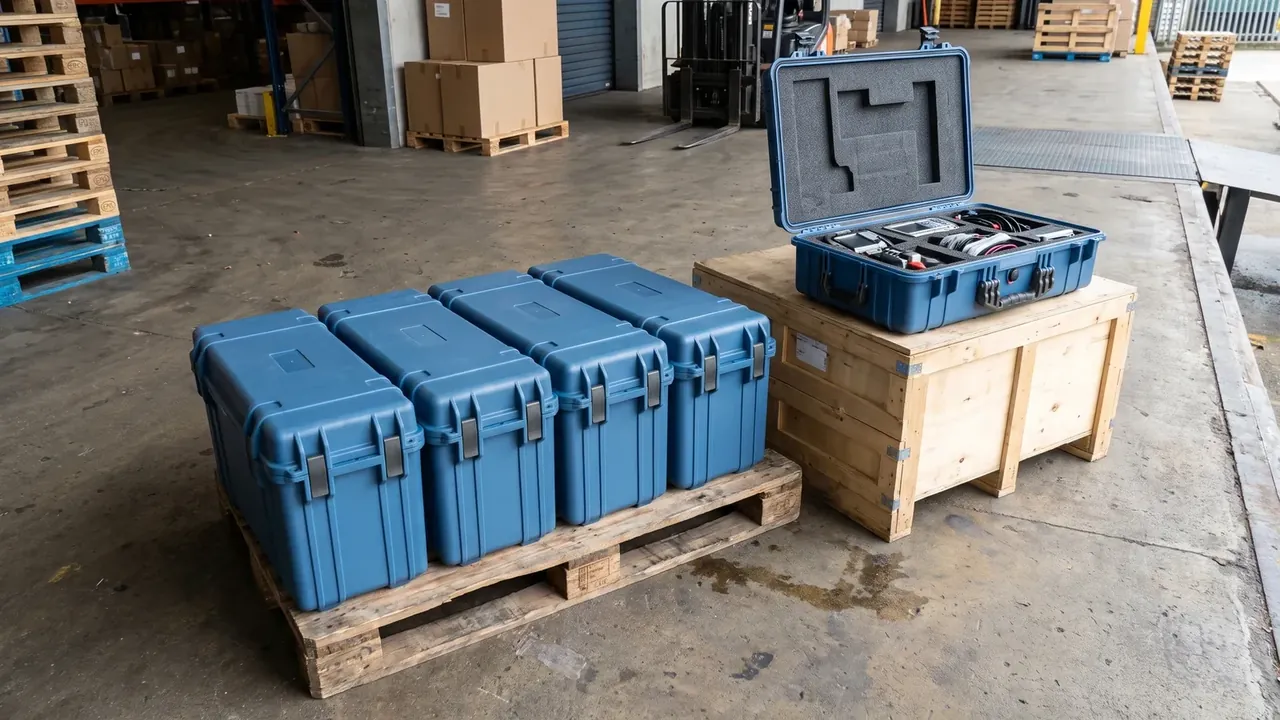
Quick answer: A Director monitor specialized protective case sets 3.2 N·m hinge torque and ±0.35 mm slot tolerance, holding slot shift to ≤0.6 mm after a 1.0 m drop.
Table of contents
- Hover hinge torque of a Director monitor specialized protective case
- Base slot width tolerance
- Slot shift readings after a drop
- Torque decay on the cycling rig
- Slot width sampling line for monitor lots
- FAQ
1. Hover hinge torque of a Director monitor specialized protective case
The drawing for a Director monitor specialized protective case fixes a 540×390×220 mm envelope, a 475×330×155 mm cavity and a 4.1 mm wall, at 5.1 kg empty and 10 kg loaded. Two hover hinges hold the lid at any opening angle through a 3.2 N·m nominal torque, generated by bushing interference, not friction pads or a stay. Too little torque lets the lid fall from half open; too much pushes the lift force past a comfortable one-hand range.
Torque is read by turning the lid to 90°, releasing it gently and taking the minimum holding value at the pivot. The ±0.35 mm tolerance on six base slots sits elsewhere, yet both decide whether a drop drags the slots out of line. Twin catches deliver 350 N each, and one lid gasket at 20% compression is benchmarked against the sealing behaviour associated with IP66 by a hydrostatic hold method.
| Torque stage | Cycle count | Hover torque reading |
|---|---|---|
| As shipped | 0 cycles | 3.2 N·m |
| Run-in | 1000 cycles | ≥3.0 N·m |
| Mid life | 2500 cycles | ≥2.9 N·m |
| End of life | 4000 cycles | ≥2.8 N·m |
A Director monitor specialized protective case is measured for hover torque both empty and loaded. A 10 kg load moves the centre of gravity and shifts the balance angle; 3.2 N·m splits 5.1 kg empty from 10 kg loaded, while bushing wear or cold grease pulls the reading off band.
2. Base slot width tolerance
Six slots are pressed into the base of a Director monitor specialized protective case, held to ±0.35 mm width tolerance. The band is checked at mouth, middle and root, and any point outside it rejects that slot. Extra width gives the insert room to wander during a drop; too little width forces assembly to scuff the slot wall white.
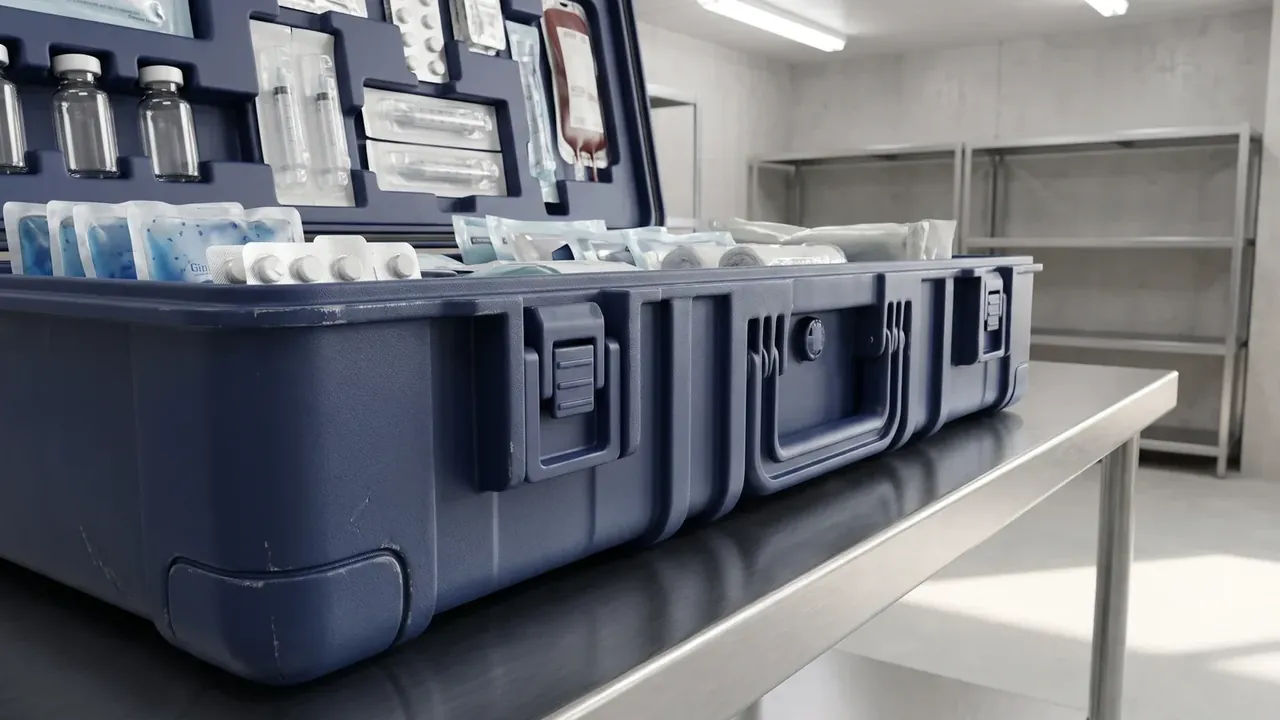
Numbering starts from the slot nearest the hinge, and the rig re-measures the same numbers after a drop. The ±0.35 mm band is paired with a 4.1 mm wall and a 10 kg load: a thin wall is less stiff, so a looser band no longer restrains the slot. Slot width and drop-shift readings must come off one and the same shell.
A Director monitor specialized protective case logs slot width next to the single lid gasket at 20% compression. Benchmarking the sealing behaviour associated with IP66 by a hydrostatic hold method confirms the interface stays closed once the lid shuts; an out-of-tolerance slot does not break the seal directly, but it steers more drop load onto one side of the lid.
3. Slot shift readings after a drop
After a 1.0 m six-face drop, a Director monitor specialized protective case must hold slot shift to ≤0.6 mm. Shift is the centre deviation of one numbered slot before versus after the drop, probed at mouth and root with the larger value taken. Drop orientation, lid state and the 10 kg load are logged on the rig first so a retest lands on the same setup.
| Slot number | Drop orientation | Shift reading |
|---|---|---|
| Slot 1 | base down | ≤0.4 mm |
| Slot 2 | hinge side | ≤0.5 mm |
| Slot 3 | catch side | ≤0.5 mm |
| Slot 4 | long edge | ≤0.6 mm |
| Slot 5 | short edge | ≤0.6 mm |
| Slot 6 | lid down | ≤0.4 mm |
A Director monitor specialized protective case is judged on the spread across all six slots, not on one extreme. If slot 2 near the hinge runs consistently high, the first check is whether the 3.2 N·m hover torque let the lid twist during the drop; if every slot rises together, the ±0.35 mm width tolerance and its assembly come under review.
4. Torque decay on the cycling rig
A Director monitor specialized protective case runs 4000 open-close cycles on a rig, with hinge torque decay held to ≤12%. One cycle drives the lid from shut to 90° and back; the start reads 3.2 N·m and the end-of-life floor is about 2.8 N·m. Decay comes from bushing wear and repeated gasket compression, and the two are booked separately.
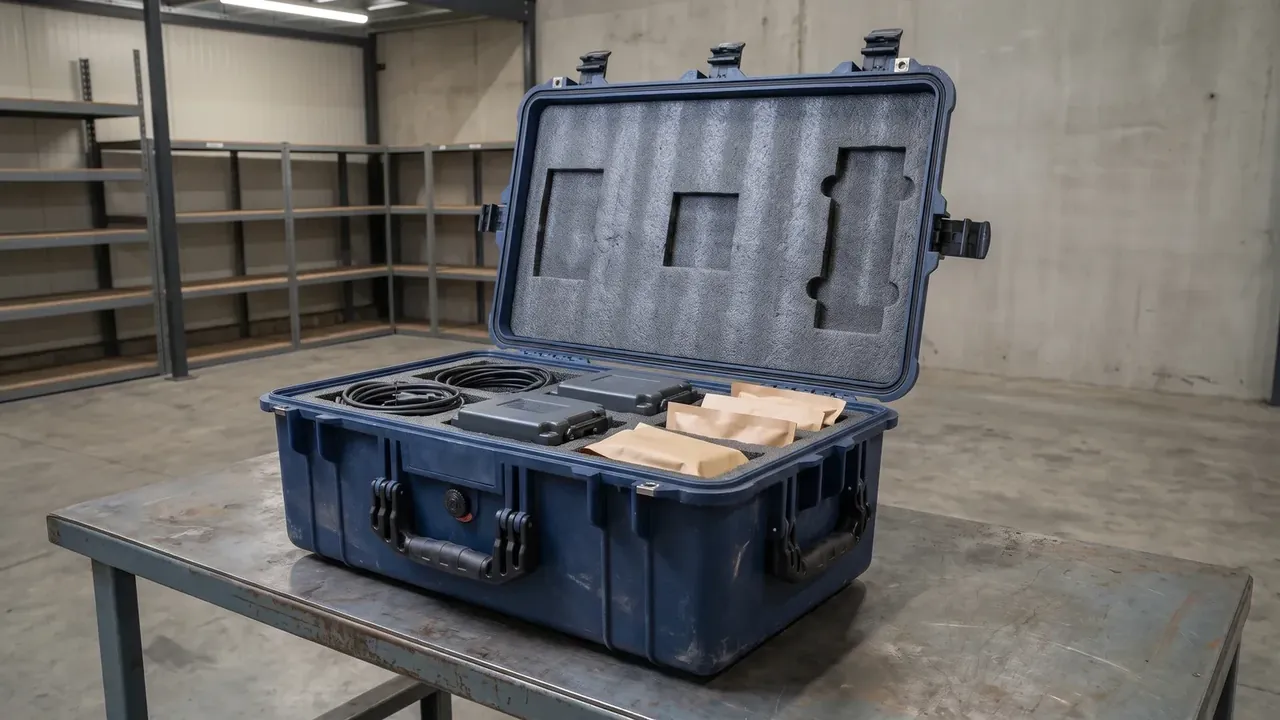
Torque stage, cycle count and hover reading are tabulated for a Director monitor specialized protective case at every 1000 cycles. A sharp downturn after 2500 cycles points to lubrication failure at the bushing rather than even wear. Once decay passes 12% the lid falls from a half-open angle, and the ≤0.6 mm slot shift after a 1.0 m drop has to be remeasured on that same shell.
Both readings are taken in sequence on one shell.
5. Slot width sampling line for monitor lots
Before a Director monitor specialized protective case ships, slot width, torque and shift go into one lot sheet as three columns. The width sampling line ties straight to ±0.35 mm: any point on any of the six slots outside it is rejected, and surplus on the others cannot average it out. Release needs ≤0.6 mm slot shift after a 1.0 m drop and ≤12% torque decay after 4000 cycles to pass together.
| Shift reading | Verdict | Action |
|---|---|---|
| ≤0.3 mm | Pass | Release directly |
| 0.3–0.6 mm | Retest | Re-drop and recheck width |
| >0.6 mm | Reject | Inspect width and hinge torque |
A Director monitor specialized protective case fills six fields per shell: lot number, slot number, drop orientation, shift reading, cycle count and torque reading, with none omitted. Without the slot number, a retest cannot tell which slot drifted. Sampling is split by lot, and the two slots near the hinge form their own group. A rejected shell is quarantined and its neighbours re-tested, not sent back for rework into the line. Two retest verdicts in a row send the whole lot back for width measurement.
Conclusion
Two checks sit at opposite ends of a Director monitor specialized protective case: ≤0.6 mm slot shift after a 1.0 m drop governs the six base slots and their ±0.35 mm tolerance, while ≤12% torque decay after 4000 cycles governs the 3.2 N·m hover hinge. A miss on either column throws off both the lid hold angle and slot alignment, so both readings are taken on the same shell. JUNZHIJIA files torque stage, slot number and shift reading into one lot sheet, and the manufacturer judges each case against it.
Related Reading
- Broadcast and film equipment cases
- Film equipment case specifications
- Camera equipment case selection guide
- Focus puller accessories safety case
Related Products
- 8 Series — Gun Cases; Military Equipment Cases; Camera Equipment Cases; Drone Cases; Watch Cases; Knife Cases; First Aid Cases; Electronics Equipment Cases
- WL8-2812 PP Gun Case — model WL8-2812
- All protective cases and toolboxes: 7 series, 158 models