

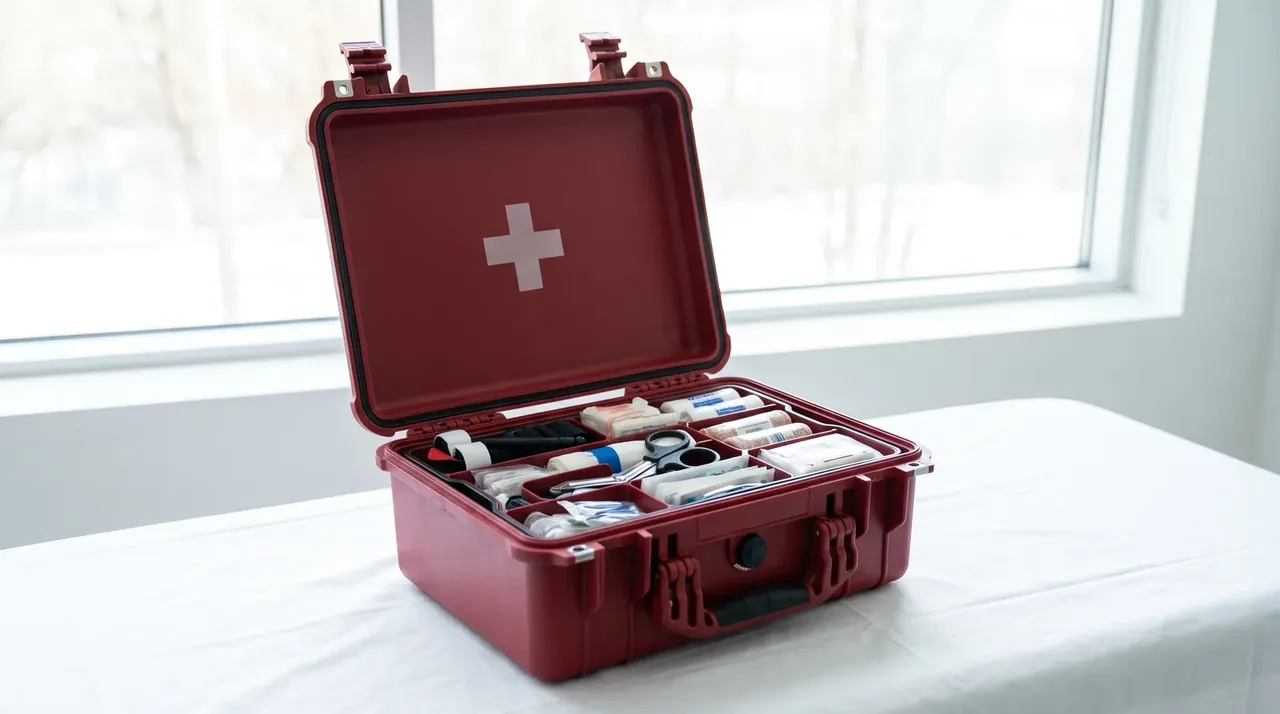
Quick answer: Case disinfection is set by shell compatibility, not kill rate: 75% ethanol leaves a PP shell intact, 0.5% chlorine chalks a gasket in 24 h.
Table of contents
- Three chemical classes, three jobs
- 75% ethanol and PC lens cracking
- Chlorine at 500 mg/L and 10 min
- Quaternary ammonium and the residue line
- Gasket, latches and the two-wipe order
- FAQ
1. Three chemical classes, three jobs
The same medical case tells two stories. Wiped three times with 75% ethanol, its shell keeps colour for three years; soaked once in 0.5% sodium hypochlorite, the gasket turns chalky inside 24 h. Case disinfection is decided by what the chemical does to shell, lens and seal, not by the kill rate on the label.
Only three classes reach the bedside. Alcohol flashes off in 30 s and carries soil away. Chlorine holds 500 mg/L available chlorine for 10 min. Quaternary ammonium sits at 1000 mg/L for the same 10 min. Each has a weak spot, and none covers everything.
| Chemical | Working strength | Contact | Main risk to the case |
|---|---|---|---|
| Ethanol | 75% | flashes off in 30 s | stress cracking of PC lens |
| Sodium hypochlorite | 500 mg/L chlorine, 0.5% for spills | 10 min | rust on metal, chalky gasket |
| Quaternary ammonium | 1000 mg/L | 10 min | residue film, tacky and dusty |
Kill spectra differ by half a log across the three classes; damage to a case surface differs by a factor of several. That is why two cases in one department can be five years old and still tight, or eighteen months old and no longer sealing.
2. 75% ethanol and PC lens cracking
At 25 ℃, 75% ethanol is gone within 30 s, so the case is dry when the wipe finishes. On PP shells, TPE gaskets and nylon latches it swells almost nothing: 200 consecutive wipes cut gloss by 5%.
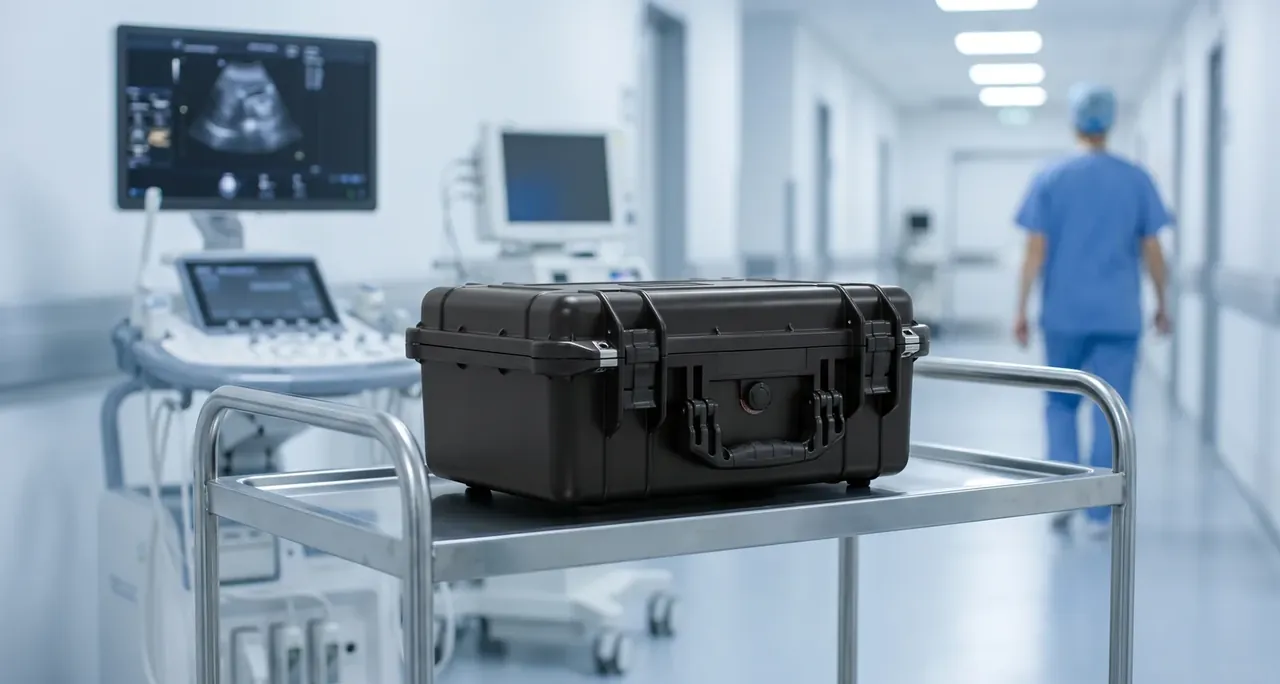
The risk sits in the polycarbonate lens. A 3 mm lens under repeated ethanol contact grows fine cracks that start at the screw boss and travel 8 mm within 40 min. Ethanol penetrates the skin layer and releases orientation stress frozen in during moulding, so the most stressed zone cracks first.
A side-by-side run made it visible: neutral detergent left lenses clean after 300 wipes, ethanol cracked them at wipe 60. The variable was annealing — a lens held at 80 ℃ for 2 h survived 200 wipes.
On a case with a lens, ethanol stays on the outer shell, the handle and the lid rim; the lens takes 1000 mg/L quaternary ammonium, wiped once and wiped dry. That boundary costs far less than a replacement lens.
3. Chlorine at 500 mg/L and 10 min
Chlorine runs at two strengths: 500 mg/L available chlorine for 10 min on routine rounds, 0.5% sodium hypochlorite for visible contamination. Stronger mixes add under one log of kill and roughly double corrosion on metal.
The 0.5% solution is safe on PP and unforgiving on latch springs, hinge pins and rivets. A carbon steel pin that passed 48 h of salt spray shows a rust film after 10 min in chlorine, and the latch feels gritty after 30 open-close cycles.
Mixed chlorine must be spent the same shift. A 500 mg/L batch left open loses 40% of its chlorine in 24 h and holds 30% by day three, and colour never changes, so only a strip reveals it. On a 20 L drum opened eight times a day, strength fell to 300 mg/L by the second evening; mix 2 L at a time and check with a 0–2000 mg/L strip.
Chlorine also cannot be left to dry. Residual salts crystallise in shell gaps, swell, and lift the gasket by 0.2 mm, which costs a whole IP class. A clean water wipe inside 10 min removes most of that risk.
4. Quaternary ammonium and the residue line
Quaternary ammonium at 1000 mg/L is the gentlest of the three: no metal corrosion, no EPDM swelling, little odour. Its trouble is residue: surfactant on the shell forms a tacky film that collects dust.
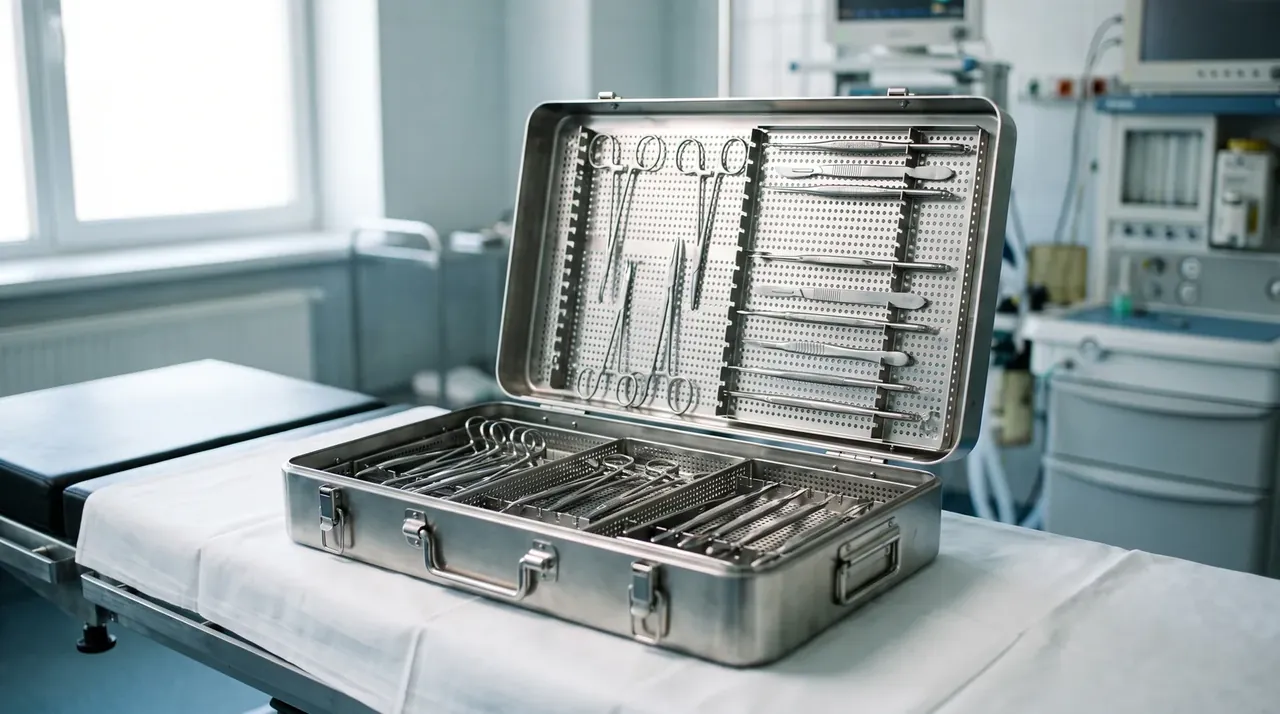
A stainless instrument case follows another path. Its metal shell tolerates 0.5% chlorine and a 10 min soak without harm, yet its hinges and latches are metal too, and chloride creeps along the rivets until rust shows inside.
The acceptance line is ≤10 μg/cm². Above it the surface beads water, the next disinfectant is blocked by the film, and measured kill rate drops 30%.
| Check | Limit | Method | If over limit |
|---|---|---|---|
| Quaternary residue | ≤10 μg/cm² | swab over a 50 cm² template | two water wipes, retest |
| Water break | film holds 30 s | spray pure water, watch | wipe clean again |
| Appearance | no white film | 45° side light | rework |
Sampling covers 50 cm², eluted in 10 mL of pure water and read by spectrophotometry; three points per case decide the result. Without a lab, a water-break test screens the batch in 3 min. Never chase residue with ethanol: alcohol drives the film into the micro-porosity of the shell, where no wipe reaches it.
5. Gasket, latches and the two-wipe order
Two wipes, in a fixed order. Detergent lifts soil first; the disinfectant then holds 10 min before the surface is wiped clean. A single pass merely spreads soil and chemical evenly across the shell.
Dwell time decides the second pass. After 1000 mg/L quaternary ammonium goes on, nothing touches the surface for 10 min; below 20 ℃ the hold stretches to 15 min, or contact falls short and kill rate loses nearly half.
The gasket groove is 0.8 mm deep, too narrow for cloth, so a soft brush runs along it once. Latch spring cavities take one lightly loaded swab each, because pooled chemical reacts with the grease on the spring.
Drying is mandatory. A gap holding 0.3 mL of liquid will not dry in 20 min at RH 60%; 15 s of air, or 15 min upside down with the lid open, brings gap humidity below 30%. Skip it and a misty white ring appears under the gasket a week later.
Conclusion
Case disinfection reduces to three decisions. Set the material: PP shells and stainless parts go to alcohol, EPDM gaskets stay clear of strong chlorine, and PC lenses only ever see quaternary ammonium. Set the time: ethanol needs 30 s to flash off, while chlorine and quaternary ammonium need a full 10 min, stretched to 15 min below 20 ℃. Set the acceptance: residue ≤10 μg/cm², a water film that holds 30 s, gap humidity under 30%. The third step is the one that gets skipped and the one that sends batches back for rewashing. Order matters as much as the numbers: material, then time, then acceptance, and the lid stays open until the third step is signed off. No chemical is better in the abstract; the only question is whether it matches this shell, this lens and this gasket.
| Case part | 75% ethanol | 500 mg/L chlorine | 1000 mg/L quaternary |
|---|---|---|---|
| PP shell | fine, 5% gloss loss at 200 wipes | fine, water wipe after | fine, wipe residue off |
| PC lens | avoid, cracks from wipe 60 | avoid, hazes | suitable |
| EPDM gasket | suitable | cautious, chalks in 24 h | suitable |
| Carbon steel spring | suitable | avoid, rusts in 10 min | suitable |
This article discusses container-side specifications and design implications only, and does not cover any handling, loading or use of the contents.
Related Reading
- Medical case maintenance routine
- Cleaning and care for protective cases
- Cleaning case gaskets safely
- Field medical case standards
Related Products
- 8 Series — Gun Cases; Military Equipment Cases; Camera Equipment Cases; Drone Cases; Watch Cases; Knife Cases; First Aid Cases; Electronics Equipment Cases
- WL8-2812 PP Gun Case — model WL8-2812
- All protective cases and toolboxes: 7 series, 158 models