

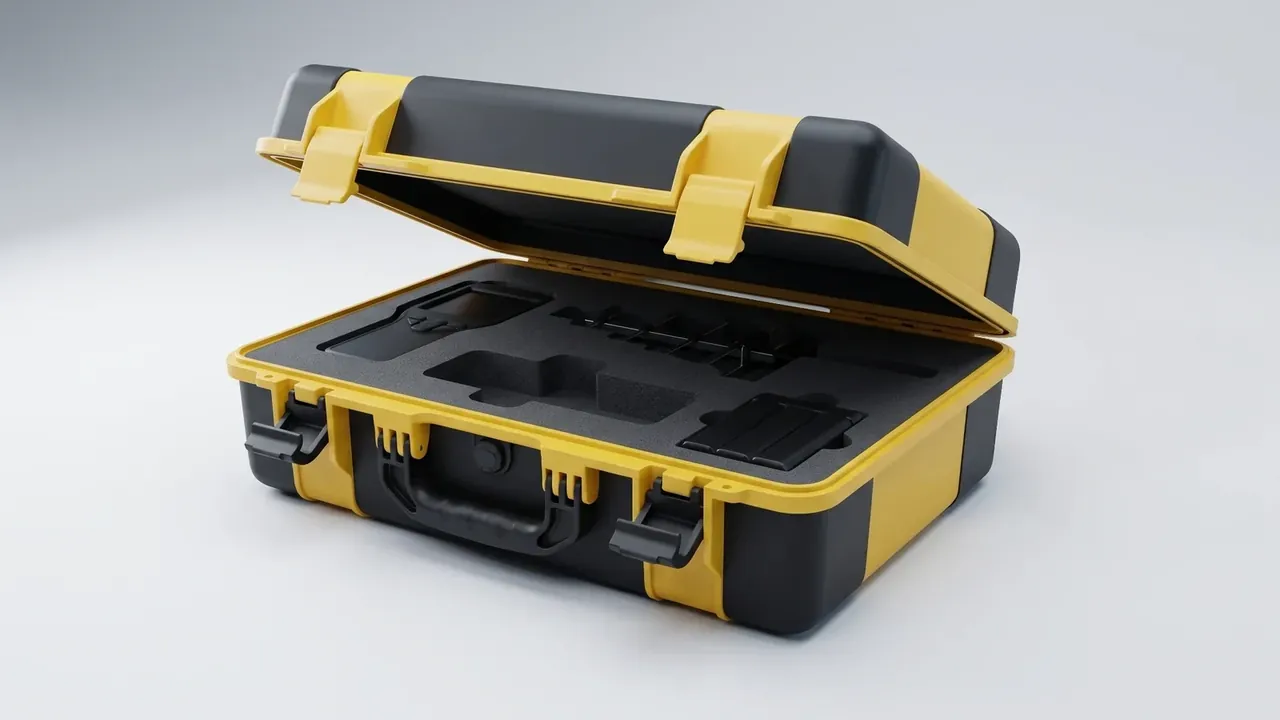
Quick answer: A drone case is configured backwards from the job. Task length sets battery pockets, transit mode sets handles and mounts, site temperature sets the gasket, and access habits set the foam.
Table of contents
- Six Job Scenarios for a Drone Case
- Foam Layout and Airframe Location in Inspection Work
- Emergency Response: Pick Order and Marking
- Film Crews and Spray Teams: Stowing the Ground Station
- From Task List to Configuration List
- FAQ
1. Six Job Scenarios for a Drone Case
Power line inspection, terrain survey, emergency response, film work, crop spraying and last-mile delivery are where a drone case spends its life: daily loading, a cramped vehicle, batteries riding with the airframe.
The differences drive the rest. A survey crew changes take-off points three times a day and may carry the case 800 m uphill; a spray crew leaves it on a flatbed in sun and splash. One mould serves both: the variables sit in foam, handle and latches.
| Scenario | Duty pattern | Focus |
|---|---|---|
| Power line inspection | 12 km line, 6 sorties daily | Arm seat, handle height |
| Terrain survey | 120 m altitude, 22 min per pack | Battery pockets, spares |
| Emergency response | Airborne 3 min after arrival | One level, reflective marks |
| Film work | 4 moves a day, many parts | Ground station, cables |
| Crop spraying | 38 C field, constant vibration | Sealing, UV stable shell |
| Last-mile delivery | Short hops, one operator | Low weight, single latch |
2. Foam Layout and Airframe Location in Inspection Work
Inspection work asks one thing of the inside: the arms must not move. Folded, the aircraft rests on the belly plate and arm roots, with a span past 600 mm, and the pockets follow the body outline with a 2 mm gap.
Survey work adds the gimbal: its own pocket, aircraft lens up. Shared with the airframe, it carries body weight, and one gravel road shifts its zero point.
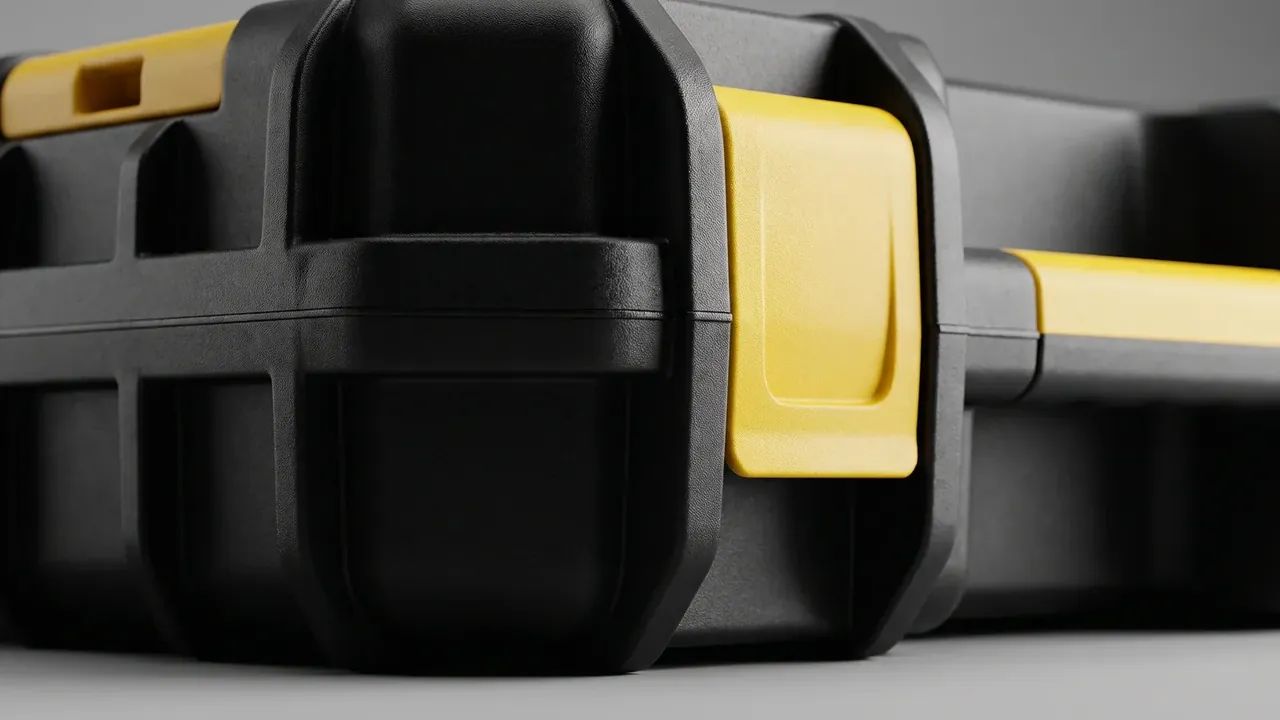
Damage rarely starts at the airframe. In a pickup bed the case hits the wall and a spare wheel bracket, and corners go first, hence a double wall and a guarded side latch: 24 kg loaded, 6.8 kg empty, a 200 m one-handed carry.
3. Emergency Response: Pick Order and Marking
Emergency work has one metric: wheels up within 3 minutes, which rules out a second lid or anything tied with cord. One level, six battery pockets in a row, airframe in the middle.
A diagram sits in the lid at 40 mm character height: reflective tape splits charged packs from empty ones, glow tape marks the latches, reach targets run 10, 30 and 60 seconds top to bottom.
Lid angle is the forgotten detail: past 100 degrees it holds, at 45 it lands on the wrist.
4. Film Crews and Spray Teams: Stowing the Ground Station
A film crew carries a kit, not an aircraft: airframe, six packs, monitor, video link, four antennas, a bundle of cable. That drone case runs two levels, monitor on top, airframe below, cable coiled away from the batteries.
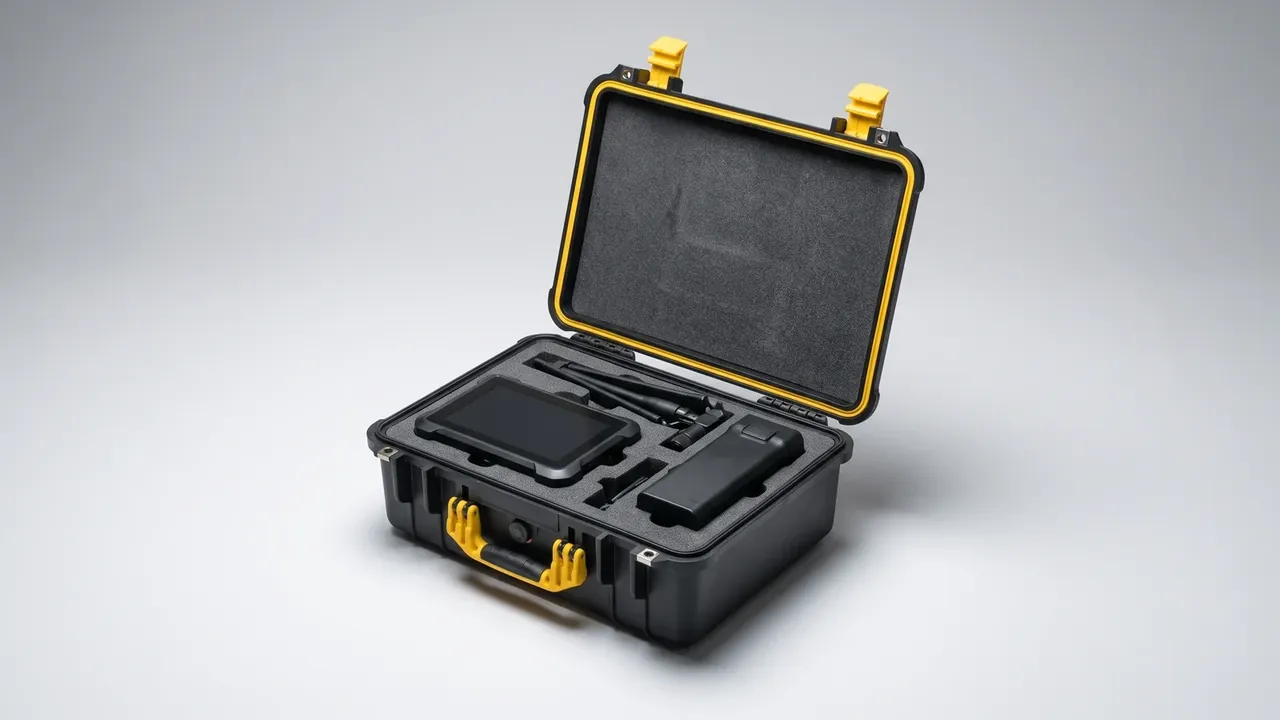
Spray teams invert it: the tank never goes in. A 16 L tank hangs on the aircraft, and the case carries transmitter, packs and spare nozzles. At 38 C with vibration and splash, sealing and UV stability outrank foam detail, so a light lid liner earns its place.
Both crews share one rule: packs never travel with metal tools. Six packs at 1.35 kg, stored at 3.85 V per cell, hate a scratched terminal.
5. From Task List to Configuration List
Work the list in order. Task length fixes battery pockets, transit method fixes handle and base plate, temperature fixes gasket and colour, operator count decides latching, stack height decides lid ribs.
| Order | Question | What it fixes |
|---|---|---|
| 1 | How long is one task | Battery pockets, spares |
| 2 | How does it travel | Handle, strap, base plate |
| 3 | What temperature range | Gasket, shell colour |
| 4 | How many operators | Single or double latch |
| 5 | How high does it stack | Lid ribs, corner wall |
The order prevents rework: choose the case first and battery count becomes the sticking point.
Conclusion
Matching a drone case to a job means fixing five variables in sequence, then letting foam, handle, latch and gasket follow. The more precisely the scenario is written, the less rework comes back, and a drone case covers six jobs without a second mould.
This article discusses only the container (case body) side of specifications and design intent, and does not cover any handling, loading or use of the contents.
Related Reading
- How to choose a drone case: size and battery transport
- Prop and airframe protection in drone case transit
- Typical applications for camera equipment cases
- Where equipment cases are used and how they mount
Related Products
- 8 Series — Gun Cases; Military Equipment Cases; Camera Equipment Cases; Drone Cases; Watch Cases; Knife Cases; First Aid Cases; Electronics Equipment Cases
- WL8-2812 PP Gun Case — model WL8-2812
- All protective cases and toolboxes: 7 series, 158 models